Every winter, as families gather around the fireplace and hang their stockings by the chimney with care, a small but meaningful object often appears among the candy canes and tiny toys: an orange. Placed at the toe of the stocking, it’s a simple gesture that carries more weight than its size suggests. But why oranges? And how did this quiet custom become part of Christmas celebrations across North America and Europe?
The tradition of placing oranges in Christmas stockings is not merely decorative or whimsical—it’s rooted in hardship, generosity, and cultural evolution. What began as a symbol of survival and rare luxury has transformed into a nostalgic nod to history, kindness, and seasonal abundance. This article explores the origins, evolution, and enduring significance of the orange-in-the-stocking custom.
The Victorian Origins: A Gift Born of Necessity
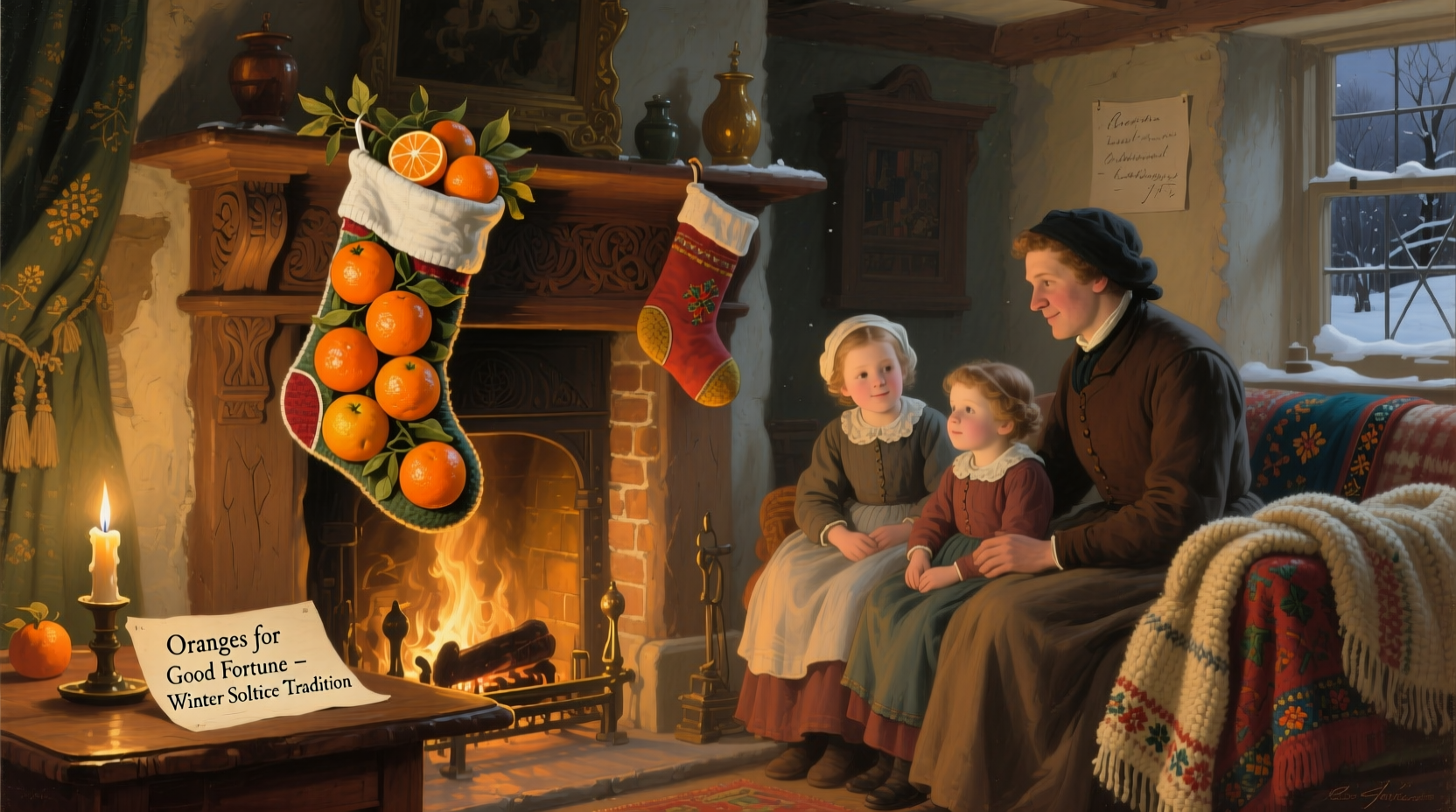
The practice traces back to 19th-century England, during the Victorian era—a time when many families lived in poverty and access to fresh fruit, especially citrus, was limited. Oranges were not grown locally in northern Europe; they had to be imported from warmer climates like Spain, Morocco, or later, Florida and California. Because of the cost and difficulty of transport, oranges were considered exotic luxuries, often reserved for special occasions.
One popular origin story centers on St. Nicholas, whose legendary generosity inspired the modern Santa Claus. According to folklore, St. Nicholas once helped a poor man who could not afford dowries for his three daughters. Without financial support, the women faced lives of servitude or worse. To save them, St. Nicholas secretly tossed bags of gold through their window—some versions say the gold landed in stockings hung by the fire to dry. Over time, the gold was symbolically replaced with oranges, representing both wealth and good fortune.
In Victorian England, giving an orange at Christmas became one of the few affordable yet meaningful gifts for children from low-income families. For many, receiving an orange was the highlight of their holiday. The fruit's bright color, sweet scent, and juicy taste made it a sensory delight in a season otherwise dominated by preserved meats, root vegetables, and gray skies.
Tip: When preserving traditions like this, consider pairing the orange with a note explaining its history—this adds emotional depth and educational value for younger generations.The Transatlantic Journey: From England to North America
As waves of British immigrants settled in North America during the 1800s, they brought their customs with them—including the practice of placing oranges in stockings. In the United States and Canada, the tradition took hold, particularly in rural and working-class communities where resources were still tight.
By the early 20th century, American railroads and improved refrigeration allowed citrus fruits to be shipped northward more efficiently. Companies like Sunkist began marketing oranges as “holiday gifts,” packaging them in festive crates labeled “For Your Christmas Stocking.” Advertisements depicted children unwrapping oranges with wide-eyed joy, reinforcing the idea that citrus was synonymous with Christmas cheer.
The Great Depression further cemented the orange’s symbolic role. During years of economic hardship, when toys and sweets were unaffordable, an orange remained a realistic and appreciated gift. It was nutritious, long-lasting, and carried emotional resonance. Parents would wrap oranges in tinfoil or tissue paper to make them feel more special, turning a simple piece of fruit into a treasure.
“An orange in the stocking wasn’t just food—it was hope wrapped in peel.” — Dr. Margaret Ellsworth, Cultural Historian, University of Toronto
Social and Religious Symbolism Behind the Orange
Beyond economics, the orange also carried symbolic meaning in Christian and folk traditions. Its round shape and golden hue evoked the sun, light, and divine warmth—especially significant during the winter solstice period when daylight was shortest. In some interpretations, the orange represented the fruit of paradise, recalling the Garden of Eden and the promise of redemption.
The act of peeling an orange added a ritualistic dimension. Children were often taught to peel it slowly, section by section, savoring each bite. This encouraged mindfulness and gratitude—values central to the holiday season. Some families even saved the peels to dry and use in potpourri or baking, minimizing waste and honoring the gift.
In certain regions, oranges were associated with miracles. One tale tells of a nun who prayed for food for orphaned children and found a crate of oranges delivered mysteriously on Christmas Eve. Whether factual or apocryphal, such stories reinforced the idea that oranges were more than fruit—they were signs of providence.
Modern Interpretations and Revival Efforts
Today, most households have easy access to citrus year-round. Supermarkets stock oranges, clementines, and tangerines in bulk during the holidays, making them commonplace rather than rare. Yet, the tradition persists—not out of necessity, but as a deliberate choice to honor heritage and teach history.
Many families continue to include an orange in their stockings as a way to connect with ancestors who endured scarcity. It serves as a tangible reminder of how far we’ve come and encourages reflection on what true abundance means. Others adopt the practice through charitable programs like Operation Christmas Child, where donors pack shoeboxes with small gifts, including oranges or fruit snacks, for children in developing countries.
Schools and museums sometimes use the orange tradition in educational settings. For example, living history exhibits at Victorian-era Christmas festivals often hand out real oranges to visitors, accompanied by stories about daily life in the 1800s. These experiences help bridge generational gaps and foster empathy.
| Era | Availability of Oranges | Symbolic Meaning | Typical Presentation |
|---|---|---|---|
| Mid-1800s (Victorian) | Rare, imported, expensive | Luxury, hope, charity | Loose in stocking or wrapped in cloth |
| Early 1900s | More accessible via rail | Seasonal treat, comfort | Festive packaging, foil-wrapped |
| Great Depression | One of few affordable gifts | Survival, parental love | Carefully placed, sometimes shared |
| Present Day | Widely available, inexpensive | Nostalgia, tradition, education | Used intentionally to honor history |
How to Keep the Tradition Alive: A Step-by-Step Guide
If you're considering incorporating this tradition into your own holiday routine, here’s a practical approach to ensure it’s meaningful—not just performative.
- Choose the right orange: Opt for a firm, brightly colored navel orange. Avoid pre-peeled or cut varieties to preserve authenticity.
- Wrap it thoughtfully: Use recycled wrapping paper, tissue, or even a small cloth bag. Some families wrap it in gold foil to echo the “gold coins” of St. Nicholas lore.
- Add context: Include a short note explaining the history. Example: “This orange honors those who once received one as their only Christmas gift.”
- Share the story aloud: On Christmas morning, take a moment to tell the story behind the orange before it’s eaten.
- Reflect together: Ask family members what they’re grateful for or discuss how holidays have changed over time.
“We started putting oranges in our kids’ stockings after reading about the Depression-era practice. Now it’s the part of Christmas morning they look forward to most—not because of the fruit, but because of the story.” — Lisa Tran, parent and educator, Portland, OR
Common Misconceptions About the Tradition
Despite its growing recognition, several myths persist about the orange-in-the-stocking custom:
- Myth: It originated in the United States.
Reality: The roots are firmly in Victorian England and European folklore. - Myth: It was always a widespread tradition.
Reality: It was primarily observed among the working class and gained broader attention only in the 20th century. - Myth: Oranges were given because they were healthy.
Reality: While nutritious, the primary reason was scarcity and symbolism—not dietary advice.
FAQ: Frequently Asked Questions
Is there a difference between placing an orange and a tangerine in a stocking?
Yes, though subtle. Oranges are traditionally linked to the original Victorian and Depression-era practices. Tangerines or clementines are modern alternatives—easier to peel and portion—but lack the same historical weight. Purists prefer the classic orange for authenticity.
Should I still include an orange if my family can afford many gifts?
Absolutely. That’s when it matters most. The orange isn’t about need—it’s about remembrance. It teaches gratitude and historical awareness, especially valuable when material abundance is the norm.
Are there any safety concerns with putting whole oranges in stockings?
Only if left too long. A fresh orange can last 2–3 weeks at room temperature, but may mold if exposed to moisture. If using in a display, consider a wax or artificial orange for longevity—though eating a real one remains the most impactful experience.
Checklist: Honoring the Orange Tradition This Holiday Season
- ☐ Source a high-quality, fresh orange
- ☐ Wrap or present it with intention
- ☐ Research and prepare the historical story
- ☐ Share the narrative with family on Christmas morning
- ☐ Encourage discussion about gratitude and history
- ☐ Consider donating to a cause that provides food to children in need
Conclusion: More Than Just a Fruit
The orange in the Christmas stocking is one of the quietest traditions—one without fanfare or commercial hype—but perhaps one of the most profound. It speaks of resilience, compassion, and the quiet dignity of small joys. In a season often defined by excess, it offers a counterpoint: simplicity with meaning.
Whether you grew up with this custom or are discovering it for the first time, placing an orange in a stocking is an act of remembrance. It honors those who celebrated with less, reminds us of the power of generosity, and invites conversation across generations. In doing so, it transforms a piece of fruit into a vessel of memory.
💬 This holiday season, will you include an orange in your stocking? Share your thoughts, family stories, or photos of your tradition online to keep this meaningful custom alive for future generations.








