In recent years, air fryers have exploded in popularity. With sleek designs, bold marketing claims of “oil-free frying,” and countertop convenience, they’ve become a fixture in kitchens worldwide. But as more people adopt them, a critical question emerges: are air fryers just glorified convection ovens, or do they offer enough unique benefits to earn their place as a kitchen essential?
To answer this, we need to look beyond the hype. The truth lies somewhere between clever engineering and genuine culinary utility. While both appliances rely on the same core principle—circulating hot air—their design, performance, and user experience differ in meaningful ways that can impact your cooking habits, health goals, and kitchen efficiency.
How Air Fryers and Convection Ovens Work
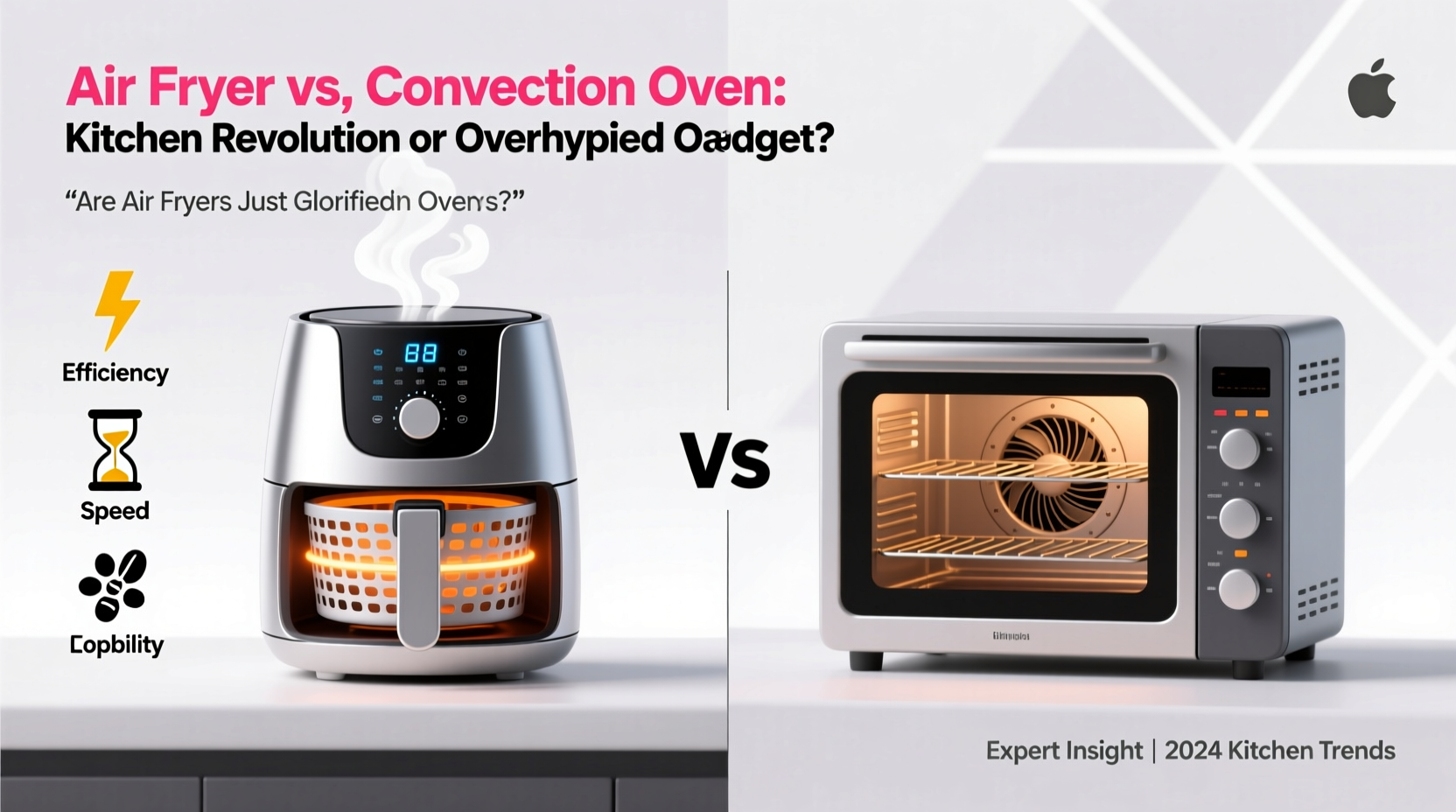
At their core, both air fryers and convection ovens use a fan to circulate hot air around food. This rapid airflow cooks food faster and more evenly than traditional radiant heat found in standard ovens. The result is crispier exteriors and shorter cook times, especially for foods like roasted vegetables, chicken wings, or frozen snacks.
The key difference lies in scale and intensity. Air fryers are compact, high-velocity systems designed to maximize airflow in a small chamber. Most models feature a powerful fan and a heating element positioned directly above it, creating a vortex of hot air that surrounds the food basket. This concentrated circulation mimics the effect of deep frying by quickly evaporating surface moisture and triggering the Maillard reaction—the chemical process responsible for browning and flavor development.
Convection ovens, on the other hand, are larger and built for versatility. They often include multiple rack positions, bake, broil, and roast functions, and are meant to handle full meals. While many modern convection ovens deliver excellent results, their airflow is less intense due to the larger cavity, which can lead to longer cooking times and slightly less crispness compared to an air fryer when preparing small batches.
Tip: For maximum crispiness, lightly coat food with oil—even if using an \"air fry\" setting—to enhance browning and texture.Performance Comparison: Speed, Crispness, and Capacity
When evaluating whether an air fryer is worth owning, three factors matter most: speed, crispness, and capacity. Let’s examine how each appliance performs across these dimensions.
| Feature | Air Fryer | Convection Oven |
|---|---|---|
| Cooking Speed | Faster for small portions (e.g., fries in 15 mins) | Slightly slower due to larger cavity and preheat time |
| Crispiness | Excellent; intense airflow creates golden, fried-like texture | Good, but may require flipping or longer cook time |
| Capacity | Limited (typically 2–6 quarts); best for 1–2 people | Large (20+ quarts); ideal for families or batch cooking |
| Precision Control | Digital timers, presets, rapid adjustments | Variable settings, but interface varies by model |
| Energy Use | Low (700–1500W); efficient for small meals | Higher (1500–3000W); uses more energy overall |
The data shows a clear trade-off: air fryers excel at speed and crispness for smaller meals, while convection ovens offer greater flexibility and volume. If you're reheating leftovers or making crispy tofu for one, the air fryer wins. But if you're roasting a whole chicken or baking multiple trays of cookies, the convection oven remains unmatched.
Real-World Utility: Who Benefits Most?
Not every kitchen needs an air fryer. Its value depends on your cooking habits, household size, and available space. Consider the following scenarios:
- Single-person households or couples benefit greatly from air fryers. They eliminate the need to heat a full oven for a quick snack or side dish.
- Busy professionals appreciate the speed. Cooking frozen vegetables or reheating pizza in under 10 minutes without sacrificing texture is a game-changer.
- Health-conscious eaters enjoy reducing oil usage. While not entirely oil-free, air fryers cut fat content by up to 75% compared to deep frying.
- Small kitchens gain counter space efficiency. An air fryer replaces toaster ovens, dehydrators, and sometimes even microwaves for certain tasks.
“Air fryers aren’t replacing ovens, but they’re filling a niche: fast, crispy cooking with minimal cleanup.” — Chef Marcus Lee, Culinary Instructor at New York Kitchen Academy
Mini Case Study: The Urban Apartment Cook
Take Sarah, a 32-year-old graphic designer living in a Brooklyn studio apartment. Her kitchen is compact, with limited storage and no oven—just a stovetop and microwave. Before buying an air fryer, she relied heavily on takeout or microwaved meals. After purchasing a mid-range 5.8-quart model, her cooking habits changed dramatically.
She now prepares crispy chickpeas, roasted sweet potatoes, and salmon fillets in under 20 minutes. Frozen dumplings come out golden and crunchy instead of soggy. Even her morning toast is better—crisp without drying out. The machine fits neatly beside her sink, and cleanup takes less than five minutes.
For Sarah, the air fryer wasn’t a luxury—it was a practical upgrade that improved her diet, saved money, and reduced reliance on processed food. In her case, it wasn’t just a gadget; it was a functional replacement for missing kitchen infrastructure.
Debunking the “Glorified Convection Oven” Argument
Critics argue that air fryers are merely mini convection ovens with aggressive branding. Technically, this isn't wrong—but it misses the point. Many kitchen tools are specialized versions of broader categories. A blender is a motorized blade in a jar, yet few would claim it's redundant because a food processor exists.
Specialization brings advantages:
- Optimized airflow: Air fryers are engineered for turbulence, not just circulation. The basket design promotes even exposure on all sides.
- User-friendly presets: One-touch buttons for fries, chicken, fish, and reheat simplify cooking for non-experts.
- Faster preheat: Most air fryers reach target temperature in 2–3 minutes, versus 10–15 for full ovens.
- Easier cleanup: Non-stick baskets and removable parts make maintenance simpler than scrubbing oven racks.
Yes, a convection oven can replicate most air fryer functions—but not always with the same speed, consistency, or ease. The air fryer’s success stems from solving specific pain points: long wait times, uneven crisping, and excessive oil.
Tip: Shake or flip food halfway through cooking to ensure even browning, especially for loose items like fries or diced vegetables.Step-by-Step Guide: Maximizing Your Air Fryer’s Potential
If you own or are considering an air fryer, follow this timeline to get the most out of it:
- Week 1: Master the Basics
Start with simple recipes: frozen fries, reheated pizza, or store-bought chicken tenders. Note cook times and adjust based on your model. - Week 2: Experiment with Oil
Try tossing veggies or proteins with ½–1 tsp of oil before air frying. Compare results to oil-free versions. - Week 3: Try Homemade Recipes
Bake homemade potato chips, roast Brussels sprouts, or make crispy tofu. Focus on texture and seasoning. - Week 4: Expand Functions
Use dehydrate mode (if available) for fruit leather or jerky. Try baking small desserts like mug cakes. - Ongoing: Optimize Workflow
Replace microwave reheating with air frying. Use it for defrosting or proofing dough in some advanced models.
Checklist: Is an Air Fryer Right for You?
Before purchasing, ask yourself the following:
- ✅ Do I frequently cook small portions or single servings?
- ✅ Do I want crispier results than my microwave or oven provides?
- ✅ Is counter space available, or can I store it easily?
- ✅ Am I willing to clean the basket after each use?
- ✅ Do I already own a convection oven, or is my current oven outdated?
- ✅ Am I looking to reduce oil consumption without sacrificing texture?
If four or more apply, an air fryer could be a valuable addition. If you already have a high-quality convection oven and cook primarily for a family, the marginal benefit may be low.
FAQ: Common Questions About Air Fryers
Can a convection oven do everything an air fryer can?
Mostly, yes—but with caveats. You can achieve similar crispness in a convection oven, especially with a wire rack and proper preheating. However, it typically takes longer, uses more energy, and may require flipping food more often. For small batches, the air fryer is simply more efficient.
Are air-fried foods actually healthier?
Yes, compared to deep-fried foods. Air frying reduces fat content significantly since it requires little to no oil. For example, air-fried french fries can have 70–80% less fat than their deep-fried counterparts. However, they are not inherently “healthy”—nutrition depends on the ingredients used.
Do I need an air fryer if I have a convection microwave?
It depends. Convection microwaves combine microwave speed with convection browning, offering impressive versatility. But many users find the convection function less powerful than standalone units. If your convection microwave delivers crispy results quickly, an air fryer may be redundant. Otherwise, it could still add value.
Conclusion: A Tool Worth Its Place��With Caveats
The debate over whether air fryers are just glorified convection ovens overlooks what truly matters: usability, context, and personal needs. While they share the same fundamental technology, air fryers refine and optimize it for a specific purpose—fast, crispy cooking with minimal effort.
They are not essential for every kitchen. If you already have a reliable convection oven, cook large meals regularly, or lack counter space, you may not benefit enough to justify the purchase. But for singles, small families, urban dwellers, or anyone seeking a faster, cleaner way to achieve fried-like textures with less oil, an air fryer can be transformative.
Rather than viewing it as a replacement, think of the air fryer as a specialist tool—a sous-chef for crispiness, speed, and simplicity. When used intentionally, it complements rather than duplicates existing appliances.
🚀 Ready to upgrade your cooking routine? Try borrowing or renting an air fryer first. Test it with your most common meals. If it saves time, improves texture, and gets regular use, it’s not just hype—it’s a kitchen keeper.