
The kitchen appliance market has seen a surge in popularity for both air fryers and convection ovens over the past decade. With similar promises of faster, crispier cooking using less oil, many consumers are left wondering: Are these appliances functionally the same? Is an air fryer just a smaller version of a convection oven, or does it offer something uniquely faster and more efficient? The answer isn’t as straightforward as it seems — while they share core technology, their design, airflow dynamics, and practical use cases lead to measurable differences in performance.
To truly understand the distinction, we need to look beyond marketing claims and examine how each appliance works, how quickly it cooks, and where each excels in everyday use.
How Air Fryers and Convection Ovens Work
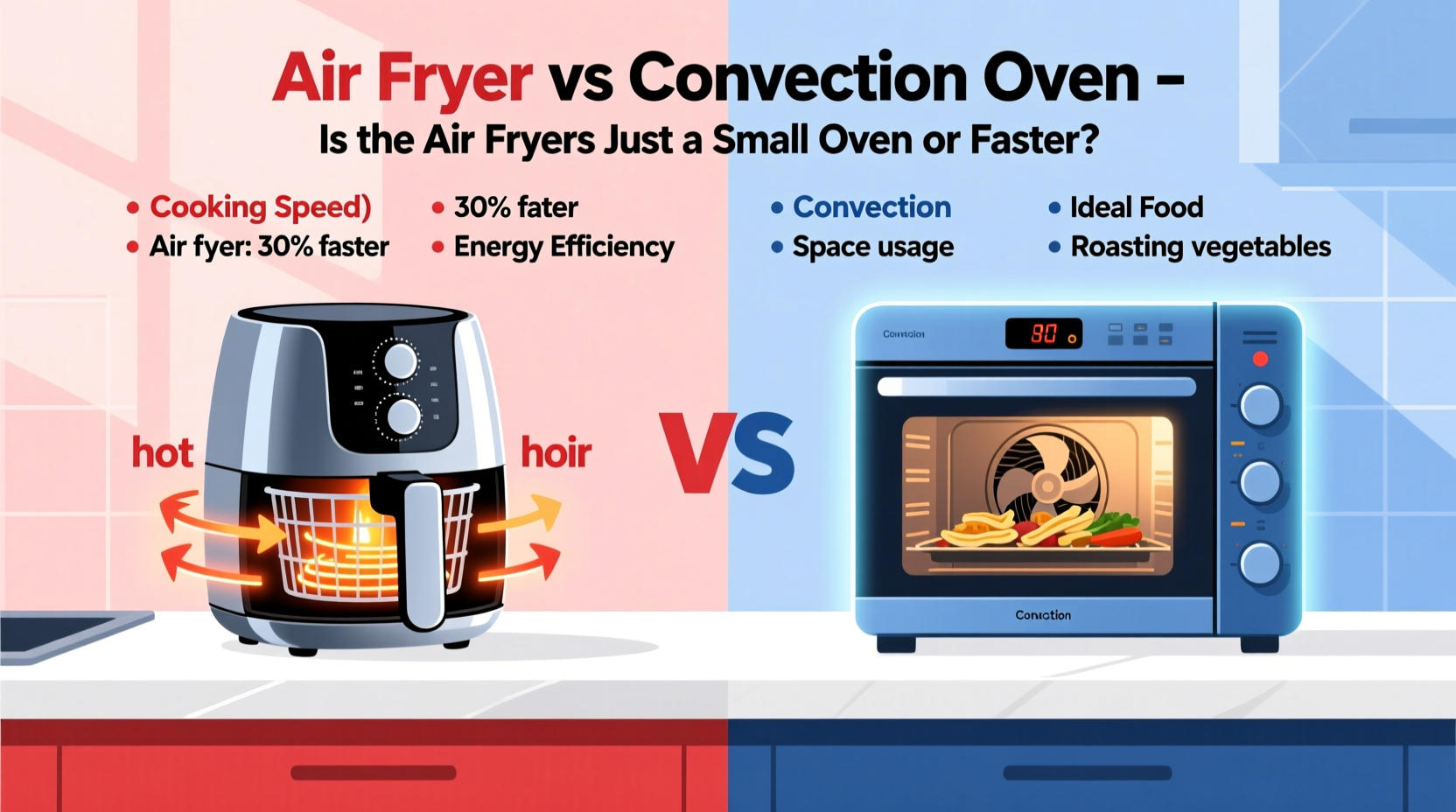
At their core, both air fryers and convection ovens rely on the same fundamental principle: circulating hot air around food to cook it evenly and create a crispy exterior. This is achieved through a heating element and a powerful fan that forces heated air across the food at high velocity.
In a traditional oven, heat rises slowly and often unevenly, leading to longer cooking times and inconsistent browning. Convection ovens solve this by adding a fan to circulate air, reducing cooking time by up to 25% compared to conventional ovens. Air fryers take this concept further by intensifying airflow within a compact chamber.
An air fryer’s basket is typically small and cylindrical, designed so that hot air moves rapidly around the food from all directions. This concentrated circulation mimics the effect of deep frying but with little to no oil. The proximity of the heating element to the food also contributes to faster surface browning.
“Air fryers aren’t magic — they’re just highly optimized convection systems in a small space.” — Dr. Linda Chen, Food Scientist at Culinary Innovation Lab
This optimization is key. While both appliances use convection, the air fryer’s compact size allows for quicker preheating and more aggressive air movement, which translates into noticeable differences when cooking certain foods.
Speed Comparison: Preheating and Cooking Times
One of the most compelling arguments in favor of air fryers is speed. But is it significantly faster than a convection oven?
Preheating: Air fryers generally preheat in 2–4 minutes due to their small internal volume and close-proximity heating elements. A full-size convection oven, even with a rapid preheat setting, usually takes 8–12 minutes to reach the desired temperature. For quick meals like frozen fries or reheating leftovers, those few minutes matter.
Cooking Time: When comparing identical recipes (e.g., chicken wings, roasted vegetables), air fryers often finish 10–20% faster than convection ovens. For example, a batch of wings might take 22 minutes in a convection oven at 400°F, but only 18 minutes in an air fryer under the same conditions.
However, this advantage diminishes with larger quantities. Air fryers have limited capacity — usually 2 to 6 quarts — meaning you may need to cook in batches for family-sized portions. A convection oven can handle larger trays of food in a single run, potentially making it faster overall for bigger meals.
Tip: For best results in an air fryer, avoid overcrowding the basket. Leave space between pieces to allow maximum airflow.Performance Differences in Real-World Use
While technical specs provide insight, real-world performance reveals where each appliance shines.
Air Fryer Strengths:
- Excellent for small-batch, crispy foods like fries, nuggets, and appetizers.
- Faster feedback loop — ideal for quick snacks or side dishes.
- Better at creating a “fried” texture due to intense, focused airflow.
- Easier cleanup with removable, non-stick baskets.
Convection Oven Strengths:
- Larger capacity — suitable for roasting whole chickens, baking multiple trays, or cooking casseroles.
- More versatile cooking modes (bake, broil, toast, dehydrate).
- Better heat distribution over large surfaces, reducing the need for rotation.
- Often includes additional features like steam injection or probe thermometers in higher-end models.
A mini case study illustrates this well: Sarah, a working parent of two, uses her air fryer daily for after-school snacks. She prepares frozen tater tots in 14 minutes with a crispness her microwave convection combo never achieved. However, on weekends, she roasts a whole chicken and vegetables in her wall-mounted convection oven, which would require three separate batches in her air fryer.
For her, the air fryer wins on convenience and speed for small tasks, but the convection oven remains essential for full meals.
Detailed Comparison Table
| Feature | Air Fryer | Convection Oven |
|---|---|---|
| Average Capacity | 2–6 quarts | 30–70 quarts |
| Preheat Time | 2–4 minutes | 8–12 minutes |
| Cooking Speed (small items) | Faster (10–20%) | Slightly slower |
| Batch Cooking Required? | Frequent for families | Rarely needed |
| Energy Use | Lower per use | Higher due to size |
| Versatility | Moderate (limited functions) | High (multiple modes) |
| Counter Space | Compact | Bulky |
| Best For | Snacks, small proteins, reheating | Family meals, baking, roasting |
When Does an Air Fryer Outperform a Convection Oven?
The air fryer’s advantage becomes clearest in specific scenarios:
- Reheating Fried Foods: Leftover fried chicken or pizza comes out remarkably crisp in an air fryer. The rapid, concentrated airflow revives texture better than a convection oven, which can sometimes dry food out before crisping it fully.
- Cooking Frozen Convenience Foods: Tater tots, mozzarella sticks, and fish sticks benefit from the air fryer’s fast ramp-up time and intense surface browning.
- Small Portion Meals: For one or two people, the air fryer eliminates the inefficiency of heating a large oven.
- Kitchen Constraints: In dorms, RVs, or small apartments, an air fryer provides high-quality cooking without requiring a full oven setup.
That said, convection ovens remain superior when precision, capacity, or multi-rack cooking is required. Baking multiple trays of cookies, roasting root vegetables with meat, or preparing holiday meals simply aren’t feasible in most air fryers.
Step-by-Step Guide: Choosing the Right Appliance
Follow this decision-making process to determine which appliance fits your lifestyle:
- Assess Your Household Size: One or two people? An air fryer may suffice. Family of four or more? Prioritize convection oven capacity.
- Evaluate Your Cooking Habits: Do you frequently reheat leftovers or make quick snacks? Air fryer. Do you bake bread or roast large cuts of meat? Convection oven.
- Check Kitchen Space: Countertop real estate is limited? Air fryers are more compact. Built-in options available? Consider a convection wall oven.
- Review Energy Usage: Air fryers use less energy per session. If sustainability is a priority, this matters for frequent use.
- Consider Budget: High-end convection ovens cost significantly more than basic air fryers. Determine if advanced features justify the price.
- Test Before Committing: Try recipes in both appliances if possible. Many modern convection ovens include \"air fry\" presets — test if they deliver comparable results.
FAQ: Common Questions Answered
Is an air fryer just a mini convection oven?
Technically, yes — both use forced hot air. But air fryers are engineered for speed and surface crisping with a focused fan system and compact cavity. So while they’re similar in principle, the execution makes them feel like different tools.
Can I replace my convection oven with an air fryer?
Only if you cook for one or two people and rarely prepare large meals. Most air fryers can't accommodate a standard sheet pan or roast a turkey. They complement rather than replace full-sized ovens.
Do convection ovens cook as evenly as air fryers?
Yes, often more evenly — especially across large trays. However, air fryers excel at creating uniform crispness on small, dense items like fries because of their rapid, swirling airflow pattern.
Final Verdict: Complementary Tools, Not Competitors
The debate over air fryer vs convection oven often frames them as rivals, but the truth is they serve different roles in the modern kitchen. An air fryer is not merely a small convection oven — it's a specialized tool optimized for speed, texture, and efficiency on a small scale. A convection oven, meanwhile, offers unmatched versatility and capacity for full meals.
Instead of asking which is better, consider how they can work together. Use the air fryer for quick, crispy tasks and the convection oven for baking, roasting, and large-batch cooking. Many home chefs now keep both, leveraging the strengths of each.
“The future of home cooking isn’t choosing between appliances — it’s using the right tool for the job.” — Chef Marcus Reed, Modern Home Kitchen Advocate
Conclusion: Make Smarter Choices Based on How You Cook
Understanding the nuances between an air fryer and a convection oven empowers you to make informed decisions about what belongs in your kitchen. If you value speed and crispiness for small meals, an air fryer delivers unmatched performance. If you prioritize versatility and volume, a convection oven remains indispensable.
Don’t fall for the myth that one replaces the other. Instead, think critically about your cooking habits, household size, and kitchen space. Whether you choose one, the other, or both, the goal is to cook better, faster, and with more enjoyment.
🚀 Ready to upgrade your kitchen game? Start by testing a simple recipe — like roasted Brussels sprouts — in both appliances. Compare the time, texture, and cleanup. Share your findings with others and discover what truly works for your lifestyle!