Vegetarian chili stands as one of the most versatile and satisfying dishes in plant-based cooking. More than just a meatless alternative, it is a culinary canvas that celebrates beans, vegetables, spices, and umami depth to deliver a robust, soul-warming experience. Whether served on a cold winter evening, prepared ahead for weekday lunches, or featured at a potluck gathering, a well-crafted vegetarian chili delivers both nourishment and complexity. This recipe transcends simplicity without demanding expertise, offering home cooks a reliable method to build layers of flavor while maximizing texture and nutritional value. With global pantry staples and smart technique, this version achieves a richness often associated with traditional beef chili—without compromising on ethics, health, or taste.
Definition & Overview
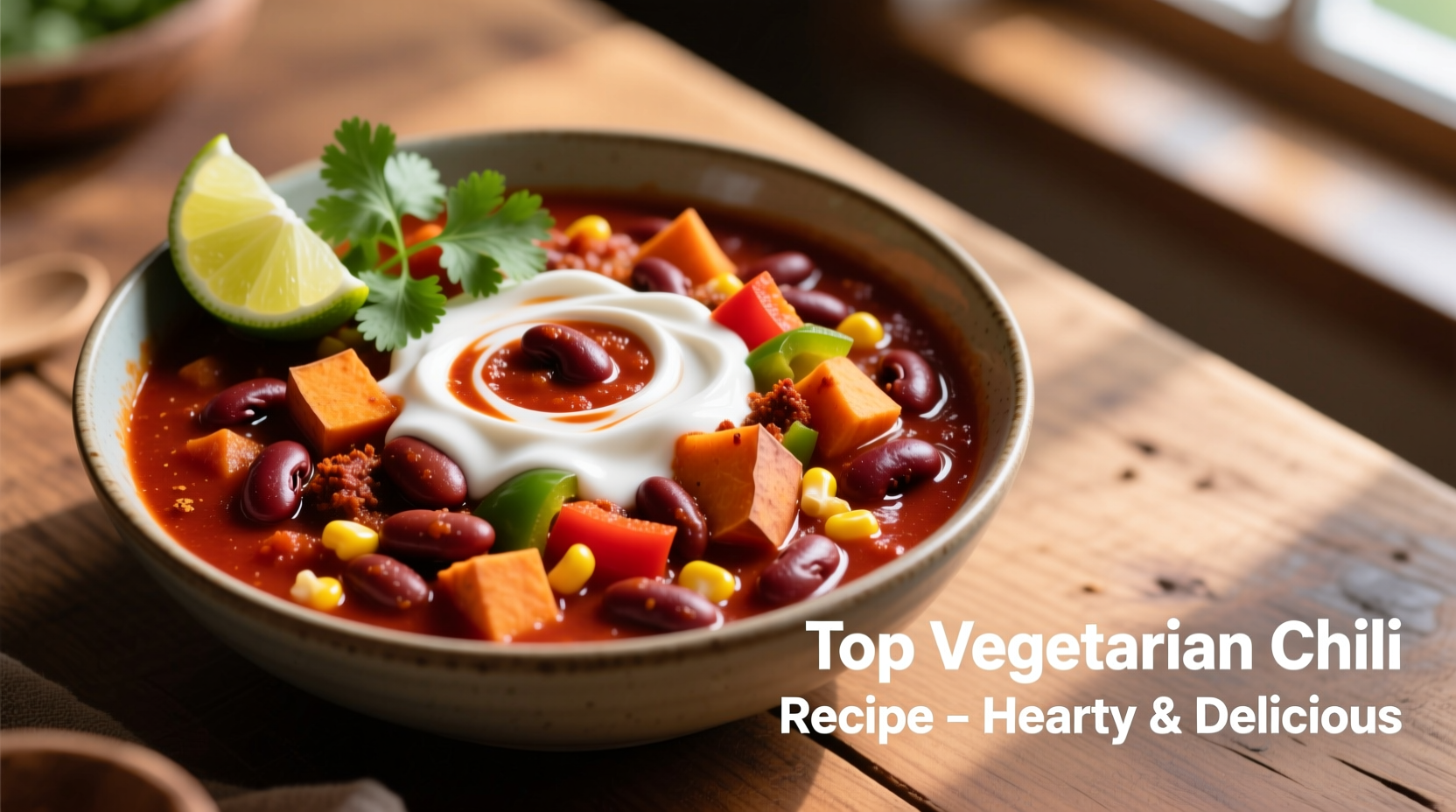
Vegetarian chili is a spiced stew originating from American Southwest cuisine, adapted from traditional Tex-Mex chili con carne by replacing animal proteins with plant-based alternatives such as beans, lentils, mushrooms, textured vegetable protein (TVP), or soy crumbles. While early versions relied solely on beans and tomatoes, modern interpretations incorporate a broad spectrum of ingredients including roasted vegetables, grains like quinoa, and fermented elements like miso or tamari to enhance savoriness.
The dish belongs to the broader category of “stews” or “chili-style preparations,” characterized by slow simmering, layered seasoning, and thick consistency. Unlike its meat-based counterpart, vegetarian chili emphasizes earthy, fibrous textures and deep umami rather than fatty mouthfeel. It functions equally well as a standalone entrée, taco filling, nacho topping, or side dish alongside cornbread or rice. Its adaptability has made it a staple in vegetarian, vegan, gluten-free, and high-fiber diets.
Flavor-wise, a superior vegetarian chili balances heat, acidity, sweetness, and bitterness. The base typically includes onions, garlic, bell peppers, and celery sautéed in oil—a mirepoix foundation that supports the addition of ground cumin, smoked paprika, oregano, and chili powder. Tomatoes (canned crushed or fire-roasted) provide tang and body, while beans contribute creaminess and protein. Optional additions like cocoa powder, coffee, or liquid smoke deepen the savory profile, mimicking the Maillard reaction found in seared meats.
Key Characteristics
| Characteristic | Description |
|---|---|
| Flavor Profile | Earthy, smoky, moderately spicy, with bright acidity and subtle sweetness. Umami-rich when enhanced with soy sauce, mushrooms, or TVP. |
| Aroma | Toasted spices, caramelized onions, roasted peppers, and warm cumin dominate the scent profile. |
| Color & Form | Deep rust-red to brick-brown depending on tomato type and spice blend; thick, chunky stew with visible bean and vegetable pieces. |
| Heat Level | Moderate (adjustable). Ranges from mild to hot based on chili powder, fresh chiles, or cayenne used. |
| Culinary Function | Main course, meal prep staple, freezer-friendly dish, crowd-pleasing entree for diverse dietary needs. |
| Shelf Life | Refrigerated: up to 5 days. Frozen: up to 6 months in airtight containers. |
Practical Usage: How to Build the Best Vegetarian Chili
The hallmark of an exceptional vegetarian chili lies not in ingredient count but in process. Flavor development occurs in stages—starting with aromatics, progressing through spice blooming, and culminating in long, slow integration during simmering. Follow this structured approach for consistent results:
- Sauté Aromatics: In a heavy-bottomed pot or Dutch oven, heat 2 tablespoons of olive oil over medium heat. Add 1 large diced yellow onion, 1 diced red bell pepper, and 2 stalks of finely chopped celery. Cook for 8–10 minutes until soft and lightly golden. Stir in 4 minced garlic cloves during the last minute to avoid burning.
- Bloom Spices: Add 2 tablespoons chili powder, 1 tablespoon ground cumin, 1½ teaspoons smoked paprika, ½ teaspoon dried oregano, and ¼ teaspoon cayenne (optional). Stir constantly for 30–60 seconds until fragrant. This step activates volatile oils in dried spices, intensifying their impact.
- Incorporate Umami Boosters: Stir in 1 tablespoon tomato paste and cook for 2 minutes, allowing it to caramelize slightly. Then add 1 cup of dry red wine (or vegetable broth) to deglaze the pot, scraping up any browned bits. This builds a fond-based flavor foundation similar to meat-based reductions.
- Add Liquids and Beans: Pour in 28 oz can of crushed tomatoes, 1½ cups vegetable broth, 1 cup cooked lentils (green or brown), and three 15-oz cans of drained beans—ideally a mix of kidney, black, and pinto. Include one can of corn if desired.
- Simmer Deeply: Bring to a boil, then reduce to low. Cover partially and simmer for at least 45 minutes, stirring occasionally. For even richer flavor, extend to 90 minutes. Long cooking allows starches to break down, thickening the chili naturally.
- Final Adjustments: Taste and adjust salt (start with 1 tsp), acidity (add 1 tsp apple cider vinegar), sweetness (½ tsp maple syrup if needed), and heat. Fold in 2 tbsp soy sauce or tamari for umami depth, or 1 tsp cocoa powder for complexity.
Pro Tip: For a meat-like texture, brown 1 cup of textured vegetable protein (TVP) or 8 oz chopped portobello mushrooms in a separate pan before adding to the pot. Alternatively, use 1 cup cooked quinoa or bulgur to boost heartiness without altering flavor.
Variants & Types of Vegetarian Chili
While the core concept remains consistent, regional and dietary adaptations have given rise to several distinct styles. Each variant serves a specific purpose—from maximizing nutrition to catering to allergy-sensitive audiences.
- Texas-Style Bean Chili: Focuses exclusively on beans and spices, omitting tomatoes for a denser, earthier result. Often uses only kidney beans and a bold chili powder blend. Ideal for those avoiding nightshades.
- Three-Bean & Corn Chili: A family-friendly version featuring black beans, pinto beans, kidney beans, and sweet corn. Lighter in spice, higher in fiber. Common in school cafeterias and casual dining.
- White Bean Chili: Uses white beans (cannellini or Great Northern), green chiles, cumin, and chicken-style vegetable broth. Often includes zucchini and finishes with cilantro and lime. Milder and creamier, appealing to spice-averse palates.
- Smoky Mushroom & Lentil Chili: Incorporates cremini or shiitake mushrooms and French green lentils for a deeply savory, almost carnivorous character. Enhanced with liquid smoke or chipotle in adobo. Favored in gourmet vegetarian restaurants.
- Quinoa-Stuffed Chili: Adds rinsed quinoa directly to the pot, which absorbs liquid and swells into a protein-packed grain matrix. Doubles as a complete meal with no side needed.
| Variant | Best For | Key Ingredient | Prep Note |
|---|---|---|---|
| Texas-Style Bean | Nightshade-free diets | Kidney beans, chili powder | Omit tomatoes and peppers |
| Three-Bean & Corn | Families, kids, batch cooking | Black, pinto, kidney beans + corn | Use fire-roasted corn for depth |
| White Bean | Mild palates, creamy texture lovers | Cannellini beans, green chiles | Add sour cream or avocado garnish |
| Smoky Mushroom & Lentil | Gourmet appeal, umami seekers | Shiitake mushrooms, green lentils | Sear mushrooms first for best texture |
| Quinoa-Stuffed | Gluten-free, high-protein meals | Uncooked quinoa | Add extra ½ cup broth; cook 20 min longer |
Comparison with Similar Ingredients
Vegetarian chili is often confused with other bean stews or soups due to overlapping ingredients. Understanding distinctions ensures proper technique and expectations.
- Vegetarian Chili vs. Minestrone: Minestrone is an Italian vegetable soup with small pasta, cabbage, and lighter broth. It lacks the concentrated spice profile and thick consistency of chili. Minestrone is served immediately; chili benefits from resting.
- Vegetarian Chili vs. Rajma (Indian Kidney Bean Curry): Rajma uses Indian spices (garam masala, turmeric, ginger) and ghee, served with rice. It features a gravy-like texture and yogurt-based cooling contrast. Chili relies on New World spices and is typically dairy-free unless garnished.
- Vegetarian Chili vs. Cowboy Beans: Cowboy beans are sweeter, bacon-infused, and baked, often containing molasses or brown sugar. They emphasize sweetness over heat and are served as a side, not a main.
- Vegetarian Chili vs. Lentil Soup: Lentil soup is thinner, broth-based, and seasoned simply with bay leaf and thyme. It cooks faster and does not include tomatoes or multiple beans.
“The secret to great vegetarian chili isn’t substitution—it’s elevation. You’re not trying to mimic meat. You’re building something deeper, more complex, and ultimately more satisfying through layering.”
— Chef Elena Martinez, Plant-Based Culinary Institute
Practical Tips & FAQs
How do I thicken vegetarian chili?
If your chili is too thin, continue simmering uncovered to evaporate excess liquid. Alternatively, mash ½ cup of beans against the pot wall and stir back in. A slurry of 1 tbsp cornstarch + 2 tbsp water can be added near the end and brought to a gentle boil.
Can I make vegetarian chili in a slow cooker?
Yes. Sauté aromatics and bloom spices in a skillet first, then transfer to a slow cooker. Add all remaining ingredients and cook on low for 6–8 hours or high for 3–4 hours. Avoid adding delicate greens or acid until the final 30 minutes.
What are the best beans for chili?
Kidney beans hold shape well and offer a classic look. Black beans add earthiness, pinto beans provide creaminess. For variety, include navy or cannellini beans. Always drain and rinse canned beans to reduce sodium and prevent mushiness.
Is vegetarian chili healthy?
When built with whole ingredients, yes. It's high in fiber, plant protein, complex carbohydrates, and antioxidants from tomatoes and peppers. Limit added sugar and sodium by choosing no-salt-added beans and low-sodium broth. One serving (1½ cups) averages 300–350 calories, 15–18g protein, and 10–12g fiber.
How can I boost protein content?
Add 1 cup cooked lentils, 1 cup TVP rehydrated in broth, or ½ cup hemp seeds stirred in at the end. Tempeh crumbles or commercial plant-based ground \"beef\" also increase protein significantly.
Can I freeze vegetarian chili?
Excellent candidate for freezing. Cool completely, portion into airtight containers or freezer bags (leave 1-inch headspace), and label. Thaw overnight in the refrigerator and reheat gently on the stove. Flavors often improve after freezing.
What are ideal toppings?
Choose based on texture and temperature contrast:
- Fresh: Diced avocado, sliced green onions, chopped cilantro, radish slices
- Creamy: Sour cream (dairy or non-dairy), Greek yogurt, cashew cream
- Crispy: Tortilla strips, crushed corn chips, fried shallots
- Savory: Shredded cheese (cheddar, Monterey Jack), pickled jalapeños
- Acidic: Lime wedges, pickled red onions
Batch Cooking Hack: Double the recipe and freeze half. Use within 3 months for peak flavor. Label with date and contents. Reheats perfectly in microwave or on stovetop with a splash of broth.
Summary & Key Takeaways
A top-tier vegetarian chili is neither an afterthought nor a compromise. It is a deliberate composition of texture, temperature, and taste—crafted through careful layering of aromatics, spices, legumes, and umami enhancers. The best versions achieve a balance between rustic simplicity and refined depth, rewarding patience with every spoonful.
Key success factors include:
- Sautéing vegetables thoroughly to build sweetness and body
- Blooming dried spices to unlock full aromatic potential
- Using a combination of beans and lentils for varied texture and protein density
- Incorporating umami agents like tomato paste, soy sauce, or mushrooms
- Simmering long enough to meld flavors and thicken naturally
- Adjusting final seasoning with acid, salt, and sweetness for balance
This recipe adapts seamlessly to dietary preferences—vegan, gluten-free, nut-free, soy-free—and scales effortlessly for crowds or meal prepping. Whether served in a bowl with cornbread, ladled over baked potatoes, or used as a filling for stuffed peppers, it proves that plant-based eating can be hearty, satisfying, and deeply flavorful.
Ready to transform your weeknight dinners? Make this chili tonight and taste the difference thoughtful technique makes.