
Tomato relish is one of those transformative condiments that bridges the gap between raw freshness and preserved depth. Unlike ketchup or chutney, it retains the vibrant texture of ripe tomatoes while layering in vinegar, sugar, and aromatic spices to create a sharp, balanced accompaniment. When made well, a tangy tomato relish enhances everything from grilled sausages to cheese boards, adding complexity without overpowering. It’s not merely a topping—it’s a flavor catalyst. In an era where homemade condiments are reclaiming their place on the table, mastering a versatile tomato relish offers home cooks a simple yet powerful tool for elevating everyday meals.
Definition & Overview
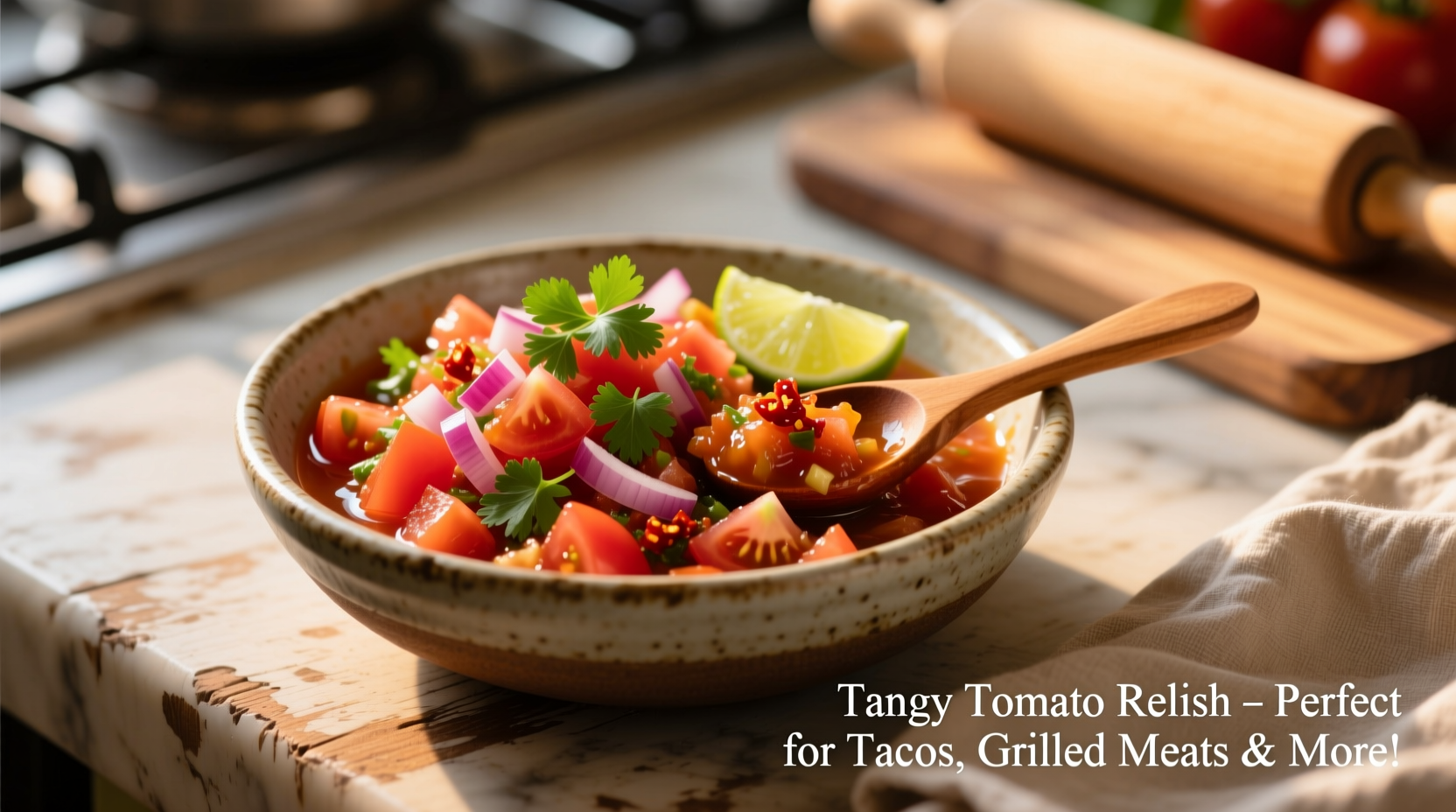
Tomato relish is a cooked or raw preparation of chopped tomatoes combined with vinegar, sugar, onions, herbs, and sometimes chili peppers. It occupies a middle ground between salsa and chutney: more structured than a pico de gallo, less sweet and dense than most fruit-based chutneys. Originating in both European and American culinary traditions, relishes were historically developed as preservation methods before refrigeration. Today, they serve primarily as flavor amplifiers—especially in dishes where acidity cuts through fat or richness.
The term \"relish\" broadly refers to any small-portion condiment served alongside a main dish. What distinguishes tomato relish specifically is its base ingredient: ripe, firm tomatoes, typically deseeded to avoid excess moisture. The best versions balance four key elements—acidity, sweetness, salt, and heat—into a cohesive whole that remains bright and textural rather than mushy or syrupy. This particular version emphasizes tanginess, achieved through a measured use of apple cider vinegar and minimal sugar, making it ideal for pairing with fatty proteins, starchy sides, or sharp cheeses.
Key Characteristics
| Characteristic | Description |
|---|---|
| Flavor Profile | Bright, acidic, slightly sweet, with herbal notes and optional warmth from chili |
| Aroma | Fresh tomato, sharp vinegar, toasted mustard seed, garlic, and basil |
| Color & Texture | Vibrant red-orange; finely chopped but not puréed, with visible vegetable pieces |
| Heat Level | Mild to moderate (adjustable via chili inclusion) |
| Culinary Function | Condiment, garnish, sandwich spread, flavor enhancer |
| Shelf Life | Up to 3 weeks refrigerated; up to 1 year if canned using proper canning techniques |
| pH Level | Approximately 3.8–4.2 (safe for water bath canning when properly acidified) |
Practical Usage: How to Use Tangy Tomato Relish
The strength of this relish lies in its adaptability. Because it's designed with a pronounced tang and restrained sweetness, it performs exceptionally well in applications where contrast matters. Here are several proven uses:
- With Grilled Meats: Serve alongside grilled chicken thighs, pork chops, or lamb burgers. The acidity cuts through fat, enhancing juiciness perception.
- On Sandwiches and Wraps: Spread on turkey clubs, BLTs, or veggie paninis. Replaces mayonnaise in many cases for a lighter, bolder profile.
- With Eggs: Spoon over scrambled eggs, omelets, or shakshuka for added brightness.
- As a Cheese Board Component: Pairs especially well with aged cheddar, goat cheese, and manchego. Complements cured meats like salami and prosciutto.
- With Seafood: Excellent with grilled tuna, salmon cakes, or fish tacos—adds dimension without overwhelming delicate flavors.
- Over Roasted Vegetables: Toss with roasted beets, zucchini, or eggplant for a finish that lifts earthy notes.
For restaurant-style impact, chefs often use tomato relish as a “bridge” element—something that ties together disparate components on a plate. For example, a seared duck breast with polenta might include a quenelle of relish to cut the richness of both duck fat and creamy cornmeal. At home, a spoonful on top of meatloaf or shepherd’s pie transforms leftovers into something more intentional and layered.
Pro Tip: Let the relish rest overnight before serving. Flavors deepen significantly during refrigeration as the vinegar penetrates the vegetables and the spices bloom. Stir well before use.
Step-by-Step Relish Preparation
- Prepare Ingredients: Dice 1.5 lbs ripe Roma tomatoes (about 6 medium), halve, scoop out seeds, and chop into ¼-inch pieces. Finely dice ½ cup yellow onion and ¼ cup red bell pepper.
- Sauté Aromatics: Heat 2 tbsp olive oil in a heavy-bottomed saucepan over medium heat. Add 1 tsp mustard seeds and toast until they begin to pop (about 1 minute). Add onions and cook until translucent (4–5 minutes). Add 1 minced garlic clove and cook 30 seconds longer.
- Add Tomatoes and Seasonings: Stir in tomatoes, ⅓ cup apple cider vinegar, 1 tbsp brown sugar, 1 tsp kosher salt, ½ tsp black pepper, ½ tsp dried oregano, and a pinch of crushed red pepper (optional).
- Cook Gently: Simmer uncovered for 25–30 minutes, stirring occasionally, until liquid reduces and mixture thickens slightly. Do not overcook—tomatoes should retain shape.
- Finish with Herbs: Remove from heat. Stir in 2 tbsp chopped fresh basil and 1 tbsp chopped parsley. Cool to room temperature before transferring to a jar.
- Store: Refrigerate in an airtight container. Best used within three weeks.
This recipe yields approximately 2 cups—enough for multiple meals. Scale up for seasonal preservation.
Variants & Types of Tomato Relish
While the core concept remains consistent, regional and cultural variations produce distinct styles of tomato relish. Understanding these helps match the right type to the right dish.
Classic American Garden Relish
Bright, sweet-tart, often includes green bell peppers and celery. Commonly served with hot dogs and hamburgers. Uses distilled white vinegar and granulated sugar for clean flavor. Typically smoother in texture due to finer chopping.
Mediterranean-Inspired Relish
Features extra virgin olive oil, red wine vinegar, capers, olives, and fresh herbs like oregano and thyme. Less sweet, more savory. Ideal with grilled fish and lamb. Sometimes includes anchovy paste for umami depth.
Spicy Southwestern Version
Uses jalapeños or serranos, cumin, and lime juice instead of vinegar. Closer to a cooked salsa but thicker. Perfect for tacos, enchiladas, or huevos rancheros.
Indian-Style Tamatar Ki Chutney
A spiced, often sweeter preparation with tamarind, jaggery, and warming spices like cloves and cinnamon. Cooked longer for jam-like consistency. Served with samosas or pakoras.
Raw Refrigerator Relish
No cooking required. Combines raw diced tomatoes, onions, vinegar, salt, and herbs. Ready in under 10 minutes. Best consumed within 5 days. Retains maximum freshness and crunch.
| Type | Sweetness | Acidity | Best Paired With | Storage |
|---|---|---|---|---|
| Classic American | Medium-high | High | Burgers, franks, deli sandwiches | Refrigerated or canned |
| Mediterranean | Low | Medium-high | Grilled seafood, lamb, antipasto | Refrigerated (up to 3 weeks) |
| Southwestern | Low-medium | High (citrus-based) | Tacos, nachos, grilled chicken | Refrigerated |
| Indian Chutney | High | Medium (tamarind-forward) | Fried appetizers, flatbreads | Canned or frozen |
| Raw Refrigerator | None (natural tomato sugar only) | Medium | Eggs, salads, bruschetta | Refrigerated (3–5 days) |
Comparison with Similar Ingredients
Tomato relish is frequently confused with other tomato-based preparations. While they share ingredients, their purposes and textures differ significantly.
| Product | Difference from Tomato Relish | When to Use Instead |
|---|---|---|
| Ketchup | Puréed, highly sweetened, smooth texture, long-cooked, shelf-stable. Contains concentrated tomato paste. | For dipping fries, coating ribs, or blending into sauces where uniformity matters. |
| Salsa | Typically raw, looser texture, more liquid, chunkier, less vinegar. Often spicier. | With tortilla chips, in burritos, or as a fresh topping where crunch is desired. |
| Chutney | Sweeter, denser, often fruit-based (mango, apricot), longer cook time, more complex spice blends. | With Indian curries, cold roast beef, or strong cheeses like blue cheese. |
| Marinara Sauce | Intended as a pasta sauce, thinner, simmered with garlic and herbs, no sugar or vinegar emphasis. | For pasta, pizza, or braising dishes—not as a condiment. |
| Confit Byaldi | An arranged baked vegetable medley, not a condiment. More labor-intensive, visually focused. | As a side dish or vegetarian centerpiece. |
“Relish is the punctuation mark of a plate—it doesn’t dominate, but it makes everything else read better.”
— Chef Elena Martinez, Culinary Instructor, San Francisco Cooking School
Practical Tips & FAQs
Can I make this relish without sugar?
Yes. Omit or substitute with honey, maple syrup, or a zero-calorie alternative like erythritol. However, a small amount of sweetener balances acidity and rounds flavor. Even professional kitchens use modest sugar to temper sharp vinegar.
How do I prevent a watery relish?
Remove seeds and excess pulp from tomatoes before dicing. Also, ensure adequate simmering time to reduce liquid. If still too wet, extend cooking by 5–10 minutes or add ½ tsp cornstarch slurry (mix with cold water first).
Can I freeze tomato relish?
Yes, though texture may soften slightly upon thawing due to cell breakdown in tomatoes. Freeze in airtight containers for up to 6 months. Best for cooked applications (e.g., mixing into casseroles) rather than fresh topping.
Is canning safe for this recipe?
Only if you follow tested guidelines. To safely can tomato relish, ensure pH is below 4.6. This means including enough vinegar (minimum 25% of total volume) and possibly adding lemon juice (1 tbsp per pint). Process in a boiling water bath for 15 minutes at sea level, adjusting for altitude.
What’s the best tomato variety for relish?
Roma (plum) tomatoes are ideal—they’re dense, low in juice, and have fewer seed cavities. Heirloom varieties can work but require more draining. Avoid overly ripe or soft tomatoes.
How much relish should I use per serving?
A little goes a long way. Start with 1–2 tablespoons per entrée portion. Adjust based on dish richness and personal taste.
Can I add other vegetables?
Yes. Finely diced cucumber, celery, or carrots can be included (¼ cup max each). Blanch harder vegetables first to ensure even texture. Avoid zucchini unless squeezed dry—it releases too much water.
Quick Flavor Boosts
- Add 1 tsp grated ginger for an Asian twist.
- Stir in 1 tbsp capers or green olives for briny depth.
- Finish with a splash of balsamic glaze for complexity.
- Infuse oil with rosemary before sautéing aromatics for herbal richness.
Substitutions Guide
- Apple Cider Vinegar → Red wine vinegar, white wine vinegar, or rice vinegar (avoid malt vinegar for delicacy).
- Mustard Seeds → Fennel seeds or cumin seeds for different aromatic profiles.
- Fresh Basil → Oregano, marjoram, or thyme (use half the amount, as dried herbs are more potent).
- Onion → Shallot (sweeter, milder) or red onion (more color and bite).
Summary & Key Takeaways
A tangy tomato relish is far more than a condiment—it’s a strategic enhancement to a wide range of dishes. Its power lies in acidity, texture, and balance, allowing it to cut through fat, lift starches, and complement both simple and complex plates. Unlike sweeter or smoother alternatives, a well-made tangy version prioritizes brightness and structure, making it especially useful in modern cooking where clarity of flavor is prized.
Key points to remember:
- Use firm, low-moisture tomatoes like Romas and remove seeds to prevent sogginess.
- Balancing acid (vinegar), salt, and a touch of sweetness creates harmony.
- Simmer gently—don’t overcook—to preserve texture and freshness.
- Let it rest overnight; flavors meld and intensify in the refrigerator.
- Customize based on cuisine: Mediterranean, Southwestern, or raw versions suit different pairings.
- Safe canning requires proper acidification and processing—do not skip food safety steps.
Once mastered, this relish becomes a kitchen staple—equally at home on a backyard barbecue platter as it is on a refined cheese course. It embodies the principle that great cooking often comes down to thoughtful details: a spoonful of something bright, bold, and alive with flavor can redefine an entire meal.
Try this relish once, and you’ll find yourself reaching for the jar far more often than expected.