
In recent years, the skincare fridge has become a staple in beauty routines, often showcased on social media as a symbol of meticulous self-care. But beyond aesthetics, does chilling your serums and creams offer real benefits? Or is it more marketing than science? The truth lies somewhere in between—some ingredients genuinely thrive in cooler environments, while others are unaffected or even destabilized by cold temperatures. Understanding the chemistry behind skincare formulations allows you to make informed decisions about where—and how—to store your products for maximum efficacy.
Temperature affects molecular stability, viscosity, microbial growth, and oxidation rates. While most skincare items are designed to be stable at room temperature (typically 20–25°C or 68–77°F), certain active compounds are sensitive to heat, light, and air. This article explores which ingredients truly benefit from refrigeration, which don’t, and how to optimize your storage strategy based on formulation science and dermatological insight.
When Cold Storage Makes a Difference: Heat-Sensitive Ingredients
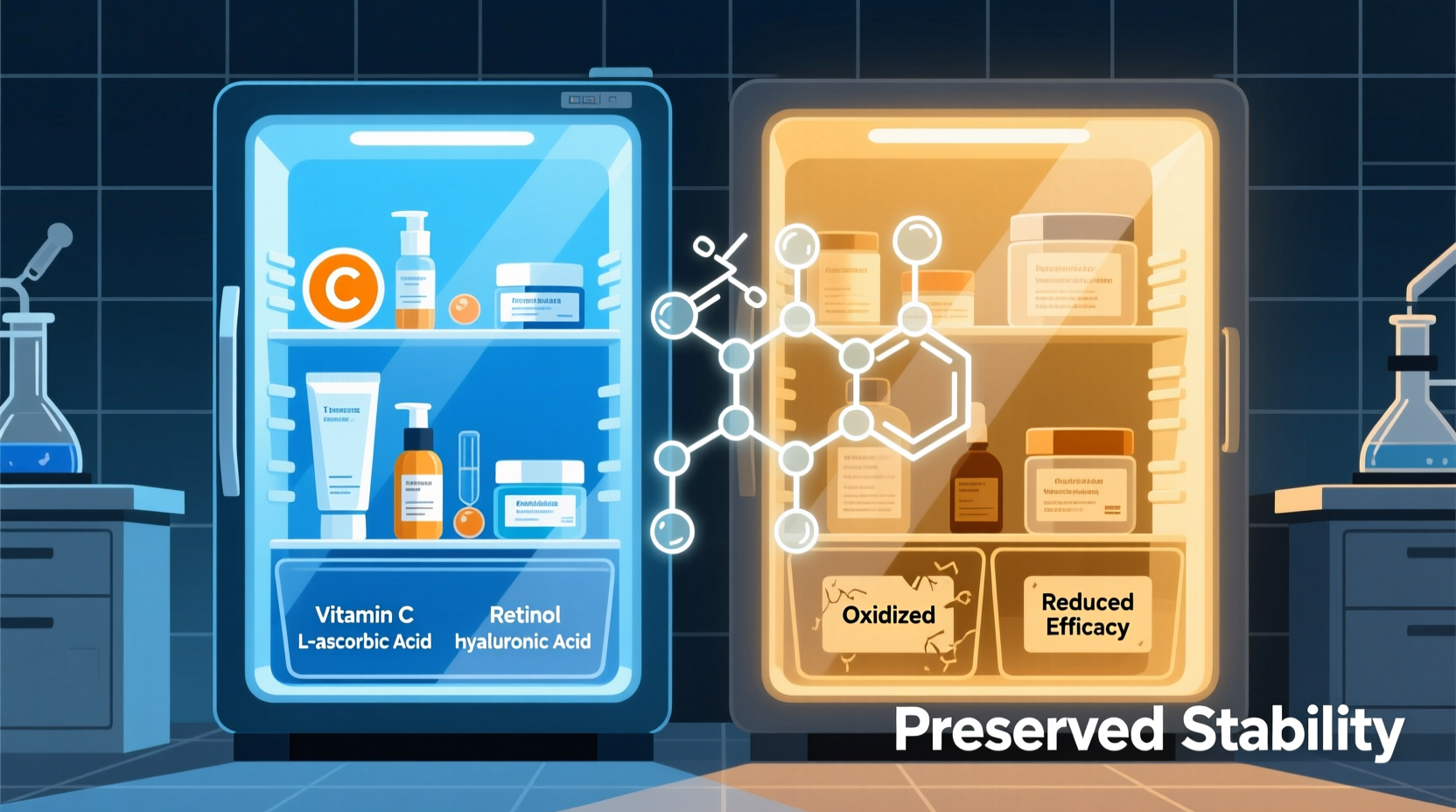
Not all skincare ingredients react the same way to temperature changes. Some degrade faster when exposed to warmth, humidity, or sunlight. For these, refrigeration can extend shelf life and preserve potency. Here are the key categories that benefit from cooler storage:
- Vitamin C (L-ascorbic acid): One of the most unstable antioxidants, L-ascorbic acid oxidizes rapidly when exposed to heat and light. Cold storage slows this degradation, helping maintain its brightening and collagen-boosting effects longer.
- Retinoids (especially prescription retinoids like tretinoin): While many over-the-counter retinol products are stabilized, high-potency retinoids are sensitive to heat and UV exposure. Keeping them cool may help preserve their integrity, especially in hot climates.
- Peptides: These fragile chains of amino acids can denature under heat stress. Refrigeration helps maintain their structure, ensuring they remain effective in supporting skin repair and firmness.
- Probiotic and live-enzyme formulas: Certain fermented skincare products contain live cultures or enzymes that are biologically active. Like yogurt or kombucha, these benefit from cold storage to prevent microbial imbalance or premature breakdown.
- Unpreserved or minimally preserved products: Water-based toners, mists, or serums with few synthetic preservatives are prone to bacterial growth. Chilling them inhibits microbial proliferation, especially after opening.
“Cold storage isn’t necessary for every product, but for actives like pure vitamin C or peptide-rich serums, a fridge can be a game-changer in maintaining potency.” — Dr. Lena Patel, Board-Certified DermatologistTip: If you live in a humid or hot climate (above 28°C/82°F), consider refrigerating heat-sensitive products even if not required—heat accelerates ingredient breakdown.
Ingredients That Don’t Benefit—or May Be Harmed—by Refrigeration
Just as some ingredients thrive in the cold, others perform poorly or undergo undesirable changes when chilled. Storing these in the fridge can lead to separation, thickening, or reduced absorption.
- Oil-based products (cleansing oils, facial oils, balms): Cold temperatures cause oils to solidify or thicken, making them harder to dispense and less pleasant to apply. They’re best kept at room temperature in a dark cabinet.
- Physical sunscreens with zinc oxide or titanium dioxide: These can separate or settle more dramatically when cooled, leading to uneven coverage when applied.
- Products with emulsifiers: Creams and lotions rely on emulsifiers to blend oil and water. Sudden temperature shifts can destabilize the emulsion, causing layering or graininess.
- Liposomal delivery systems: Some advanced serums use lipid vesicles to deliver actives deeper into the skin. Cold may disrupt these delicate structures, reducing penetration efficiency.
- Alcohol-based toners or astringents: Already drying, these can become overly harsh when chilled, potentially irritating sensitive skin upon application.
Repeatedly moving products in and out of the fridge introduces thermal cycling, which stresses formulations. Condensation inside the bottle can introduce moisture, promoting microbial growth—especially problematic for anhydrous (water-free) products.
Comparative Guide: Skincare Fridge vs. Room Temperature Storage
| Product Type | Best Storage | Why? |
|---|---|---|
| Vitamin C serum (L-ascorbic acid) | Fridge | Slows oxidation; preserves potency |
| Peptide serum | Fridge | Prevents denaturation of protein chains |
| Tretinoin cream/gel | Fridge (optional) | Cooling may reduce irritation; stabilizes sensitive retinoid |
| Fermented toner / probiotic mist | Fridge | Maintains live cultures; prevents spoilage |
| Facial oil / cleansing balm | Room temp (cool, dark place) | Prevents solidification; maintains texture |
| Mineral sunscreen | Room temp | Prevents separation of active particles |
| Moisturizing cream | Room temp | Emulsion stability; avoids texture changes |
| Hydrating hyaluronic acid serum | Room temp or fridge (personal preference) | No chemical degradation, but cooling feels refreshing |
Real-World Example: A Clinical Aesthetician’s Routine
Jamila Reyes, a licensed aesthetician in Miami, Florida, operates in a high-humidity environment where summer temperatures regularly exceed 32°C (90°F). She noticed her clients’ vitamin C serums were turning yellow within weeks—signaling oxidation—even when stored in medicine cabinets.
To test a solution, she advised one group of clients to keep their L-ascorbic acid serums in the refrigerator and another to continue room-temperature storage. After six weeks, 80% of the fridge-stored serums remained colorless and effective, while only 30% of the room-stored ones did. Clients using refrigerated products also reported brighter complexions and fewer breakouts, possibly due to consistent ingredient performance.
“In tropical climates, refrigeration isn’t a luxury—it’s a practical tool,” Jamila explains. “I now recommend it for any antioxidant serum, especially those without opaque, airless packaging.”
How to Use a Skincare Fridge Effectively: A Step-by-Step Guide
If you decide to invest in a skincare fridge, follow this protocol to maximize benefits and avoid common pitfalls:
- Choose the right mini-fridge: Opt for a compact, temperature-stable unit (ideally 4–10°C / 39–50°F). Avoid models that fluctuate widely.
- Prioritize heat-sensitive products: Reserve space for vitamin C, peptides, retinoids, and unpreserved liquids. Don’t overcrowd with items that don’t need cooling.
- Use air-tight containers or secondary packaging: Place products in sealed silicone bags or plastic bins to protect against condensation and cross-contamination.
- Label and rotate: Mark opening dates and use older products first. Most chilled skincare lasts 3–6 months post-opening, depending on preservatives.
- Let products warm slightly before use: Applying ice-cold serums can shock sensitive skin. Remove them 5–10 minutes before application.
- Never freeze: Freezing damages molecular structures and can rupture emulsions. The fridge is for cooling, not freezing.
Frequently Asked Questions
Does refrigerating hyaluronic acid make it more effective?
No, refrigeration doesn’t enhance hyaluronic acid’s hydrating properties. However, applying a chilled HA serum can feel soothing on puffy or inflamed skin, offering a sensory benefit rather than a functional one.
Can I store my sunscreen in the fridge?
It’s not recommended. Sunscreens, especially mineral types, can separate when cooled, leading to inconsistent UV protection. Additionally, frequent temperature changes weaken emulsion stability. Store sunscreens in a cool, dark drawer instead.
Is a skincare fridge worth the investment?
For most people, a dedicated skincare fridge is optional. If you live in a hot climate, use sensitive actives frequently, or enjoy the ritual of chilled application, it can be worthwhile. Otherwise, a cool, dark cupboard away from bathrooms (humidity) and windows (light) is sufficient for most products.
Checklist: Is Your Skincare Storage Optimized?
- ✅ Store vitamin C, peptides, and retinoids in the fridge if you live in a warm climate
- ✅ Keep oils, balms, and sunscreens at stable room temperature
- ✅ Avoid placing products in direct sunlight or humid areas (like bathroom counters)
- ✅ Use opaque, airless packaging when possible to minimize oxidation
- ✅ Discard products that change color, smell, or texture—regardless of storage method
- ✅ Limit fridge door openings to maintain consistent temperature
“The best storage method depends on your product’s formulation, your environment, and your routine. There’s no one-size-fits-all rule—but understanding ingredient stability puts you ahead of the curve.” — Dr. Aaron Kim, Cosmetic Chemist
Final Thoughts: Smart Storage for Lasting Results
The skincare fridge trend isn’t just a vanity project—it has legitimate scientific merit for specific formulations. However, treating it as a universal solution risks misusing products that perform better at ambient temperatures. The goal isn’t to chill everything, but to match storage conditions to ingredient needs.
Ultimately, proper skincare preservation extends beyond temperature. Exposure to light, air, and repeated hand contact play equally critical roles. Whether you use a mini-fridge or a linen closet, the principles remain the same: protect actives, minimize contamination, and prioritize consistency.
By aligning your storage habits with the science of skincare chemistry, you ensure that every drop delivers its intended benefit. That’s not just good beauty practice—it’s smart self-care.
🚀 Ready to optimize your routine? Audit your current skincare storage tonight—move heat-sensitive actives to the fridge, relocate oils to a dry drawer, and share your setup tips in the comments below.