
When it comes to statement footwear, few details draw attention like a pair of dazzling heels adorned with crystals or rhinestones. In fashion today, where subtle luxury often trumps overt flashiness, the choice between crystal and rhinestone embellishments can make or break the perceived value of a shoe. While both offer sparkle, they differ significantly in material quality, light reflection, brand association, and overall aesthetic sophistication. Understanding these differences is essential if you're aiming to invest in heels that look genuinely high-end rather than costume-like.
The question isn’t just about personal preference—it’s about perception. Which material gives off the aura of exclusivity, craftsmanship, and modern elegance? As trends shift toward minimalist glamor and understated opulence, the answer may surprise you.
The Material Divide: What Sets Crystals Apart from Rhinestones?
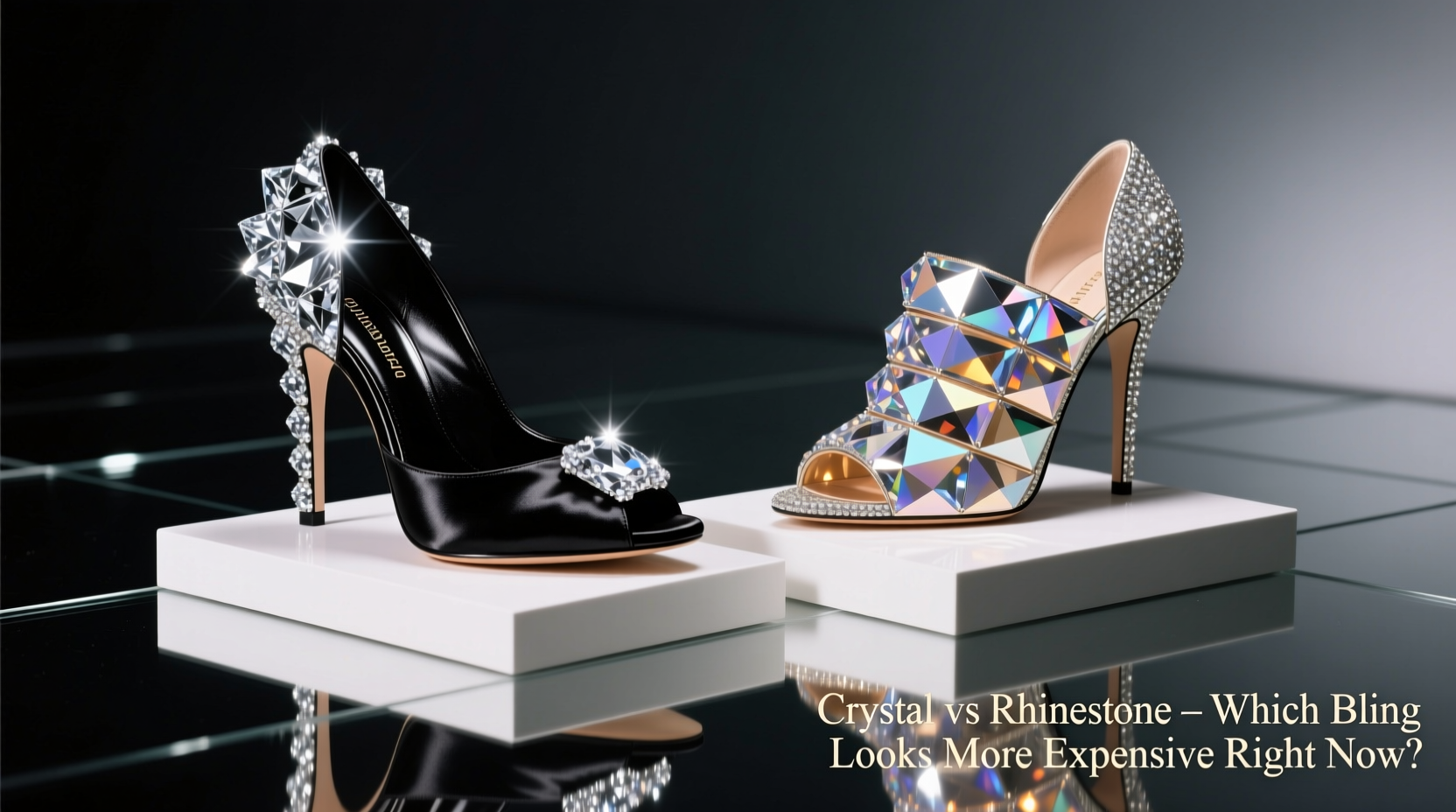
At first glance, crystals and rhinestones may appear identical—both are faceted stones designed to catch the light. But their composition, origin, and optical performance tell very different stories.
Rhinestones originated as rock crystal imitations found in the Rhine River, but today, most are made from glass or acrylic. They’re mass-produced, affordable, and widely used in fashion accessories, dancewear, and fast-fashion footwear. Their sparkle is bright but tends to be flat or plasticky under certain lighting conditions, especially when viewed up close.
Crystals, particularly those from premium brands like Swarovski, are precision-cut man-made gemstones composed of quartz, sand, and minerals. The cutting process is highly controlled, resulting in superior clarity, refraction, and brilliance. Unlike generic rhinestones, branded crystals carry a reputation for luxury and are frequently used in couture collections, red carpet designs, and high-end bridal wear.
Tip: Look for \"precision-cut lead crystal\" on product descriptions—this indicates higher refractive index and authentic luxury-grade materials.Visual Impact: How Light Defines Perceived Value
Light interaction is one of the most critical factors in determining whether bling reads as expensive or cheap. Crystals outperform rhinestones in three key areas: brilliance (white light reflection), fire (color dispersion), and scintillation (sparkle when moving).
Swarovski crystals, for example, use an advanced Xilion cut designed to maximize surface reflection. This creates a diamond-like shimmer even in low-light environments such as evening events or dimly lit restaurants. Rhinestones, by contrast, often reflect light unevenly due to inconsistent faceting and lower-quality adhesives, leading to a scattered, less refined glow.
Fashion stylists and designers emphasize that subtlety wins in upscale settings. A heel with fewer, well-placed crystals will appear more luxurious than one overloaded with rhinestones. It's not about quantity—it's about quality of sparkle.
“Luxury sparkle doesn’t shout; it whispers with precision. One perfectly placed crystal can elevate a shoe more than a hundred random rhinestones.” — Lena Moreau, Footwear Designer at Atelier Luxe
Brand Alignment and Market Perception
The branding behind the bling plays a major role in consumer perception. Swarovski has spent over a century positioning itself as a symbol of refined glamour. Its partnerships with designers like Alexander McQueen, Jimmy Choo, and Dolce & Gabbana reinforce the idea that crystal-adorned pieces belong in high fashion.
Rhinestones lack this pedigree. While some artisanal uses exist—especially in vintage or theatrical contexts—they are commonly associated with budget retailers, prom shoes, and temporary trends. Even when real glass rhinestones are used, the absence of a recognized brand label means consumers default to assuming lower value.
In 2024, social media and celebrity culture amplify this divide. Influencers wearing crystal-studded Manolo Blahniks at galas are praised for elegance, while glittery rhinestone platforms at music festivals are seen as fun but fleeting. Context matters, but so does material credibility.
Comparison Table: Crystal vs Rhinestone Heels
| Feature | Crystal Heels | Rhinestone Heels |
|---|---|---|
| Material Quality | Precision-cut lead crystal with high refractive index | Glass or acrylic, often machine-cut with inconsistencies |
| Sparkle Quality | Diamond-like brilliance, consistent color return | Bright but flat; prone to dullness over time |
| Brand Association | Luxury labels (Swarovski, Baccarat) | Fast fashion, costume jewelry |
| Durability | Resists chipping and fading; longer lifespan | Prone to loosening, scratching, yellowing |
| Price Range | $300–$1,500+ | $30–$150 |
| Best For | Weddings, galas, luxury styling | Costume parties, themed events, short-term wear |
Real-World Example: Bridal Styling Decision
Consider Sarah, a bride planning her wedding in Tuscany. She wanted elegant yet memorable footwear. Her stylist presented two options: a pair of ivory satin heels with hand-set Swarovski crystals forming a delicate vine pattern, priced at $750, and another pair covered entirely in silver-toned rhinestones, retailing for $89.
Though both were beautiful in photos, seeing them side by side changed everything. Under natural daylight, the crystal heels emitted a soft, radiant glow that complemented her dress without overpowering it. The rhinestone pair looked busy and slightly garish—the sparkle felt “loud” rather than refined. Guests later commented on how “expensive” her shoes looked, mistaking them for custom couture. That perception stemmed directly from the quality of the embellishment.
This case illustrates a broader truth: in discerning environments, crystal finishes signal intentionality and taste, while dense rhinestone coverage risks appearing kitschy.
Actionable Checklist: Choosing Heels That Look Expensive
- ✅ Prioritize precision-cut crystals from known brands (look for Swarovski certification)
- ✅ Opt for strategic placement—scattered accents beat full coverage
- ✅ Choose neutral or metallic tones (clear, champagne, silver) over bright colors
- ✅ Check adhesive quality—loose stones ruin even the priciest illusion
- ✅ Test sparkle under multiple lights: daylight, indoor, and low ambient
- ✅ Avoid oversized or overly shiny rhinestones unless going for a retro-disco vibe
FAQ
Can rhinestone heels ever look expensive?
Yes—but only under specific conditions. High-quality glass rhinestones with flawless setting, used sparingly on minimalist silhouettes, can mimic luxury. However, they still lack the depth of true crystals and require impeccable styling to avoid looking costume-like.
Do all \"crystal\" heels contain real Swarovski elements?
No. Many brands use the term “crystal” loosely. Always verify through product specs or direct inquiry. Authentic Swarovski-licensed products often include a logo tag or certificate of authenticity.
Are crystal heels worth the investment?
If you attend formal events regularly or want timeless bridal footwear, yes. Well-maintained crystal heels retain their luster for years and maintain resale value, especially from designer lines. They also photograph exceptionally well, making them ideal for milestone occasions.
Final Verdict: Why Crystals Win in 2024
In today’s fashion climate, where quiet luxury dominates runways and red carpets, crystal heels undeniably project more expense than their rhinestone counterparts. It’s not merely about cost—it’s about coherence with current aesthetics that favor refinement over flamboyance.
Designers are moving away from maximalist sparkle and embracing micro-embellishments: a single crystal accent at the ankle strap, a discreet toe cap detail, or a gradient shimmer along the heel. These touches suggest wealth not through excess, but through restraint and precision—hallmarks of true luxury.
Rhinestones still have their place—in festival fashion, drag performances, or nostalgic throwback styles—but when the goal is to look effortlessly affluent, nothing beats the luminous subtlety of genuine crystal work.
💬 Have a pair of crystal or rhinestone heels? Share your experience—did people assume they were expensive? Join the conversation below.








