The wearable tech market has shifted dramatically in recent years. From smartwatches to fitness bands, consumers now demand precision, personalization, and long-term health insights. Enter the smart ring category—compact, discreet, and packed with biometric sensors. Two major players are making waves: the Ultrahuman Ring Air and the newly announced Samsung Galaxy Ring. But amid the buzz, a critical question remains: is the hype justified, or should you hold off on joining the ring revolution?
This isn’t just about fashion or convenience. These rings promise continuous glucose monitoring (CGM) integration, sleep staging, recovery scores, heart rate variability (HRV), and even menstrual cycle tracking. For biohackers, athletes, and health-conscious individuals, the stakes are high. But so are the price tags and expectations. Let’s break down what each device offers, where they fall short, and whether now is the right time to invest.
Design and Build: Comfort Meets Tech
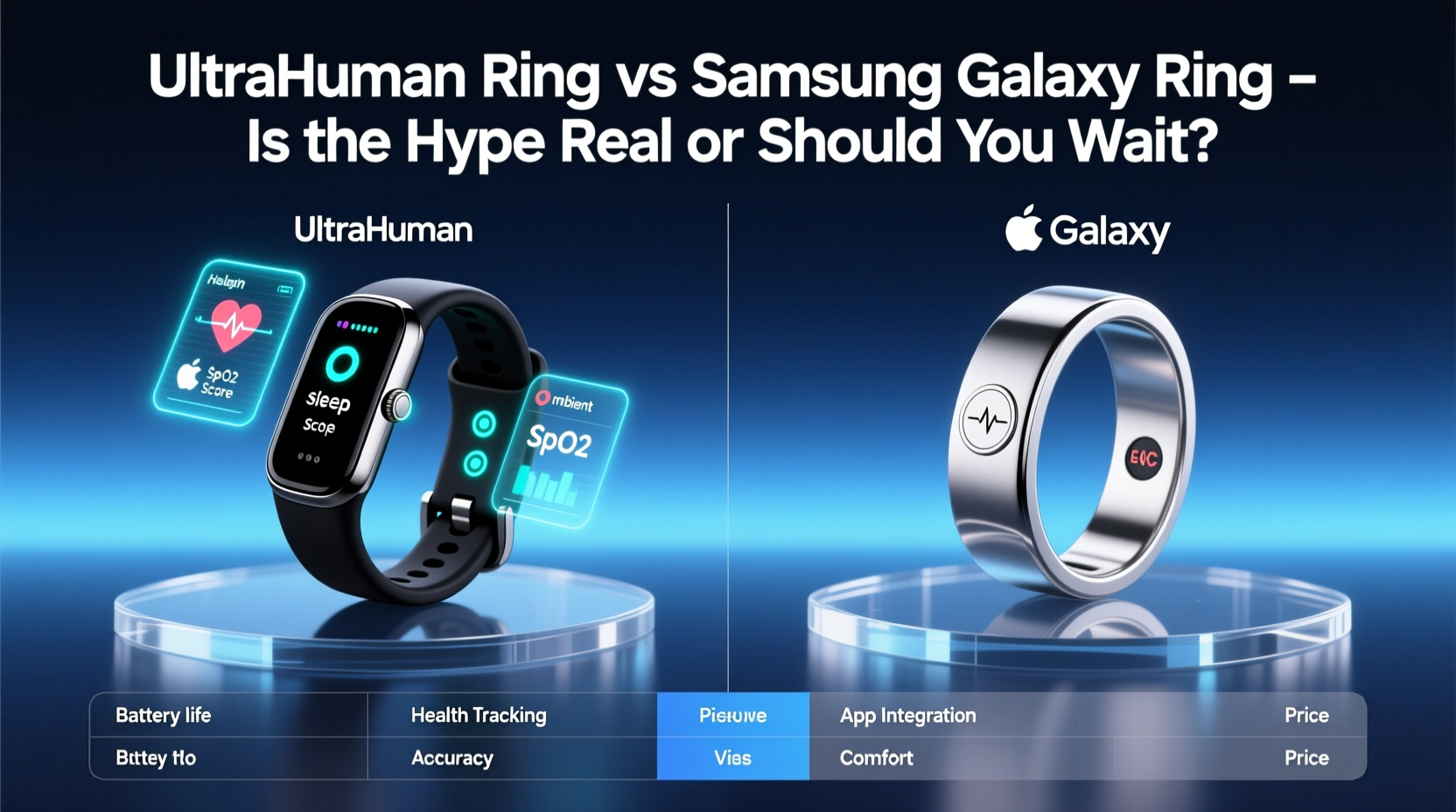
Smart rings must balance advanced hardware with all-day wearability. The Ultrahuman Ring Air takes a minimalist approach—lightweight titanium construction, IP68 water resistance, and a sleek matte finish. It’s designed for 24/7 use, including during workouts and sleep, and comes in multiple sizes to ensure a snug fit without discomfort.
Samsung’s Galaxy Ring, while still under wraps in terms of full availability, reportedly features a more premium build with medical-grade materials and a slimmer profile than earlier prototypes. Early images suggest a polished, elegant design that blends into daily life, possibly targeting both fitness enthusiasts and general wellness users.
One key difference: Ultrahuman focuses on active users who want performance metrics, while Samsung appears to be aiming for broader consumer appeal—potentially integrating deeper with its existing Galaxy ecosystem, including phones, watches, and health apps.
Tip: Always size your smart ring correctly. A loose fit can compromise sensor accuracy, especially for HRV and blood oxygen readings.Health Tracking Capabilities Compared
At the core of any smart ring is its ability to collect meaningful health data. Here's how the two stack up across essential metrics:
| Feature | Ultrahuman Ring Air | Samsung Galaxy Ring |
|---|---|---|
| Sleep Tracking | Detailed sleep stages, REM detection, sleep score | Advanced sleep staging, apnea risk indicators (rumored) |
| Heart Rate & HRV | Continuous monitoring, stress insights | High-precision optical sensors, ECG support (expected) |
| Blood Oxygen (SpO2) | Yes, nightly tracking | Yes, with improved accuracy claims |
| Body Temperature | Yes, with trend analysis | Yes, thermal sensing for ovulation and illness detection |
| Glucose Monitoring Integration | Direct CGM sync via Dexcom & Abbott | No native CGM; potential future app integrations |
| Menstrual Cycle Prediction | Basic predictions based on temperature | AI-driven forecasting using multi-sensor inputs |
| Battery Life | Up to 7 days | Estimated 6–8 days |
Ultrahuman stands out with its seamless integration with continuous glucose monitors—a rare feature in wearables. This makes it particularly valuable for people managing metabolic health, prediabetes, or insulin resistance. Samsung, meanwhile, emphasizes clinical-grade accuracy and AI-powered insights but lacks direct CGM compatibility at launch.
“Wearables that integrate real-time metabolic data will redefine preventive healthcare.” — Dr. Anil Bajaj, Endocrinologist & Digital Health Researcher
Software, Ecosystem, and User Experience
A smart ring is only as good as the insights it delivers. Ultrahuman’s app excels in actionable feedback. After sleep tracking, it provides a Recovery Score combining HRV, resting heart rate, and sleep quality. It also offers “glucose spikes” alerts when your levels rise abnormally post-meal, helping refine dietary habits.
Samsung’s advantage lies in ecosystem synergy. If you own a Galaxy phone or watch, the Galaxy Ring could offer unified health dashboards, automatic workout detection, and deeper Samsung Health integration. Rumors suggest FDA clearance efforts for certain features, which would elevate its credibility in medical monitoring.
However, early adopters should note: software maturity matters. Ultrahuman has been refining its algorithms for over two years with real user data. Samsung is entering a space with established competitors like Oura and WHOOP—and launching with less public validation of its models.
Real-World Example: Athlete Recovery Monitoring
Consider Priya, a triathlete training for her first Ironman. She used the Ultrahuman Ring Air during peak training. One morning, her Recovery Score dropped sharply despite adequate sleep. The app flagged elevated nighttime heart rate and low HRV—early signs of overtraining. She adjusted her schedule, added rest, and avoided burnout.
If she had relied solely on subjective feelings, she might have pushed through and risked injury. With objective data from her ring, she made an informed decision. This kind of proactive insight is where smart rings add tangible value.
Should You Buy Now or Wait?
The answer depends on your goals, budget, and tolerance for early-adopter risks.
Ultrahuman Ring Air is available now globally, priced around $399, with proven performance and strong app support. It’s ideal for users focused on metabolic health, sleep optimization, and fitness tracking. Its CGM integration alone gives it a unique edge.
Samsung Galaxy Ring, expected to launch mid-to-late 2024, remains untested in real-world conditions. While Samsung’s engineering reputation inspires confidence, delays in wearable accuracy (seen previously with Galaxy Watches) raise caution. Pre-orders may begin soon, but widespread availability and firmware maturity could take months.
Checklist: Decide Which Ring Fits You
- ✅ Do you need CGM integration? → Choose Ultrahuman
- ✅ Are you deeply embedded in the Samsung ecosystem? → Galaxy Ring may offer better sync
- ✅ Prioritizing sleep and recovery analytics now? → Ultrahuman has mature tools
- ✅ Willing to wait for FDA-reviewed features? → Consider waiting for Galaxy updates
- ✅ Prefer a medically validated device? → Monitor Samsung’s regulatory progress
Frequently Asked Questions
Can the Ultrahuman Ring measure blood glucose directly?
No. It does not have a built-in glucose sensor. Instead, it syncs with external CGMs like Dexcom G7 or Abbott Libre to display and analyze glucose trends within its app.
Is the Samsung Galaxy Ring waterproof?
Based on leaks and Samsung’s typical standards, it is expected to have at least IP68 rating, meaning it can withstand dust and immersion in water up to 1.5 meters for 30 minutes. Ideal for swimming and showering.
Which ring has better battery life?
Both claim 6–8 days. Ultrahuman currently averages 7 days in real-world use. Samsung’s estimates are theoretical until independent testing confirms longevity under continuous sensing.
Final Verdict: Hype vs. Reality
The smart ring hype is real—but selectively so. Ultrahuman delivers on its promises today. It’s not perfect—some users report occasional syncing hiccups or inconsistent temperature baselines—but it offers a robust, science-backed platform for health optimization.
Samsung’s entry could be transformative, especially if it achieves medical certification and deepens AI-driven diagnostics. But until it’s widely available and independently reviewed, it remains a promising concept rather than a proven tool.
For most consumers seeking immediate value, the Ultrahuman Ring Air is the smarter buy. If you’re patient and invested in Samsung’s ecosystem, waiting six months could pay off. Just don’t expect miracles: no wearable replaces blood tests, doctor visits, or healthy habits.
🚀 Ready to take control of your health metrics? Try the Ultrahuman Ring Air today—or sign up for Samsung’s Galaxy Ring waitlist to stay updated. Share your thoughts: are smart rings the future of personal health, or just another gadget fad?