A Puffy Elsa Princess dress is more than just a costume—it’s a centerpiece of imagination, often worn for birthdays, themed parties, or cherished dress-up moments. Whether it belongs to a child who adores Arendelle’s ice queen or a collector preserving a special piece, maintaining its pristine condition requires care beyond typical laundry routines. These dresses are typically made from delicate fabrics like polyester tulle, satin, and spandex blends, often adorned with sequins, glitter, and embroidery. Improper cleaning can lead to fraying, color bleeding, stiffness, or collapse of the signature \"puff\" in the skirt. This guide provides a thorough, practical approach to cleaning, drying, storing, and repairing your Elsa dress so it remains magical for years.
Understanding Your Dress’s Materials
Before any cleaning begins, identifying the fabric composition is essential. Most official Elsa dresses—especially those inspired by Disney’s *Frozen* films—are constructed using multiple layers:
- Tulle overlay: Creates the voluminous, cloud-like skirt. Often stiffened with light coatings that dissolve in water.
- Satin or chiffon bodice: Provides a smooth, shiny finish. Prone to snagging and water spots.
- Spandex or jersey lining: Ensures stretch and comfort. Can lose elasticity if washed improperly.
- Decorative elements: Sequins, rhinestones, and heat-applied glitter may peel or crack under agitation or high heat.
Always check the garment label. If present, follow manufacturer instructions strictly. When labels are missing or faded, assume the most conservative care method: hand wash only, no bleach, no machine dry.
“Delicate costumes like princess dresses combine fashion and fantasy—but they demand textile respect. Treat them like performance wear, not play clothes.” — Dr. Lila Monroe, Textile Conservation Specialist, Museum of Childhood Fashion
Step-by-Step Guide to Safe Cleaning
Cleaning an Elsa dress isn’t about speed—it’s about precision. Rushing leads to irreversible damage. Follow this sequence carefully.
- Inspect for stains and damage: Lay the dress flat on a clean surface. Look for food residue, makeup marks, grass stains, or loose embellishments. Note areas needing spot treatment.
- Detach accessories: Remove capes, tiaras, gloves, or detachable sleeves. Clean these separately based on their material.
- Pre-treat stains gently: Use a microfiber cloth dampened with cold water and a single drop of mild detergent (like Woolite or baby shampoo). Dab—not rub—the stained area. For makeup, a tiny amount of rubbing alcohol on a cotton swab works cautiously around sequins.
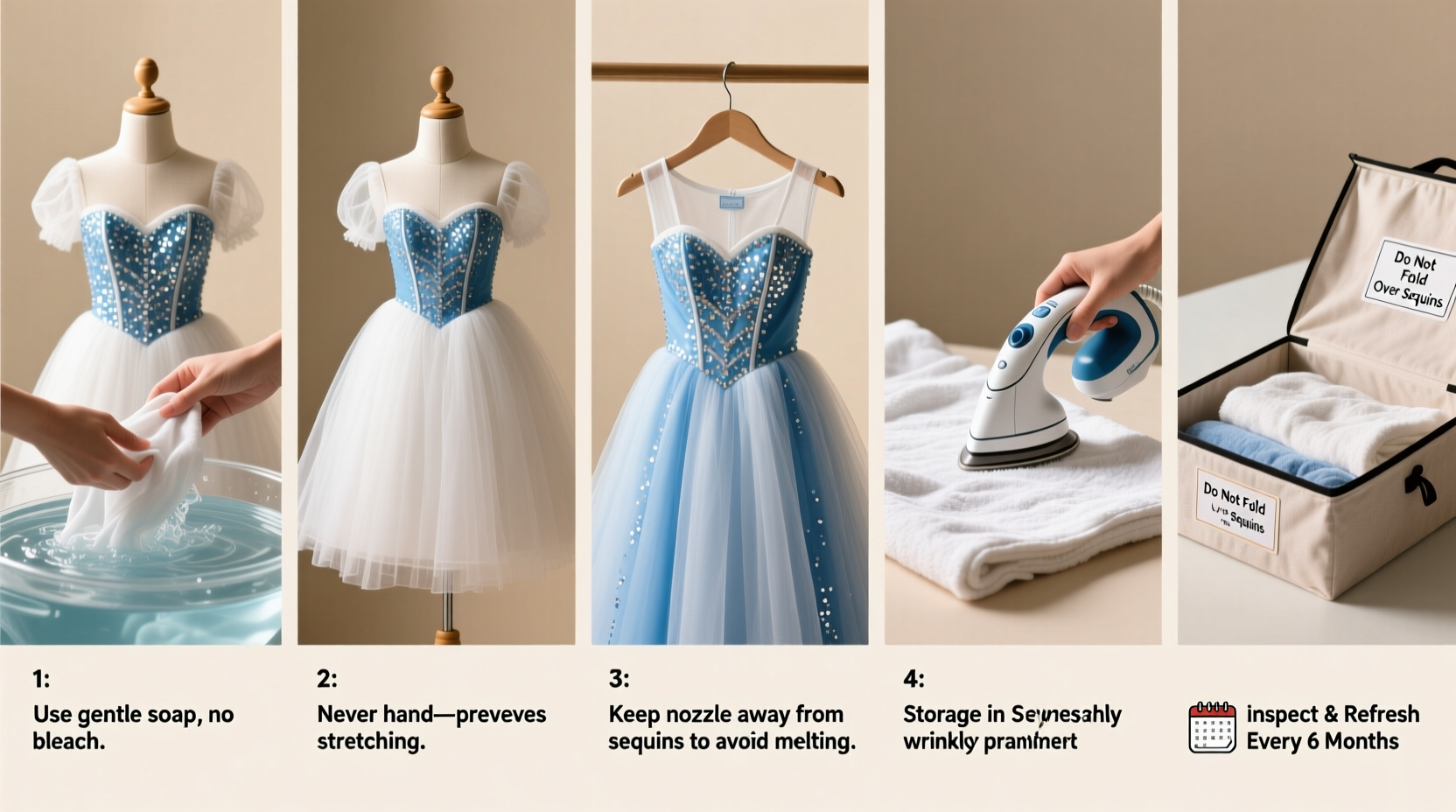
- Prepare a cleaning bath: Fill a clean bathtub or large basin with cold water. Add one tablespoon of gentle detergent. Swirl to mix; avoid suds buildup.
- Submerge and soak: Place the dress in the water. Let it soak for 10–15 minutes. Gently swirl once or twice. Do not wring, twist, or agitate.
- Rinse thoroughly: Drain the soapy water. Refill with fresh cold water. Repeat rinsing 2–3 times until water runs clear.
- Remove excess water: Press the fabric lightly against the tub wall to release water. Never lift the soaked dress by the straps—they can tear under weight.
Drying and Reshaping the Skirt
Improper drying is the leading cause of collapsed puffiness. Heat and hanging distort the internal structure.
Avoid These Common Mistakes
| Mistake | Consequence |
|---|---|
| Hanging the dress to dry | Skirt stretches, loses volume, seams strain |
| Using a dryer | Heat melts glitter, shrinks lining, flattens tulle |
| Direct sunlight drying | Fades colors, weakens fibers |
| Ironing over embellishments | Seals glitter into fabric or causes melting |
Instead, lay the dress flat on a drying rack covered with a dry towel. Reshape the skirt by fluffing each layer of tulle gently with your fingers. Rotate the dress every few hours to ensure even drying. Allow 24–48 hours depending on humidity. Once dry, store immediately or use.
Storage Solutions to Preserve Longevity
Even occasional wear demands consistent storage care. Poor conditions cause yellowing, musty odors, and brittle tulle.
Tip: Store the dress in a breathable cotton garment bag, not plastic. Plastic traps moisture and promotes mildew.Use acid-free tissue paper to cushion folds and prevent creasing. Avoid tight folding—especially across the bodice or skirt layers. Instead, consider a wide, padded hanger with shoulder supports, but only if the dress has a sturdy inner lining. For maximum protection, place the dress in a sealed container with silica gel packets to control humidity.
Seasonal Maintenance Checklist
- Inspect for insect damage or mold before and after storage
- Refresh scent with a light spritz of fabric-safe linen spray
- Check seams and attachments for wear
- Re-fluff tulle layers to restore volume
- Rotate storage position quarterly to prevent permanent compression
Real-Life Example: The Birthday Party Rescue
Six-year-old Mia wore her Elsa dress to a backyard birthday party. During cake time, chocolate frosting smeared across the bodice, and the skirt picked up grass stains from playing. Her mother, concerned about ruining the $80 dress, tried wiping with a wet wipe first—only to notice the glitter starting to lift.
She paused, consulted a care guide, and followed the cold-water soak method outlined here. She pre-treated the chocolate with a dab of dish soap and used a second rinse with vinegar (one teaspoon per liter) to neutralize any residual stickiness. After air-drying flat and reshaping with tissue paper support, the dress regained its original shimmer. Two months later, it was worn again—with no visible signs of prior stains.
This case underscores the importance of patience and correct technique: immediate action matters, but so does choosing the right method.
Frequently Asked Questions
Can I machine wash my Elsa dress if it says “hand wash only”?
No. Even a delicate cycle subjects the dress to agitation that can destroy tulle structure and loosen sequins. Hand washing is the only safe option for long-term preservation.
How often should I clean the dress?
Only when visibly soiled or after heavy wear. Over-cleaning breaks down fibers. For light use, spot-clean and air out between events. A full wash is recommended once per season or after 3–4 wears.
What if the tulle loses its puff permanently?
If the skirt collapses despite proper care, it may be due to degraded stiffening agents. To revive volume, gently steam the tulle from 12 inches away—never touch the iron to fabric. Alternatively, insert a lightweight petticoat underneath during wear.
Conclusion: Care That Honors the Magic
A Puffy Elsa Princess dress carries emotional value far beyond its price tag. It represents confidence, dreams, and joyful moments. Treating it with thoughtful maintenance ensures those memories aren’t dimmed by frayed seams or faded sparkle. By understanding materials, following a careful cleaning process, avoiding common pitfalls, and storing with intention, you preserve not just a garment, but a symbol of wonder. Take the time now to care for it properly—because every princess deserves a gown that feels as magnificent as it looks.
💬 Have a favorite trick for keeping costumes fresh? Share your tip with parents and collectors who want to protect their little one’s magical moments.