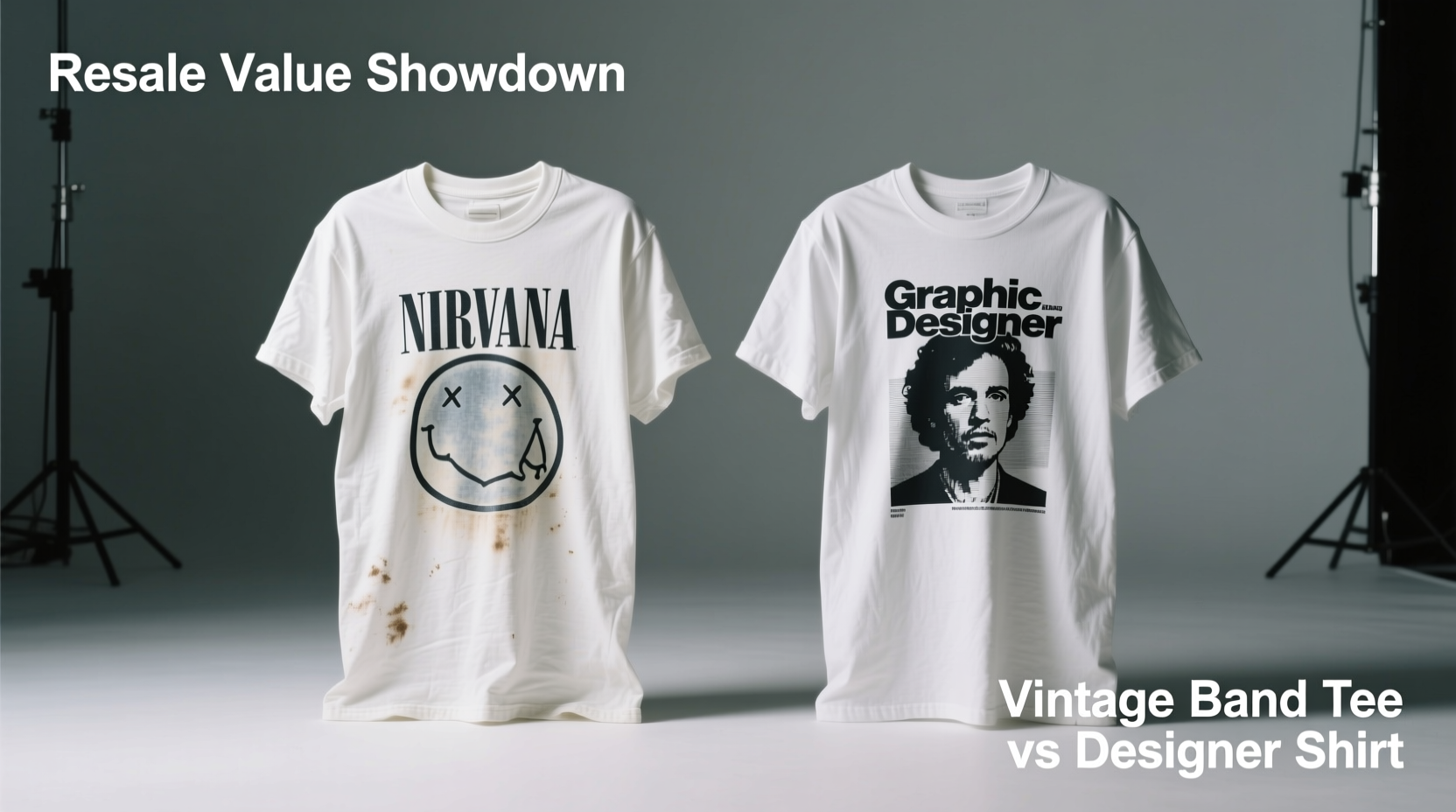
When it comes to fashion resale, few categories spark as much debate as vintage band tees and graphic designer shirts. Both are staples in streetwear and casual wardrobes, often seen layered under denim jackets or styled with minimalist jeans. But from an investment perspective—particularly resale value—one consistently outperforms the other over time. Understanding why requires more than just knowing what’s trendy; it demands insight into authenticity, scarcity, cultural significance, and collector behavior.
While both garments may appear similar at a glance—bold prints, cotton fabric, relaxed fits—their long-term financial potential diverges sharply. This article breaks down the key factors that determine resale performance, compares real-world market data, and provides actionable guidance for buyers, collectors, and resellers navigating this niche but growing segment of the fashion economy.
The Resale Market Landscape
The secondhand apparel market is projected to double by 2027, reaching over $75 billion globally. Within this expansion, vintage and designer streetwear have emerged as two of the most dynamic subcategories. Platforms like Grailed, Depop, Vestiaire Collective, and eBay have made it easier than ever to buy and sell high-value clothing, but they’ve also introduced complexity. Not all graphic tees appreciate equally—even if they look alike.
Vintage band tees refer to authentic concert or promotional shirts from past decades, typically from the 1970s through the early 2000s. These include iconic bands like The Rolling Stones, Nirvana, Pink Floyd, and Metallica. In contrast, graphic designer shirts are modern creations from luxury or high-fashion labels such as Supreme, Off-White, Comme des Garçons, or Yeezy, featuring bold logos, slogans, or artistic prints.
At first glance, both seem collectible. Yet their valuation mechanisms differ fundamentally. Vintage band tees derive worth from nostalgia, historical relevance, and organic scarcity. Designer graphics rely on brand power, limited drops, and fashion cycles. Over time, one proves more resilient in retaining—and increasing—value.
Factors That Influence Resale Value
Resale value isn’t arbitrary. It’s shaped by measurable criteria that collectors and platforms use to assess worth. Here’s how vintage band tees and graphic designer shirts compare across five critical dimensions:
- Rarity & Supply: True vintage band tees were never produced in large quantities, especially tour-specific designs. Once sold out, they don’t return. Designer graphics may be limited, but many brands reissue popular designs or release annual variations, diluting exclusivity.
- Authenticity & Provenance: Vintage band tees require careful authentication—screen printing style, tag type (e.g., “Champion” or “Gildan”), wash patterns, and even ink cracking can verify age. Designer shirts are vulnerable to counterfeits, but authentication tools (like Entrupy) are improving.
- Cultural Significance: A 1991 Nirvana “Smells Like Teen Spirit” tee connects to a pivotal music moment. A Balmain x H&M collaboration shirt, while stylish, lacks that depth. Emotional resonance drives collector demand.
- Condition Sensitivity: Vintage tees degrade faster due to age. Stains, holes, or excessive fading drastically reduce value. Designer shirts, being newer, are less prone to structural wear—but minor flaws still matter in luxury markets.
- Market Demand Trends: Vintage rock and punk aesthetics remain stable, even growing among Gen Z. Designer graphics follow seasonal hype; once a trend fades, so does demand.
Comparative Performance: Data and Real Examples
To illustrate the disparity in resale longevity, consider two real cases:
Case Study: The Nirvana “In Utero” Tour Tee (1993)
A verified 1993 Nirvana “In Utero” tour tee in excellent condition sold on Grailed in 2023 for $1,200. Originally retailing for under $20, its value has grown steadily since the late 2000s. Key drivers: Kurt Cobain’s enduring legacy, the album’s cult status, and the shirt’s original tour run of fewer than 5,000 units. Reissues exist, but collectors seek originals.
Case Study: Off-White “Pyrex” Graphic Shirt (2017)
An Off-White “Pyrex” printed shirt from Virgil Abloh’s early collection sold new for $450. On resale in 2020, it briefly peaked at $1,100 during the peak hype cycle. By 2023, average resale value had dropped to $320—below retail—due to oversaturation and shifting tastes post-Virgil.
“Vintage band tees are artifacts. Designer graphics are fashion statements. One belongs in a museum archive, the other in a seasonal lookbook.” — Marcus Lin, Vintage Apparel Curator at Archive NYC
Detailed Comparison Table: Key Metrics
| Metric | Vintage Band Tees | Graphic Designer Shirts |
|---|---|---|
| Average Age | 25–50 years | 1–10 years |
| Original Production Run | Small (often unrecorded) | Medium to Large (branded drops) |
| Resale Appreciation (10-year avg.) | 300%–800% | 50%–200% (with volatility) |
| Decline After Peak Hype | Minimal (steady demand) | Sharp (up to 60% drop) |
| Authentication Difficulty | High (requires expertise) | Moderate (brand tags help) |
| Collector Base | Music historians, baby boomers, Gen Z | Streetwear enthusiasts, millennials |
| Reissue Risk | Low (originals prized) | High (brands re-release hits) |
The data shows a clear pattern: vintage band tees maintain stronger long-term value because their worth is tied to irreplaceable history. Designer graphics, while capable of short-term spikes, are subject to fashion’s fickle nature.
How to Maximize Resale Value: A Step-by-Step Guide
Whether you're acquiring pieces for personal enjoyment or future profit, proper handling significantly impacts resale potential. Follow this timeline to protect and enhance value:
- Research Before Buying (Week 1)
Identify sought-after eras and bands (e.g., 1970s classic rock, 1990s grunge). Use databases like TeeHunter or Discogs to verify original print runs. For designer shirts, track drop dates and collaboration frequency. - Purchase from Trusted Sources (Week 2)
Buy vintage from estate sales, specialized consignment shops, or authenticated online sellers. Avoid mass-market thrift stores unless inspecting in person. Designer pieces should come with original tags, receipts, or platform verification. - Inspect Condition Thoroughly (Day of Purchase)
Check for stains, armpit discoloration, print cracks, and fabric thinning. Use a magnifying glass to examine print layers. On designer shirts, verify stitching quality and logo placement accuracy. - Store Properly (Ongoing)
Fold vintage tees (never hang—they stretch) in acid-free tissue paper inside sealed plastic bins, away from sunlight. Store designer shirts in breathable garment bags, ideally on padded hangers if hanging. - Document Authenticity (Within 1 Month)
Photograph labels, prints, and unique flaws. Record purchase source and date. Consider third-party grading services like Collectors Grade for high-value vintage items. - Monitor Market Trends (Quarterly)
Set alerts on Grailed, StockX, and Whatnot for comparable sales. Note auction results from Heritage Auctions or RR Auction, which handle celebrity-owned vintage gear. - Sell at the Right Time (When Conditions Align)
For vintage, list during music anniversaries (e.g., 30th anniversary of Nevermind). For designer, watch fashion calendar events—resale often spikes post-fashion week or celebrity endorsement.
Tips for Buyers and Collectors
Tip: Look for \"deadstock\" vintage tees—unworn, stored since purchase. These command 2–3x premiums over gently worn versions. Tip: Avoid washing vintage band tees. Cleaning removes natural patina and risks print damage. If necessary, hand-wash cold with mild detergent and air dry flat.Checklist: What to Verify Before Buying
- ✅ Original manufacturer label (e.g., Gildan, Fruit of the Loom, Hanes)
- ✅ Correct font and logo alignment (compare to known authentic examples)
- ✅ Print texture (vintage: slightly raised; fake: flat and smooth)
- ✅ Fabric feel (older cotton is softer, looser weave)
- ✅ Evidence of age-appropriate wear (subtle fading, not artificial distressing)
- ✅ Seller reputation and return policy (especially on online platforms)
- ✅ Presence of size tag style consistent with era (e.g., no neck labels pre-1980s)
Frequently Asked Questions
Can a graphic designer shirt ever match the resale value of a vintage band tee?
Rarely, and only under exceptional circumstances. A deceased designer’s final collection (e.g., Virgil Abloh for Louis Vuitton) or a culturally defining piece (like Kanye West’s Yeezus tour shirt) may reach similar price points. However, these are outliers. Most designer graphics depreciate within 3–5 years unless part of a landmark moment.
Are bootlegs or reproductions worthless?
Not necessarily. Some reproduction tees from the 1990s (e.g., Japanese fan-made tour shirts) are now collectible in their own right. But they rarely exceed $100 unless historically notable. Always disclose reproduction status when selling to maintain trust.
Does the band matter more than the shirt design?
Yes. A plain black Rolling Stones shirt from 1975 will outvalue a flashy, obscure band’s tee from the same era. Legacy, fan base size, and cultural impact outweigh visual appeal. Bands with tragic endings (e.g., Led Zeppelin after Bonham’s death, Nirvana post-Cobain) see amplified collector interest.
Conclusion: Why Vintage Band Tees Win Long-Term
When comparing vintage band tees and graphic designer shirts for resale value, the evidence points clearly toward vintage. While designer graphics offer short-term gains during hype cycles, they lack the permanence, emotional weight, and organic scarcity that define lasting collectibles. Vintage band tees, by contrast, are wearable history. Each stitch and faded print tells a story—of concerts attended, generations influenced, and movements defined.
That doesn’t mean designer shirts are without merit. They play a role in fashion expression and can be smart speculative buys if timed correctly. But for sustainable value retention, nothing beats a well-preserved, authentic vintage band tee from a legendary act.
For those building a wardrobe with resale intent, prioritize condition, provenance, and cultural relevance. Focus on iconic bands from pivotal eras, store garments with archival care, and wait for the right market moment. Over time, your patience will pay dividends—not just in dollars, but in owning pieces that outlive trends.
💬 Have a vintage find or designer drop you’re tracking? Share your experience or ask questions in the community—collectors thrive on shared knowledge.