
Golf is as much a mental and technical game as it is physical. One of the most overlooked aspects of consistent ball striking is proper alignment. Even slight misalignment at address can result in significant deviations downrange—especially over longer distances. Enter the golf alignment disc: a simple yet powerful training aid that helps players of all skill levels improve their setup, swing path, and directional control. Unlike bulky or complicated tools, alignment discs offer instant visual feedback and are among the most cost-effective investments for serious improvement.
The Science Behind Proper Alignment in Golf
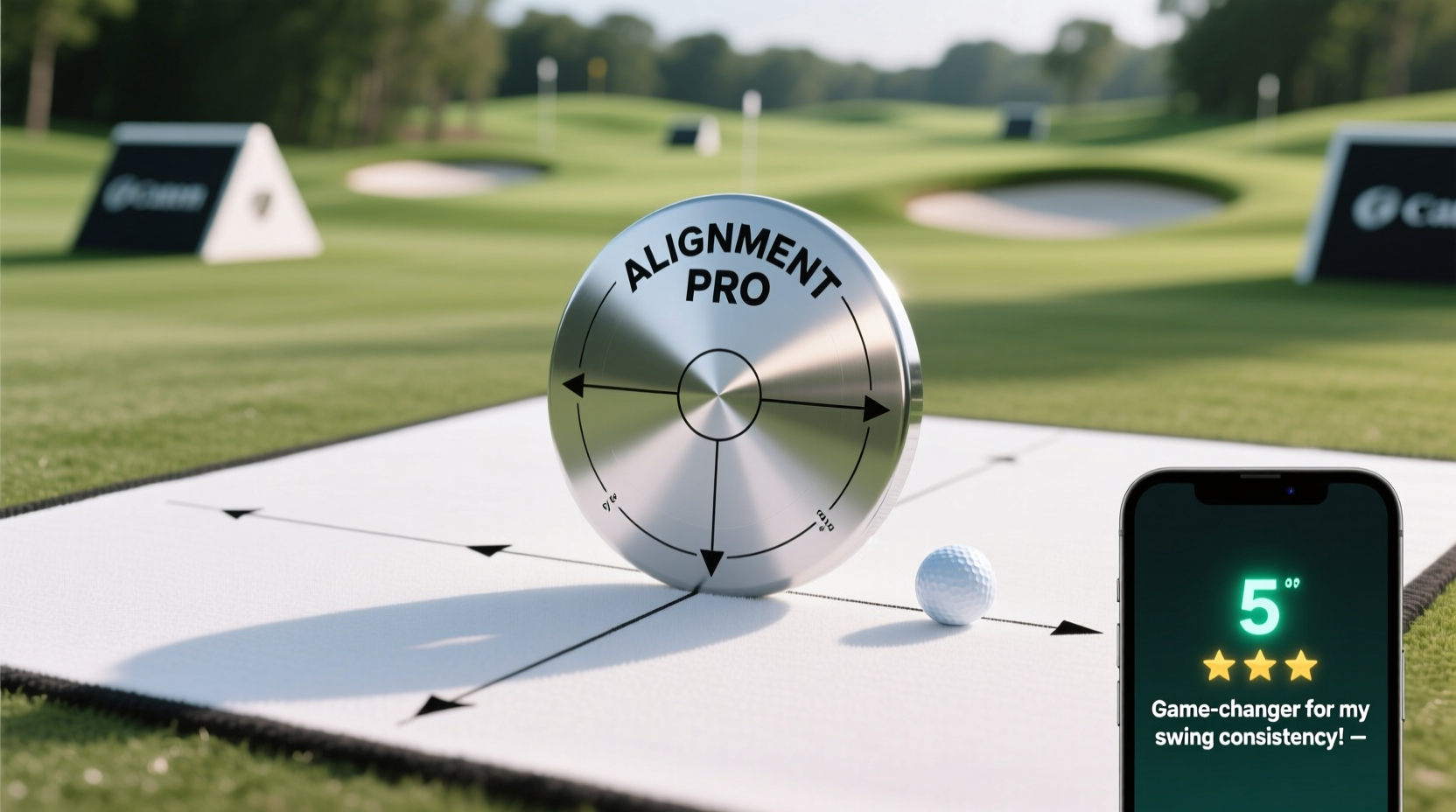
Alignment refers to the positioning of your feet, hips, shoulders, and clubface relative to the target line. Misalignment—even by just 3–5 degrees—can cause shots to veer dramatically off course. Research from the PGA Teaching Division shows that over 60% of amateur golfers consistently aim left or right of their intended target without realizing it. This \"subconscious drift\" often stems from poor visual references during setup.
Alignment discs solve this problem by providing two parallel lines that simulate rail tracks. When placed on the ground, one line aligns with the target, while the other runs along the player’s feet. This dual-line system reinforces correct posture, hip rotation, and swing plane. Because the brain processes visual cues faster than verbal instructions, using an alignment disc creates muscle memory more efficiently than verbal coaching alone.
“Visual alignment aids like discs reduce cognitive load during setup, allowing golfers to focus on rhythm and tempo.” — Dr. Mark Chen, Sports Biomechanist and PGA Consultant
Key Benefits of Using Golf Alignment Discs
- Improved Shot Consistency: By training your body to repeat square setups, you eliminate one of the biggest variables in shot dispersion.
- Better Swing Path Awareness: The rear edge of the disc acts as a barrier, helping prevent excessive inside-out or outside-in swings.
- Enhanced Posture and Balance: Standing on the disc encourages even weight distribution and neutral spine angle.
- Portability and Durability: Most discs are made from high-impact plastic, weigh under 10 ounces, and fit easily in a golf bag.
- Immediate Feedback: You can instantly see if your clubface or stance deviates from the intended line.
Top 5 Golf Alignment Discs: Features and Reviews
Not all alignment discs are created equal. While the basic function remains the same, differences in design, durability, and added features can influence performance. Below is a comparison of leading models based on user feedback, professional testing, and long-term usability.
| Product | Material | Length (inches) | Special Features | User Rating |
|---|---|---|---|---|
| SKLZ Gold Flex Alignment Disc | Flexible polymer | 48 | Bendable for arc drills, non-slip surface | ⭐ 4.7/5 |
| Orange Whip Swing Trainer + Disc Combo | Rigid composite | 42 | Integrated balance beam, color-coded zones | ⭐ 4.5/5 |
| OnCore Alignment Track System | High-density EVA | 60 | Adjustable width, connects multiple units | ⭐ 4.8/5 |
| Breakthrough Golf Technology PlaneMate | Polypropylene | 40 | Doubles as swing plane trainer | ⭐ 4.4/5 |
| Callaway Smart Rail Alignment Tool | Recycled ABS plastic | 45 | Eco-friendly, magnetic end connectors | ⭐ 4.6/5 |
The SKLZ Gold Flex model stands out for its versatility—it can be curved slightly to encourage an inside-square-inside swing path, making it ideal for fixing slices. Meanwhile, OnCore’s extended 60-inch track is favored by instructors for full-swing diagnostics. For eco-conscious players, Callaway’s Smart Rail offers sustainability without sacrificing grip or visibility.
Step-by-Step Guide to Using an Alignment Disc Effectively
To get the most out of your alignment disc, follow this proven routine used by touring professionals and teaching coaches:
- Choose a flat lie on the practice range with clear visibility downrange. Place a target (flag, bag, or tee) 50–100 yards away.
- Position the disc so the front edge points directly at the target. Ensure both rails run parallel to your target line.
- Align your feet along the rear line of the disc, shoulder-width apart. Your toes should follow the groove.
- Check your clubface alignment by placing the leading edge against the front guide. It should sit flush with no gaps.
- Take your normal stance and swing with mid-irons first. Focus on keeping your lower body within the track during the backswing and follow-through.
- Repeat for 10–15 swings, then remove the disc and hit 5 shots freehand. Notice any difference in ball flight direction.
- Incorporate into short game: Re-position the disc near 10-yard targets to refine putting and chipping alignment.
“Using an alignment disc three times a week reduced my average miss-left by 68% in six weeks.” — Lisa Tran, Amateur Golfer, Handicap 12 → 8
Real-World Example: How a Weekend Golfer Fixed Her Slice
Sarah M., a recreational golfer from Colorado, struggled with a persistent slice that ruined her confidence on par 3s. Despite lessons and video analysis, she couldn’t break the habit of aiming left and swinging across the ball. Her coach introduced her to the OnCore Alignment Track System during a lesson.
At first, Sarah found it uncomfortable standing “square” because it felt like she was aiming right. But after hitting 20 balls with the disc, she began to trust the feedback. Within two sessions, her driver dispersion tightened from a 40-yard fan to under 15 yards. A month later, she shot her first sub-90 round. The disc didn’t change her swing mechanics—it corrected her perception.
Common Mistakes to Avoid
- Placing the disc diagonally due to uneven ground, which skews alignment.
- Only using it with drivers—alignment matters just as much with wedges and putters.
- Ignoring the clubface—many users align their body correctly but still open or close the face.
- Over-relying on the tool without transitioning to unaided swings, which limits transfer to real play.
Frequently Asked Questions
Can I use an alignment disc on the golf course during a round?
No—under USGA Rules of Golf, using alignment aids during competitive play is prohibited. However, they are permitted in practice rounds and warmups before tournaments.
Are alignment discs suitable for junior golfers?
Absolutely. In fact, young players benefit greatly from early exposure to correct alignment habits. Many junior academies use shortened versions or foam-based discs for safety and adaptability.
Do alignment discs help with putting?
Yes. Placing the disc along the intended start line helps train eye position, stroke path, and putter face alignment. Some models even include built-in ball rollout channels for instant feedback.
Final Checklist: Getting Started with Your Alignment Disc
- Choose a durable, full-length disc with clear visual guides.
- Practice with irons first to build confidence.
- Use it at least twice per week for 15–20 minutes.
- Combine with video recording to verify alignment accuracy.
- Gradually phase out use every few weeks to test retention.
- Store in your golf bag for easy access during warmups.
Conclusion: Make Alignment a Habit, Not a Guess
Golf alignment discs may look simple, but their impact on performance is profound. They bridge the gap between instruction and execution, turning abstract concepts like “square stance” or “on-plane swing” into tangible, repeatable actions. Whether you're battling a slice, struggling with consistency, or simply refining your fundamentals, incorporating an alignment disc into your routine delivers measurable results.
🚀 Ready to fix your aim and tighten your shot pattern? Grab an alignment disc today and experience the difference precise setup makes—one straighter shot at a time.








