Dogs don’t just play with toys—they form emotional attachments, develop routines around them, and sometimes fixate on specific ones. Among the most common culprits of this obsession are squeaky toys. Whether your dog carries one everywhere, attacks it relentlessly, or whines when it stops squeaking, you’ve likely wondered: what’s behind this behavior? And more importantly, should you support it or intervene?
The truth is, a dog’s fascination with squeaky toys isn’t random. It’s rooted in instinct, psychology, and sensory feedback. But like any strong behavioral pattern, it can cross into problematic territory if left unchecked. Understanding the reasons behind the obsession—and knowing when encouragement helps versus harms—can make a big difference in your dog’s well-being.
The Instinct Behind the Squeak
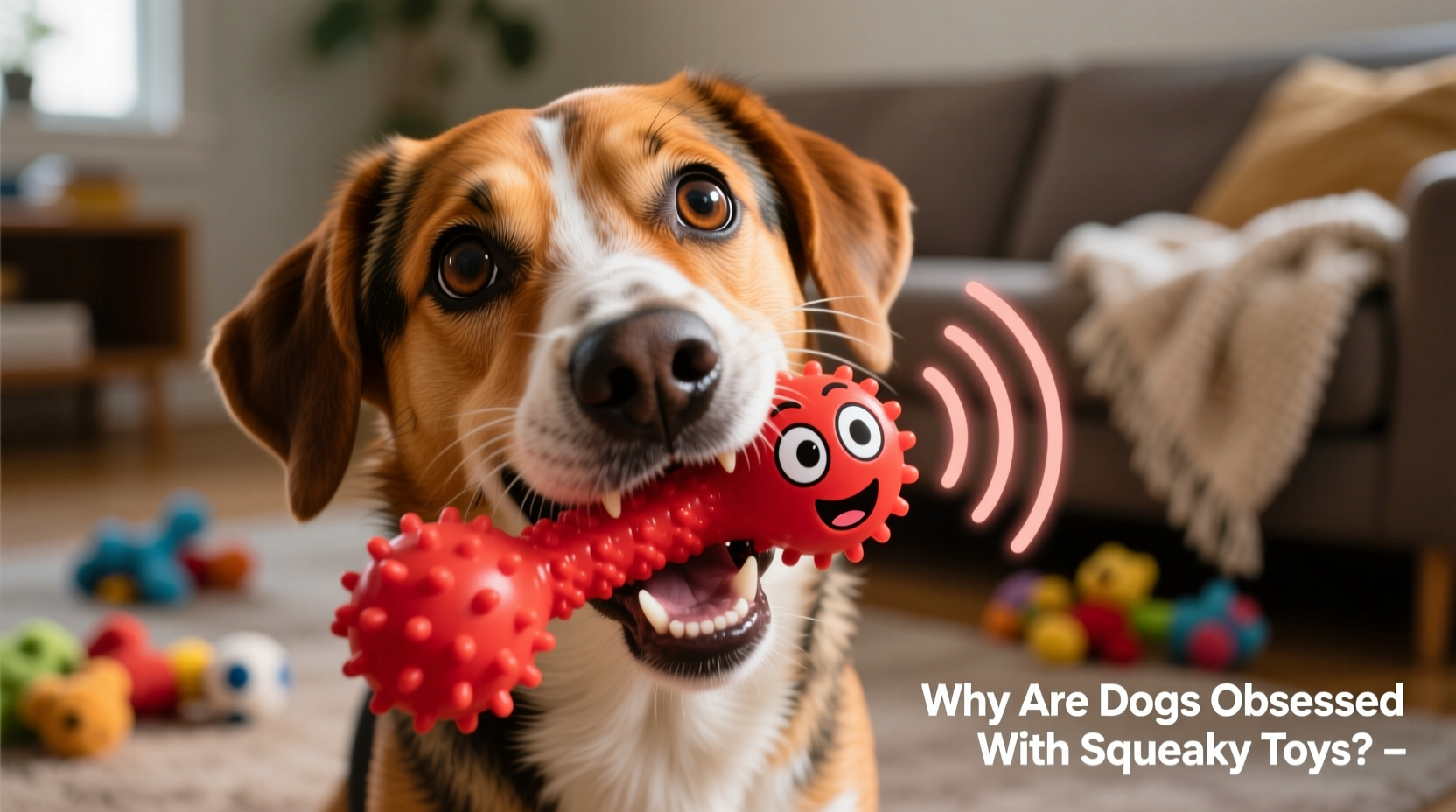
At first glance, the appeal of a squeaky toy might seem purely auditory. But for dogs, the high-pitched noise mimics something far more primal: the sound of prey. In the wild, canines hunt small animals that emit sharp, distressed cries when caught. A squeaker replicates this sound with uncanny accuracy, triggering a deep-seated predatory sequence in your dog’s brain.
This sequence follows a natural order: search → stalk → chase → catch → kill. The squeak acts as both a reward and a signal—confirming the “kill” phase even though no actual harm occurs. This psychological payoff reinforces the behavior, making dogs eager to repeat the process over and over.
“Dogs aren’t just playing when they bite a squeaky toy—they’re fulfilling an ancient behavioral loop. The squeak serves as a conditioned reinforcer, much like a treat in training.” — Dr. Karen B. London, Certified Applied Animal Behaviorist
For many dogs, especially those with strong prey drives (like terriers, herding breeds, or retrievers), this simulation provides essential mental stimulation. Without appropriate outlets, these instincts can manifest in destructive behaviors such as chasing cars, digging obsessively, or nipping at heels.
Why Some Dogs Become Obsessed
Not all dogs react the same way to squeaky toys. While some show mild interest, others become emotionally dependent. Several factors contribute to this intensity:
- Breed predisposition: Breeds developed for hunting or vermin control (e.g., Jack Russell Terriers, Beagles) are more likely to respond strongly to high-frequency sounds.
- Lack of environmental enrichment: Dogs without sufficient physical exercise or cognitive challenges may fixate on toys as a primary source of stimulation.
- Positive reinforcement history: If owners consistently praise or engage when the dog plays with a squeaky toy, the behavior becomes self-reinforcing.
- Anxiety or displacement behavior: In some cases, obsessive toy interaction masks underlying stress. Chewing or carrying a toy may soothe a nervous dog.
When Obsession Crosses the Line
A healthy interest in squeaky toys is normal. But obsession becomes concerning when it interferes with daily life. Warning signs include:
- Aggression when the toy is removed
- Refusal to eat, sleep, or respond to commands unless the toy is present
- Excessive destruction leading to ingestion of foam or plastic
- Obsessive searching or pacing if the toy is missing
In extreme cases, dogs may develop compulsive behaviors similar to OCD in humans. These patterns often stem from unmet needs—either physical, mental, or emotional. For example, a Border Collie left alone for long hours may latch onto a squeaky toy not out of joy, but as a coping mechanism for boredom and anxiety.
Real Example: Max the Australian Shepherd
Max, a three-year-old Australian Shepherd, began carrying his red squeaky squirrel everywhere after his owner started working remotely. At first, it seemed harmless. But soon, Max growled at visitors who approached the toy, refused walks without it, and shredded every new version within minutes. His owner consulted a veterinary behaviorist, who identified separation-related anxiety masked by toy fixation. With structured training, increased off-leash exercise, and gradual desensitization to toy removal, Max’s dependency decreased significantly over eight weeks.
This case illustrates that while the toy itself isn’t the problem, the underlying motivation matters deeply.
Should You Encourage the Behavior?
The answer depends on context. Encouragement can be beneficial—if done mindfully. Unchecked indulgence, however, risks reinforcing unhealthy habits.
Reasons to Encourage (With Limits)
- Mental stimulation: Squeaky toys offer cognitive engagement, especially for indoor or senior dogs.
- Confidence building: Puppies learning bite inhibition can benefit from controlled play sessions.
- Training rewards: Use the toy as a reward in fetch games to reinforce recall or obedience cues.
Reasons to Limit or Redirect
- Destructive chewing: If your dog tears toys apart quickly, swallowed materials pose choking or intestinal blockage risks.
- Resource guarding: Possessiveness over toys can escalate into aggression toward people or pets.
- Narrowed behavioral repertoire: Overreliance on one type of toy reduces adaptability and resilience.
“Moderation is key. Squeaky toys are tools, not crutches. They should enhance enrichment—not replace it.” — Dr. Ian Dunbar, Veterinarian and Animal Behavior Specialist
Step-by-Step Guide: Managing Squeaky Toy Use Responsibly
- Assess your dog’s current relationship with the toy: Observe frequency, emotional response, and reactions to removal.
- Set usage boundaries: Designate specific times for squeaky toy play (e.g., 15 minutes after dinner).
- Supervise all interactions: Never leave your dog unattended with a squeaky toy, especially if prone to tearing.
- Teach “drop it” and “leave it” commands: Use positive reinforcement to build compliance.
- Rotate with alternative enrichment: Swap in Kongs, snuffle mats, or tug ropes to broaden engagement.
- Retire broken toys immediately: Remove silent or damaged squeakers to avoid frustration or ingestion.
Do’s and Don’ts: A Quick Reference Table
| Do | Don’t |
|---|---|
| Use squeaky toys during structured play or training | Leave your dog unsupervised with a squeaky toy |
| Choose durable, size-appropriate toys with removable squeakers | Give small toys to large dogs who can easily destroy them |
| Combine squeaky toys with other types of enrichment | Rely solely on squeaky toys for mental stimulation |
| Teach and reinforce toy exchange behaviors | Punish your dog for holding onto a toy—this worsens guarding |
| Replace worn toys before they become hazards | Allow continued use once the squeaker is exposed or broken |
Frequently Asked Questions
Is it bad if my dog wants to play with squeaky toys all day?
Yes, if it replaces essential activities like eating, resting, or socializing. Continuous fixation may indicate insufficient exercise or under-stimulation. Evaluate your dog’s overall routine and consider adding longer walks, nose work, or agility drills to balance their needs.
Can squeaky toys cause hearing damage in dogs?
While rare, extremely loud or prolonged exposure to high-pitched noises could potentially affect sensitive ears, especially in small or elderly dogs. Most commercial squeakers operate within safe decibel ranges, but monitor your dog for signs of discomfort, such as ear flicking or avoidance. Opt for softer-sounding toys if needed.
My dog gets aggressive when I take away the squeaky toy. What should I do?
Resource guarding requires careful management. Begin by teaching a reliable “drop it” command using trade-ups (e.g., exchanging the toy for a treat). Avoid confrontation. If aggression persists, consult a certified dog behavior consultant. Never punish possessive behavior—it increases fear and defensiveness.
Building a Balanced Play Routine
The goal isn’t to eliminate squeaky toys, but to integrate them into a broader enrichment strategy. Dogs thrive on variety. A balanced play diet includes:
- Sensory toys: Sniffing mats, scent trails, frozen treats
- Physical challenge: Fetch, flirt poles, obstacle courses
- Cognitive puzzles: Treat-dispensing toys, shape sorters, memory games
- Social interaction: Playdates, group training, cooperative games
By rotating squeaky toys with these alternatives, you satisfy your dog’s instinctual drives without fostering dependency. Think of the squeaker as one flavor in a rich menu of experiences—not the entire meal.
Checklist: Healthy Squeaky Toy Use
- ☑ Supervise all play sessions
- ☑ Limit access to 1–2 designated times per day
- ☑ Teach “drop it” using positive reinforcement
- ☑ Inspect toys daily for damage
- ☑ Replace silent or torn toys promptly
- ☑ Offer non-squeaky alternatives regularly
- ☑ Monitor for signs of obsession or anxiety
Conclusion: Play Smart, Not Just Loud
Your dog’s love for squeaky toys isn’t silly—it’s biologically meaningful. That little squeak taps into millions of years of evolutionary wiring, offering satisfaction, focus, and fun. But like any powerful stimulus, it demands thoughtful handling. Encouraging moderate, supervised play supports your dog’s mental health. Allowing unchecked obsession risks behavioral imbalances and safety hazards.
Be intentional. Set boundaries. Provide variety. Celebrate the joy without feeding the fixation. When you do, you’re not just managing a toy—you’re nurturing a happier, more resilient companion.
💬 Have a story about your dog’s favorite squeaky toy—or how you managed an obsession? Share your experience in the comments and help fellow pet owners learn from real-life insights.








