
Dogs are naturally vigilant animals, and their barking is often a form of communication—not just noise. Many dog owners notice a peculiar pattern: their pet remains calm when guests arrive at the door, yet erupts into intense barking the moment the mail carrier appears. This selective reactivity puzzles many, especially since the same dog may greet neighbors, delivery drivers, or friends without issue. The answer lies in a combination of behavioral conditioning, territorial instincts, and the unique context surrounding postal workers’ visits.
Understanding this behavior requires more than assuming your dog simply dislikes strangers. It involves unpacking the subtle cues dogs detect—cues humans often miss—and recognizing how repetition, unpredictability, and lack of social feedback shape your dog’s responses over time.
The Territorial Trigger: Why the Mail Carrier Is Different
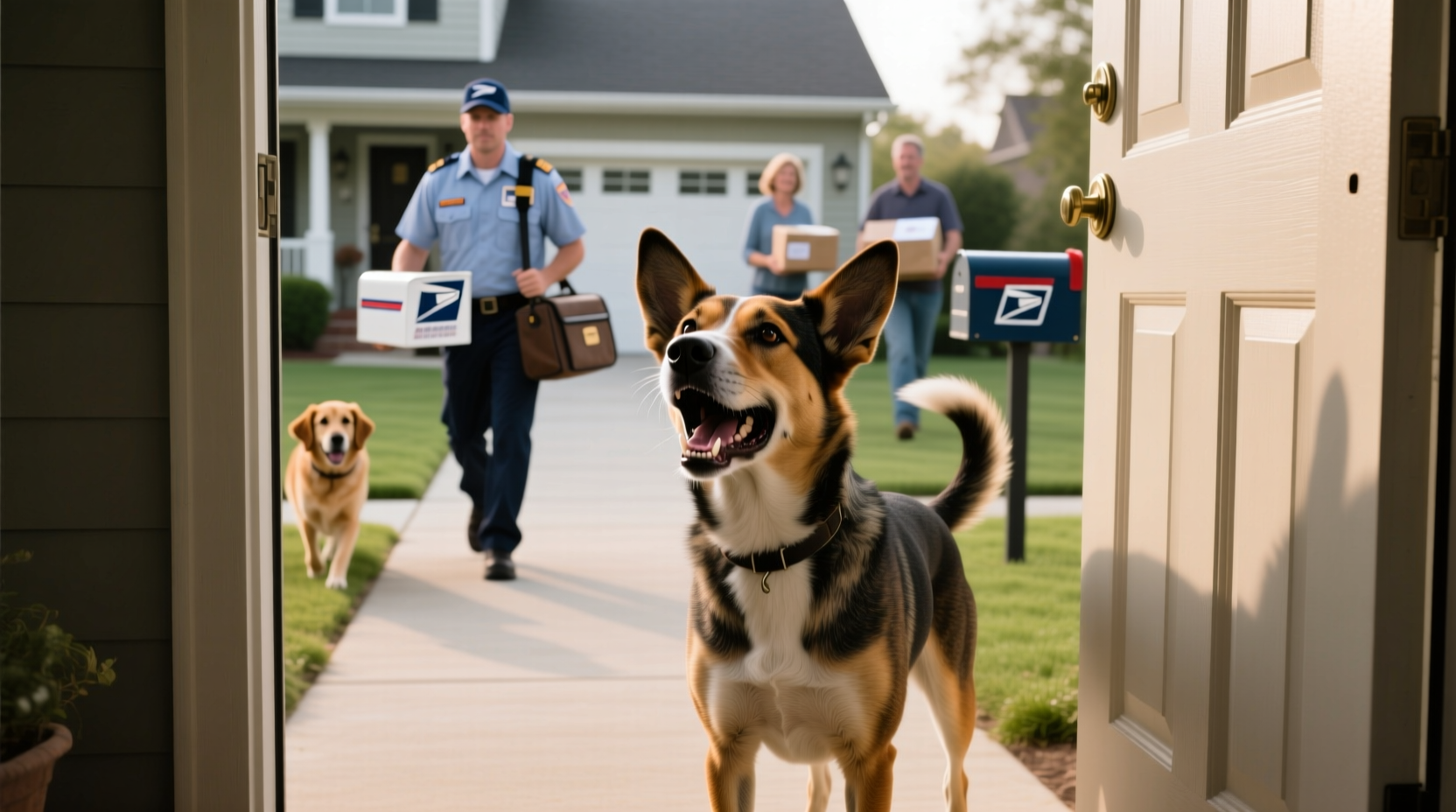
Dogs are hardwired to protect their territory. Your home, yard, and even the sidewalk up to your front door are zones your dog considers part of their domain. When someone enters that space, your dog evaluates the threat level based on movement patterns, frequency, and interaction history.
The mail carrier presents a distinct profile:
- Repetitive but non-interactive presence: Unlike visitors who enter, speak, or engage, mail carriers approach the door daily but never interact meaningfully with the dog.
- Predictable intrusion: They show up around the same time each day, reinforcing the dog’s anticipation and arousal.
- Sudden approach and retreat: The carrier walks directly toward the door with purpose, then leaves abruptly—never offering calming signals like eye contact, friendly tone, or stillness.
This pattern creates what animal behaviorists call a “frustrated greeting” or “barrier frustration.” The dog sees an intruder entering their space, feels compelled to respond, but cannot complete the interaction. The carrier doesn’t acknowledge the dog, doesn’t stay, and doesn’t leave on the dog’s terms. This unresolved tension fuels repeated barking.
“Dogs don’t react to people—they react to patterns. The mail carrier isn’t scary because of who they are, but because of what they *do* repeatedly, without closure.” — Dr. Karen Overall, Veterinary Behaviorist
The Role of Conditioning and Learned Behavior
Your dog isn’t born knowing to bark at postal workers. This behavior develops through classical and operant conditioning—processes that shape most learned behaviors in animals.
Classical conditioning occurs when two stimuli become linked in the dog’s mind. For example:
- The sound of footsteps on the driveway (neutral stimulus).
- The sight of a uniformed person holding packages (unconditioned stimulus).
- The dog barks, the person leaves (reinforcement).
Over time, the footsteps alone trigger barking—even before the carrier is visible. The dog has learned: “Footsteps = Intruder = Must Bark.”
Operant conditioning reinforces this further. If barking causes the carrier to leave (which they do regardless), the dog perceives their behavior as effective. From the dog’s perspective: “I barked → the stranger left → barking works.” This is negative reinforcement—the removal of a perceived threat strengthens the behavior.
Tip: Never punish your dog for barking at the mail carrier. Punishment increases anxiety and can worsen reactivity without addressing the root cause.Why Other Visitors Don’t Trigger the Same Response
It’s common for dogs to remain calm when family, friends, or even food delivery drivers arrive. The difference lies in three key factors: predictability, social signaling, and interaction history.
| Factor | Mail Carrier | Other Visitors |
|---|---|---|
| Interaction Pattern | No eye contact, no verbal engagement, abrupt departure | Greetings, voice modulation, direct acknowledgment |
| Frequency & Timing | Daily, predictable, during active hours | Irregular, often announced or expected |
| Social Feedback | None—dog’s barking ignored | Positive response (petting, treats, calm speech) |
| Access to Space | Stops at threshold—no entry | Enters home, becomes part of environment |
For instance, a pizza delivery driver might knock, wait briefly, and hand over a box before leaving. That brief human-dog exchange—even if minimal—provides closure. The dog sees the person serve a purpose and exit peacefully. In contrast, the mail carrier follows a rigid protocol: approach, deliver, leave—without engaging. To a dog, this reads as suspicious or threatening behavior.
Step-by-Step Guide to Reducing Mail Carrier Reactivity
Changing this behavior takes consistency, patience, and positive reinforcement. Here’s a proven five-step plan to reduce your dog’s barking at the mail carrier:
- Block visual access. Use opaque window film, close blinds, or block line-of-sight with baby gates. Preventing your dog from seeing the carrier removes the primary trigger.
- Create a distraction zone. Designate a quiet room away from the front door where your dog goes during deliveries. Stock it with a stuffed Kong, chew toy, or puzzle feeder.
- Train a “go to place” command. Teach your dog to go to a mat or bed on cue using treats. Practice this daily so it becomes automatic when the doorbell rings.
- Desensitize to delivery sounds. Record audio of footsteps, knocking, or doorbells. Play it at low volume while rewarding calm behavior. Gradually increase volume over weeks.
- Simulate controlled exposures. Ask a friend to mimic a mail carrier’s approach (wearing similar clothing). Start at a distance where your dog stays calm, reward heavily, and slowly decrease distance over time.
Consistency is critical. Perform these exercises daily, even on non-delivery days, to build new neural pathways. Real change typically takes 4–8 weeks with dedicated practice.
Mini Case Study: Reducing Barking in a Reactive Border Collie
Milo, a 3-year-old Border Collie in suburban Denver, barked intensely every morning when the mail arrived. His owner, Sarah, reported that he’d sprint to the front window, growl, and continue barking for several minutes after the carrier left. However, Milo greeted guests warmly and remained calm during Amazon deliveries.
A certified trainer assessed the situation and identified two key issues: Milo could see the carrier approaching from 50 feet away, and he had no alternative behavior to perform. The solution included installing frosted window decals, teaching a “place” command, and introducing a high-value frozen peanut butter Kong given only during mail hours.
Within three weeks, Milo began moving to his mat automatically when he heard the mail truck. By week six, barking had reduced by 90%. Today, he quietly chews his treat while the mail is delivered—proof that environmental management and positive reinforcement work.
Common Mistakes That Make the Problem Worse
Well-meaning owners often unintentionally reinforce barking. Avoid these pitfalls:
- Yelling “Quiet!” during barking: Your dog hears elevated tone and urgency, which can signal danger and escalate arousal.
- Picking up or comforting a reactive dog: While soothing, this rewards anxious behavior. Wait until the dog is calm before offering attention.
- Allowing prolonged exposure: Letting your dog stare at the carrier through glass reinforces fixation. Distance and redirection are more effective.
- Inconsistent routines: If you sometimes let your dog bark freely and other times correct them, confusion arises. Choose one method and stick to it.
Frequently Asked Questions
Can neutering or spaying stop my dog from barking at the mail carrier?
No. While hormones can influence general aggression or territoriality, mail carrier reactivity is primarily learned behavior, not hormonally driven. Neutering may reduce roaming or mounting but won’t resolve this specific issue without training.
Is my dog aggressive if they bark at the mail carrier?
Not necessarily. Most dogs exhibiting this behavior are reactive, not aggressive. Reactivity stems from fear, excitement, or frustration—not intent to harm. True aggression includes lunging, snapping, or biting, which require professional intervention.
What if my dog only barks when the carrier is on the porch but not elsewhere?
This confirms territorial motivation. The porch is part of your dog’s defended space. Dogs are more likely to react when the perceived threat enters their immediate boundary. Management strategies focusing on blocking access to that zone are most effective.
Checklist: How to Respond the Next Time the Mail Comes
- ✅ Close curtains or block windows before delivery time.
- ✅ Prepare a high-value chew or stuffed toy in advance.
- ✅ Call your dog to a quiet room or designated “safe spot” away from the door.
- ✅ Reward calm behavior with quiet praise or treats.
- ✅ Avoid yelling, pushing, or showing frustration—stay neutral.
- ✅ Practice daily training drills, even when no delivery is expected.
Conclusion: Turning Reactivity Into Calm
Your dog’s barking at the mail carrier isn’t defiance—it’s communication. They’re responding to a daily invasion of their space with no resolution. With understanding and consistent training, this behavior can be reshaped. The goal isn’t silence, but calm coexistence. By managing the environment, teaching alternative behaviors, and respecting your dog’s emotional experience, you create a home where both you and your pet feel secure.
💬 Have success stories or challenges with mail carrier reactivity? Share your experience in the comments—your insight could help another dog owner find peace at delivery time.








