It’s a familiar sensation: you apply your favorite moisturizer, expecting soft, hydrated skin, only to be left with a tacky, almost glue-like film across your face. You’re not imagining it—this stickiness is real, and more common than you might think. While some products are designed to leave a slight residue, persistent stickiness can signal mismatched ingredients, improper layering, or even underlying skin concerns. To get to the root of the issue, we consulted board-certified dermatologists and dissected the chemistry behind skincare formulations. This guide breaks down exactly why your face feels sticky after moisturizing, what ingredients to watch for, and how to choose products that absorb cleanly—so your skin feels nourished, not coated.
The Science Behind Skin Stickiness
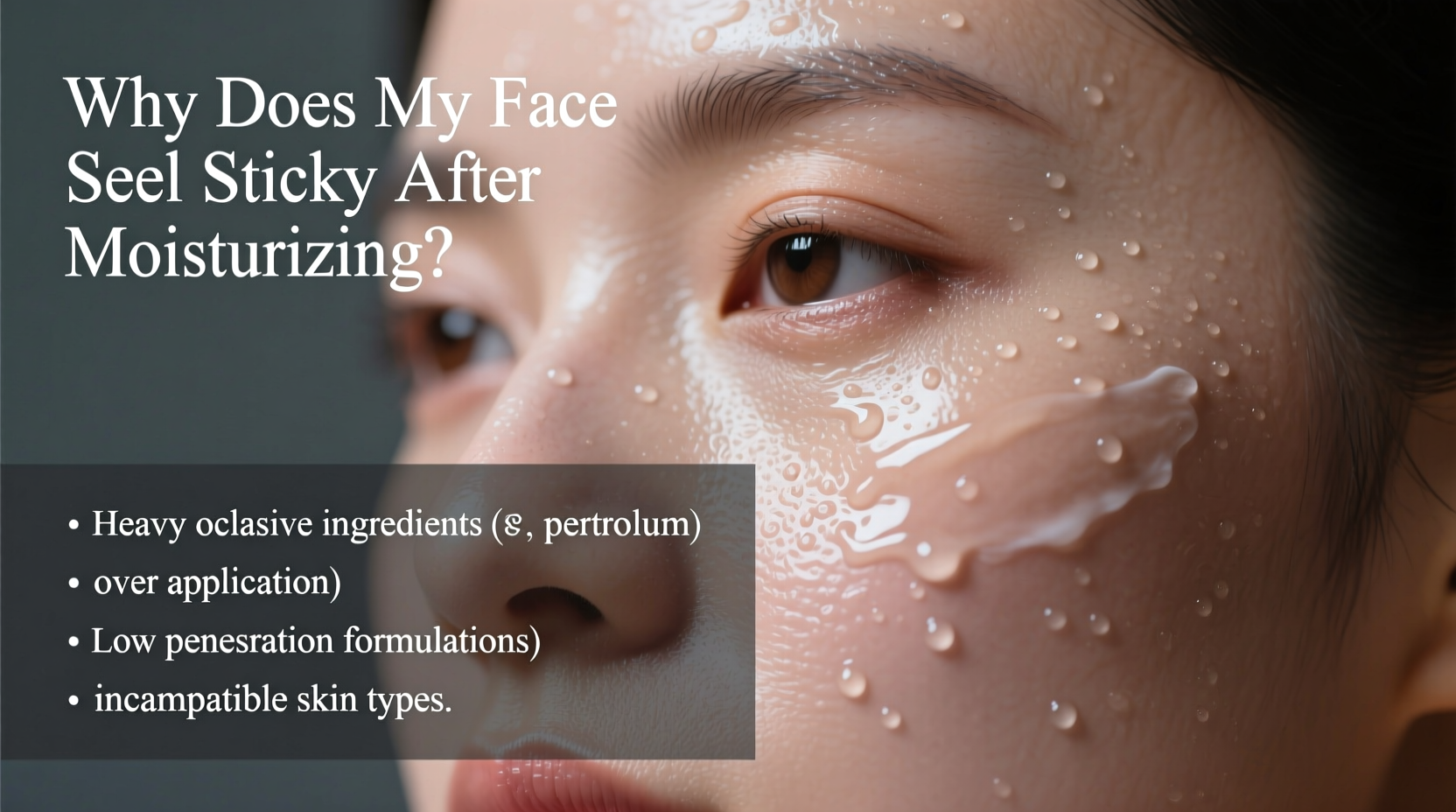
Stickiness occurs when certain ingredients in your moisturizer don’t fully absorb into the skin or evaporate quickly. Instead, they linger on the surface, forming a thin, adhesive layer. This is often due to humectants, emollients, and occlusives—key components in most moisturizers—that behave differently depending on concentration, formulation, and your skin type.
Humectants like glycerin and hyaluronic acid attract water from the environment and deeper layers of the skin to the surface. In dry climates or low-humidity environments, these ingredients may pull moisture but fail to retain it, leaving behind a tacky residue as they sit on the skin without proper hydration to bind to.
“When hyaluronic acid is applied without a sealing ingredient, especially in arid conditions, it can draw moisture up and then evaporate, creating a sticky or tight feeling,” explains Dr. Lena Patel, a clinical dermatologist based in Los Angeles. “This is why layering matters—it’s not just about what you use, but how you use it.”
Common Culprits: Ingredients That Cause Sticky Residue
Not all moisturizers are created equal. Some ingredients are more likely to leave a sticky finish than others. Understanding which ones contribute to that unpleasant texture helps you make smarter product choices.
| Ingredient | Function | Why It Feels Sticky |
|---|---|---|
| Glycerin (high concentration) | Humectant | Draws water but can remain tacky if not sealed or diluted properly. |
| Hyaluronic Acid (especially low molecular weight) | Hydration booster | Can feel sticky if over-applied or used in dry air without occlusion. |
| Propylene Glycol | Solvent & humectant | Leaves a wet, sticky film on sensitive or reactive skin types. |
| Polyquaternium-7 | Film-forming agent | Creates a coating that locks in moisture but can feel gummy. |
| Dimethicone (high levels) | Occlusive silicone | Can create a barrier that feels slick or sticky if not blended well. |
While these ingredients aren’t inherently bad—many are effective at hydrating and protecting the skin—their sensory profile varies. Some people tolerate them well; others experience discomfort due to sensitivity or environmental factors.
Tip: If your moisturizer feels sticky, try applying it to damp skin. Water helps dilute humectants and improves absorption, reducing residue.Environmental and Application Factors
Beyond ingredients, external conditions play a major role in how your moisturizer feels. Humidity, temperature, and even the order of your skincare routine influence whether a product absorbs smoothly or sits stubbornly on your face.
In low-humidity environments—like heated rooms in winter or air-conditioned offices—humectants struggle to find moisture in the air. Without enough water to bind to, they remain concentrated on the skin’s surface, leading to a sticky sensation. Conversely, in high humidity, the same moisturizer might feel lightweight and refreshing.
Application technique also matters. Applying too much product, skipping toner or serum layers, or using a moisturizer incompatible with previous steps can lead to pilling or tackiness. For example, using a water-based hyaluronic serum followed by a heavy oil-based cream may cause separation and uneven texture.
“Layering is an art. Apply thinnest to thickest, and allow each step to absorb before adding the next. Rushing leads to buildup and stickiness.” — Dr. Anika Rao, Dermatologic Consultant, New York
Step-by-Step Guide to Prevent Sticky Residue
Follow this sequence to minimize stickiness and maximize absorption:
- Cleanse gently: Use a mild, pH-balanced cleanser. Over-stripping removes natural oils needed for balanced absorption.
- Apply to damp skin: Right after cleansing or misting, while skin is still slightly wet. This helps humectants bind to water rather than sitting dry on the surface.
- Use serums first: Apply water-based treatments like vitamin C or hyaluronic acid before heavier creams.
- Layer moisturizer correctly: Use a pea-sized amount. Warm it between fingers before pressing onto the face to enhance spreadability.
- Seal with oil if needed: For very dry skin, add a facial oil as the final step to lock in moisture without stickiness.
- Wait before makeup: Allow at least 2–3 minutes for full absorption to avoid pilling under foundation.
Choosing the Right Moisturizer for Your Skin Type
A moisturizer that works for oily skin may feel suffocating on dry skin—and vice versa. Matching your formula to your skin type reduces the risk of residue and irritation.
- Oily/Acne-Prone Skin: Look for gel or water-based moisturizers labeled “non-comedogenic.” Avoid heavy silicones and oils. Ingredients like niacinamide help regulate sebum and reduce tackiness.
- Dry Skin: Opt for ceramide-rich creams with occlusives like shea butter or squalane. These seal moisture without being sticky when applied to damp skin.
- Combination Skin: Use lightweight lotions or emulsions. Apply richer formulas only to dry zones (cheeks), lighter ones to the T-zone.
- Sensitive Skin: Choose fragrance-free, minimal-ingredient formulas. Alcohol, essential oils, and synthetic fragrances can exacerbate sticky or irritated feelings.
Consider trying a “moisturizer audit”: for one week, track how each product feels 5 and 15 minutes after application. Note any residue, pilling, or discomfort. This helps identify problematic ingredients or routines.
Real Example: Sarah’s Morning Routine Fix
Sarah, a 32-year-old office worker in Denver, struggled with a persistently sticky face every morning. Her routine included a foaming cleanser, hyaluronic acid serum, and a thick cream moisturizer. Despite loving the hydration, she hated the residue—especially under makeup.
After consulting a dermatologist, she made two key changes: she switched to a cream-to-foam cleanser to preserve her skin’s lipid barrier, and began applying her hyaluronic serum to damp skin, followed immediately by moisturizer. She also reduced her moisturizer amount by half and waited three minutes before applying sunscreen.
Result: within three days, the sticky feeling vanished. Her skin felt plump and smooth, and her makeup applied evenly. “I didn’t realize how much technique mattered,” she said. “Now I barely notice my moisturizer is on.”
When Stickiness Signals a Bigger Issue
Occasional stickiness is usually harmless and fixable. But persistent discomfort—especially when paired with redness, breakouts, or tightness—may indicate a problem beyond texture.
For instance, some people develop contact dermatitis from preservatives like methylisothiazolinone or fragrances, which can trigger inflammation and alter skin barrier function, making products feel heavier or stickier than usual. Others may unknowingly be using expired products, where degraded ingredients separate and leave a gummy residue.
In rare cases, excessive stickiness could point to seborrheic dermatitis or fungal imbalances, particularly if accompanied by flaking, itching, or greasy patches around the nose and brows. These conditions disrupt normal skin cell turnover and oil production, affecting how products interact with the surface.
If adjusting your routine doesn’t resolve the issue, see a dermatologist for patch testing or barrier assessment.
Tip: Store moisturizers in a cool, dark place. Heat and light can destabilize formulations, leading to separation and altered texture.Checklist: How to Eliminate Sticky Skin Feel
Use this actionable checklist to troubleshoot and improve your moisturizing experience:
- ✅ Apply moisturizer to damp, not dry, skin
- ✅ Use a pea-sized amount for the entire face
- ✅ Check ingredient list for high-glycerin, polyquats, or propylene glycol
- ✅ Layer from thinnest to thickest consistency
- ✅ Wait 2–3 minutes before applying next product
- ✅ Try a different formula (gel vs. cream) based on your skin type
- ✅ Replace old or separated products (most have 6–12 month shelf life after opening)
- ✅ Test new products on a small area first to assess texture and tolerance
Frequently Asked Questions
Is it normal for hyaluronic acid to feel sticky?
Yes, in some cases. Pure hyaluronic acid serums can feel tacky when applied to dry skin or in low humidity. To minimize this, apply to damp skin and follow with a moisturizer to seal it in. The stickiness should subside as it binds to water.
Can using too much moisturizer cause stickiness?
Absolutely. Over-application overwhelms the skin’s ability to absorb the product, leading to residue buildup. Most faces need only a pea-sized amount. Using more doesn’t increase hydration—it just increases waste and potential for pilling or greasiness.
Why does my expensive moisturizer feel stickier than drugstore ones?
Premium products often contain higher concentrations of active ingredients like hyaluronic acid or proprietary polymers that form protective films. While effective, these can feel tackier initially. Proper application technique is even more critical with high-performance formulas.
Final Thoughts: Comfort Is Part of Skincare Efficacy
Your moisturizer shouldn’t just work—it should feel good. A sticky sensation isn’t just annoying; it can discourage consistent use, interfere with makeup, and even lead to over-washing or product layering mistakes. By understanding the ingredients, environment, and techniques that influence texture, you can transform your routine from uncomfortable to seamless.
The right moisturizer should absorb cleanly, leave skin supple, and support your skin barrier without residue. If yours doesn’t, it’s not your skin’s fault—it’s likely the formula or method. Small adjustments, backed by dermatological insight, can make a dramatic difference.
💬 Have a favorite non-sticky moisturizer or trick that works for you? Share your experience in the comments—your tip could help someone finally say goodbye to sticky skin!








