Bearded dragons are among the most popular reptile pets for good reason—they’re intelligent, expressive, and form strong bonds with their owners. Yet one of the most common questions new and experienced keepers alike ask is: Why does my bearded dragon just sit there and stare at me? This seemingly simple behavior can carry a range of meanings, from curiosity and recognition to hunger or even mild stress. Understanding what lies behind that unblinking gaze is key to providing better care and deepening your relationship with your scaly companion.
Unlike mammals, reptiles don’t communicate through vocalizations or overt facial expressions. Instead, they rely on subtle body language, posture, eye movement, and behavioral patterns. The bearded dragon’s stare is not random—it’s a calculated observation rooted in instinct, environment, and learned experience. Decoding this behavior requires awareness of context, health indicators, and species-specific tendencies.
The Science Behind the Stare: Vision and Survival
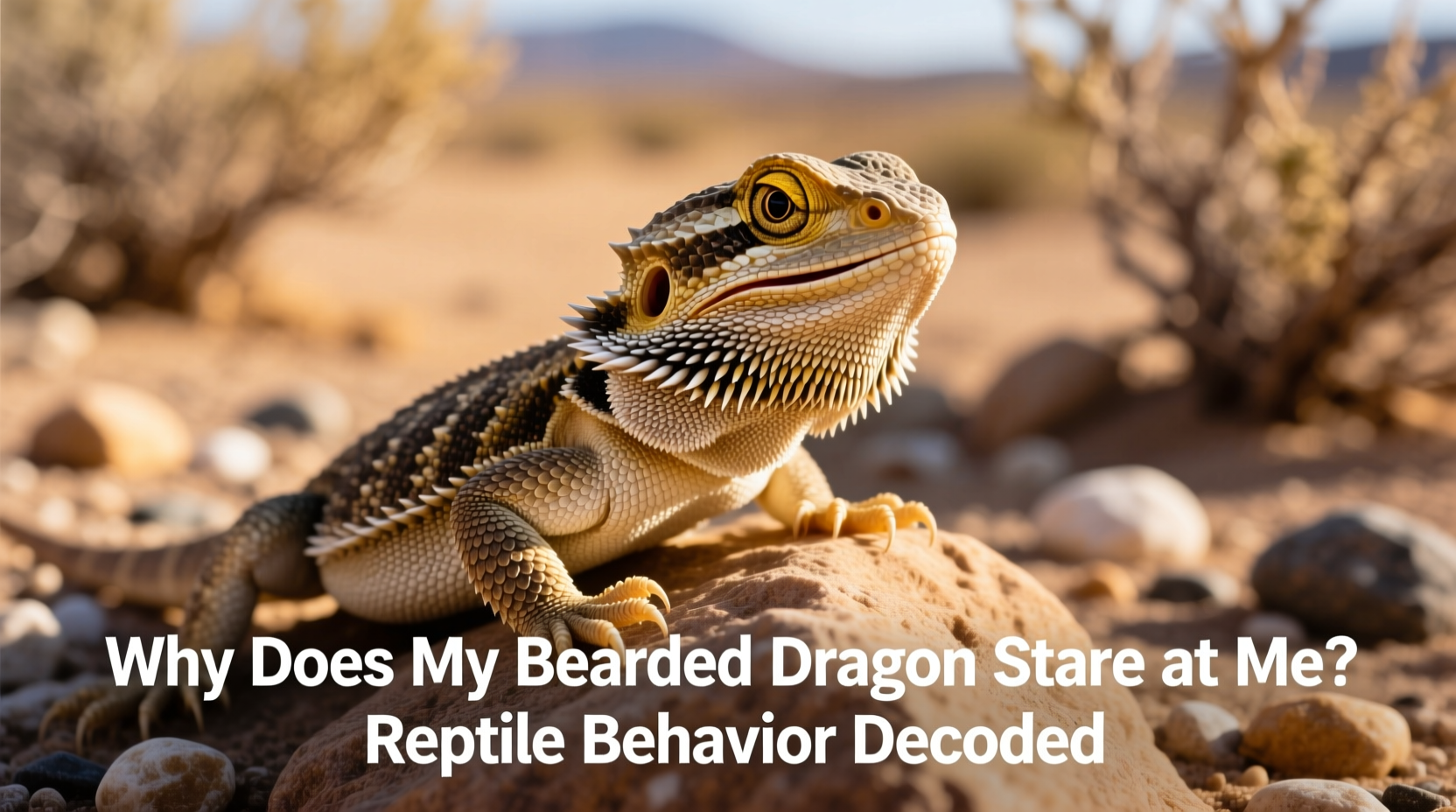
Bearded dragons possess highly developed vision compared to many other reptiles. Their eyes are positioned laterally on the head, giving them nearly 360-degree peripheral vision—ideal for detecting predators or prey in the wild. However, they also have binocular vision in the front, allowing them to focus intently on objects directly ahead, including you.
This ability to fixate is part of their evolutionary toolkit. In the arid regions of Australia where they originate, spotting movement from a distance could mean the difference between catching a meal or becoming one. When your bearded dragon stares, it may simply be assessing its surroundings. But over time, especially in captivity, this visual scanning becomes intertwined with social learning.
“Reptiles like bearded dragons are far more perceptive than we once believed. They recognize individual humans, respond to routines, and use visual cues as a primary mode of environmental assessment.” — Dr. Laura Jenkins, Herpetological Behavior Researcher, University of Queensland
Studies in cognitive ethology suggest that reptiles exhibit forms of associative learning. Your beardie likely associates your presence with food, handling, warmth (if you turn on lights), or safety. The stare, then, often begins as surveillance but evolves into interaction.
Common Reasons Your Bearded Dragon Stares
Not all staring is equal. The meaning changes based on context, body posture, and accompanying signals. Here are the most frequent causes:
- Curiosity and Observation: Bearded dragons are naturally inquisitive. If you're moving around, wearing something colorful, or introducing a new object near the enclosure, your pet may lock eyes to gather information.
- Hunger Cues: A hungry beardie often positions itself near the glass and stares intently at anyone passing by—especially if feeding time is near. This is learned behavior; they associate human activity with food delivery.
- Recognition and Bonding: Over time, your dragon learns to recognize your face, voice, and routine. The stare may be a sign of comfort and familiarity—a silent “I see you, and I know you’re safe.”
- Thermoregulation Monitoring: If you adjust lights or open the enclosure, your dragon may watch closely, tracking heat source changes critical to their metabolism.
- Stress or Threat Perception: While less common, prolonged, rigid staring accompanied by blackened beard, inflation, or head bobbing can indicate discomfort or defensive alertness.
Decoding Body Language: Beyond the Eyes
The stare rarely occurs in isolation. To accurately interpret intent, pair eye contact with physical cues:
| Behavior | Accompanying Signs | Interpretation |
|---|---|---|
| Soft, slow blink | Relaxed posture, open eyes | Contentment, acknowledgment |
| Head bob (slow) | Upright stance, slight puff | Greeting or recognition |
| Arm wave (one limb raised) | Closed mouth, lowered body | Submission or greeting |
| Black beard + stare | Inflated body, hissing | Stress or threat response |
| Staring + glass surfing | Clawing at walls, pacing | Overstimulation or desire to explore |
A slow blink while staring is particularly telling. In the wild, bearded dragons use minimal blinking to avoid drawing attention. A deliberate blink in captivity—often while looking directly at you—is increasingly interpreted by experts as a sign of trust.
Building Trust: How to Respond to the Stare
Your reaction shapes future interactions. Responding appropriately reinforces positive behavior and reduces anxiety. Consider the following steps:
- Maintain Calm Movement: Avoid sudden gestures. Move slowly and predictably near the enclosure to prevent startling your pet.
- Return Gentle Eye Contact: Softly look back without looming. This mimics non-threatening social engagement.
- Use a Consistent Routine: Feed, clean, and interact at similar times daily. Predictability builds confidence.
- Offer Hand Feeding: Present insects or greens from your hand occasionally. This pairs your presence with positive reinforcement.
- Limit Handling Initially: Respect personal space. Let your dragon initiate contact by climbing onto your hand voluntarily.
“In our behavioral enrichment trials, bearded dragons exposed to consistent, calm human interaction showed 40% less stress-related behavior within six weeks.” — Reptile Wellness Journal, 2022
Mini Case Study: Luna the Observant Beardie
Luna, a two-year-old female bearded dragon, lived with her owner Sarah for eight months. At first, Luna would retreat whenever Sarah approached. But after Sarah began sitting quietly beside the enclosure for 10 minutes each evening—reading aloud and offering crickets by hand—Luna started approaching the glass. Within three weeks, she began staring intently during these sessions, often waving a single arm in greeting. Over time, Sarah noticed Luna would position herself near the front of the tank every night at 7 PM, waiting. The stare had transformed from cautious observation to anticipatory connection.
This case illustrates how intentional, low-pressure interaction shifts perception. Luna wasn’t just staring—she was engaging.
When Staring Signals a Problem
While most staring is normal, certain patterns warrant attention:
- Prolonged, unblinking fixation with no movement for hours – Could indicate neurological issues or illness.
- Staring accompanied by lethargy, loss of appetite, or abnormal swelling – May point to metabolic bone disease or infection.
- Obsessive glass surfing with intense gaze – Often linked to inadequate enclosure size, reflections, or lack of enrichment.
- Sudden change in behavior – If a previously interactive dragon starts staring blankly or avoids contact, assess environmental conditions and consult a vet.
Checklist: Is Your Bearded Dragon’s Stare Normal?
Use this quick checklist to evaluate whether the behavior aligns with healthy patterns:
- ✅ Stare is intermittent, not constant
- ✅ Body posture is relaxed (no puffing, hissing)
- ✅ Appetite and activity levels are normal
- ✅ Accompanied by known triggers (feeding time, your entrance)
- ✅ Responds to your voice or movement with interest, not fear
- ✅ No signs of physical distress (labored breathing, swollen limbs)
If all boxes are checked, the stare is likely benign or even affectionate. If multiple red flags appear, schedule a veterinary consultation with a reptile specialist.
Environmental Enrichment to Reduce Repetitive Behaviors
Enrichment plays a vital role in mental stimulation. A bored bearded dragon may develop repetitive behaviors, including obsessive staring at shadows, lights, or people. Enhance their habitat with:
- Mirror-free surfaces (use matte backgrounds instead of reflective ones)
- Rotating decor (rocks, branches, hides)
- Supervised out-of-tank exploration (in a secure, warm room)
- Foraging opportunities (hide food under substrate or in puzzle feeders)
- Visual variety (safe plants, changing light angles)
One study found that dragons given weekly environmental changes exhibited 30% more exploratory behavior and reduced glass-oriented actions. Mental engagement reduces fixation and promotes naturalistic behaviors.
Frequently Asked Questions
Do bearded dragons recognize their owners?
Yes. Multiple behavioral studies confirm that bearded dragons distinguish between familiar handlers and strangers. They respond differently to voices, movements, and routines associated with their primary caretakers, often showing calmer demeanor and increased interaction.
Is it bad if my bearded dragon stares for long periods?
Not inherently. Brief, context-driven staring is normal. However, constant, unfocused gazing—especially if paired with inactivity or poor appetite—may signal health issues such as vitamin deficiency, eye problems, or neurological concerns. Monitor for additional symptoms and consult a veterinarian if worried.
Can staring be a sign of affection?
While reptiles don’t experience emotion the way mammals do, prolonged eye contact in a relaxed state is widely considered a sign of comfort and habituation. It reflects a level of trust. Many owners report their dragons “checking in” throughout the day, almost like a visual acknowledgment of presence.
Conclusion: Seeing Beyond the Surface
The bearded dragon’s stare is more than a quirk—it’s a window into their world. What might seem like vacant observation is often active processing, recognition, or quiet communication. By learning to read the full spectrum of their behavior, you move beyond basic care to meaningful companionship.
Every glance, blink, and head tilt tells a story. Whether your dragon is watching for food, tracking your movements, or simply acknowledging your presence, each moment offers an opportunity to connect. These animals thrive not just on proper UVB and diet, but on consistency, respect, and attentive care.
🚀 Start today: Sit quietly near your bearded dragon’s enclosure, maintain soft eye contact, and observe how they respond. Over time, you’ll begin to recognize their unique “language.” Share your experiences in the comments—what has your beardie taught you about patience, presence, and silent understanding?








