When a cat slowly closes its eyes while looking at you—holding the gaze with soft, deliberate blinks—it’s easy to mistake the gesture for drowsiness or disinterest. But in reality, this subtle behavior is one of the most meaningful forms of nonverbal communication between cats and humans. Known as the “slow blink,” this act is not just a quirky feline habit; it’s a powerful signal of trust, comfort, and even love. Understanding this quiet gesture can deepen the bond between cats and their caregivers, offering insight into a species that often communicates in whispers rather than shouts.
Cats are masters of body language. Unlike dogs, who tend to express emotions openly through wagging tails and enthusiastic greetings, cats rely on nuanced cues—tail flicks, ear positions, pupil dilation, and yes, blinking—to convey their internal states. The slow blink is particularly significant because it involves vulnerability: closing one’s eyes in the presence of another being is risky in the animal kingdom. When a cat chooses to do so around you, it’s a profound statement of safety and emotional connection.
The Science Behind the Slow Blink
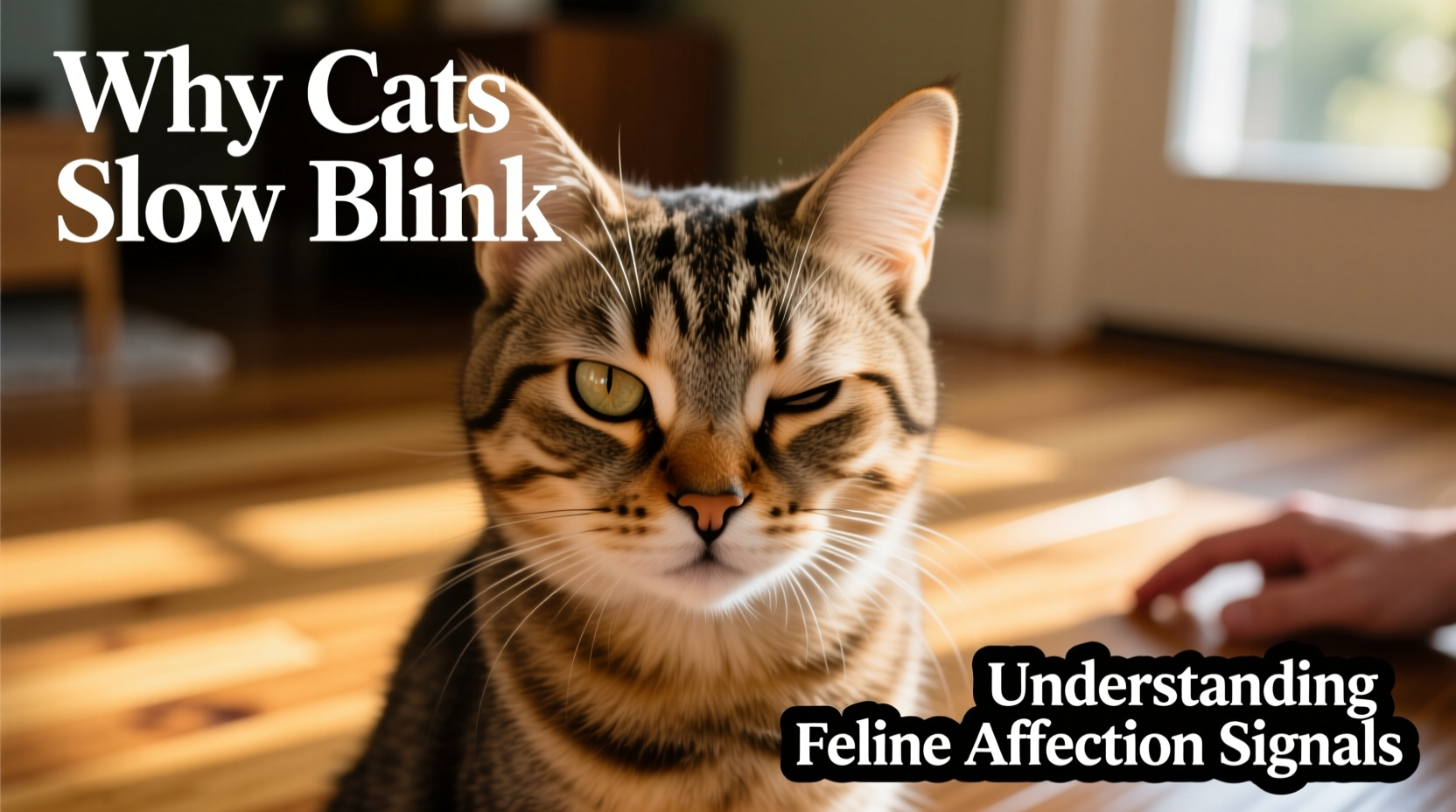
Research has confirmed what many cat owners have long suspected: slow blinking is a genuine sign of positive emotion. A 2020 study published in *Scientific Reports* found that cats were more likely to return slow blinks from their owners and even approach experimenters who used the gesture. In controlled settings, researchers and cat owners alike engaged in slow blinking sessions with unfamiliar and familiar cats. The results showed a consistent pattern: cats responded more positively—approaching, purring, and reciprocating the blink—when people initiated the slow blink compared to neutral or direct stares.
The study concluded that slow blinking functions as a form of affective communication—a mutual exchange of goodwill between species. Dr. Karen McComb, a behavioral biologist at the University of Sussex and lead author of the study, explained:
“Cats use the slow blink not only with their owners but also with strangers who use the same signal. It appears to be a cross-species social cue that helps build rapport.” — Dr. Karen McComb, University of Sussex
This finding challenges outdated notions that cats are aloof or indifferent to human interaction. Instead, it suggests that cats are highly attuned to our behavior and capable of forming emotionally intelligent responses when we meet them on their communicative terms.
Why Cats Use the Slow Blink: Decoding Feline Trust
In the wild, direct eye contact is often interpreted as a threat. Predators fixate on prey, and rival animals lock eyes before conflict. For a small carnivore like the domestic cat, prolonged staring can trigger defensiveness or fear. That’s why a soft, gradual blink serves as a visual “disarmament.” By partially closing the eyes and breaking the intensity of the gaze, the cat signals, “I mean no harm,” and invites the other party to do the same.
When your cat slow blinks at you, it’s essentially saying:
- “I feel safe around you.”
- “You are not a threat.”
- “I am content in this moment.”
- “I trust you enough to lower my guard.”
This behavior often occurs during relaxed moments—when the cat is lounging nearby, basking in sunlight, or sitting within arm’s reach. It’s rarely seen during play, feeding, or when the environment feels uncertain. The context matters: a slow blink in a calm setting reinforces its meaning as a peace offering and emotional check-in.
Tip: If your cat slow blinks at you, return the gesture. Gently close your eyes for a second or two, then open them slowly. Repeat once or twice. This simple act can strengthen your bond and reassure your cat of your peaceful intentions.How to Respond: Building Connection Through Blinking
Engaging in a slow blink exchange isn’t just rewarding—it’s a practical way to improve your relationship with your cat. Unlike verbal praise or physical petting, which some cats may find overwhelming, the slow blink respects feline communication norms. It allows interaction without intrusion.
Here’s how to initiate and respond to a slow blink effectively:
- Make soft eye contact from a comfortable distance—don’t loom or stare intensely.
- Squint slightly, then close your eyes slowly over one to two seconds.
- Pause for a brief moment (like a relaxed wink), then open your eyes gently.
- Repeat the sequence two or three times, pausing between each blink.
- Observe your cat’s response. They may return the blink, approach, lie down, or begin purring.
Some cats respond immediately; others may take time to warm up. Patience is key. Avoid rapid movements or loud noises during the exchange, as these can disrupt the sense of calm you’re trying to cultivate.
A Real-Life Example: Rebuilding Trust with a Shy Cat
Sarah adopted Luna, a three-year-old domestic shorthair, from a shelter after the cat had spent months in temporary housing. Initially, Luna stayed hidden under the bed, darting away whenever Sarah entered the room. Determined to build trust, Sarah began using slow blinks during quiet moments near Luna’s hiding spot.
Every evening, she’d sit on the floor a few feet away, avoid direct eye contact, and offer a series of slow blinks. She paired the gesture with soft speech and left treats nearby. After two weeks, Luna began peeking out. One night, as Sarah blinked slowly from the doorway, Luna sat up—and returned the blink.
“It was like a switch flipped,” Sarah said. “After that, she started coming out more, following me around, even jumping onto the couch beside me. The blink was her way of saying, ‘Okay, I think I can trust you.’”
This case illustrates how the slow blink can serve as a bridge for cats recovering from stress, trauma, or social hesitation. It’s a low-pressure way to communicate acceptance and safety.
Slow Blink vs. Other Feline Eye Signals
Not all eye behaviors are created equal. While the slow blink conveys affection, other eye-related cues can indicate very different emotional states. Recognizing the contrast helps prevent misinterpretation.
| Eye Behavior | Meaning | Context Clues |
|---|---|---|
| Slow blink | Trust, affection, relaxation | Soft gaze, upright or relaxed posture, purring |
| Staring (unblinking) | Potential threat, alertness, challenge | Rigid body, dilated pupils, flattened ears |
| Rapid blinking | Irritation, discomfort, eye issue | Squinting, pawing at eyes, avoiding light |
| Avoiding eye contact | Submission, anxiety, fear | Crouched posture, tail tucked, hiding |
| Dilated pupils | Excitement, fear, or low light | Context-dependent: play vs. panic |
Understanding these distinctions ensures you respond appropriately. A wide-eyed stare from your cat across the room might look intense, but if their body is loose and they eventually follow it with a slow blink, it could simply be curiosity—not aggression.
Practical Checklist: Strengthen Your Bond Through Slow Blinking
To make the most of this natural communication tool, follow this actionable checklist:
- ✅ Observe your cat’s daily routines to identify calm moments ideal for interaction.
- ✅ Practice slow blinking in low-stress environments—avoid doing so during feeding or playtime.
- ✅ Combine slow blinks with gentle vocal tones to reinforce positive associations.
- ✅ Reward reciprocal blinks with treats or quiet companionship (not immediate petting).
- ✅ Use the technique with fearful or new cats to help them acclimate to your presence.
- ✅ Be consistent. Regular engagement builds familiarity and emotional security.
Frequently Asked Questions
Do all cats slow blink?
No, not all cats exhibit slow blinking equally. Some are naturally more expressive, while others may be shy, stressed, or simply less inclined to use this specific signal. However, most cats will respond to slow blinks from humans, even if they don’t initiate them frequently.
Can slow blinking help with multi-cat households?
Yes. Introducing slow blinks during supervised interactions between cats can reduce tension. Humans can model calm behavior, helping to de-escalate potential conflicts. That said, direct eye contact between cats should be avoided—this technique works best between humans and cats, not cat-to-cat.
Is slow blinking the same as cat kissing?
Many people refer to the slow blink as a “cat kiss,” and while it’s not a literal kiss, the term captures its emotional significance. Just as a human kiss expresses affection, the slow blink is one of the closest equivalents in feline body language to saying “I love you” without words.
Conclusion: Seeing Love in a Blink
The slow blink is more than a curious quirk—it’s a window into the emotional world of cats. In a species often misunderstood as distant or indifferent, this gentle gesture reveals depth, sensitivity, and the capacity for deep attachment. By learning to recognize and reciprocate the slow blink, you’re not just interpreting behavior; you’re participating in a silent dialogue built on mutual respect and care.
Cats don’t need grand gestures to feel connected. Often, it’s the smallest actions—the quiet blink, the soft gaze, the shared stillness—that speak the loudest. The next time your cat locks eyes and slowly closes their lids, don’t look away. Blink back. In that quiet moment, you’re not just seeing your cat—you’re truly connecting.
💬 Have you experienced a slow blink from your cat? Share your story in the comments and inspire others to look closer at the quiet ways cats say “I love you.”








