
For decades, dog owners have relied on collars and leashes as the standard method for walking their pets. In recent years, however, front-clip harnesses and no-pull vests have surged in popularity—marketed as safer, more humane alternatives that reduce strain on a dog’s neck and prevent pulling. But with so much conflicting advice and product claims, it’s fair to ask: Is a dog vest harness actually safer than a traditional collar and leash, or is it just marketing hype?
The answer isn’t simple. It depends on your dog’s breed, size, behavior, health, and even your own walking habits. To help you make an informed decision, we’ll examine the biomechanics of both systems, review veterinary insights, compare pros and cons, and look at real-life scenarios where one option clearly outperforms the other.
Anatomy and Pressure: What Happens When a Dog Pulls?
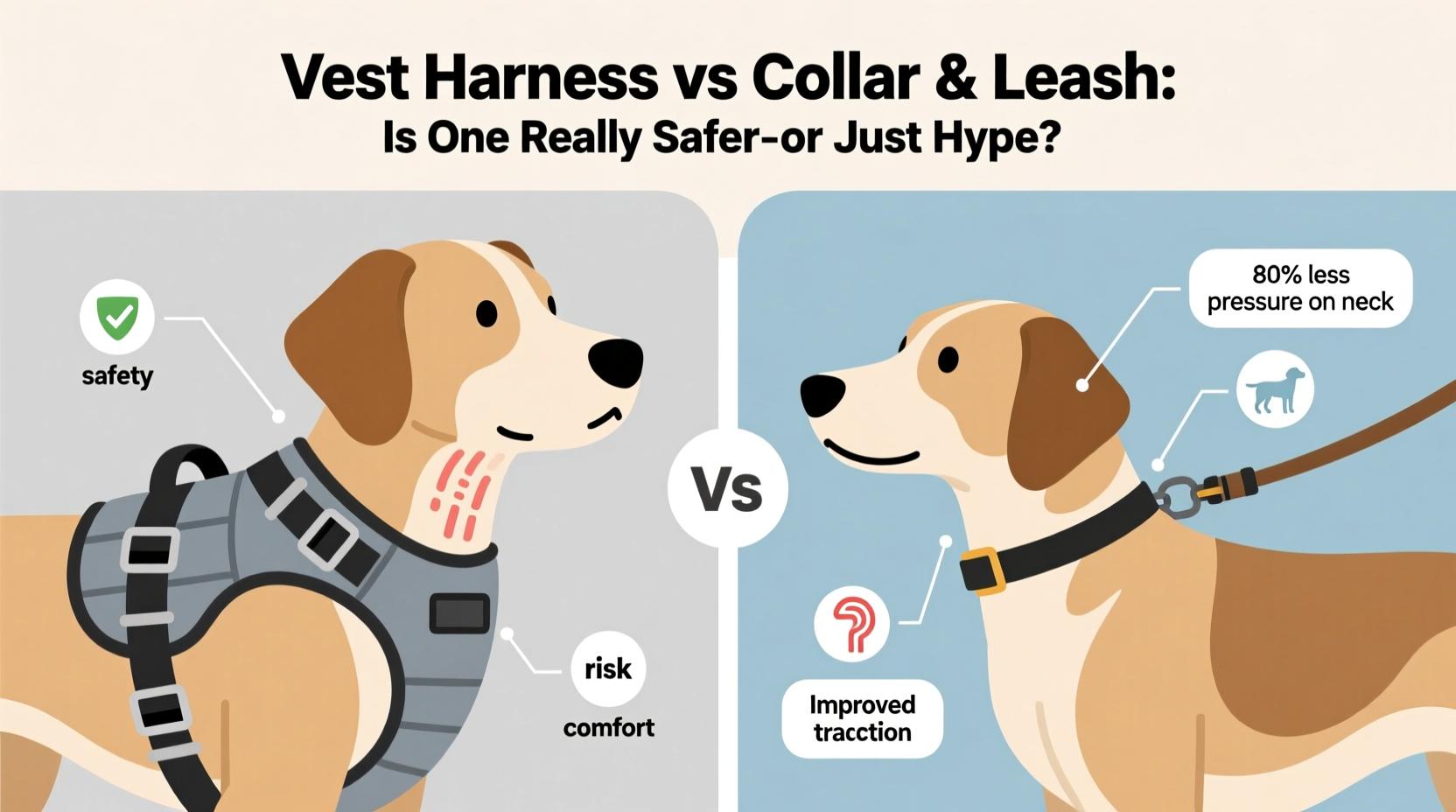
When a dog pulls on a leash, significant force is transmitted through the restraint system to their body. With a traditional collar, this force concentrates around the trachea, cervical spine, and throat area. For small breeds like Chihuahuas or Pomeranians—or brachycephalic dogs such as Bulldogs—this pressure can lead to serious health issues including tracheal collapse, eye strain, and even neurological damage over time.
In contrast, a well-fitted harness distributes that same pulling force across the dog’s chest, shoulders, and back—areas better equipped to handle mechanical stress. A 2020 study published in the *Journal of Veterinary Behavior* found that dogs wearing properly adjusted front-clip harnesses experienced up to 45% less pressure on their necks compared to those using standard collars during controlled walks.
“Repeated pressure on the neck from tight collars or frequent jerking can cause long-term structural damage, especially in small or toy breeds.” — Dr. Karen Reynolds, DVM, Canine Orthopedic Specialist
However, not all harnesses are created equal. Poorly designed models can restrict shoulder movement, rub sensitive skin, or shift during activity, creating new problems instead of solving old ones.
Comparing the Options: Harness vs Collar & Leash
To understand which system suits your dog best, let’s break down the core differences in design, function, and safety implications.
| Feature | Traditional Collar & Leash | Vest Harness (Front-Clip) |
|---|---|---|
| Pressure Distribution | Concentrated on neck and throat | Distributed across chest and torso |
| Pulling Control | Limited; encourages forward momentum | High; redirects dog when they pull |
| Safety Risk (Trachea/Spine) | Higher, especially in small breeds | Lower when properly fitted |
| Mobility Impact | Minimal restriction | Some may limit stride if poorly designed |
| Ease of Use | Simple to put on/take off | May require adjustment; some take practice |
| ID Tag Attachment | Standard location | May require secondary loop or tag clip |
When a Harness Makes Sense: Real-World Scenarios
Not every dog needs a harness, but certain situations strongly favor one over a collar.
Tip: If your dog pulls consistently, has respiratory issues, or is under 20 pounds, consider switching to a front-clip harness.Case Study: Max the Pug
Max, a three-year-old pug, began coughing after walks and was diagnosed with mild tracheal irritation. His owner used a standard nylon collar and retractable leash, which allowed sudden lunges. After consulting with a vet, they switched to a padded front-clip harness. Within two weeks, Max’s coughing stopped, and his walking behavior improved significantly due to the gentle redirection feature of the harness.
This case illustrates how a seemingly minor equipment change can have major health implications—especially for breeds predisposed to airway issues.
Breed-Specific Considerations
- Small Breeds (Yorkies, Shih Tzus): High risk of tracheal injury; harness recommended.
- Brachycephalic Dogs (Pugs, French Bulldogs): Sensitive airways; avoid neck pressure.
- Large/Strong Breeds (Huskies, German Shepherds): May benefit from no-pull harnesses for control, though well-trained dogs can do fine with flat collars.
- Puppies: Use harnesses during training to prevent neck strain while learning leash manners.
Common Misconceptions About Harnesses
Despite growing adoption, several myths persist about harness use:
- Myth 1: Harnesses encourage pulling. This is only true with back-clip harnesses, which allow dogs to lean into the pull. Front-clip designs discourage pulling by turning the dog slightly when tension occurs.
- Myth 2: Harnesses are only for small dogs. While small dogs benefit most from reduced neck pressure, large breeds prone to pulling also gain improved control and spinal protection.
- Myth 3: All harnesses are safe. Ill-fitting or restrictive harnesses can cause chafing, limit gait, or even lead to shoulder injuries over time.
How to Choose the Right Harness: A Step-by-Step Guide
Selecting a safe, effective harness requires more than just following trends. Follow these steps to ensure a proper fit and function:
- Measure Your Dog: Use a soft tape measure around the deepest part of the chest (behind the front legs) and the neck base.
- Choose Clip Position: Opt for front-clip designs if pulling is an issue. Back-clip is acceptable for calm walkers.
- Check Adjustability: Look for multiple adjustment points (chest, neck, belly strap).
- Test Mobility: Once fitted, let your dog move naturally. Raise each front leg—the harness shouldn’t dig in or slip.
- Monitor for Rubbing: On initial walks, check skin under straps for redness or irritation.
- Avoid Over-Tightening: You should be able to fit two fingers snugly under any strap.
When a Collar Might Still Be Better
While harnesses offer clear advantages in many cases, collars still have their place. For dogs that walk politely on a loose leash, a well-fitted flat collar remains a lightweight, low-profile option. Additionally, collars are essential for holding ID tags—even when using a harness, many trainers recommend keeping a collar on underneath for identification purposes.
Retractable leashes, however, pose risks regardless of attachment point. The extended length increases the chance of tripping, tangling, or sudden jerks that can injure the dog’s neck or your wrist. Fixed-length leashes (4–6 feet) paired with either a collar or harness provide better control and safety.
Frequently Asked Questions
Can a harness hurt my dog if it doesn’t fit right?
Yes. A too-tight harness can restrict breathing and movement, particularly across the shoulders. One that’s too loose may slip or allow the dog to back out. Improper fit over time can lead to sores, muscle strain, or altered gait patterns.
Should I use a harness for training?
Absolutely—especially for dogs learning not to pull. Front-clip harnesses act as gentle teaching tools by redirecting the dog when they surge ahead. However, pairing the harness with positive reinforcement techniques yields the best long-term results.
Do service dogs use harnesses or collars?
Most service and working dogs wear specially designed harnesses that support task performance (e.g., guide dog handles, mobility assistance grips). These are distinct from no-pull models but highlight the functional benefits of distributing load safely across the body.
Final Verdict: Safer or Just Hype?
The idea that dog harnesses are inherently safer than collars isn’t hype—it’s supported by veterinary research and biomechanical principles. For dogs that pull, have respiratory conditions, or belong to vulnerable breeds, a well-designed front-clip harness significantly reduces the risk of injury.
That said, no single solution fits all dogs. A calm, well-trained Labrador may do perfectly fine on a flat collar, while a hyperactive Jack Russell might need the added control of a harness. The key is matching the equipment to your dog’s individual needs, not following trends blindly.
Ultimately, safety comes not just from gear choice, but from responsible handling, proper fit, and consistent training. Whether you choose a collar or a harness, what matters most is minimizing force, avoiding trauma, and ensuring your dog enjoys their walks as much as you do.
💬 Have you made the switch from collar to harness—or vice versa? Share your experience and what worked (or didn’t) for your dog in the comments below.








