
Intelligent dog breeds like Border Collies, Poodles, German Shepherds, and Australian Shepherds thrive on mental engagement as much as physical exercise. Without proper stimulation, even well-exercised dogs can develop destructive habits—chewing furniture, barking excessively, or digging in the yard. These behaviors are rarely signs of defiance; they’re symptoms of an under-stimulated mind. The right toys don’t just entertain—they challenge, teach, and satisfy a dog’s natural instincts for problem-solving and exploration. Choosing mentally enriching toys is not a luxury; it’s a necessity for maintaining a balanced, happy, and well-behaved companion.
Why Mental Stimulation Matters for Smart Dogs
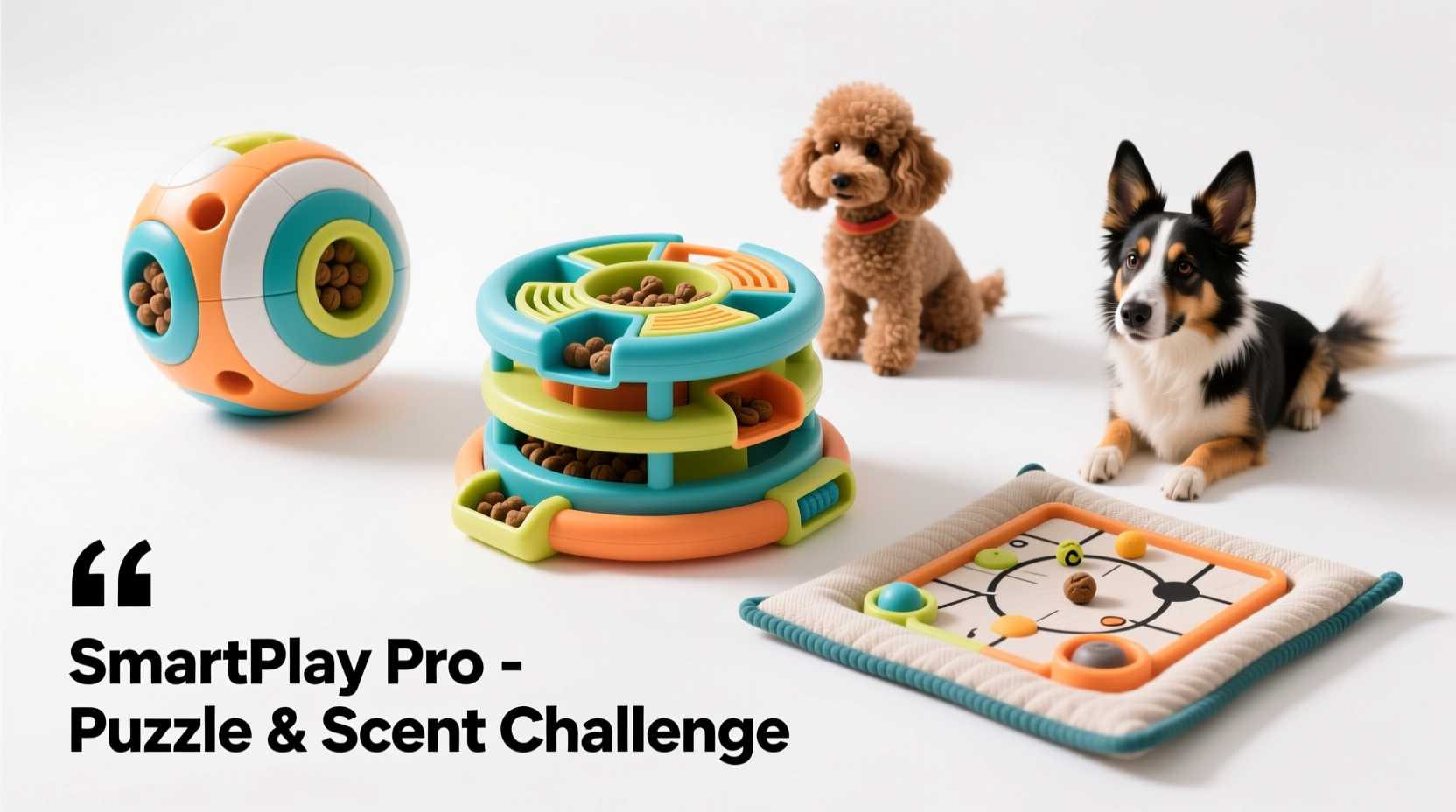
Dogs like Belgian Malinois or Shetland Sheepdogs were bred for complex tasks—herding, guarding, detecting. Their brains evolved to process information quickly, make decisions, and adapt to changing environments. When these cognitive abilities go unused, frustration builds. Unlike less driven breeds, intelligent dogs don’t settle easily into passive downtime. They seek challenges, and if none are provided, they create their own—often in ways owners find inconvenient.
Mental stimulation helps regulate stress, reduces anxiety, and strengthens the bond between pet and owner. Studies show that dogs engaged in regular cognitive activities exhibit lower cortisol levels and improved emotional regulation. A tired brain is often more effective at promoting calm behavior than a tired body alone.
Tip: Rotate your dog’s toys weekly to maintain novelty and prevent habituation.Types of Toys That Challenge the Canine Mind
Not all “interactive” toys deliver real mental work. Many marketed as puzzle toys require minimal effort or repetition without progression. Effective mental stimulation comes from variety, increasing difficulty, and engagement of natural instincts like foraging, scent tracking, and manipulation.
Puzzle and Food Dispensing Toys
These are foundational tools for mental enrichment. They force dogs to use logic, memory, and fine motor skills to access treats. Examples include sliding panels, rotating compartments, and multi-step mechanisms. The key is progressive difficulty—starting simple and advancing as the dog masters each level.
Hide-and-Seek Toys
Dogs have powerful olfactory senses. Hide-and-seek toys tap into this by encouraging them to locate hidden treats or plush toys within layered compartments or fabric setups. Some models require flipping flaps, lifting Velcro covers, or nudging drawers open. These mimic natural foraging behavior and keep dogs focused for extended periods.
Interactive Electronic Toys
Modern tech has introduced sound-responsive and motion-activated toys that react to a dog’s actions. Some play music when solved, while others dispense treats after a sequence of correct inputs. While not replacements for human interaction, they offer structured engagement when owners are unavailable.
DIY Enrichment Tools
Household items can be repurposed into low-cost enrichment tools. Muffin tins with tennis balls covering treat-filled cups, frozen broth in Kongs, or towels with treats rolled inside provide novel challenges. The unpredictability of homemade puzzles often makes them more engaging than predictable commercial versions.
Top 7 Toys for Maximum Cognitive Engagement
Based on behavioral studies, trainer recommendations, and user feedback, the following toys consistently deliver high cognitive value for intelligent breeds:
| Toy Name | Key Features | Best For | Difficulty Level |
|---|---|---|---|
| Nina Ottosson Dog Worker | Sliding blocks, removable cups, treat compartments | Beginner to intermediate learners | Medium |
| Outward Hound Hide-A-Squirrel | Plush toys hidden in a fabric tree trunk | Dogs who enjoy pulling and searching | Low to Medium |
| Kong Classic with Peanut Butter | Stuffable rubber toy, unpredictable bounce | All intelligent breeds, especially chewers | Adjustable (based on stuffing) |
| Trixie Mad Scientist Fun Pal | Color-coded tubes requiring sorting and pushing | Advanced problem solvers | High |
| Starmark Bob-A-Lot | Weighted base, dispenses food as dog pushes | Dogs needing sustained activity | Medium |
| West Paw Qwizl | Hollow center for stuffing, durable for strong chewers | Dogs who destroy standard toys | Adjustable |
| Snuffle Mat | Fabric strips hide treats, encourages sniffing | Scent-driven breeds (e.g., Retrievers) | Low to Medium |
“Mental fatigue is just as important as physical fatigue in dogs. A 20-minute puzzle session can tire a Border Collie more than a 30-minute run.” — Dr. Rachel Sylvester, Veterinary Ethologist
Creating a Rotation System for Long-Term Engagement
Even the best toys lose appeal when available constantly. Dogs, like humans, experience diminishing returns from repeated exposure. A structured rotation system prevents boredom and extends the lifespan of each toy.
Step-by-Step Toy Rotation Plan
- Group toys by type: Separate into categories—puzzle, chew, hide-and-seek, tug, and sensory.
- Select 3–4 toys per week: Choose one from each category to ensure variety.
- Store others out of sight: Use sealed bins in a closet or garage to eliminate scent cues.
- Rotate every 5–7 days: Introduce two new toys while retiring two used ones.
- Monitor interest levels: If a dog ignores a toy after two sessions, pause it for later reintroduction.
- Reintroduce favorites monthly: Bring back high-engagement toys after a break to renew excitement.
This method mimics how wild animals encounter novel stimuli intermittently, keeping the brain alert and responsive. It also allows owners to assess which types of challenges their dog prefers—whether spatial reasoning, scent work, or manual dexterity.
Tip: Label toy bins by category and date rotated in to maintain consistency.Real-Life Example: Managing a High-Energy Australian Shepherd
Lucas, a 3-year-old Australian Shepherd in Boulder, Colorado, began chewing door frames and barking at shadows after his owner returned to office work. Despite two daily walks and backyard time, Lucas remained restless. His veterinarian suggested cognitive enrichment over additional physical exercise.
His owner introduced a four-phase plan: morning Kong stuffed with yogurt and blueberries, midday snuffle mat with kibble, afternoon Nina Ottosson puzzle with training treats, and evening DIY muffin tin game. Toys were rotated weekly. Within three weeks, destructive behaviors ceased. Video recordings showed Lucas spending up to 40 minutes actively engaged with a single puzzle—time previously spent pacing or whining.
The change wasn’t just behavioral. Lucas slept more deeply, responded faster to commands, and showed reduced reactivity on walks. His owner noted, “I thought he needed more running. Turns out, he needed more thinking.”
Common Mistakes to Avoid
- Overloading with too many toys: Clutter leads to indecision and short attention spans.
- Using only food-based rewards: Not all dogs are food-motivated; incorporate play and tactile rewards.
- Ignoring difficulty progression: Staying at beginner levels causes boredom; gradually increase complexity.
- Leaving puzzles unsupervised for hours: Short, focused sessions are more effective than constant access.
- Choosing toys that are too loud or erratic: Overstimulating toys can trigger anxiety in sensitive dogs.
Checklist: Building a Balanced Mental Enrichment Routine
Use this checklist weekly to ensure your intelligent dog receives adequate cognitive stimulation:
- ✅ Offer at least one new or rotated toy each week
- ✅ Provide a minimum of 20 minutes of focused puzzle time daily
- ✅ Include at least one scent-based activity (snuffle mat, hide-and-seek)
- ✅ Vary reward types (treats, praise, play, access to favorite toy)
- ✅ Monitor for signs of frustration or disengagement
- ✅ Clean toys weekly to prevent bacterial buildup
- ✅ Combine mental games with training sessions (e.g., “find it” with named objects)
Frequently Asked Questions
How do I know if a puzzle toy is too hard for my dog?
If your dog stares at the toy for more than 30 seconds without attempting a solution, paws aggressively, or walks away completely, it may be too advanced. Start with simpler versions and build up. Success should come within a few minutes with effort, not instant gratification or total confusion.
Can puppies use advanced puzzle toys?
Yes, but with modifications. Puppies benefit from early cognitive training, but their attention spans are shorter. Use easier settings, higher-value treats, and shorter sessions (5–10 minutes). Supervise closely to prevent chewing and swallowing small parts.
Are there non-food-based mental stimulation options?
Absolutely. Tug-of-war with rules, learning new tricks, nosework games using squeaky toys instead of treats, and obstacle courses all engage the mind. The key is structure and novelty. A game of fetch becomes mentally stimulating when combined with commands like “wait,” “go,” and “drop it” in varying sequences.
Final Thoughts: Invest in Your Dog’s Mind
Owning an intelligent dog breed is a privilege that comes with responsibility. These dogs are capable of extraordinary focus, empathy, and learning—but they demand engagement. The best toys aren’t the flashiest or most expensive; they’re the ones that invite curiosity, persistence, and joy in problem-solving. By integrating purposeful play into daily routines, owners transform idle moments into opportunities for growth.
Start today. Pull out a muffin tin, stuff a Kong, or set up a simple hide-and-seek game. Observe how your dog responds—not just with their paws, but with their eyes, ears, and entire demeanor. You’ll likely see a shift from restlessness to deep concentration, then to contented relaxation. That transformation is the mark of a fulfilled mind.
🚀 Ready to elevate your dog’s mental fitness? Pick one new toy this week, introduce it with patience, and watch your smart dog thrive. Share your success story or favorite puzzle trick in the comments below!








