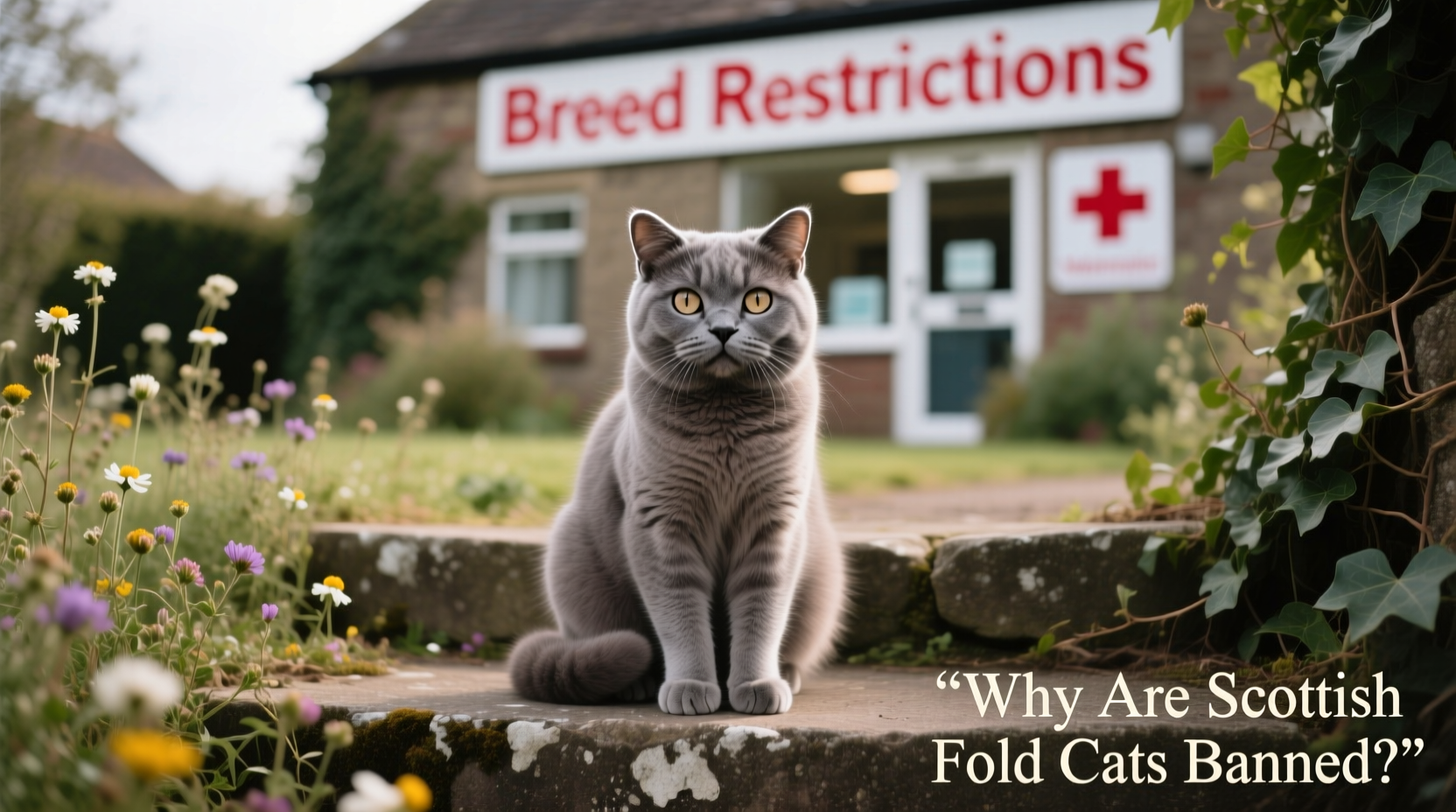
The Scottish Fold cat, instantly recognizable by its unique folded ears and wide-eyed expression, has captured the hearts of cat lovers worldwide. Yet behind its charming appearance lies a deeply controversial breeding history rooted in genetic abnormalities and chronic suffering. In numerous countries—including the UK, Australia, and several across Europe—the breeding and sale of Scottish Folds are either heavily restricted or outright banned. The reason? A single gene responsible for those adorable floppy ears also causes a painful, degenerative condition known as osteochondrodysplasia.
This article explores the science, ethics, and international response behind the ban on Scottish Fold cats, offering insight into why animal welfare organizations and veterinary professionals are calling for an end to their breeding.
The Genetic Mutation Behind the Folded Ears
The defining feature of the Scottish Fold—its folded ears—is caused by a spontaneous dominant gene mutation affecting cartilage development. This mutation, first observed in a white barn cat named Susie in 1961 in Scotland, alters the structure of connective tissue throughout the body, not just in the ears.
When the gene is inherited from one parent (heterozygous), the cat typically develops folded ears. However, if inherited from both parents (homozygous), the effects are significantly more severe. All Scottish Folds with folded ears carry at least one copy of this defective gene, meaning they are predisposed to lifelong skeletal issues.
“Breeding Scottish Folds is essentially breeding for a disease. There is no way to produce a healthy folded-eared cat without compromising long-term welfare.” — Dr. Rowena Packer, Senior Research Fellow in Companion Animal Biology, Royal Veterinary College
Osteochondrodysplasia: The Hidden Cost of Cuteness
Osteochondrodysplasia is a hereditary disorder that disrupts normal bone and cartilage development. In Scottish Folds, it manifests in progressive joint deformities, stiffness, lameness, and chronic pain. Symptoms often appear as early as four months of age and worsen over time.
Cats affected by this condition may exhibit:
- Limping or reluctance to jump
- Abnormal gait or bunny-hopping movement
- Swollen, rigid joints in the tail, ankles, and knees
- Pain when touched or handled
- Tail that appears short, thick, and inflexible
In severe cases, the bones in the limbs and spine can fuse, leaving the cat permanently immobile. Many affected cats require lifelong pain management, restricted activity, and specialized care—measures that do not reverse the underlying condition.
Tip: If you already own a Scottish Fold, schedule regular vet check-ups focused on mobility and joint health. Early detection can improve quality of life.International Bans and Regulatory Stances
Due to mounting evidence of suffering, several countries and major veterinary organizations have taken decisive action against Scottish Fold breeding.
| Country/Organization | Status | Key Reasoning |
|---|---|---|
| United Kingdom (GCCF) | Banned from registration | Genetic defect causes avoidable suffering |
| Australia (RSPCA) | Breeding discouraged; import restrictions | Prevention of animal cruelty |
| Germany | Breeding illegal under animal protection law | Deliberate breeding of diseased animals prohibited |
| France | Scottish Folds cannot be shown or bred | Ethical concerns over genetic disorders |
| Fédération Internationale Féline (FIFe) | Does not recognize the breed | Welfare risks outweigh aesthetic value |
In contrast, the breed remains legal and popular in the United States, where the Cat Fanciers' Association (CFA) continues to register Scottish Folds. This divergence highlights a global divide in how animal welfare is prioritized in pet breeding practices.
Real-Life Consequences: A Mini Case Study
Sophie, a 3-year-old Scottish Fold from Glasgow, was adopted as a kitten for her sweet temperament and distinctive look. By age one, she began avoiding stairs and showed discomfort when picked up. Radiographs revealed fused vertebrae and severely deformed ankle joints consistent with advanced osteochondrodysplasia.
Her owner, unaware of the breed’s risks, had assumed Sophie was simply “lazy.” After diagnosis, Sophie required daily anti-inflammatory medication, a heated bed, and environmental modifications like low-entry litter boxes and ramps. Despite dedicated care, her mobility continued to decline.
Sophie’s case illustrates how the consequences of selective breeding for appearance can unfold gradually—often after the cat has been sold and the breeder has disengaged.
Alternatives and Ethical Breeding Practices
Animal welfare advocates emphasize that there is no ethical way to breed Scottish Folds without perpetuating disease. However, some breeders attempt to reduce risk through specific mating strategies.
One common practice is crossing a Scottish Fold (with one copy of the gene) with a straight-eared British Shorthair or American Shorthair—producing offspring known as “Scottish Straights.” While these cats do not have folded ears, half of them still carry the defective gene and can pass it on if bred irresponsibly.
Even Scottish Straights with no physical symptoms remain genetic carriers, making them unsuitable for any breeding program aiming to eliminate the mutation entirely.
“We should not be creating animals destined to suffer for human amusement. Beauty should never come at the cost of health.” — James Yeates, Chief Veterinary Officer, RSPCA
What You Can Do: Checklist for Responsible Ownership
If you're considering a cat with folded ears—or already own one—here’s how to act responsibly:
- Never breed a Scottish Fold, even if it appears healthy.
- Adopt instead of buying from breeders who profit from genetic defects.
- Choose breeds with natural ear shapes, such as British Shorthairs or European Shorthairs.
- Support legislation banning the breeding of genetically compromised pets.
- Consult your veterinarian about signs of joint disease and pain management options.
- Educate others about the hidden costs of trendy pet traits.
Frequently Asked Questions
Can Scottish Fold cats live normal lives?
Some Scottish Folds may appear healthy in early life, but most develop joint problems by adulthood. While supportive care can improve comfort, they are unlikely to live completely pain-free lives due to their genetic condition.
Are all Scottish Folds in pain?
Not all show obvious signs immediately, but every Scottish Fold with folded ears carries the gene for osteochondrodysplasia. Pain levels vary, but degeneration is inevitable to some degree.
Why are Scottish Folds still sold in some countries?
Profit motives and lack of regulation allow breeders to continue selling them, especially online and through social media platforms that glamorize their appearance without disclosing health risks.
Conclusion: Prioritizing Welfare Over Aesthetics
The story of the Scottish Fold is a cautionary tale about the dangers of breeding animals for novelty rather than health. What began as a rare mutation has become a global commodity, promoted for its whimsical look while its victims endure silent suffering.
Banning the breed isn’t about denying affection for a certain appearance—it’s about aligning pet ownership with compassion and responsibility. As public awareness grows, so does the momentum for change. Veterinarians, lawmakers, and conscientious pet owners are increasingly refusing to support practices that prioritize cuteness over well-being.
💬 Will you help end the demand for genetically compromised pets? Share this article to spread awareness and choose adoption over trends. Every informed decision protects a future cat from unnecessary pain.








