When choosing a houseplant that can thrive in less-than-ideal conditions, two names consistently rise to the top: the spider plant (Chlorophytum comosum) and the snake plant (Sansevieria trifasciata). Both are celebrated for their air-purifying qualities, minimal care requirements, and ability to brighten indoor spaces. But when push comes to shove—especially in dimly lit rooms or when watering is inconsistent—which one truly wins the title of ultimate survivor?
This article dives deep into the real-world performance of spider plants and snake plants under low-light environments and periods of neglect. We’ll compare growth habits, water tolerance, lighting adaptability, and overall resilience, so you can make an informed decision based on your lifestyle and home environment.
Light Requirements: How Each Plant Handles Low Light
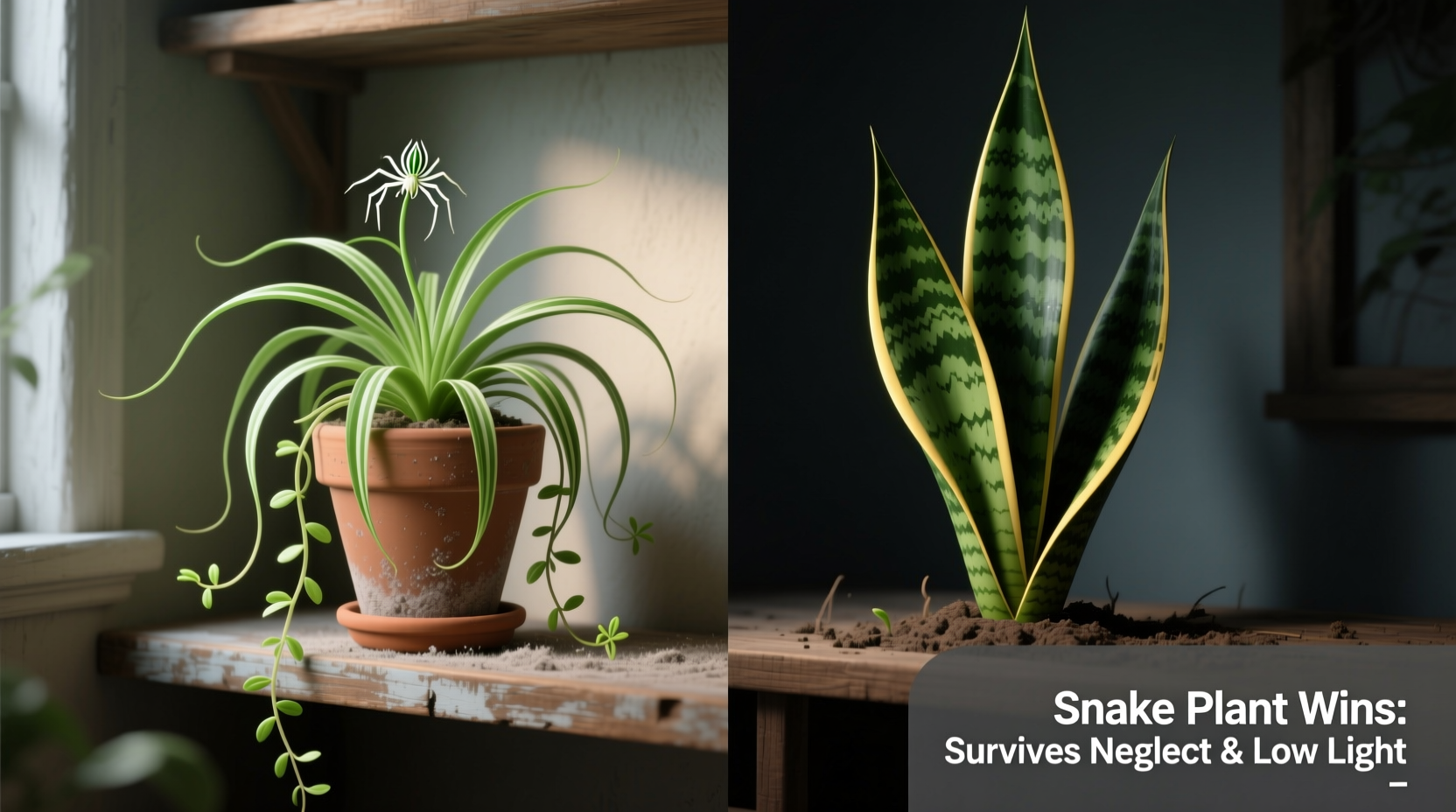
One of the most critical factors in indoor plant survival is light availability. Many homes lack consistent, bright natural light, especially during winter months or in windowless rooms.
Spider Plant: Native to South Africa, spider plants naturally grow in dappled sunlight beneath tree canopies. Indoors, they prefer bright, indirect light but can tolerate moderate shade. However, prolonged exposure to low light leads to leggy growth, reduced variegation, and fewer “spiderettes” (the baby plantlets they’re famous for). In very dim conditions, the leaves may become pale and weak.
Snake Plant: Also native to West Africa, snake plants evolved in arid, shaded environments. They are exceptionally efficient at photosynthesis with minimal light. While they grow faster in bright indirect light, they can survive—and even persist—for years in corners with almost no natural light. Fluorescent office lighting is often enough to keep them alive.
Tip: If your space has only artificial light or north-facing windows, snake plants are more likely to endure long-term than spider plants.Watering Tolerance: Who Survives Forgetful Owners?
Overwatering is the leading cause of indoor plant death. The ability to withstand missed watering sessions—or accidental overhydration—is a key trait for any “neglect-tolerant” plant.
Spider Plant: These plants prefer evenly moist soil but dislike sitting in water. They will droop noticeably if too dry and develop brown leaf tips if overwatered or exposed to chlorine in tap water. While they can survive a week or two without water, extended drought causes stress, leaf browning, and stunted growth. They are moderately forgiving but require some consistency.
Snake Plant: With thick, succulent-like leaves that store water, snake plants are built for drought. They thrive on infrequent watering—once every 3–6 weeks is often sufficient. Their rhizomatous root system resists rot better than most houseplants, making them highly tolerant of both underwatering and occasional overwatering (provided the soil drains well).
“Snake plants are among the most resilient indoor species we recommend for beginners. Their slow metabolism allows them to go months without attention.” — Dr. Linda Park, Botanist and Urban Horticulture Consultant
Comparative Resilience: A Side-by-Side Breakdown
| Factor | Spider Plant | Snake Plant |
|---|---|---|
| Low Light Tolerance | Moderate – survives short-term, declines over time | High – thrives in low to moderate light |
| Drought Resistance | Low to Moderate – shows stress within 1–2 weeks | Very High – can go 4+ weeks without water |
| Overwatering Risk | Moderate – prone to root rot if soil stays wet | Low – highly resistant due to succulent leaves |
| Growth Speed in Low Light | Slow, leggy, reduced variegation | Very slow but steady |
| Pest Susceptibility | Higher – attracts spider mites in dry air | Lower – rarely affected by pests |
| Air Purification (NASA Study) | Yes – removes formaldehyde, xylene | Yes – removes benzene, formaldehyde, trichloroethylene |
| Pet Safety | Toxic to cats and dogs if ingested | Mildly toxic – causes nausea or vomiting |
The data clearly favors the snake plant when it comes to surviving under challenging conditions. Its structural adaptations—thick leaves, slow growth, and CAM photosynthesis (a water-efficient process used by desert plants)—make it uniquely suited for forgotten corners and irregular care routines.
Real-World Case: Office Environment Test
In 2022, a small study was conducted across three office buildings in Chicago to evaluate plant longevity under typical corporate conditions: fluorescent lighting, infrequent watering (every 4–6 weeks), and temperature fluctuations from HVAC systems.
Twelve spider plants and twelve snake plants were placed in identical interior offices with no windows. All received the same care—or lack thereof—from building staff.
- After 3 months: Spider plants showed significant browning, reduced growth, and two had died. Snake plants remained green and upright.
- After 6 months: Only four spider plants survived, all with sparse foliage. Ten snake plants were still healthy; two showed minor tip burn.
- After 12 months: No spider plants remained viable. Eight snake plants were actively growing, albeit slowly.
This real-world scenario illustrates that while spider plants can handle brief periods of neglect, they falter over time without proper light and moisture balance. Snake plants, by contrast, proved nearly indestructible in the same setting.
Care Tips for Maximizing Survival
Even the hardiest plants benefit from smart care. Here’s how to get the most out of each species, especially in low-light or high-neglect environments.
Tip: Use terracotta pots for both plants—they promote airflow and help prevent overwatering, especially critical for snake plants in poorly lit areas.For Spider Plants:
- Place near an east- or north-facing window if possible.
- Use filtered or distilled water to avoid fluoride and chlorine damage.
- Trim brown tips regularly to maintain appearance.
- Rotate the pot monthly for even growth.
- Fertilize lightly every 2–3 months during spring and summer.
For Snake Plants:
- Thrives in corners, hallways, or bathrooms with minimal light.
- Water only when the soil is completely dry—check by inserting a finger 2 inches deep.
- Wipe leaves occasionally to remove dust and improve light absorption.
- Repot every 2–3 years; they prefer being slightly root-bound.
- No fertilizer needed, but a single dose in spring won’t hurt.
Step-by-Step Guide: Choosing the Right Plant for Your Space
- Assess your light conditions: Is the room near a window? Does it receive direct sun? If not, lean toward snake plant.
- Evaluate your schedule: Do you travel frequently or forget to water? Snake plants are ideal for irregular routines.
- Consider pet safety: If you have curious cats or dogs, keep spider plants out of reach. Snake plants are also mildly toxic but less tempting to chew.
- Think about aesthetics: Spider plants offer soft, cascading foliage—great for hanging baskets. Snake plants provide upright, architectural lines suitable for modern decor.
- Test with a trial plant: Start with one of each in similar conditions and observe over 3 months. Note growth, leaf health, and maintenance effort.
FAQ: Common Questions Answered
Can I grow a spider plant in a bathroom with no window?
Possibly, but not ideally. Bathrooms often have high humidity, which spider plants enjoy, but without any natural or artificial light, the plant will weaken over time. A snake plant would be far more suitable in such a space.
Why are the tips of my spider plant turning brown?
Brown tips are typically caused by chemical buildup (fluoride, chlorine) in tap water, low humidity, or inconsistent watering. Use filtered water and maintain even moisture to reduce this issue.
Do snake plants really clean the air at night?
Yes. Unlike most plants, snake plants use crassulacean acid metabolism (CAM), opening their stomata at night to absorb carbon dioxide and release oxygen. This makes them excellent bedroom plants for improving air quality during sleep.
Final Verdict: Which Plant Wins?
If your priority is a plant that survives prolonged neglect, low light, and irregular watering, the **snake plant is the clear winner**. It’s nearly impossible to kill through benign neglect and performs reliably in environments where most other houseplants fail.
The spider plant, while charming and fast-growing under optimal conditions, demands more attention. It shines in bright, indirect light and with consistent moisture. It’s a better choice for those who enjoy tending to plants and want visible signs of growth and propagation.
That said, both plants have earned their place in the pantheon of beginner-friendly houseplants. The difference lies in the degree of forgiveness. For apartments, offices, dorm rooms, or homes with spotty care routines, the snake plant’s ruggedness gives it a decisive edge.
Action Plan Checklist
- ✅ Assess your home’s light levels room by room
- ✅ Determine how often you realistically water plants
- ✅ Decide whether aesthetics (cascading vs. upright) matter more than resilience
- ✅ Choose snake plant for low-light, high-neglect areas
- ✅ Choose spider plant for brighter spaces where you can provide regular care
- ✅ Use well-draining soil and pots with drainage holes for either option
- ✅ Monitor plant health monthly and adjust care as needed
Conclusion: Make the Smart Choice for Your Lifestyle
The debate between spider plant and snake plant isn’t about which is “better” in absolute terms—it’s about matching the right plant to your living conditions and habits. Nature offers solutions for every environment, but success comes from understanding what each plant truly needs.
If you're looking for a set-it-and-forget-it green companion that endures dim corners and vacation-length absences, the snake plant stands unmatched. But if you’re drawn to lively growth, hanging displays, and a bit of gardening engagement, the spider plant rewards attention with beauty and charm.
🚀 Ready to bring life to your space? Start with a snake plant in your darkest room and a spider plant near a kitchen window. See which thrives—and learn what your home really needs. Share your journey with fellow plant lovers!








