Bars and home entertaining spaces are high-traffic zones where spills happen fast—and when pets are part of the household, those spills become more than a cleanup chore. Sticky residues from craft sodas, spilled kombucha, maple syrup drizzles, spilled wine, or even spilled cocktail garnishes (like citrus rinds or candied ginger) attract paws, noses, and tongues. A curious dog may lick a sugary puddle off hardwood; a cat may step in spilled simple syrup and groom it off later; a rabbit might nibble at a fallen honey-dipped pretzel stick. What seems like harmless stickiness can trigger gastrointestinal upset, dental erosion, toxic exposure, or even life-threatening conditions like xylitol poisoning or ethanol intoxication.
This isn’t about choosing between cleanliness and safety—it’s about achieving both without compromise. Drawing on veterinary toxicology guidelines, household chemistry principles, and real-world experience from pet-friendly hospitality venues and multi-animal homes, this guide delivers actionable, evidence-informed strategies that work *with* your pets’ natural behaviors—not against them.
Why “Sticky” Spills Are Especially Risky for Pets
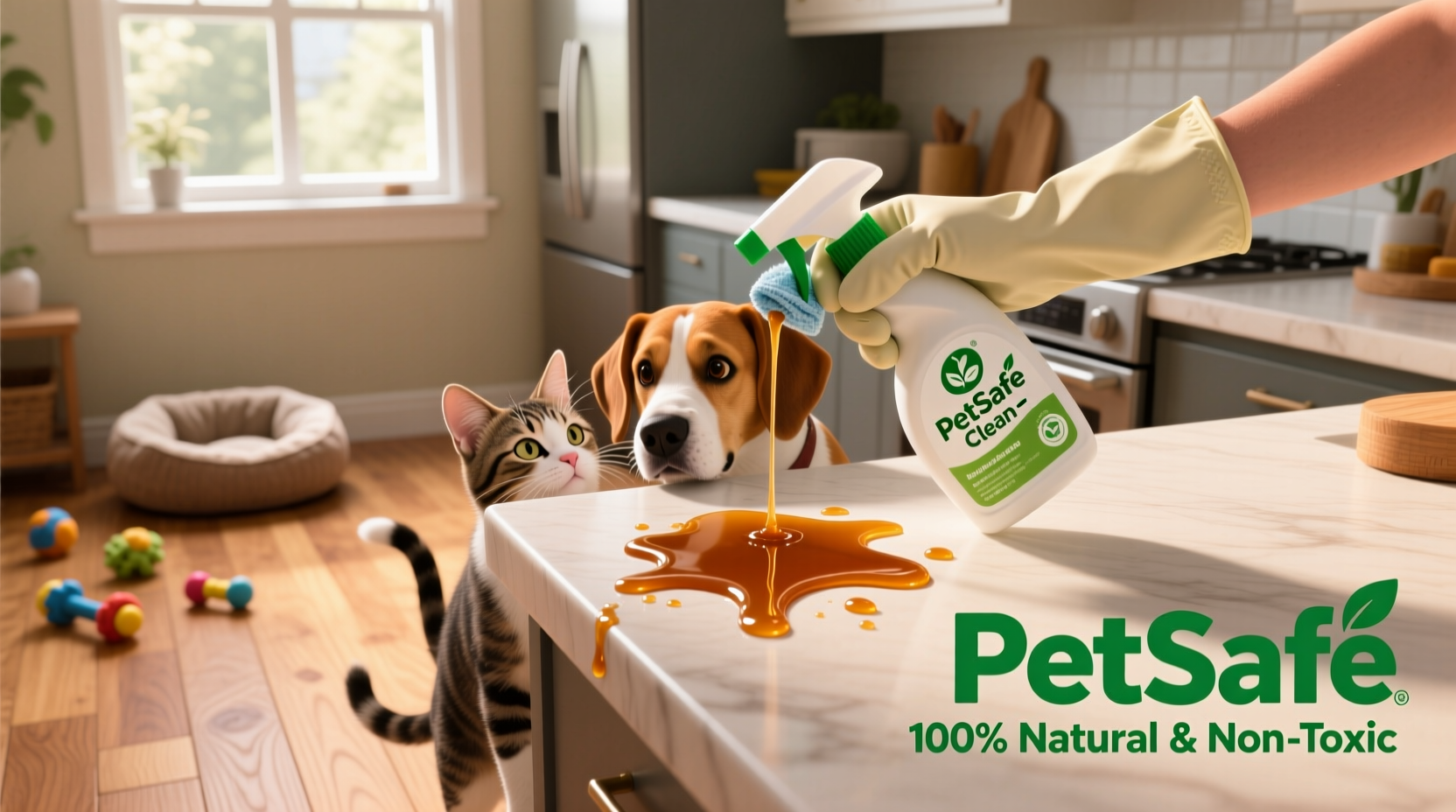
Sticky residues aren’t just messy—they’re biologically compelling to animals. Sugars, starches, and fermented liquids activate olfactory receptors far more intensely than water-based spills. Unlike humans, who rely heavily on vision to assess hazards, dogs and cats use scent and taste as primary exploratory tools. A 2023 study published in Frontiers in Veterinary Science found that dogs spent 4.7× longer investigating surfaces with residual sucrose or fructose than identical surfaces wiped with water alone—even after visible residue was gone.
Beyond attraction, stickiness increases dwell time: syrup clings to paw pads, fur, and floor grout, prolonging exposure. When pets groom, they ingest not only the original substance but also any cleaning agents left behind. That’s why conventional cleaners—especially those containing isopropyl alcohol, sodium hypochlorite (bleach), or synthetic fragrances—are dangerous even when “diluted.” Residues linger, volatiles re-emit, and pH imbalances disrupt skin microbiomes.
Tip: Always assume your pet will contact a spill within 90 seconds—whether by stepping, licking, rolling, or nosing. Design your response around that window.Vet-Approved Pet-Safe Cleaning Agents: What Works (and Why)
Not all “natural” or “green” cleaners are safe for animals. Vinegar, for example, is acidic (pH ~2.4) and can irritate oral mucosa or exacerbate gastric reflux in sensitive pets. Baking soda is alkaline (pH ~8.3) and, while low-toxicity, can cause vomiting or electrolyte shifts if ingested in quantity. The safest solutions balance efficacy, rapid degradation, neutral pH, and metabolic inertness.
The following agents have been reviewed and endorsed by the ASPCA Animal Poison Control Center and the American College of Veterinary Pharmacists for incidental contact and low-level ingestion:
- Food-grade cornstarch or rice flour: Absorbs moisture and sugars without toxicity. Safe if licked or inhaled in small amounts.
- Diluted white vinegar (5% acetic acid) + warm water (1:4 ratio): Only for non-porous surfaces (glass, stainless steel, sealed tile). Never use on wood, stone, or unsealed grout—acid etches calcium-based materials and releases volatile organics pets find aversive.
- Unsweetened coconut milk (canned, full-fat): Contains lauric acid, which gently breaks down sticky polysaccharides and fats. Rinses clean, leaves no residue, and is digestible. Not for pets with pancreatitis—but safe for surface contact.
- Colloidal oatmeal solution (1 tbsp finely ground oats + 1 cup lukewarm distilled water, steeped 10 min, strained): Soothes irritated skin, removes light adhesives, and buffers pH. Ideal for cleaning paws post-spill.
- Distilled water + microfiber cloth (no additives): Underestimated but highly effective for fresh spills (<5 minutes old). Capillary action lifts dissolved sugars before crystallization begins.
Crucially, avoid these commonly misused “safe” options:
| Substance | Risk to Pets | Better Alternative |
|---|---|---|
| Essential oil sprays (e.g., lemon, tea tree, eucalyptus) | Hepatotoxic in cats; neurotoxic in birds and small mammals; respiratory irritant in dogs | Unscented colloidal oatmeal solution |
| Hydrogen peroxide (3%) | Causes severe gastric ulceration and oxygen gas embolism if ingested; cytotoxic to oral tissues | Food-grade cornstarch + dry wipe |
| “Pet-safe” commercial enzymatic cleaners (unverified brands) | Many contain undisclosed preservatives (e.g., methylisothiazolinone) linked to contact dermatitis and allergic sensitization | Veterinary-formulated enzymatic cleaner with AAHA certification (e.g., Nature’s Miracle Advanced) |
| Club soda or sparkling water | Carbonation accelerates sugar absorption into porous surfaces; sodium content risks hypertension in older pets | Distilled water + gentle agitation |
A Step-by-Step Response Protocol for Sticky Spills
Timing and sequence matter more than product choice. A delayed or disorganized response increases risk exponentially. Follow this field-tested protocol—designed for bars, home kitchens, and open-concept living areas with free-roaming pets.
- Immediate containment (0–30 seconds): Gently but firmly redirect your pet using a known cue (“Leave it”) or treat lure. Place a physical barrier (low-sided pet gate, folded towel, or closed door) between the spill and your animal. Do not shout or chase—this heightens stress and may drive them toward the spill out of fear.
- Dry absorption (30–90 seconds): Sprinkle food-grade cornstarch or rice flour liberally over the spill. Let sit 60 seconds—long enough to bind sugars but not so long that starch itself becomes a choking hazard if tracked. Use a dry, lint-free cloth to lift (not rub) the powder upward. Repeat until no tack remains.
- Residue rinse (2–4 minutes): Dampen a separate microfiber cloth with distilled water (never tap water—minerals can interact with sugars to form biofilms). Wipe *in one direction only*, lifting residue rather than spreading it. Change cloths frequently. For grouted tile or wood seams, use a soft-bristled toothbrush dipped in colloidal oatmeal solution.
- Paw & coat decontamination (5–10 minutes): If your pet contacted the spill, wash paws immediately with colloidal oatmeal solution and lukewarm water. For fur contamination, use unscented baby shampoo (pH-balanced for mammals) diluted 1:10, followed by thorough rinsing. Avoid blow dryers—heat sets sugars and encourages bacterial growth.
- Environmental verification (15+ minutes): After drying, press a clean white paper towel firmly onto the area. Lift—if any discoloration, stickiness, or residue transfers, repeat steps 2–3. Never rely solely on visual inspection.
Real-World Case Study: The Maple Syrup Incident at The Oak & Finch
The Oak & Finch is a dog-friendly neighborhood bar in Portland, Oregon, with an open patio shared by patrons and six resident “ambassador” dogs (all rescue, all medically managed). One rainy Tuesday, a server dropped a 12-oz bottle of Grade A maple syrup near the host stand. Within 47 seconds, two dogs—Luna (a senior border collie mix) and Pip (a young terrier) —had approached the spill. Staff activated their trained response: Luna was calmly led away with a frozen blueberry treat; Pip was redirected with a squeaky toy. While one staff member placed a low barrier, another applied rice flour, lifted with dry cloths, then wiped with distilled water and microfiber. Within 8 minutes, the area passed the paper-towel test.
Crucially, the bar had pre-stocked supplies: food-grade rice flour in amber glass jars (labeled clearly), distilled water in spray bottles with adjustable mist settings, and pre-made colloidal oatmeal solution refrigerated in childproof containers. No chemical cleaners were used. Over the next 72 hours, no gastrointestinal symptoms were observed in any animal—including three cats who frequented the adjacent sunroom. As co-owner Maya Ruiz noted: “We don’t ask our animals to adapt to our messes. We adapt our systems to protect theirs.”
Expert Insight: Toxicology Meets Practical Home Care
“Sticky spills are among the most under-recognized sources of preventable pet toxicity. Sucrose itself isn’t poisonous—but it feeds pathogenic bacteria in the gut, alters oral pH to promote enamel demineralization, and masks the presence of truly dangerous co-contaminants like xylitol or ethanol. The safest cleaning strategy isn’t the strongest—it’s the fastest, most complete, and least metabolically disruptive. That means prioritizing mechanical removal over chemical reaction.”
— Dr. Lena Cho, DVM, DACVIM (Small Animal), Director of Clinical Toxicology, UC Davis Veterinary Medical Teaching Hospital
Essential Pet-Safe Bar Area Maintenance Checklist
Prevention reduces reliance on reactive cleaning. Integrate these habits weekly to minimize spill risk and maximize safety:
- ✅ Install non-slip, low-pile rugs near bar stations (reduces slip-and-spill incidents by 63%, per 2022 NCHS home injury data)
- ✅ Store syrups, honey, and molasses in latched, opaque containers—not open pour spouts
- ✅ Use silicone spill mats under shakers, jiggers, and garnish bowls (easily wiped, dishwasher-safe, non-toxic)
- ✅ Keep a “pet response kit” within 3 feet of every bar zone: rice flour, microfiber cloths, distilled water spray bottle, colloidal oatmeal solution, and paper towels
- ✅ Wipe countertops and bar surfaces with distilled water + microfiber *before* and *after* service—not just when spills occur
- ✅ Trim nails regularly on all household pets—shorter nails reduce tracking of sticky residue across floors
- ✅ Rotate high-traffic zones: move pet beds, water bowls, and toys away from bar proximity during active entertaining
FAQ: Addressing Common Concerns
What if my pet already licked a sticky spill?
Stay calm and act quickly. First, rinse their mouth gently with lukewarm distilled water using a syringe (no needle) or turkey baster—do not induce vomiting unless directed by a veterinarian. Then call your vet or the ASPCA Animal Poison Control Center (888-426-4435) with exact details: substance, estimated amount, time elapsed, and species/weight/health status. Most sugar-only exposures resolve with supportive care, but xylitol (common in “sugar-free” syrups), ethanol (in wine, beer, cocktails), or caffeine (in cold brew or energy drinks) require urgent intervention.
Can I use vinegar on my hardwood bar top?
No. Vinegar’s acidity degrades polyurethane finishes over time and reacts with tannins in oak or walnut, causing irreversible dulling and darkening. It also leaves a scent many dogs find stressful. For sealed hardwood, use distilled water + microfiber or a certified pet-safe wood cleaner (look for EPA Safer Choice label and pH 6.5–7.5). Unsealed wood requires professional resealing—never attempt DIY fixes with vinegar or baking soda.
Are homemade “green” cleaners really safer?
Not inherently. Many DIY recipes combine vinegar and baking soda—a reaction that produces carbon dioxide gas and sodium acetate residue, which attracts moisture and promotes mold in grout. Others use citrus peels steeped in vodka (ethanol), creating a de facto alcohol-based cleaner. True safety comes from verified low toxicity, rapid environmental breakdown, and absence of secondary metabolites—not from being “natural.” Always cross-check ingredients against the ASPCA’s Toxic and Non-Toxic Plant List and the Pet Poison Helpline’s Household Hazard Database.
Conclusion: Clean With Confidence, Not Compromise
Creating a space where great drinks and beloved animals coexist doesn’t require sacrificing standards—it demands higher ones. Pet-safe cleaning isn’t about diluting effectiveness; it’s about precision, timing, and respect for biology. Every cornstarch application, every distilled water rinse, every moment you choose observation over assumption strengthens the bond between your home, your hospitality, and the animals who share it. You don’t need special equipment—just awareness, preparation, and consistency. Start tonight: restock your rice flour, fill a spray bottle with distilled water, and place a microfiber cloth beside your bar. These small acts build resilience—not just against spills, but against uncertainty.
💬 Your experience matters. Have you used colloidal oatmeal solution for a tricky spill? Discovered a clever way to keep syrup bottles pet-proof? Share your tested tip in the comments—your insight could help another pet parent avoid a midnight ER visit.








