
Hosting a bar party at home should be about connection—not constant vigilance. Yet for many dog owners, the moment guests arrive, so does the familiar ritual: paws on knees, soulful stares at cocktail glasses, strategic flops beside snack bowls, and the quiet, persistent nudge of a wet nose against an elbow holding a charcuterie fork. Begging isn’t just inconvenient; it undermines your dog’s emotional regulation, invites digestive upset from human foods, and quietly erodes household boundaries. Worse, most owners respond inconsistently—sometimes saying “no,” sometimes sneaking a crumb “just this once,” sometimes shooing the dog away only to find them back in 30 seconds, more determined than before. This cycle doesn’t reflect poor dog behavior. It reflects unstructured training, missed cues, and a fundamental mismatch between social expectations and canine communication. The solution isn’t banishment to another room (though temporary management has its place), nor is it scolding. It’s proactive, empathetic, and deeply practical training rooted in behavioral science—and it starts long before the first guest rings your doorbell.
Why Begging Escalates During Parties—And Why It’s Not “Just Being Friendly”
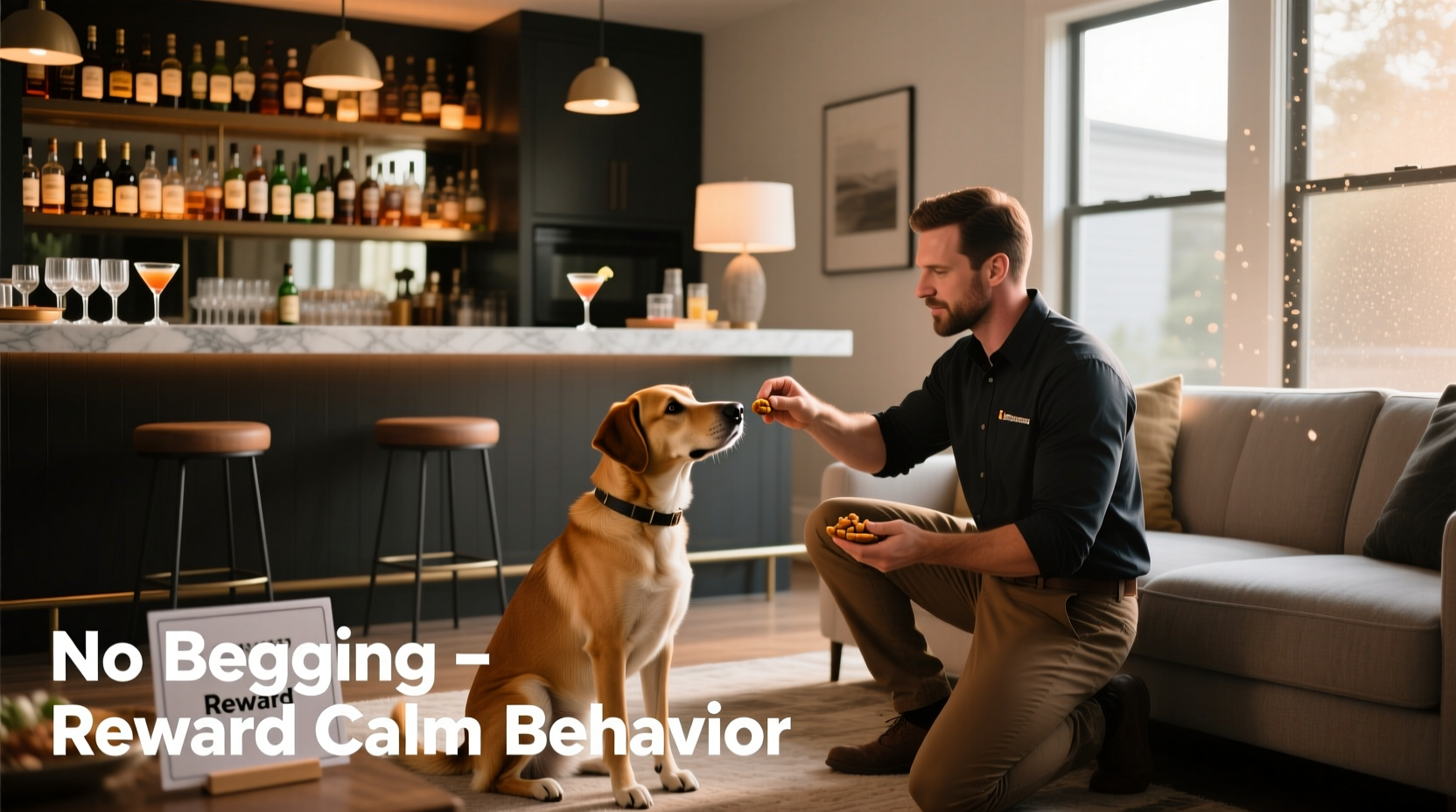
Begging at parties isn’t random mischief. It’s operant conditioning in real time: your dog learns that proximity to guests + sustained attention + vocalization or physical contact = high-value rewards (treats, dropped food, petting, even verbal engagement). Parties amplify this because they introduce three powerful variables: increased movement, novel scents (alcohol, cheese, grilled meats), and inconsistent human responses. A guest who’s had two glasses of wine may be far more likely to drop a chip or offer a bite than your sober, rule-following partner. Your dog notices—and remembers. Neurologically, the anticipation of reward triggers dopamine release, reinforcing the behavior with each successful interaction. Over time, the dog doesn’t just beg *for food*—they beg for *access*, *attention*, and *inclusion*. That’s why simply telling guests “please don’t feed him” rarely works: it places the burden on people who aren’t trained in dog behavior, while leaving your dog’s underlying motivation untouched.
“Dogs don’t beg because they’re manipulative—they beg because they’ve been taught, often unintentionally, that persistence pays. Every time a guest reaches down—even to say ‘shoo’—they’re reinforcing the dog’s presence as relevant.” — Dr. Sarah Lin, Certified Applied Animal Behaviorist and author of Everyday Ethology
A 4-Week Pre-Party Training Timeline
Effective training begins at least one month before your next gathering. Rushed fixes create confusion and frustration—for both you and your dog. This timeline builds reliability through repetition, environmental control, and layered cues. Follow it precisely, adjusting only for your dog’s individual pace (e.g., extend Week 2 if your dog struggles with duration).
- Week 1: Foundation & Impulse Control
Teach “place” (a designated mat or bed) using positive reinforcement. Start with 5-second holds while you stand beside the mat. Reward only when all four paws remain on the surface. Gradually increase duration to 2 minutes and add mild distractions (e.g., dropping keys, opening a cabinet). No treats off the mat. If your dog leaves, calmly guide them back—no scolding. - Week 2: Guest Simulation & Cue Generalization
Invite one calm, reliable friend. Ask them to enter, ignore the dog completely, and sit quietly. Practice “place” with your dog while your guest is present. Reward stillness—not eye contact or whining. If your dog breaks, reset without emotion. Repeat 3x per session, max 10 minutes. Introduce a low-distraction food item (e.g., a dry biscuit on the floor near—but not touching—the mat) to test impulse control. - Week 3: Controlled Exposure & Distraction Grading
Add complexity: two guests, light background music, and a small, visible snack bowl placed 6 feet from the mat. Use a 6-foot leash attached to a belt loop for gentle redirection if needed. Reward only sustained relaxation (soft eyes, loose body, no lip-licking or yawning). Introduce the “leave-it” cue with safe items (e.g., a closed fist containing kibble). Master this before moving to open bowls. - Week 4: Full Mock Party & Protocol Integration
Host a 30-minute “dry run”: guests arrive, mingle, hold drinks (non-alcoholic), and follow your pre-briefed instructions (see checklist below). Your dog stays on “place” for 80% of the event. Rotate short “breaks” (2 minutes of leash-walked outdoor time or a puzzle toy in a quiet room) to prevent fatigue. Record video to assess body language—tension, panting, or frequent blinking signal over-arousal, not disobedience.
Guest Management: The Unspoken Host Responsibility
You control the environment—not your guests’ impulses. Effective hosting means briefing attendees *before* they walk in the door. This isn’t about policing; it’s about shared responsibility for your dog’s well-being and your guests’ comfort. Provide clear, kind guidance—and back it up with structure.
| Action | Do | Don’t |
|---|---|---|
| Pre-arrival communication | Text guests 24 hours prior: “So excited to host you! To keep our pup, Leo, calm and healthy, we ask that everyone avoid feeding him—our treats are vet-approved and portioned. We’ll have a cozy ‘dog-free zone’ set up for mingling!” | Wait until guests arrive to mention it—or worse, say nothing and hope for compliance. |
| In-the-moment redirection | Keep a basket of approved dog treats by the front door. Hand one to guests *with instructions*: “Here’s Leo’s special party treat—just toss it onto his mat when he’s settled!” | Let guests reach into their own bags or plates. Never assume they know what’s safe (grapes, onions, alcohol, xylitol-sweetened items are toxic). |
| Physical setup | Create a defined “dog zone”: a quiet room or corner with the mat, water, a chew toy, and white noise (e.g., fan or soft music). Close the door or use a baby gate if needed. | Leave food on low tables, couches, or countertops within easy leap range—or allow the dog free roam in active party zones. |
Real-World Case Study: Maya, Her Terrier Mix Finn, and the “Cocktail Hour Crisis”
Maya hosted biweekly cocktail nights in her Brooklyn apartment. Finn, a spirited 4-year-old Jack Russell–Beagle mix, would begin pacing 30 minutes before guests arrived, then escalate to barking at the doorbell, nudging hands holding drinks, and stealing olives from passed appetizer plates. After three incidents—including one guest accidentally dropping a piece of chocolate-covered espresso bean—Maya consulted a certified trainer. They discovered Finn wasn’t “naughty”; he was anxious and seeking predictability in chaotic energy. His “begging” was displacement behavior masking stress. The plan: First, shift Finn’s association with parties from “chaos” to “calm opportunity.” Maya began playing low-volume jazz 45 minutes pre-party and giving Finn a frozen KONG filled with goat yogurt and blueberries—only during this window. Second, she installed a visual cue: a navy bandana worn *only* by guests who’d agreed to the “no-feed” policy. Finn learned to relax around bandana-wearers, and guests felt empowered, not admonished. Within five weeks, Finn’s pre-party pacing stopped. At the next party, he settled on his mat for 47 uninterrupted minutes—then took his scheduled break outside. Maya reported guests complimented his “chill vibe.” The transformation wasn’t about obedience—it was about reducing ambiguity.
The Essential Pre-Party Checklist
- ✅ 3 days before: Vacuum thoroughly—crumbs under furniture are prime begging bait.
- ✅ 1 day before: Wash your dog’s bedding and place it in the designated “dog zone.” Add a worn t-shirt with your scent for security.
- ✅ 2 hours before: Take your dog for a brisk 20-minute walk + 5 minutes of focused “find-it” scent work (hide kibble in grass or yard).
- ✅ 30 minutes before: Feed dinner (not snacks) and offer a long-lasting chew (e.g., bully stick or dental bone) in the dog zone.
- ✅ At arrival: Greet guests at the door *while leashing your dog*, then escort them directly to the living area—bypassing kitchens and dining spaces where food lives.
- ✅ During party: Assign one person (not you) to monitor the dog zone and refresh water/chews every 45 minutes.
FAQ: Addressing Common Concerns
What if my dog is reactive or fearful around strangers?
Do not force exposure. Begin with distance desensitization: have guests stand silently 15+ feet away while you reward calm behavior (even just looking away). Gradually decrease distance over weeks—not hours. For true reactivity (growling, lunging), consult a veterinary behaviorist before hosting. Safety trumps social expectations.
Can I use a crate instead of a mat?
Yes—if your dog is fully crate-trained and views it as a sanctuary (not punishment). Place the crate in the dog zone with covered sides for privacy. Never crate a stressed dog during parties; it can heighten anxiety. Observe body language: tucked tail, flattened ears, or panting indicate distress—not readiness.
My dog only begs for alcohol-infused foods (like beer-battered shrimp). Is that dangerous?
Extremely. Even trace amounts of ethanol cause vomiting, disorientation, respiratory depression, and hypoglycemia in dogs. Xylitol (in sugar-free cocktails or gum) triggers rapid, life-threatening insulin release. Never allow access. Store all alcohol-containing foods in sealed, dog-proof containers—and dispose of scraps in an outdoor bin.
Conclusion: Hospitality That Honors Both People and Pets
Training your dog to not beg at home bar parties isn’t about creating a silent, sterile environment—it’s about cultivating mutual respect. It’s recognizing that your dog’s need for safety, routine, and clear boundaries is as valid as your guests’ desire for relaxed conversation and good food. It’s understanding that the most elegant party isn’t the one where no one notices the dog, but the one where everyone feels comfortable—including the animal who calls your home theirs. This work requires consistency, patience, and a willingness to reframe “begging” as communication—not defiance. When you invest in structured preparation, thoughtful guest coordination, and compassionate behavior support, you’re not just solving a nuisance. You’re deepening your bond with your dog, elevating your hosting integrity, and modeling responsible coexistence in shared spaces. Start your first “place” session tonight. Adjust the mat. Breathe. Reward the stillness. One calm minute today builds the foundation for joyful, uncluttered gatherings tomorrow.
💬 Your turn: Share one thing you’ll implement from this plan before your next gathering—or tell us how your dog surprised you with their progress. Real stories help others feel less alone in the journey.








