Turtlenecks have long been associated with academia, winter formals, and perhaps a touch of intellectual austerity. But in today’s fashion landscape, they’re anything but outdated—if styled with intention. The key to wearing a turtleneck confidently lies not in avoiding it, but in reimagining how it fits within your wardrobe ecosystem. When layered thoughtfully, a turtleneck can be sleek, modern, and effortlessly cool. It adds structure, warmth, and a quiet elegance that few other pieces can match. The challenge? Avoiding the \"stuffy professor\" effect while embracing its inherent polish.
This guide breaks down how to style a turtleneck with contemporary flair—focusing on layering techniques, fabric choices, proportions, and accessories that keep the look fresh and dynamic. Whether you're navigating a crisp autumn day or dressing for a minimalist winter aesthetic, these strategies will help you wear turtlenecks with confidence and style.
Choose the Right Fit and Fabric
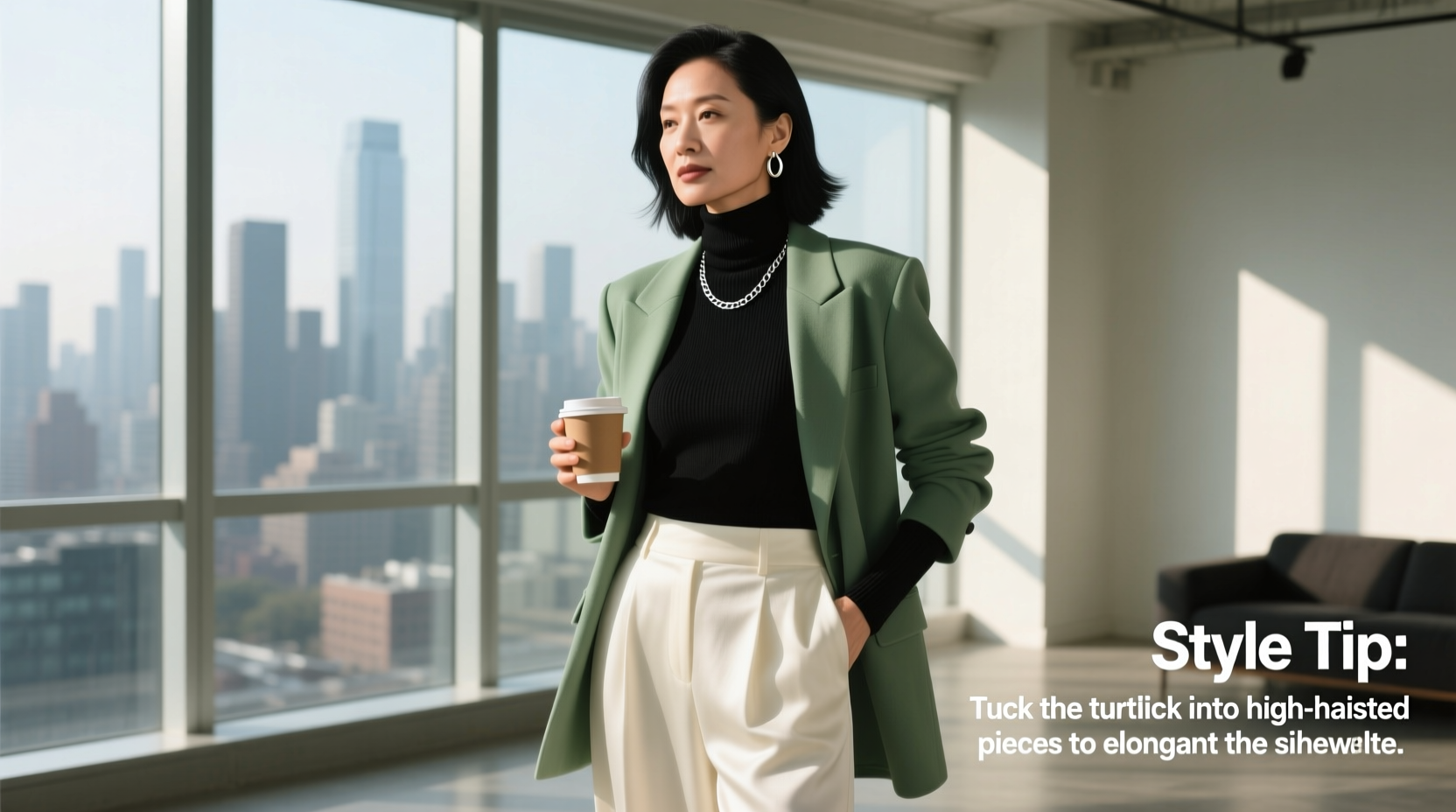
The foundation of any good turtleneck ensemble starts with the garment itself. A poorly fitting or overly thick knit can instantly weigh down your silhouette, making even the most stylish person appear boxy or constrained. Modern turtlenecks should feel like a second skin—not constricting, but supportive of your natural shape.
Opt for slim-fitting styles in lightweight merino wool, cashmere blends, or fine cotton. These materials drape well, breathe easily, and layer seamlessly under jackets or blazers. Avoid bulky knits unless intentionally used as a statement piece in colder weather. Even then, balance is crucial: pair a chunky turtleneck with streamlined trousers or a tailored coat to prevent visual overload.
Tip: If you're new to turtlenecks, start with a mock neck or half-turtleneck—it offers similar coverage with less formality.Fabric weight also affects comfort and versatility. Heavier wools are best reserved for deep winter, while lighter knits transition beautifully into spring layers. Neutral colors like black, charcoal, ivory, and camel offer maximum styling flexibility, but don’t shy away from muted tones like olive, burgundy, or heather gray for subtle personality.
Master the Art of Layering
Layering is where the turtleneck truly shines. Its high collar creates a clean base for outerwear, acting as both insulation and a polished underlayer. However, improper layering can lead to bulkiness or an overly formal appearance. The goal is to build depth without sacrificing movement or proportion.
- Under a Blazer or Suit Jacket: This classic combo works when kept minimal. Choose a slim-fit blazer in wool, tweed, or even leather for contrast. Skip the tie—let the turtleneck stand alone as a refined alternative to a dress shirt. Pair with dark jeans or chinos for a smart-casual edge.
- Beneath a Coat: A turtleneck eliminates the need for a scarf in many cases, especially with structured overcoats. Try a single-breasted pea coat or a double-breasted trench. For a fashion-forward twist, leave the top button undone and let the turtleneck peek through slightly.
- Over a Button-Down Shirt: Yes, really. Wearing a thin turtleneck over a crisp white or chambray shirt adds texture and visual interest. Roll up the cuffs of the shirt just enough to show at the wrists. This works particularly well with unbuttoned denim jackets or chore coats on cooler days.
- With a Vest: A sleeveless layer—like a quilted gilet, cable-knit sweater vest, or tailored waistcoat—adds dimension without covering the neckline entirely. This approach keeps the outfit light and breathable while maintaining warmth.
The secret to successful layering? Mind the volume. Each additional layer should decrease in thickness. Start thin (turtleneck), add moderate weight (shirt or sweater), then finish with heavier outerwear (coat). This prevents the “onion look” and maintains a clean profile.
Avoid Common Styling Pitfalls
Even small missteps can make a turtleneck feel outdated or uncomfortable. Awareness of common errors helps refine your approach and ensures each outfit feels intentional rather than accidental.
| Do | Don't |
|---|---|
| Pair with relaxed tailoring or dark denim for balance | Wear with stiff, wide-leg trousers that amplify formality |
| Roll sleeves slightly to expose wrist and break monotony | Let multiple layers bunch at the cuff or collar |
| Use accessories like watches, rings, or minimalist chains | Add a scarf over the turtleneck—creates unnecessary bulk |
| Choose footwear like Chelsea boots, loafers, or clean sneakers | Mix with overly academic shoes like oxfords unless fully dressed up |
| Experiment with open-front cardigans or duster coats | Layer too many textured pieces at once (e.g., cable knit + herringbone) |
Another frequent mistake is ignoring face shape and neck length. People with shorter necks may find full turtlenecks visually shortening. In such cases, opt for a folded-down collar or a thinner ribbed knit that allows slight stretching for breathing room. Conversely, those with longer necks can embrace taller collars for added symmetry.
Real-Life Example: From Office to Evening Out
Consider Marcus, a 34-year-old creative director based in Chicago. His weekday wardrobe needs to bridge professionalism and personal style. On a typical November morning, he layers a charcoal merino turtleneck under a navy wool blazer, pairing it with slim black trousers and suede Chelsea boots. The look is sharp but not corporate—ideal for client meetings.
After work, instead of changing completely, Marcus removes the blazer and throws on an oversized olive utility jacket with raw-hem details. He swaps his watch for a simple silver chain and heads to a downtown wine bar. The same turtleneck now reads more casually, yet still elevated. No one suspects he’s worn the same base layer all day.
This scenario illustrates the power of strategic layering: one core piece, two distinct vibes. The turtleneck serves as a neutral canvas, adaptable through outerwear and accessories. It’s efficient, sustainable, and inherently modern.
Expert Insight: What Designers Say About Turtlenecks
Fashion stylists and designers consistently praise the turtleneck for its sculptural quality and timeless appeal. As menswear consultant Julian Reed notes:
“The turtleneck is the silent upgrade. It doesn’t shout, but it changes everything. When done right, it adds instant refinement without effort. The trick is to treat it like architecture—you’re building around it, not hiding behind it.” — Julian Reed, Menswear Stylist & Creative Director
Reed emphasizes fit and proportion above all. He advises clients to avoid anything too tight around the neck or too loose in the body. “A turtleneck should move with you,” he says. “If you feel restricted, it’s either the wrong size or the wrong fabric.”
Designers like Phoebe Philo and Jil Sander have long championed the turtleneck as a cornerstone of minimalist luxury. Their collections often feature perfectly calibrated silhouettes where the turtleneck acts as both anchor and accent—proving that simplicity, when executed precisely, commands attention.
Step-by-Step Guide to Building a Modern Turtleneck Outfit
Follow this five-step process to create a balanced, current look every time:
- Select Your Base: Choose a well-fitted turtleneck in a neutral or complementary color. Ensure it sits smoothly at the collarbone without pulling or gaping.
- Add Structure: Layer a tailored jacket, denim trucker, or chore coat. Keep shoulders aligned and avoid excessive padding that disrupts the line.
- Balance the Bottom Half: Pair with slim or straight-leg pants. Avoid overly baggy cuts unless offsetting with a shorter jacket.
- Introduce Texture or Contrast: Add a lightweight scarf (draped loosely around the shoulders, not the neck), a crossbody bag, or textured footwear.
- Refine with Details: Adjust sleeve lengths, roll collars slightly if needed, and ensure no bunching occurs at joints. Finish with a watch, ring, or minimalist necklace.
This method ensures cohesion across elements while allowing room for individual expression. It works equally well for men and women, thanks to the gender-neutral nature of modern knitwear.
Checklist: Quick Tips for Effortless Turtleneck Styling
- ✔️ Always check the fit around the neck—shouldn’t restrict movement or breathing
- ✔️ Stick to one dominant texture per outfit (e.g., smooth turtleneck + rugged coat)
- ✔️ Use monochrome palettes to elongate the silhouette
- ✔️ Mix casual and formal elements (e.g., turtleneck + sneakers + blazer)
- ✔️ Roll up sleeves to show a bit of arm or wristwatch
- ✔️ Avoid double-layering scarves over turtlenecks
- ✔️ Experiment with open-front knits (cardigans, kimono-style layers)
FAQ: Common Questions About Styling Turtlenecks
Can I wear a turtleneck if I have a short neck?
Yes—but choose wisely. Opt for thinner, stretchier fabrics that allow the collar to fold down slightly. A mock neck or semi-turtleneck can provide similar benefits without overwhelming your frame. Avoid rigid, thick knits that sit upright and cut off the neck.
Is it okay to wear a turtleneck with a suit instead of a dress shirt?
Absolutely. In fact, it’s a growing trend in modern menswear and womenswear alike. A fine-gauge black or navy turtleneck under a tailored suit creates a sleek, James Bond-inspired aesthetic. Just ensure the turtleneck is wrinkle-free and fits snugly beneath the jacket.
How do I keep my turtleneck from riding up?
Riding occurs due to poor elasticity or incorrect sizing. Look for garments with a blend of wool and a small percentage of spandex or elastane for recovery. Also, avoid washing in hot water, which can degrade fibers over time. Hand wash or use a delicate cycle, and lay flat to dry.
Final Thoughts: Make the Turtleneck Work for You
The turtleneck isn’t just a seasonal staple—it’s a versatile tool for crafting intentional, elevated outfits year-round. By focusing on fit, fabric, and thoughtful layering, you transform what could feel restrictive into something liberating. The most stylish people don’t follow trends blindly; they reinterpret classics with confidence and clarity.
Whether you’re dressing for a meeting, a weekend walk, or a night out, the turtleneck offers a foundation of quiet strength. It protects against the cold and chaos alike, offering both physical and aesthetic shelter. When combined with modern layering principles, it becomes a symbol not of stuffiness, but of control—over your environment, your image, and your personal narrative.
💬 Ready to reinvent your winter wardrobe? Pick one turtleneck from your closet and rebuild an outfit using these tips. Share your transformation in the comments—what worked, what didn’t, and how you made it your own.








