
It’s a familiar scene for many cat owners: you wake up to find your feline companion proudly depositing a crumpled mouse toy beside their food dish. Sometimes it’s one toy. Other times, an entire collection accumulates around the bowl like offerings at a shrine. While this behavior may seem whimsical or even inconvenient, it’s deeply rooted in evolutionary instincts, social dynamics, and environmental cues. Understanding why cats bring toys to their food bowl reveals much about their inner world—their need for security, expression of trust, and the lingering echoes of wild ancestry.
Cats are not random in their actions. Every paw placement, vocalization, and object relocation serves a purpose, often tied to survival strategies inherited from their wild relatives. What appears to be quirky play is, in fact, a complex interplay of instinct and learned behavior. By decoding this habit, we gain insight into our cats’ emotional needs and can better support their well-being.
Hunting Instincts and Prey Simulation
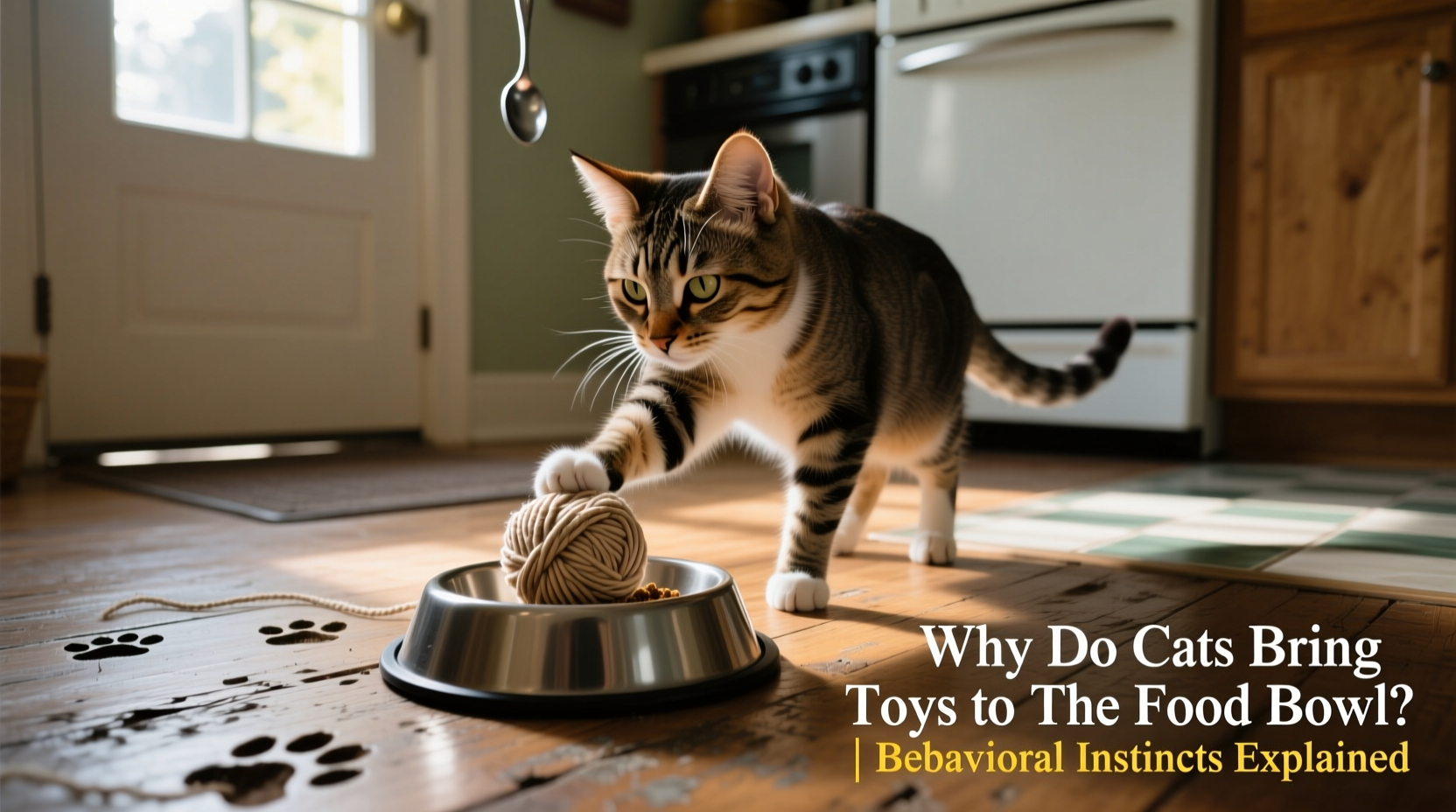
At the core of this behavior lies the cat’s predatory nature. Domestic cats share nearly identical hunting sequences with their wild counterparts: stalk, chase, pounce, kill, and consume. Even well-fed indoor cats exhibit these behaviors because they’re driven by instinct, not hunger. When a cat carries a toy to their food bowl, they’re often reenacting the final stage of the hunt—bringing prey back to a safe place to eat.
In the wild, cats typically drag their catch to a secluded spot before feeding. This protects them from scavengers and ensures privacy during consumption. The food bowl, especially if located in a quiet corner of the home, becomes that “safe zone.” Placing a toy there symbolizes completion of the hunt. It’s as if the cat is saying, “I’ve made a kill, and now I’m bringing it to where I feed.”
This ritual reinforces mental stimulation and satisfies deep-seated urges. Without real prey, toys become proxies. The act of carrying the toy mimics the physical effort of transporting prey, while placing it near food completes the psychological loop of the hunting sequence.
Tip: Rotate your cat’s toys regularly to maintain novelty and encourage healthy predatory play.Territory Marking and Scent Communication
Cats are highly territorial animals that rely heavily on scent to navigate their environment. They possess scent glands on their cheeks, paws, and flanks, which they use to mark objects and spaces. When a cat carries a toy to their food bowl, they may be engaging in olfactory labeling—claiming both the toy and the feeding area as part of their personal domain.
The food bowl is a resource-rich zone. In multi-cat households, competition over food can trigger subtle dominance displays. Depositing a toy nearby may serve as a form of non-aggressive assertion: “This space is mine.” Even in single-cat homes, the behavior persists because the instinct to guard resources remains strong.
Additionally, the toy absorbs the cat’s scent through handling and rubbing. Bringing it to the feeding area effectively extends their scent boundary. This creates a comforting, familiar environment—especially important in homes with frequent changes or stressors.
“Cats don’t just live in spaces—they claim them through scent, sound, and ritual. A toy by the bowl isn’t clutter; it’s communication.” — Dr. Lena Reyes, Feline Behavior Specialist
Social Bonding and Gift-Giving Behavior
One of the most touching explanations for this behavior is its role in social bonding. Cats view their human caregivers as part of their social group—often as inept members who need help surviving. This is why cats sometimes present dead mice or birds at doorsteps. They’re attempting to teach or provide for their family.
Toys function similarly. When a cat brings a plush mouse to their food bowl—especially if you’re nearby or preparing a meal—it may be a symbolic offering. The food bowl becomes a communal feeding site, and the toy represents a contribution to the group’s sustenance. The cat might watch you closely afterward, awaiting acknowledgment or approval.
This gesture stems from kittenhood, where mother cats bring injured prey to their young to teach them how to eat. Adult cats extend this teaching instinct to humans, whom they perceive as clumsy, large kittens. Your response matters: if you react positively (with praise or attention), the behavior is reinforced.
Mini Case Study: Bella and the Blue Bird Toy
Bella, a 4-year-old tabby living in a suburban household, began collecting her favorite blue bird toy and placing it beside her stainless steel food bowl every evening. Her owner, Maria, initially found it odd and would return the toy to the toy basket. But after consulting a feline behaviorist, she learned that Bella was expressing trust and inclusion.
Maria changed her approach. Instead of removing the toy, she started acknowledging Bella’s “offering” with gentle petting and verbal praise. Over time, Bella’s anxiety around mealtimes decreased, and she became more relaxed overall. The toy remained a fixture near the bowl—not as clutter, but as a symbol of connection.
This case illustrates how understanding instinctive behavior can improve human-cat relationships. Simple recognition of a cat’s gestures fosters emotional security and reduces stress-related habits.
Environmental Factors and Routine Reinforcement
A cat’s environment plays a crucial role in shaping this behavior. If the toy is consistently found near the food bowl, it may indicate that the cat has established a fixed routine. Cats thrive on predictability. Performing the same action—like carrying a toy to the bowl before eating—provides structure and reduces uncertainty.
Location also matters. If the toy storage area is far from the feeding zone, the effort required to transport the toy underscores its importance. Conversely, if toys are scattered throughout the house, the cat may select one specifically associated with hunting energy—bright colors, feather attachments, or squeakers—and reserve it for this ritual.
In some cases, the behavior intensifies during certain times of day, such as dawn or dusk—natural peak hunting periods for cats. Owners may notice increased toy deliveries before morning or evening meals, aligning with the cat’s internal biological clock.
Tip: Observe when your cat brings toys to the bowl—timing can reveal patterns linked to activity cycles or feeding anticipation.Step-by-Step Guide: Responding to Toy-Bowl Behavior
Understanding *why* your cat does this is only half the solution. Knowing how to respond appropriately ensures the behavior remains positive and doesn’t escalate into obsession or anxiety. Follow this step-by-step guide:
- Observe without interfering. For a few days, simply watch when and how your cat moves toys. Note the type of toy, time of day, and whether they interact with it after placing it down.
- Avoid punishment or removal. Taking the toy away may confuse or stress your cat, especially if they see it as a meaningful act.
- Respond with calm acknowledgment. A soft word, gentle stroke, or brief eye contact signals that you recognize their effort.
- Encourage alternative outlets. Provide puzzle feeders or treat-dispensing toys that simulate hunting and feeding in one activity.
- Maintain consistency. Stick to regular feeding times and keep the feeding area clean and undisturbed to reinforce its status as a safe zone.
This approach respects your cat’s instincts while guiding them toward balanced expression. Over time, you may notice fewer toy deposits—not because the instinct fades, but because the cat feels understood and secure.
Do’s and Don’ts: Managing Toy-to-Bowl Habits
| Do’s | Don’ts |
|---|---|
| Recognize the behavior as natural and meaningful | Scold or punish your cat for placing toys near food |
| Use positive reinforcement when they display non-destructive behaviors | Remove toys abruptly without explanation |
| Provide interactive toys that satisfy hunting drives | Ignore signs of obsessive repetition (e.g., moving the same toy dozens of times) |
| Create a dedicated feeding zone free from distractions | Place food and litter boxes too close together |
| Rotate toys weekly to prevent fixation | Overwhelm your cat with too many new toys at once |
FAQ: Common Questions About Cats Bringing Toys to Food Bowls
Is it normal for my cat to bring toys to their food bowl?
Yes, it’s completely normal. This behavior reflects natural hunting sequences, territorial marking, and social bonding. As long as your cat is healthy and not showing signs of distress, it’s a sign of instinctual fulfillment rather than confusion.
Should I let my cat leave toys in the food area?
If the toys are clean and not interfering with eating, it’s generally fine. However, if multiple toys accumulate or attract dirt, consider designating a small mat or basket next to the bowl where “offerings” can be placed. This honors the ritual while maintaining hygiene.
Could this behavior indicate anxiety or OCD?
In most cases, no. However, if your cat obsessively carries the same toy back and forth without pause, refuses to eat until the toy is in place, or shows other compulsive behaviors (over-grooming, tail chasing), consult a veterinarian or feline behaviorist. These could be signs of underlying stress.
Checklist: Supporting Healthy Instinctual Behaviors
- ✅ Provide daily interactive play sessions that mimic hunting (5–10 minutes, twice a day)
- ✅ Use puzzle feeders or food-dispensing toys to blend feeding with mental exercise
- ✅ Keep the feeding area quiet, clean, and separate from high-traffic zones
- ✅ Rotate at least three different types of toys weekly (feather wands, crinkle balls, motorized mice)
- ✅ Acknowledge your cat’s symbolic gestures with calm, positive feedback
- ✅ Monitor for sudden changes in behavior that might signal health or emotional issues
Conclusion: Honoring the Wild Within
Cats are not small dogs. They are solitary hunters with rich internal lives shaped by thousands of years of evolution. When your cat brings a toy to their food bowl, they’re not being silly—they’re being profoundly feline. They’re enacting ancient rituals, reinforcing their sense of safety, and inviting you into their world on their terms.
By recognizing these actions as expressions of instinct rather than quirks, we deepen our bond with our pets. We stop seeing mess and start seeing meaning. The toy by the bowl isn’t trash—it’s testimony. It says, “I trust this place. I belong here. And I want you to know I’ve done my part.”
💬 Have a story about your cat’s unique rituals? Share your experience in the comments—your insights could help another cat owner understand their furry companion better.








