
Pet ownership brings joy, companionship, and a fair share of shedding. Whether you have a long-haired cat or a double-coated dog, pet hair ends up on furniture and clothing with relentless persistence. While sticky rollers are widely recommended, they’re not always practical—especially when they run out, aren’t eco-friendly, or leave behind residue. The good news is that there are several highly effective alternatives that require only common household items and a bit of technique. From rubber gloves to damp cloths and even dryer tricks, this guide reveals how to banish pet hair efficiently and sustainably—without ever reaching for another lint roller.
Why Sticky Rollers Aren’t Always the Best Option
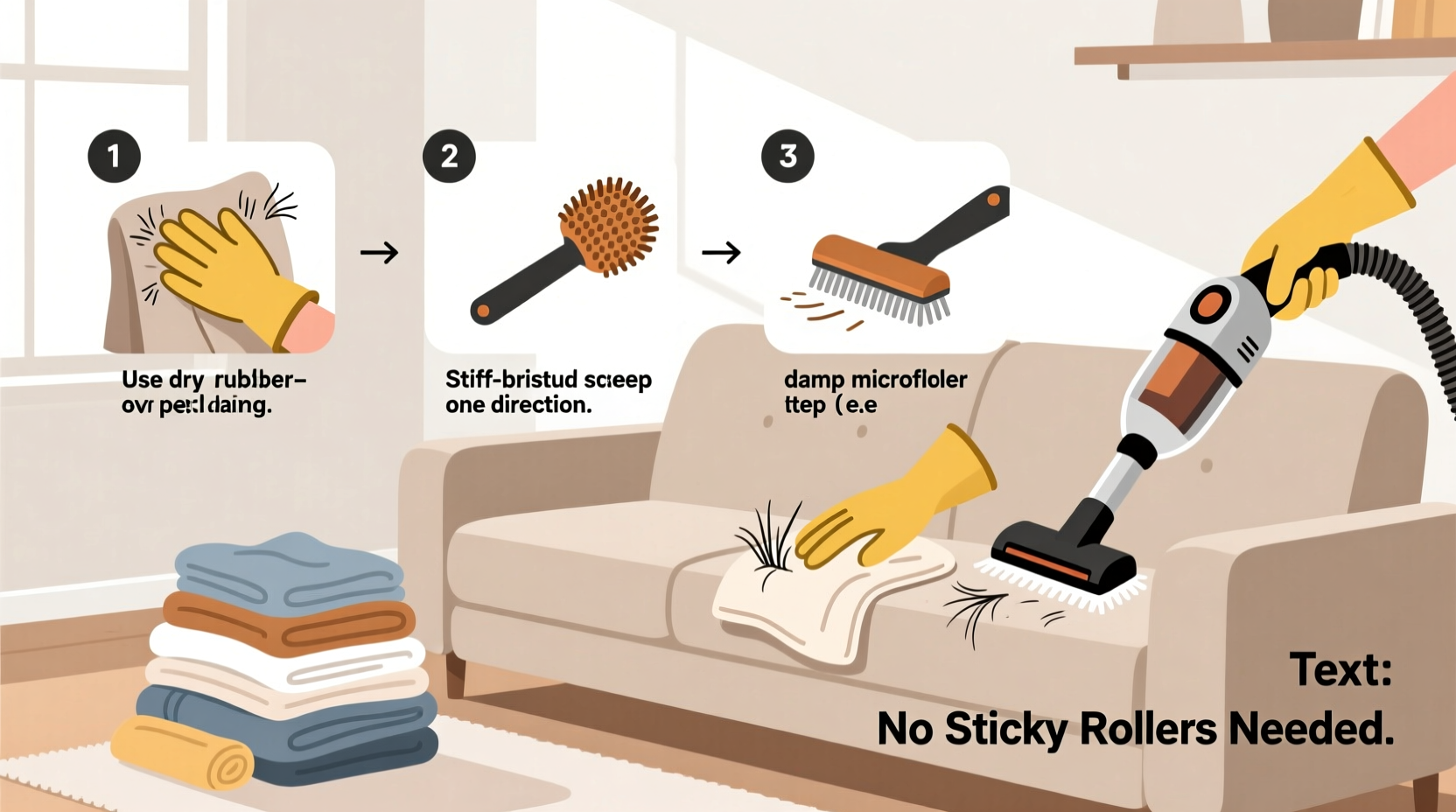
Despite their popularity, sticky rollers come with notable drawbacks. They generate waste in the form of used sheets and plastic handles, making them less environmentally friendly. Over time, they can also lose effectiveness as the adhesive wears down, requiring frequent replacements. Some people find the sticky residue unpleasant or worry about damaging delicate fabrics. Additionally, for large surfaces like sofas or bulky winter coats, using a roller can be tedious and time-consuming.
Alternative methods often work faster, cost less, and are more sustainable. Many rely on principles of static electricity, moisture adhesion, or mechanical removal—all of which can be just as effective, if not more so, than adhesive-based solutions.
Tip: A slightly damp microfiber cloth picks up pet hair better than dry wiping because moisture helps clump and lift fibers.The Science Behind Pet Hair Removal
To remove pet hair effectively, it helps to understand why it sticks in the first place. Animal fur carries a natural static charge, especially in dry environments, causing it to cling stubbornly to fabrics and upholstery. This static attraction is stronger on synthetic materials like polyester and nylon, which explains why pet hair seems magnetically drawn to certain clothes and couch covers.
Effective removal strategies either neutralize this static charge or use counterforces—like friction or moisture—to break the bond between hair and surface. For example, rubber creates friction that generates opposite static charges, attracting and lifting fur. Similarly, moisture reduces static and allows hairs to clump together for easier removal.
“Understanding the role of static electricity in pet hair adhesion is key to choosing the right removal method.” — Dr. Lena Patel, Home Materials Scientist
Proven Methods to Remove Pet Hair Without Sticky Rollers
Below are seven reliable, accessible techniques that don’t require specialty products. Most use items already found in your home, making them both economical and convenient.
1. Rubber Gloves (Dry or Damp)
Wearing clean rubber or latex gloves, run your hand over the fabric surface in short, firm strokes. The rubber creates friction that lifts pet hair through static attraction. For best results, slightly dampen the gloves—this enhances grip and causes hair to ball up into easy-to-remove clumps.
- Works well on couches, curtains, and thick fabrics.
- Ideal for quick daily touch-ups.
- Eco-friendly and reusable.
2. Damp Sponge or Microfiber Cloth
A slightly wet sponge or tightly woven microfiber cloth glides over surfaces, collecting hair with minimal effort. The moisture neutralizes static and encourages hair to adhere to the cloth rather than the fabric beneath.
- Dampen a sponge or cloth—do not soak it.
- Wipe in one direction across the surface.
- Rinse and repeat as needed.
3. Fabric Softener Spray (DIY Version)
Create a homemade anti-static spray by mixing one part fabric softener with three parts water in a spray bottle. Lightly mist the solution onto affected areas before wiping with a dry cloth. The softener reduces static cling, making hair easier to remove.
Caution: Test on an inconspicuous area first, especially on delicate or colored fabrics, to avoid staining or texture changes.
4. Squeegee (Rubber Window Tool)
A small window squeegee works surprisingly well on couches and car seats. The flexible rubber edge gathers hair efficiently when pulled across fabric. After each pass, rinse the blade under water to clear accumulated fur.
- Fast for large surfaces.
- No chemicals or waste involved.
- Durable and inexpensive.
5. Vacuum with Upholstery Attachment
While not entirely “tool-free,” using a vacuum cleaner properly avoids reliance on disposable rollers. Attach the upholstery nozzle and use slow, overlapping strokes. For stubborn embedded hair, gently brush the fabric with a soft-bristle clothes brush first to loosen fibers.
For clothes, turn garments inside out and vacuum lightly on low suction to avoid damage.
6. Dryer Method for Clothes
Place clothing in the dryer with a damp towel and run it on low heat for 10–15 minutes. The moisture from the towel helps release pet hair, which collects in the lint trap. Alternatively, add a dryer sheet to reduce static and loosen clinging fur.
“This trick saved me during allergy season. I’d wear a sweater, only to find it covered in cat hair. Now I toss it in the dryer for five minutes with a damp washcloth—game changer.” — Maria T., pet owner and nurse from Portland, OR
7. Pumice Stone or Velcro Strip
A dry pumice stone—typically used for skin exfoliation—can gently lift pet hair from heavy fabrics like wool coats or corduroy. Use light pressure in one direction. Similarly, a strip of hook-side Velcro run across fabric will catch and hold loose hairs.
These are particularly useful for textured or looped materials where hair embeds deeply.
Comparison Table: Methods by Surface Type
| Method | Couch/Upholstery | Clothing | Car Seats | Eco-Friendly? |
|---|---|---|---|---|
| Rubber Gloves | Excellent | Good | Excellent | Yes |
| Damp Cloth/Sponge | Very Good | Fair | Very Good | Yes |
| Fabric Softener Spray | Good | Good | Fair | Sometimes (depends on ingredients) |
| Rubber Squeegee | Excellent | Poor | Excellent | Yes |
| Vacuum + Nozzle | Excellent | Very Good | Excellent | Yes |
| Dryer + Damp Towel | Poor | Excellent | Poor | Yes |
| Pumice Stone / Velcro | Fair | Very Good (on heavy fabrics) | Fair | Yes |
Step-by-Step Guide: Deep Cleaning a Pet-Haired Couch
Follow this sequence for thorough cleaning without sticky rollers:
- Prep the Area: Remove cushions and launder any removable covers according to label instructions.
- Dry Brush: Use a soft-bristle clothes brush or pet grooming mitt to loosen embedded hair from the fabric.
- Use a Damp Rubber Glove: Put on a rubber glove and lightly dampen it. Wipe the couch in one direction, applying moderate pressure. Hair will gather into clumps.
- Squeegee Pass: Go over larger flat areas with a rubber squeegee to collect residual hair.
- Vacuum: Use the upholstery attachment to remove loosened debris and remaining particles.
- Deodorize (Optional): Sprinkle baking soda, let sit for 15 minutes, then vacuum again to refresh the fabric.
- Maintain Weekly: Repeat light rubber-glove wipe-downs weekly to prevent buildup.
Common Mistakes to Avoid
Even with the right tools, improper technique can reduce effectiveness or damage fabrics. Watch out for these errors:
- Using too much water: Excess moisture can lead to mold or fabric warping, especially on foam-filled cushions.
- Aggressive scrubbing: Vigorous rubbing may fray delicate weaves or push hair deeper into fibers.
- Skipping pre-loosening: Trying to wipe away hair without brushing first often just redistributes it.
- Ignoring fabric labels: Always check care instructions before applying liquids or abrasive tools.
Checklist: Pet Hair Removal Routine
Keep this checklist handy for consistent results:
- ☐ Remove loose items from couch or clothing
- ☐ Pre-brush fabric to lift embedded hair
- ☐ Choose appropriate tool based on material and size
- ☐ Apply method with firm, directional strokes
- ☐ Collect clumped hair and dispose of properly
- ☐ Vacuum or rinse tool to maintain efficiency
- ☐ Store tools in a dry place for reuse
- ☐ Repeat weekly to prevent heavy accumulation
Frequently Asked Questions
Can I use a dryer sheet alone to remove pet hair from clothes?
Dryer sheets won’t remove existing hair but help prevent static cling that attracts fur. For removal, combine a dryer sheet with a 10-minute tumble in the dryer on low heat, or wipe clothes with a sheet before wearing to lift surface hair.
Is vinegar safe for removing pet hair from couches?
Vinegar can be used cautiously as a fabric refresher, but it should be diluted (one part vinegar to three parts water) and tested first. While it helps cut through grime and deodorize, it doesn’t directly remove hair. Use it before wiping with a damp cloth for enhanced cleaning.
How often should I deep-clean pet-prone fabrics?
For homes with heavy shedders, deep-clean upholstery every 4–6 weeks and treat clothing as needed. Light maintenance—like rubber glove wipes or quick vacuums—should be done weekly to stay ahead of buildup.
Final Thoughts and Action Plan
Removing pet hair without sticky rollers isn’t just possible—it’s often more efficient, economical, and sustainable. By leveraging everyday items like rubber gloves, sponges, and dryers, you can keep your home and wardrobe looking neat without contributing to single-use waste. The key is consistency and using the right method for each surface.
Start by assessing your most problematic areas—whether it’s the living room sofa or your favorite black blazer—and apply the corresponding technique. Integrate one or two of these methods into your weekly routine. Over time, you’ll notice less buildup, fewer allergens, and a cleaner environment for both you and your pet.
💬 Ready to ditch the lint roller? Try the rubber glove method tonight and see the difference. Share your favorite hack in the comments—your tip might help another pet owner breathe easier!








