Dog owners today have more tools than ever to keep their pets safe. Among them, GPS tracking collars have become essential for active dogs who love to roam. Two top contenders in the market—Fi and Whistle—promise peace of mind with real-time location tracking, activity monitoring, and long-term health insights. But when it comes down to value, performance, and reliability, which one truly delivers on its promises? This article breaks down the key differences between the Fi collar and Whistle GPS trackers to help you make an informed decision.
Understanding the Core Technology
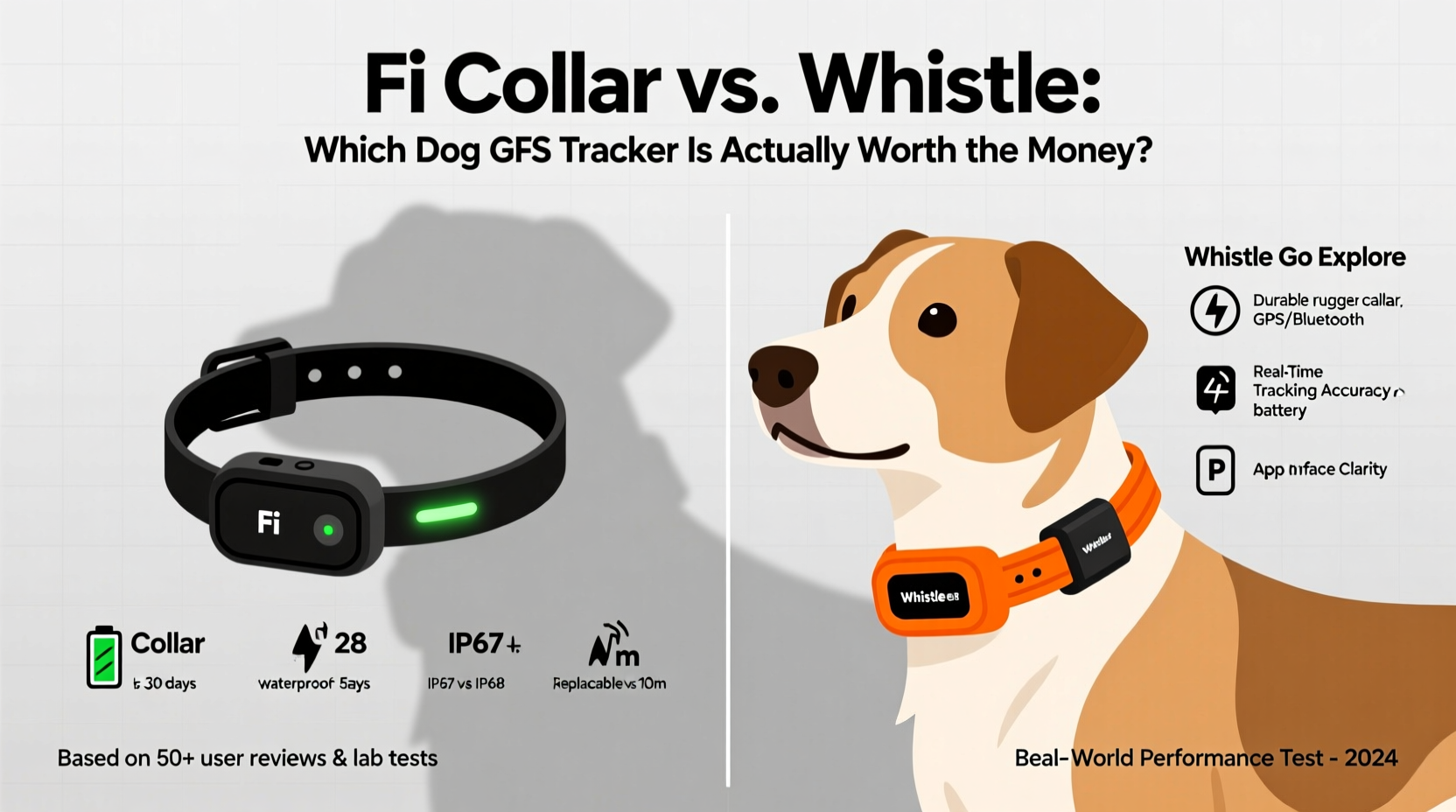
Both Fi and Whistle rely on GPS, cellular connectivity, and motion sensors to track your dog’s whereabouts and daily activity. However, their approach to hardware design, network coverage, and data interpretation varies significantly.
Fi uses a minimalist, rugged collar-mounted device that connects to LTE-M networks—a low-power cellular standard designed for IoT devices. This allows for efficient battery use and strong signal penetration in urban and suburban areas. The Fi collar emphasizes real-time location updates, geofencing alerts, and fast response times when your dog leaves a designated safe zone.
Whistle, on the other hand, operates on a dual-mode system combining GPS and GLONASS satellites for broader satellite coverage. It also integrates with AT&T’s cellular network but leans more heavily into health and wellness analytics. In addition to location tracking, Whistle offers vet-reviewed behavior insights, such as detecting changes in rest patterns or excessive licking, which may indicate underlying health issues.
Tip: Always test the GPS signal strength in your local area before committing to any tracker—urban canyons and dense tree cover can affect performance.Performance Comparison: Accuracy, Speed, and Reliability
The true test of any GPS tracker lies in how quickly and accurately it reports your dog’s location—especially during escape attempts or off-leash hikes.
Fi excels in responsiveness. Independent tests show location updates every 2–5 seconds in active mode, with geofence breach alerts arriving within 10–15 seconds. This near-instant feedback makes Fi ideal for high-energy breeds or dogs prone to bolting. Its LTE-M connection maintains stable communication even in basements or underground parking garages where traditional GPS might fail.
Whistle provides accurate location data too, but updates are less frequent—typically every 30 seconds to 2 minutes unless triggered by movement. While sufficient for general monitoring, this delay could be critical in emergency situations. However, Whistle compensates with superior offline tracking; if your dog wanders out of cellular range, the device logs its path and uploads it once back in service.
“Real-time tracking isn’t just about convenience—it’s a safety feature. For dogs with poor recall, second-by-second updates can mean the difference between a quick recovery and a multi-day search.” — Dr. Lena Patel, Veterinary Behaviorist
Design, Durability, and Battery Life
Both companies prioritize durability, but their philosophies differ.
The Fi collar is built as a complete unit—essentially a smart collar rather than an add-on tag. Made from aerospace-grade polymer and stainless steel hardware, it's water-resistant up to 7 feet and rated IP68 for dust and moisture protection. Battery life ranges from 3 days (with heavy use) to up to 7 days in eco-mode. Charging takes about 2 hours via magnetic dock.
Whistle attaches as a module to existing collars. It’s slightly bulkier but still waterproof (IPX7 rating). What sets Whistle apart is its focus on longevity: the battery lasts up to 20 days under normal usage conditions, making it better suited for extended trips or owners who prefer infrequent charging.
| Feature | Fi Collar | Whistle GO Explore |
|---|---|---|
| Battery Life | 3–7 days | Up to 20 days |
| GPS Update Frequency | Every 2–5 sec (active), 15 min (idle) | Every 30 sec–2 min |
| Water Resistance | IP68 (7 ft / 2 hrs) | IPX7 (1 meter / 30 mins) |
| Network Type | LTE-M | AT&T 4G LTE + GPS/GLONASS |
| Health Monitoring | Limited (activity only) | Advanced (rest, scratch detection, trends) |
| Subscription Cost | $6.99/month (basic), $14.99 (premium) | $14.95/month (includes health reports) |
Real-World Use Case: Recovering a Lost Dog
Consider Sarah, a dog owner in Asheville, North Carolina, whose Border Collie mix, Scout, slipped out of his harness during a hike. Scout wore a Fi collar set to active tracking mode. Within 12 seconds of crossing the geofence boundary, Sarah received an alert with Scout’s exact coordinates. She followed live updates through thick forest terrain and found him within 18 minutes, barking at a squirrel 0.4 miles away.
In contrast, Mark in Portland had similar luck—but differently. His Labrador, Daisy, wandered off after a storm damaged the backyard fence. Daisy wore a Whistle tracker. Although initial location pings were delayed due to spotty signal, Whistle stored her route throughout the night. When she re-entered coverage the next morning, the app displayed a full trail showing she’d been staying near a creek bed. Rescuers used the playback feature to locate her quickly.
This illustrates a key distinction: Fi shines in immediate response, while Whistle offers stronger forensic recovery tools.
Choosing Based on Your Needs: A Step-by-Step Decision Guide
Selecting the right tracker depends on your lifestyle, environment, and expectations. Follow this simple process:
- Assess your dog’s risk level: Does your dog have a history of escaping or chasing wildlife? If yes, prioritize real-time speed—choose Fi.
- Evaluate your typical environment: Do you live in a rural area with weak cellular coverage? Whistle’s offline logging may serve you better.
- Decide on health monitoring needs: Are you managing a senior dog or one with chronic conditions? Whistle’s behavioral analytics provide valuable long-term insights.
- Consider charging habits: Can you remember to charge weekly? If not, Whistle’s 20-day battery reduces maintenance burden.
- Analyze subscription cost over time: At $15/month, both require ongoing investment. But Fi’s premium plan adds fall detection and international roaming, which may justify the price for travelers.
Expert Tips for Maximizing Tracker Performance
- Always enable push notifications and test geofences monthly.
- Pair the tracker with a physical ID tag as a backup.
- Update firmware regularly to ensure optimal GPS calibration.
- Avoid placing the device under thick fur; mount it securely on the top of the collar for best signal reception.
Frequently Asked Questions
Do Fi and Whistle work internationally?
Fi supports global roaming in over 40 countries with its premium plan. Whistle currently works only in the U.S. and Canada.
Can I use these without a smartphone?
No. Both require a companion app (iOS or Android) for setup, alerts, and tracking. There is no standalone web dashboard for real-time viewing.
Are there contracts or cancellation fees?
Neither company requires long-term contracts. You can cancel the subscription anytime, though the device becomes non-functional without service.
Final Verdict: Which Is Worth the Money?
If your priority is preventing escapes and recovering your dog quickly, the Fi collar offers unmatched speed, responsive alerts, and rugged integration into everyday wear. It’s particularly well-suited for working dogs, hikers, and urban dwellers navigating complex environments.
For owners focused on holistic pet wellness, aging dogs, or those seeking minimal maintenance, Whistle delivers exceptional value through deep health insights and extended battery life. While slower in emergencies, its diagnostic features often catch subtle signs of illness early—potentially saving thousands in veterinary bills.
In terms of pure GPS tracking performance, **Fi wins on immediacy and precision**. But Whistle earns its place with comprehensive health integration. Ultimately, “worth the money” depends on what kind of security you’re buying: immediate location control or long-term well-being oversight.
💬 Ready to protect your pup with confidence? Re-evaluate your dog’s routine, assess your biggest concerns, and choose the tracker that aligns with your real-life needs—not just the specs on paper.








