Rabbit fur keychains are popular for their softness, warmth, and timeless charm. Often used as decorative accessories or lucky charms, they appear in fashion markets, online shops, and souvenir stalls worldwide. However, the rise in demand has led to a surge in counterfeit versions made from synthetic fibers or lower-grade animal fur. These imitations not only lack authenticity but may also raise ethical concerns. Distinguishing real rabbit fur from fake requires more than just a glance—it demands knowledge, observation, and a few clever techniques. This guide equips you with reliable, field-tested methods to spot genuine rabbit fur and protect yourself from deceptive products.
Understanding Rabbit Fur: Characteristics of the Real Thing
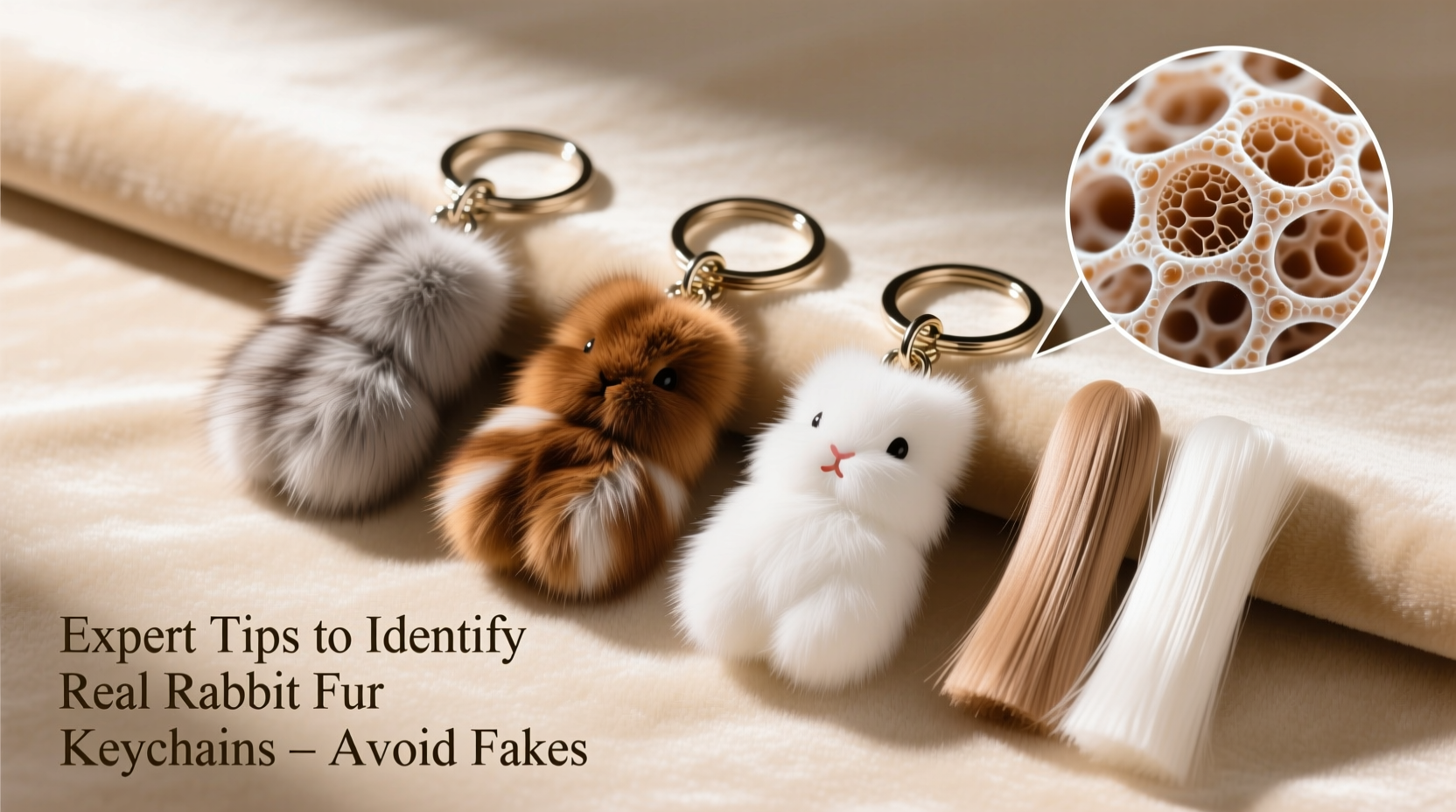
Authentic rabbit fur has distinct physical traits that set it apart from synthetic alternatives. Knowing what to look for begins with understanding its natural structure.
Real rabbit fur is typically dense, with a soft undercoat and slightly longer guard hairs. The texture should feel silky but not greasy. When touched, genuine fur compresses easily and springs back gently—synthetics often feel stiff or overly smooth. The base of the fur (the skin side) will show visible follicles and a thin, flexible leather backing. In contrast, fake fur is usually attached to a woven fabric or plastic mesh backing.
The color distribution is another clue. Natural rabbit fur tends to have subtle variations in shade, especially near the roots. Solid, unnaturally uniform colors are common in dyed synthetics. Also, real fur may carry a faint organic scent—earthy or musky—but never chemical or plastic-like.
Tip: Gently blow into the fur to part the strands. Real fur reveals a leather-like base; fake fur often shows a grid-patterned backing.Burn Test: A Definitive Way to Confirm Material
One of the most reliable ways to verify fur authenticity is the burn test—a method used by textile experts and furriers. While it involves minor destruction, it’s highly accurate when performed carefully.
To conduct the test, pull a few loose fibers from an inconspicuous area (such as the edge or underside). Hold them with tweezers and apply a flame using a lighter. Observe how the material reacts:
- Real rabbit fur: Burns slowly, curls away from the flame, emits a smell similar to burnt hair or feathers (due to keratin), and turns into brittle, dark ash.
- Synthetic fur: Melts quickly, drips like plastic, produces black smoke, and gives off a sharp, acrid odor. It leaves behind a hard, sticky residue.
“Fur is protein-based, so it behaves like human hair when burned. That smell is nature’s barcode.” — Dr. Lena Petrov, Textile Forensics Researcher, Helsinki Institute of Materials
While effective, this test should be done cautiously—preferably outdoors or under ventilation—and only on items you own or have permission to test.
Visual and Tactile Inspection Checklist
Before purchasing or accepting a rabbit fur keychain as a gift, perform a quick but thorough inspection. Use the following checklist to evaluate authenticity without tools.
Fur Inspection Checklist
- Touch the fur: Does it feel soft with slight variation in texture? Stiffness suggests synthetic.
- Part the strands: Look at the backing. Leather-like skin = real. Fabric mesh or plastic = likely fake.
- Check color depth: Are roots slightly darker or different in hue? Uniform dye job hints at imitation.
- Observe shedding: Some shedding is normal for real fur; excessive fiber loss may indicate poor quality or blend.
- Smell the base: A faint animal scent is natural. Chemical odors point to synthetic materials.
- Test elasticity: Press down—real fur bounces back slowly. Fake fur may flatten permanently.
Comparing Real vs. Fake: Key Differences at a Glance
The table below summarizes the most telling differences between authentic rabbit fur and common imitations.
| Feature | Real Rabbit Fur | Fake Fur |
|---|---|---|
| Backing Material | Thin, flexible leather or skin | Woven fabric, plastic mesh |
| Texture | Soft, slightly springy, variable length | Uniformly smooth, sometimes greasy |
| Color Roots | Natural gradient, darker at base | Same color throughout, no root variation |
| Burn Reaction | Slow burn, hair-like smell, ash residue | Melts, plastic smell, black beads form |
| Durability | Sheds moderately, wears naturally | May pill, mat, or melt with heat |
A Real-World Example: How One Buyer Avoided a Costly Mistake
In early 2023, Clara M., a vintage accessory collector from Portland, was offered a “luxury rabbit fur” keychain at a flea market for $45. The seller claimed it came from a European brand and had been passed down through generations. Intrigued by the price and story, Clara nearly handed over cash—until she remembered the burn test.
She asked for a single strand. Using a matchstick, she lit the fiber. It melted instantly, forming a black bead and releasing a harsh chemical odor. She declined the purchase and later found an identical item online labeled “acrylic plush fur.” Her caution saved her from paying a premium for a $3 synthetic trinket.
This case underscores the importance of skepticism and verification—even when dealing with seemingly trustworthy sellers.
Step-by-Step Guide to Verifying a Rabbit Fur Keychain
Follow this sequence when evaluating a fur keychain, whether in person or before ordering online (if return options exist).
- Inspect Visually: Examine color consistency and backing under bright light.
- Feel the Texture: Rub fingers through the fur. Note resistance, softness, and recovery.
- Perform the Pull Test: Gently tug a few fibers. Real fur resists pulling; fake fur may unravel easily.
- Conduct the Burn Test (if possible): Use minimal fibers and observe combustion behavior.
- Verify Seller Credibility: Check reviews, business history, and transparency about sourcing.
- Compare Market Prices: Extremely low prices (<$10) are red flags for mass-produced fakes.
- Request Documentation (for high-value items): Authentic fur products in regulated markets may include origin labels.
Frequently Asked Questions
Can I wash a real rabbit fur keychain?
No, water can damage the delicate skin backing and cause matting. Instead, use a soft brush to remove dust and store in a dry place. If deeply soiled, consult a professional fur cleaner.
Is real rabbit fur ethical?
This depends on sourcing. Some rabbit fur comes from meat farms where animals are raised primarily for food, making fur a byproduct. Others oppose all animal-derived materials. Look for certifications or ask sellers about supply chains if ethics matter to you.
Are there legal regulations on selling rabbit fur?
Yes, in many countries—including the U.S. and EU—sellers must label animal fur products truthfully. Mislabeling synthetic as real fur can result in fines. The FTC’s Fur Products Labeling Act requires disclosure of species, country of origin, and whether it’s real or faux.
Final Thoughts: Trust, But Verify
In a market flooded with convincing replicas, identifying real rabbit fur keychains isn’t just about value—it’s about integrity. Whether you’re a collector, a gift-giver, or someone who appreciates craftsmanship, knowing how to distinguish truth from illusion empowers your choices.
These methods—visual checks, tactile feedback, scientific tests, and informed skepticism—are tools anyone can use. Combine them with due diligence, and you’ll rarely be misled. The next time you hold a fluffy keychain, don’t just admire it. Investigate it. Let knowledge be your guide.
💬 Have you ever been fooled by fake fur? Share your experience or tip in the comments—your insight could help others avoid the same mistake.








