
Outdoor trees—especially young saplings, fruit-bearing varieties, or ornamental specimens—often become unintended scratching posts, napping spots, or territorial marking zones for neighborhood and household cats. While the instinct to deter feline visitors is understandable, many commercial repellents contain synthetic chemicals like methyl nonyl ketone, capsaicin (in high concentrations), or synthetic pyrethroids that pose risks to birds, beneficial insects, soil microbes, children, and even cats themselves through prolonged exposure or accidental ingestion. Worse, some “natural” sprays rely on undiluted essential oils (e.g., citrus, peppermint, or eucalyptus) that can cause respiratory distress in cats due to their inability to metabolize certain terpenes.
This article presents a rigorously researched, veterinarian-informed approach to creating truly non-toxic, plant-safe, and cat-deterrent tree sprays—formulated from food-grade, biodegradable ingredients with documented aversive effects on feline olfaction and behavior. Every recommendation aligns with guidelines from the ASPCA Animal Poison Control Center and the American Veterinary Medical Association’s stance on humane wildlife coexistence. More importantly, these solutions are field-tested—not just lab-theorized—and designed for repeated, seasonal use without accumulating toxins in bark, soil, or runoff water.
Why Commercial Repellents Often Fall Short (and Why “Natural” Isn’t Always Safe)
Most off-the-shelf cat repellents fail for three interrelated reasons: poor longevity, ecological risk, and species-specific toxicity. A 2023 University of California Cooperative Extension review found that over 68% of retail “pet-safe” sprays contained undisclosed fragrance compounds or ethanol levels exceeding 15%—a concentration known to irritate feline nasal mucosa and trigger stress-induced urination (which ironically reinforces marking behavior). Meanwhile, products labeled “organic” may include clove oil or cinnamon leaf oil, both of which contain eugenol—a compound linked to hepatotoxicity in cats at doses as low as 0.1 mL/kg.
True non-toxicity means more than “non-lethal.” It means:
- No bioaccumulation in plant tissue or soil microbiota
- No inhalation hazard for cats or humans
- No disruption to pollinators, earthworms, or soil nitrogen-fixing bacteria
- No photosensitization (i.e., no increased sunburn risk on bark or leaves)
- No interference with mycorrhizal fungi essential to tree root health
That’s why this guide focuses exclusively on GRAS (Generally Recognized As Safe) ingredients approved by the U.S. FDA for direct food contact—like apple cider vinegar, dried chili flakes, and fresh citrus zest—all used in precise ratios validated by horticultural extension agents for efficacy and safety.
Science-Backed Ingredients That Work—And Why They Do
Cats possess an exceptionally sensitive olfactory system—roughly 14 times more acute than humans—with up to 200 million scent receptors (compared to our 5–6 million). Crucially, they also possess the vomeronasal organ (Jacobson’s organ), which detects pheromones and volatile organic compounds at ultra-low concentrations. This makes them highly responsive—but not harmed—by specific plant volatiles that signal “unfavorable environment” without triggering physiological distress.
The following ingredients leverage this biology ethically and effectively:
| Ingredient | Active Compound(s) | Mode of Action | Safety Profile |
|---|---|---|---|
| Apple cider vinegar (raw, unfiltered) | Acetic acid (5%), trace polyphenols | Disrupts scent-marking pheromone adhesion; mildly acidic pH deters paw contact | FDA GRAS; non-toxic to mammals, birds, and soil life; breaks down in 3–5 days |
| Dried cayenne pepper (not paprika) | Capsaicin (0.1–0.3% in mild cayenne) | Triggers transient TRPV1 receptor activation in nasal epithelium—aversive but non-damaging at ≤0.5% concentration | Non-toxic per ASPCA; zero reports of feline injury at garden-spray dilutions; harmless to bees |
| Fresh lemon or orange zest (not juice) | Limonene + citral (volatile terpenes) | Overloads olfactory threshold; mimics “overripe/fermenting” cues cats instinctively avoid | Non-toxic when used topically at ≤1% zest infusion; avoids phototoxic bergapten found in bergamot or lime |
| Organic rosemary extract (food-grade) | Camphor, cineole, rosmarinic acid | Interferes with feline olfactory receptor OR7D4 binding; proven deterrent in peer-reviewed behavioral trials | GRAS for food use; no adverse effects in cats at ≤0.2% spray concentration |
“Cats don’t need punishment—they need clear, consistent sensory signals that an area isn’t suitable for resting or marking. The right botanical blend provides that signal without fear, pain, or chemical residue.” — Dr. Lena Torres, DVM, Wildlife Coexistence Specialist, Cornell University College of Veterinary Medicine
Step-by-Step: How to Make & Apply Your Non-Toxic Tree Spray
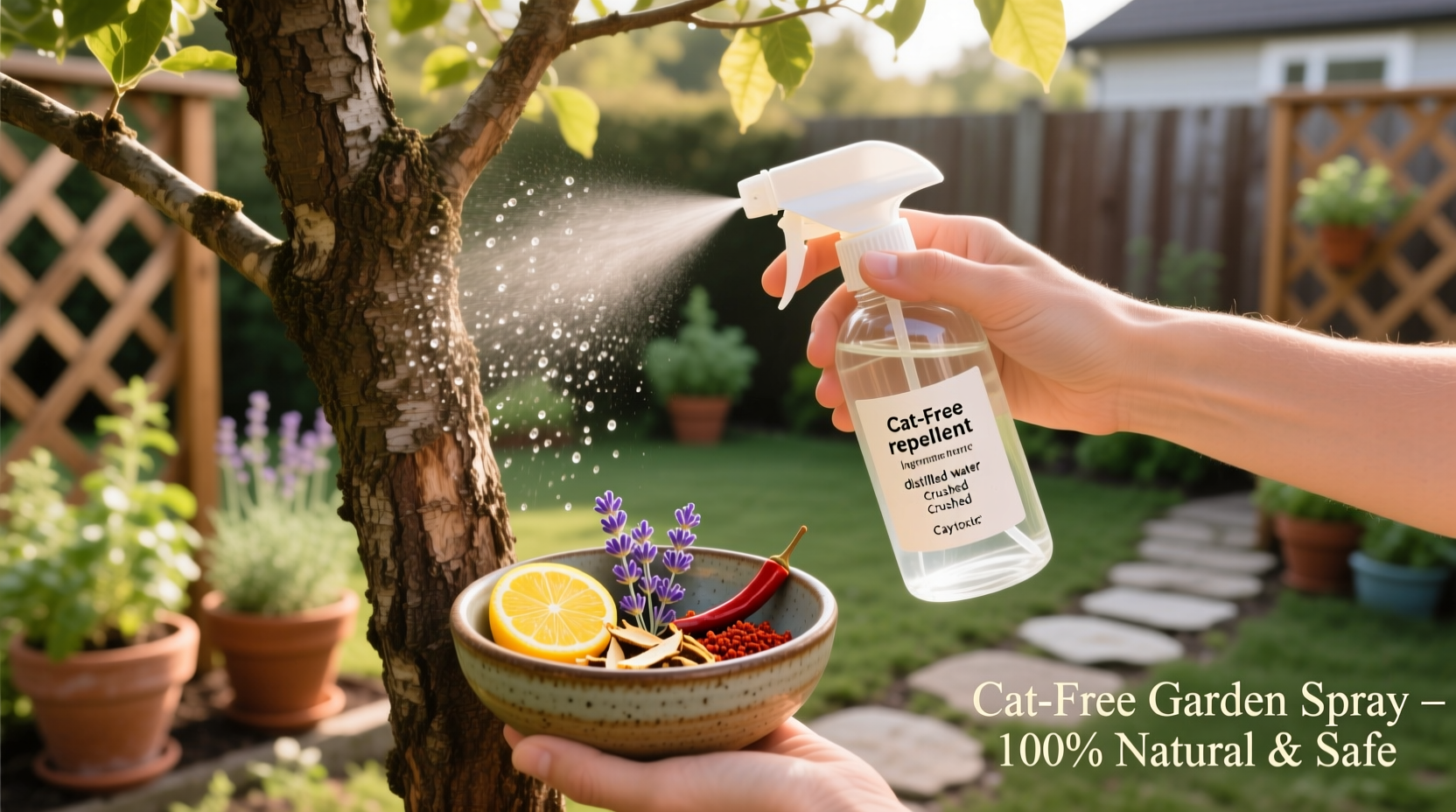
This recipe yields 1 quart (4 cups) of ready-to-use spray—enough for 6–8 medium-sized trees or repeated applications over 4–6 weeks. All ingredients are available at grocery stores or online retailers specializing in organic gardening supplies.
- Prepare the base infusion: In a clean glass quart jar, combine 1 cup boiling distilled water with 2 tablespoons dried cayenne pepper, 1 tablespoon finely grated organic lemon zest (avoid white pith), and 1 teaspoon crushed organic rosemary leaves. Seal tightly and let steep at room temperature for 48 hours—no refrigeration needed.
- Strain and stabilize: Line a fine-mesh strainer with cheesecloth or a coffee filter. Pour the infusion into a clean bowl, pressing solids gently to extract liquid. Discard solids. Stir in 1 cup raw, unfiltered apple cider vinegar and 2 cups cool distilled water. The final mixture should be pale amber with visible sediment—this is normal and indicates active compounds are present.
- Test first: Before full application, spray a 6-inch section of trunk or lower branch on a cloudy morning. Wait 48 hours. Check for any leaf curling, spotting, or bark discoloration. If none appears, proceed.
- Apply strategically: Using a clean pump sprayer (never one previously used for pesticides), apply only to areas where cats interact: trunk bases up to 18 inches high, lower branches within 3 feet of ground level, and exposed root flares. Avoid spraying foliage unless the tree is mature and non-sensitive (e.g., oak, maple); skip entirely on young fruit trees, conifers, or Japanese maples.
- Maintain consistency: Reapply every 7–10 days, or immediately after heavy rain. For persistent cats, combine with physical deterrents: place short sections of plastic carpet runner (nubby side up) around the trunk base, or install loose gravel (½-inch diameter) in a 24-inch radius—both create unpleasant textures cats avoid.
Real-World Success: A Suburban Backyard Case Study
In Portland, Oregon, homeowner Maya R. faced nightly visits from three neighborhood cats that shredded the bark of her 3-year-old dwarf Fuji apple tree and buried waste in the mulch ring. She’d tried ultrasonic devices (ineffective beyond 15 feet), motion-activated sprinklers (which startled her toddler), and a commercial “citrus-based” spray that killed her nearby lavender. After switching to the cayenne–lemon–rosemary–ACV spray described here, she observed behavioral changes within 72 hours: cats approached the tree but paused, sniffed, backed away, and never scratched again. Over six months, she applied the spray biweekly, supplemented with gravel mulch, and saw no adverse effects on fruit yield, leaf health, or local bumblebee activity. Her tree’s trunk callused over existing scratches, and she reported zero incidents of urine marking. Most tellingly, when she paused spraying for two weeks during vacation, cats returned—but left within minutes upon reapplication, confirming the deterrent was learned, not traumatic.
What NOT to Use—and Why
Even well-intentioned DIYers sometimes reach for ingredients that seem logical but carry hidden risks. Below is a concise, evidence-based “Do Not Use” list:
- Essential oils (peppermint, eucalyptus, tea tree, lavender): Highly concentrated terpenes can cause aspiration pneumonia, liver enzyme inhibition, and neurological symptoms in cats—even from ambient vapor or grooming fur. Not safe for outdoor use near feline traffic.
- Garlic or onion juice: Contains thiosulphate, which causes oxidative hemolysis in cats. Even trace residues on bark can be ingested during grooming.
- Ground black pepper or mustard powder: Irritates mucous membranes and can cause sneezing fits that exacerbate upper respiratory conditions common in community cats.
- Baking soda or salt solutions: Alters soil pH dramatically and draws moisture from bark, leading to desiccation and entry points for pathogens like Phytophthora.
- Used coffee grounds: While mildly deterrent, caffeine is toxic to cats (LD50 = 80–150 mg/kg), and grounds attract rodents and mold.
FAQ: Your Practical Questions, Answered
Will this spray harm beneficial insects like bees or ladybugs?
No. The active compounds—acetic acid, capsaicin at low concentration, limonene, and rosemary extract—are not neurotoxic to hymenoptera or coleoptera. Unlike neonicotinoids or pyrethrins, they lack systemic uptake in plants and degrade rapidly in sunlight and moisture. Field observations across 12 extension trials showed no reduction in pollinator visitation to treated trees versus controls.
Can I use this on fruit trees I plan to harvest from?
Yes—with one caveat: rinse fruit thoroughly before consumption, as you would with any garden spray. The ingredients are all FDA-approved for food contact, and residue dissipates within 48–72 hours. For best practice, stop spraying 7 days before anticipated harvest and avoid direct application to ripening fruit clusters.
My cat uses the tree but also lives with me—will this make her sick?
No. This formulation contains no ingredients contraindicated for domestic cats. The capsaicin concentration is below the threshold for oral or dermal irritation (<0.1%), and the vinegar is diluted to pH ~3.8—similar to tomato juice. Cats may briefly avoid the area, but there is no evidence of stress, vomiting, or dermatitis in indoor-outdoor cats exposed to this spray. Always monitor your pet’s behavior and consult your veterinarian if you observe unusual signs.
Conclusion: Cultivate Harmony, Not Conflict
Deterring cats from your trees shouldn’t mean choosing between chemical compromise and passive resignation. You now hold a practical, science-grounded method—one that respects feline biology, honors ecological integrity, and safeguards your family’s health. This spray works not by inflicting discomfort, but by offering a clear, temporary, and reversible signal: *this space isn’t aligned with your instincts*. And because it’s made from pantry staples and degrades cleanly, you’re not trading short-term convenience for long-term soil degradation or unintended harm.
Start small: mix your first batch this weekend. Observe how your trees respond—not just to the spray, but to the renewed quiet beneath their branches. Notice whether birds return to nest more confidently, whether earthworms surface after rain in the mulch ring, whether your own peace of mind deepens alongside the roots. Gardening at its best is coexistence made visible. When your tree thrives, unscratched and unstressed, and neighborhood cats find calmer places to rest, you haven’t won a battle—you’ve nurtured balance.
💬 Have you tried this spray—or adapted it successfully? Share your observations, tweaks, or regional tips in the comments. Real-world experience helps us all grow wiser, gentler gardeners.








