Managing an overweight cat becomes significantly more complex when other pets are part of the household. Competition for food, shared feeding areas, and varying activity levels can sabotage weight loss efforts. Yet, with thoughtful planning and consistent routines, it's entirely possible to help your feline shed excess pounds without disrupting the peace among your pets. The key lies in combining veterinary guidance, environmental adjustments, and behavioral management tailored to a multi-animal home.
Assessing the Root Causes of Feline Weight Gain
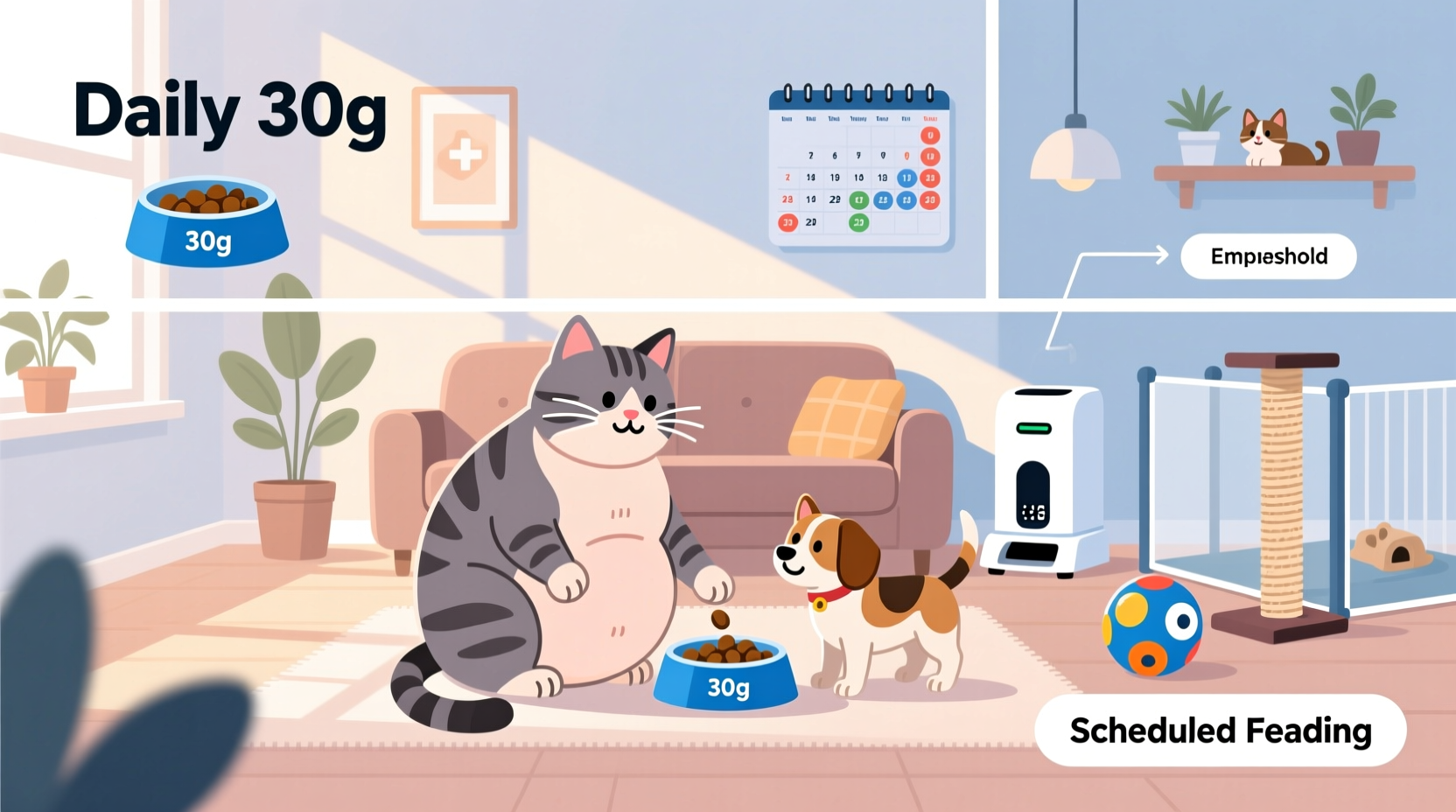
Before implementing any strategy, it’s essential to understand why your cat is overweight. Unlike dogs, cats often gain weight due to subtle changes in diet, lack of stimulation, or medical conditions like hypothyroidism or diabetes. In multi-pet homes, overfeeding may occur unintentionally—perhaps one pet eats faster and gets extra portions, or human family members feed treats independently.
Another common issue is food guarding or stealing. A dominant pet might consume not only their own meals but also sneak bites from the overweight cat’s bowl. Conversely, a shy or anxious cat may eat too quickly out of fear, leading to overconsumption. These dynamics make accurate feeding nearly impossible without intervention.
“Over 60% of cats in multi-pet households are overweight, and most owners don’t realize their feeding setup contributes directly to the problem.” — Dr. Lena Patel, Feline Nutrition Specialist
Step-by-Step Guide to Controlled Feeding
One of the most effective ways to manage weight is through portion-controlled, scheduled feeding rather than free-feeding. This method allows you to monitor exactly how much each pet consumes. Follow this timeline to transition safely:
- Week 1: Establish Baseline – Weigh each pet and record current feeding habits. Consult your vet to determine ideal daily caloric intake for your overweight cat.
- Week 2: Separate Mealtimes – Feed all pets in separate rooms simultaneously. Use baby gates or closed doors to prevent access.
- Week 3: Introduce Timed Bowls – Serve meals for 20–30 minutes only. Remove uneaten food to discourage grazing.
- Week 4: Evaluate Progress – Re-weigh your cat and adjust portions if needed. Maintain separation during feeding indefinitely.
Creating a Balanced Multi-Pet Environment
Harmony in a shared home depends on minimizing competition and stress. When pets feel threatened during mealtimes, anxiety can lead to erratic eating behaviors—either bingeing or avoidance. To reduce tension:
- Designate individual feeding zones away from high-traffic areas.
- Use visual barriers (like low bookshelves) so pets can’t see each other while eating.
- Feed at consistent times daily to establish predictability.
- Avoid hand-feeding unless supervised, as this encourages begging and unequal treat distribution.
For households with dogs, consider elevated platforms or cat trees with built-in feeding stations that only cats can reach. This prevents opportunistic snacking and reinforces species-specific boundaries.
Nutrition and Food Management: Do’s and Don’ts
| Do’s | Don’ts |
|---|---|
| Choose high-protein, low-carbohydrate diets formulated for weight loss. | Free-feed dry kibble, which is often calorie-dense and easy to overconsume. |
| Divide daily food into 3–4 small meals to boost metabolism. | Give table scraps or high-calorie treats without accounting for total intake. |
| Use puzzle feeders to slow eating and increase mental engagement. | Allow other pets unrestricted access to the overweight cat’s food. |
| Track all calories—including treats and supplements. | Rely solely on bag labels; always consult your vet for personalized plans. |
Puzzle feeders are especially valuable in multi-pet settings. They challenge the cat cognitively and physically, turning mealtime into exercise. Start with easy models and gradually increase difficulty to maintain interest.
Encouraging Activity Without Causing Conflict
Exercise must be integrated carefully to avoid triggering territorial disputes. Rather than forcing interaction, create opportunities for natural movement:
- Install vertical spaces like wall shelves or climbing towers near windows.
- Use wand toys for short, focused play sessions—two 10-minute bursts per day are ideal.
- Rotate toys weekly to sustain curiosity and prevent boredom.
- Place food or treats on higher surfaces to encourage jumping and stretching.
In homes with active dogs, supervised leash walks or “cat exercise pens” in secure backyards can offer safe outdoor stimulation. However, ensure these activities don’t provoke aggression or fear in other pets.
Tip: Schedule playtime before meals—cats are more motivated to chase when slightly hungry.Mini Case Study: Bella, the Overweight Tabby in a Busy Household
Bella, a 7-year-old domestic shorthair, lived with two energetic kittens and a Labrador retriever. Her owner noticed she had gained over 2 pounds in six months despite eating the same amount as before. Upon observation, it became clear the Labrador routinely licked Bella’s bowl clean after she left it, and the kittens chased her away during mealtimes.
The solution involved three steps: First, meals were moved to separate rooms. Second, Bella was given a microchip feeder that opened only for her. Third, her diet was switched to a vet-recommended weight-loss formula, and her daily intake was split into four measured portions. Within four months, Bella lost 1.5 pounds and showed increased energy and confidence around the other pets.
Checklist for Managing an Overweight Cat in a Multi-Pet Home
- ✅ Schedule a veterinary check-up to rule out medical causes.
- ✅ Calculate your cat’s daily caloric needs with your vet’s help.
- ✅ Transition to scheduled, portion-controlled meals.
- ✅ Feed all pets in separate locations at the same time.
- ✅ Invest in a microchip or timed feeder if food theft occurs.
- ✅ Introduce puzzle feeders to slow eating and add enrichment.
- ✅ Increase daily playtime with interactive toys.
- ✅ Monitor weight monthly and adjust food as needed.
- ✅ Prevent other pets from accessing the overweight cat’s food.
- ✅ Rotate toys and climbing structures to maintain interest.
Frequently Asked Questions
Can I feed my overweight cat a different diet than the other pets?
Yes—and you should. Prescription or weight-management formulas are designed specifically for metabolic support. As long as feeding areas are separated, differing diets pose no issue and are often necessary for successful weight loss.
What if my other pets become aggressive during feeding separation?
Gradual desensitization helps. Begin by feeding pets in adjacent rooms with doors open. Reward calm behavior with praise or treats. Over time, they’ll associate separation with positive outcomes. If aggression persists, consult a veterinary behaviorist.
How long does it take for a cat to lose weight safely?
A safe rate is 0.5% to 1% of body weight per week. For a 12-pound cat, that’s about 0.5–1 pound per month. Rapid weight loss can trigger hepatic lipidosis, a life-threatening liver condition, so patience is critical.
Conclusion
Helping an overweight cat lose weight in a multi-pet home demands structure, vigilance, and empathy for all animals involved. Success isn’t just about reducing food—it’s about redesigning routines, eliminating competition, and enriching the environment so healthy choices become effortless. With consistent effort and the right tools, you can improve your cat’s longevity and vitality while preserving household harmony.
💬 Have you successfully managed weight loss for a cat in a multi-pet home? Share your story or tips in the comments—your experience could inspire another pet owner to make a life-changing difference.








