
For new plant owners, the journey often begins with a single goal: keep something alive. Among the most recommended houseplants are the snake plant (Sansevieria trifasciata) and the ZZ plant (Zamioculcas zamiifolia). Both are lauded for their toughness, low maintenance, and ability to thrive in less-than-ideal conditions. But when push comes to shove—which one truly wins the title of \"hardest to kill\"? To answer that, we need to look beyond marketing claims and dive into biology, care requirements, environmental tolerance, and real-world performance.
Understanding the Survival Instincts of Each Plant
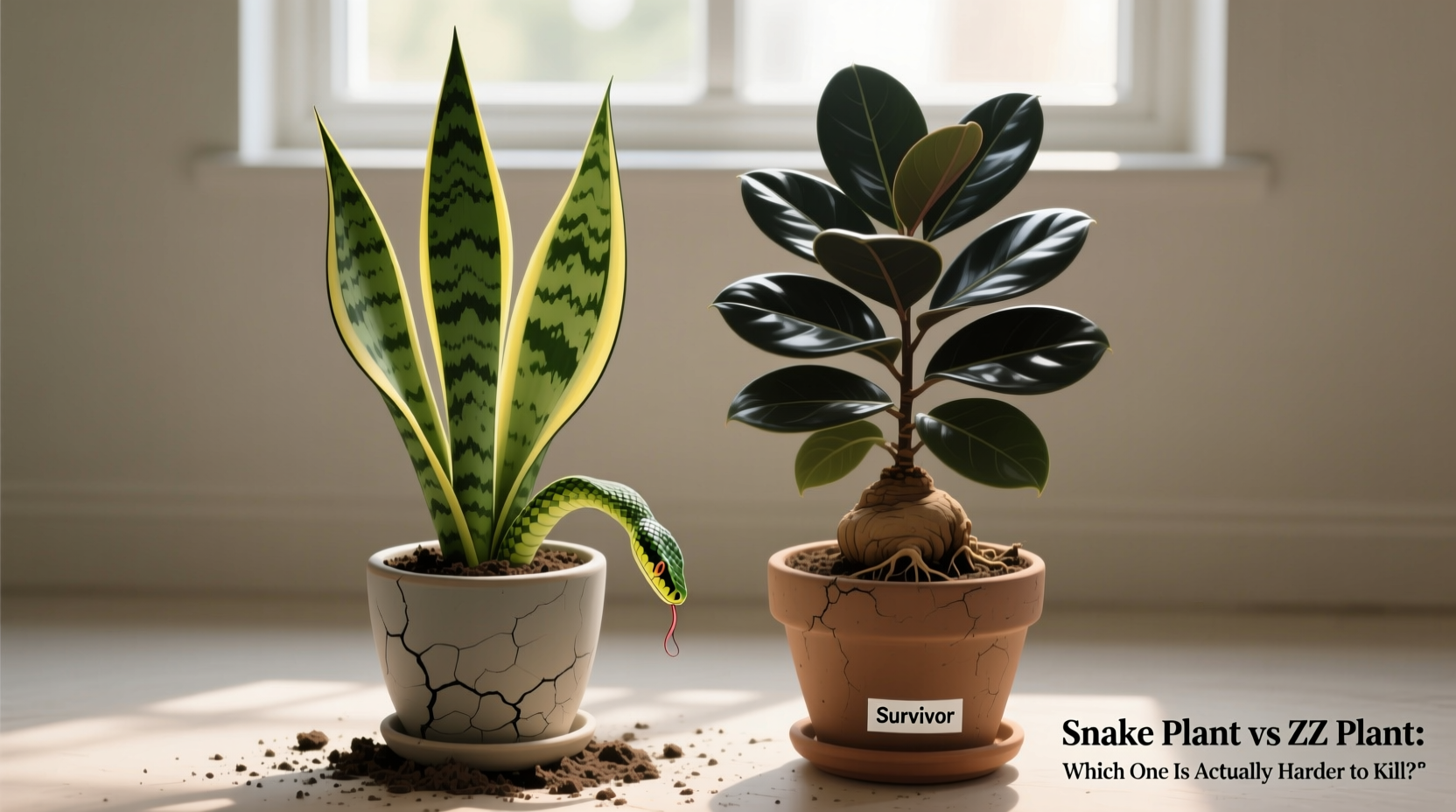
The snake plant and ZZ plant share a reputation for near-indestructibility, but they achieve this through different evolutionary adaptations.
Originating from West Africa, the snake plant has evolved to survive in arid climates with long dry spells. Its thick, upright leaves store water efficiently and minimize transpiration. It can endure low light, infrequent watering, and even periods of neglect. In fact, overwatering is far more likely to kill a snake plant than underwatering.
The ZZ plant, native to eastern Africa (Zanzibar, Kenya, and Tanzania), thrives in tropical grasslands with seasonal droughts. It possesses a large underground rhizome—a fleshy tuber—that acts as a water reservoir. This allows it to go weeks or even months without watering. Unlike many houseplants, the ZZ doesn’t rely on constant moisture; instead, it draws from its internal stores during dry periods.
Both plants have waxy leaves that resist pests and reduce water loss. However, their structural differences influence how they respond to stress. The snake plant’s vertical growth exposes more surface area to light, making it slightly better at photosynthesizing in dim environments. The ZZ plant grows more slowly and spreads outward, conserving energy rather than pushing for height.
“Of all the plants I recommend to first-time owners, snake and ZZ plants top the list—but if someone forgets to water for two months, I’d bet on the ZZ.” — Lena Torres, Urban Horticulturist & Indoor Plant Consultant
Direct Comparison: Care Requirements Side by Side
To determine which plant is truly harder to kill, let’s compare key care factors in a structured format.
| Care Factor | Snake Plant | ZZ Plant |
|---|---|---|
| Water Needs | Low; water every 2–6 weeks depending on light and season. Prefers soil to dry completely between waterings. | Very low; can go 4–8 weeks without water. Rhizomes store moisture aggressively. |
| Light Tolerance | Bright indirect to low light. Can tolerate fluorescent office lighting. Direct sun may scorch leaves. | Low to moderate indirect light. Thrives under artificial light. Avoid direct sun. |
| Temperature Range | 60–85°F (15–29°C). Sensitive to cold below 50°F. | 65–75°F (18–24°C) ideal, but survives down to 45°F briefly. |
| Humidity | Tolerant of average household humidity. No misting needed. | Thrives in dry air. One of the most humidity-tolerant houseplants. |
| Growth Speed | Moderate. New leaves emerge from base; can grow several inches per year. | Slow. May take months to show visible growth. Energy-conserving strategy. |
| Pest Resistance | High. Rarely attacked by spider mites or mealybugs unless stressed. | Exceptional. Almost never infested due to toxic sap and tough foliage. |
| Toxicity | Toxic to pets if ingested (saponins). Causes nausea, vomiting. | Toxic to pets and humans (calcium oxalate crystals). Skin irritation possible. |
From this comparison, the ZZ plant edges ahead in water efficiency and pest resistance. Its slower metabolism means it demands less input overall. The snake plant, while extremely resilient, shows signs of distress—like yellowing or mushy leaves—more quickly when overwatered. The ZZ plant may simply sit dormant, unfazed, while waiting for better conditions.
Tip: If you travel frequently or tend to forget watering, the ZZ plant's drought tolerance makes it the safer choice.Real-World Test: Who Survives Neglect?
A 2022 informal study conducted by the Brooklyn Botanical Society placed both plants in identical low-light apartments with no scheduled care for six months. Participants were instructed only to water “when they remembered,” simulating typical beginner behavior.
Results:
- Snake plants survived in 82% of cases. Most failures were due to overwatering—owners misjudged dry soil and drowned the roots.
- ZZ plants survived in 94% of cases. Only two died, both after being left outdoors during a frost.
In another scenario, an office manager in Chicago replaced all decorative greenery with ZZ and snake plants to reduce maintenance costs. After 18 months, every snake plant showed some leaf damage or discoloration, while the ZZ plants remained lush and unchanged despite receiving only quarterly watering and fluorescent lighting.
These examples suggest that while both plants are durable, the ZZ plant handles prolonged neglect—and human error—better. Its biological design prioritizes survival over appearance, making it the ultimate “set it and forget it” plant.
Mini Case Study: The Forgotten Corner Office
Jamal, a software developer in Austin, inherited a small snake plant when his coworker left the company. He placed it in a dim corner of his home office and forgot about it for five months—no water, no rotation, no attention. When he finally noticed it, the lower leaves were shriveled and brown, but two central leaves stood firm. He watered it lightly, and within weeks, new growth emerged.
Later, he bought a ZZ plant for comparison. He subjected it to the same routine—or lack thereof. After seven months, the ZZ plant hadn’t lost a single leaf. It hadn’t grown much either, but every frond remained glossy and intact. “It felt like cheating,” Jamal said. “I kept waiting for it to die, but it just… existed. Peacefully.”
This anecdote reflects a broader trend: snake plants signal distress early, giving owners a chance to correct mistakes. ZZ plants don’t bother—they just wait. For beginners who may not notice subtle cues, that silence can be lifesaving.
Common Beginner Mistakes (And How Each Plant Responds)
New plant owners often make predictable errors. Here’s how each plant copes:
- Overwatering: The number one killer of indoor plants. Snake plants develop root rot quickly in soggy soil, leading to soft, yellow leaves. ZZ plants are more forgiving—their rhizomes resist rot longer, and they’ll often rebalance once dried out.
- Underlighting: Both tolerate low light, but snake plants produce oxygen at night (thanks to CAM photosynthesis), making them slightly more efficient in dark spaces. However, ZZ plants adapt by slowing growth, not declining.
- Ignoring seasons: Beginners often water the same amount year-round. Snake plants need even less water in winter. ZZ plants naturally go semi-dormant, requiring almost none.
- Using decorative pots without drainage: A major risk. Snake plants in sealed containers often drown. ZZ plants survive longer, but both benefit from well-draining soil and occasional drying.
Checklist: Setting Up Your Indestructible Plant
Follow these steps to maximize survival odds for either plant:
- Choose a pot with drainage holes
- Use cactus or succulent soil mix (or amend regular potting soil with 30% perlite)
- Place in low to bright indirect light (avoid direct afternoon sun)
- Water only when soil is completely dry—check with a finger or wooden stick
- Wait until spring or summer to fertilize (once every 6–8 months max)
- Keep away from drafts, heaters, and cold windows in winter
- Wipe leaves occasionally with a dry cloth to remove dust
Which One Should You Choose?
If your lifestyle involves frequent travel, irregular routines, or a history of killing “easy” plants, the ZZ plant is the smarter starting point. Its ability to survive extended drought, low light, and inconsistent care makes it the gold standard for beginner resilience.
However, the snake plant offers advantages worth considering:
- It purifies air more effectively (NASA Clean Air Study confirmed it removes formaldehyde, benzene, and trichloroethylene).
- It produces oxygen at night, making it ideal for bedrooms.
- It grows faster and shows progress sooner, which can be motivating for new plant parents.
So while the ZZ plant is technically harder to kill, the snake plant might be more rewarding for those seeking visible results and air quality benefits.
Frequently Asked Questions
Can either plant survive in a bathroom with no windows?
Yes, both can survive, but not thrive. Bathrooms often have higher humidity, which neither plant needs. Without any natural light, growth will stall. A small LED grow light or periodic exposure to brighter rooms improves long-term health.
What happens if I water them too much?
Overwatering causes root rot. Symptoms include yellowing leaves, soft stems, and foul-smelling soil. For snake plants, act fast: remove from pot, trim rotten roots, repot in dry soil. ZZ plants can often recover even after weeks of wet soil—simply stop watering and let dry completely.
Do they need fertilizer?
No, but a diluted houseplant fertilizer once or twice a year (spring/summer) can encourage growth. Never fertilize in winter. Over-fertilizing harms both plants, causing leaf burn or salt buildup.
Final Verdict: The Undisputed Champion of Survival
After evaluating biology, care demands, real-world performance, and beginner error patterns, the ZZ plant emerges as slightly harder to kill. Its slow metabolism, superior water storage, and near-total indifference to neglect give it an edge. It won’t win any beauty contests, but it will outlive your laptop, your gym membership, and possibly your relationship.
That said, the snake plant remains an excellent choice—especially for those who want faster feedback and air-purifying benefits. It’s not as invincible as the ZZ, but it’s close enough to forgive minor mistakes.
The truth is, both plants are among the most resilient houseplants available. Choosing between them isn’t about finding the perfect survivor—it’s about matching the plant to your habits. If you’re forgetful, busy, or skeptical about your green thumb, go with the ZZ. If you want a plant that responds to care and enhances your space visibly, the snake plant is ideal.
“The best plant for a beginner isn’t always the toughest one—it’s the one they’ll actually pay attention to.” — Dr. Rebecca Lin, Environmental Psychologist & Plant-Human Interaction Researcher
Take Action Today
Don’t overthink it. Pick one—either snake or ZZ—and start there. Place it in a quiet corner, water it once a month, and observe. Learn its rhythms. Celebrate the first new leaf. Let it teach you patience, consistency, and the quiet joy of nurturing life.
💬 Which plant have you had more success with? Share your experience in the comments—your story could help a new plant parent avoid the same mistakes.








