
Birdwatching is a peaceful pastime that brings joy to many homeowners, but it can quickly turn disheartening when predatory cats threaten nesting birds. Domestic and feral cats are responsible for killing hundreds of millions of birds annually in the U.S. alone, according to the American Bird Conservancy. Protecting bird houses from curious or hunting felines isn’t just about preserving avian life—it’s about fostering a balanced, thriving backyard ecosystem. The good news: with thoughtful planning and humane deterrents, you can effectively shield your feathered neighbors without harming cats.
Understanding the Threat: Why Cats Target Bird Houses
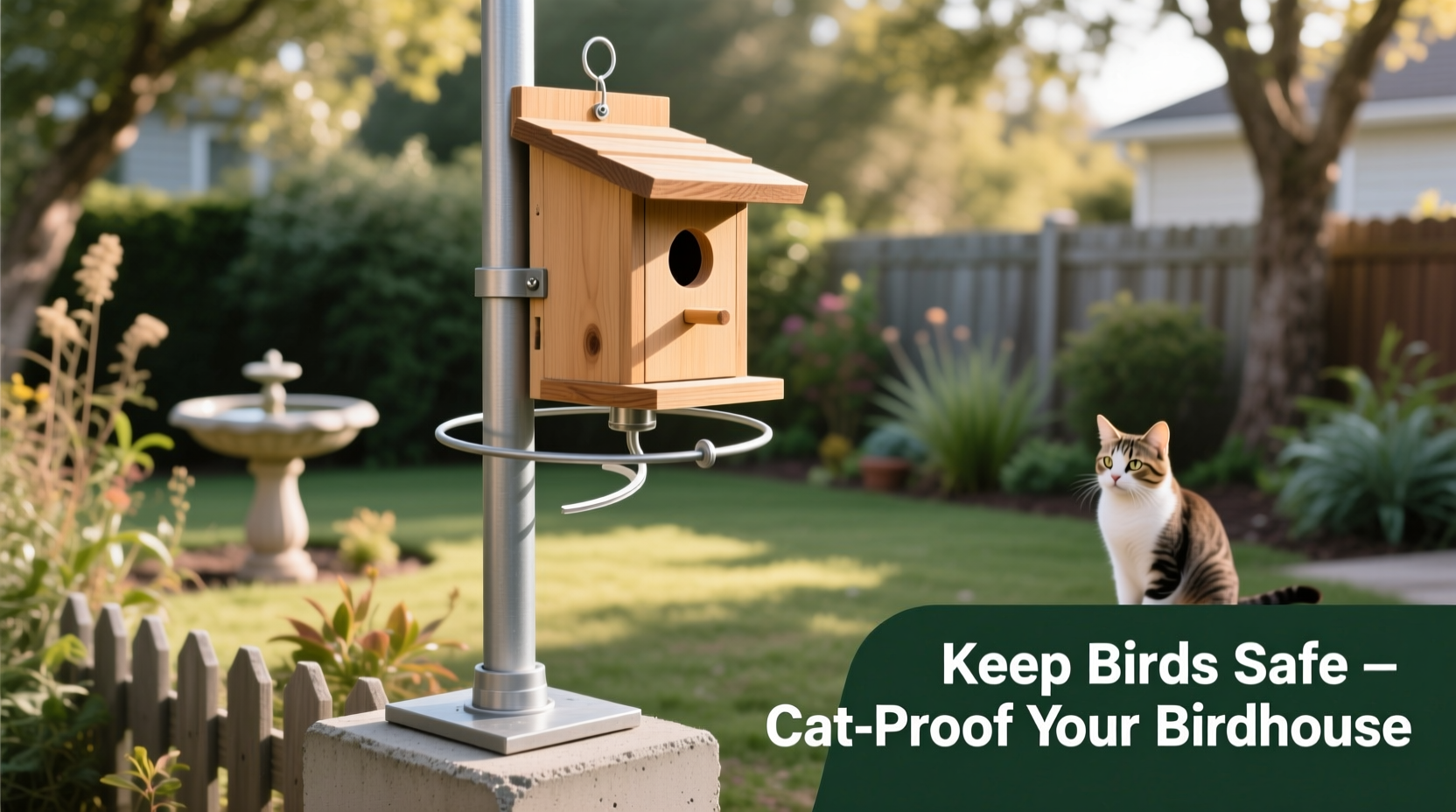
Cats are natural predators with keen senses and agile bodies built for stealth. Even well-fed house cats retain their instinct to stalk and pounce. Bird houses, especially those mounted on poles or low tree branches, are often within striking distance. Nestlings and fledglings are particularly vulnerable due to their limited mobility and high-pitched calls that attract attention.
The risk increases if your yard offers cover—such as shrubs, tall grass, or woodpiles—that allow cats to approach unseen. Understanding feline behavior is the first step in designing an effective defense strategy. Cats prefer routes with concealment and avoid open, exposed areas. They also rely heavily on scent and routine, making environmental modification a powerful tool.
Tip: Place bird houses at least 6 feet above ground and away from overhanging branches or dense foliage where cats can hide.Physical Barriers: Blocking Access to Bird Houses
The most reliable way to protect bird houses is to prevent cats from reaching them physically. This requires strategic placement and structural modifications.
Start by mounting bird houses on smooth metal poles instead of wooden posts or trees. Wooden surfaces offer grip for climbing, while metal poles—especially when paired with a baffle—can stop even the most determined cat. A cone baffle (also called a predator guard) installed below the bird house creates a slippery obstacle that cats cannot scale.
For added security, consider using a stovepipe baffle, a cylindrical metal sleeve that surrounds the pole. When properly installed, it spins under a cat’s weight, making ascent impossible. These baffles should be placed at least 4–5 feet off the ground and positioned so no nearby structures (like fences or furniture) allow a jumping launch.
| Barrier Type | Effectiveness | Installation Tip |
|---|---|---|
| Conical Baffle | High | Mount below bird house; ensure wide angle faces upward |
| Stovepipe Baffle | Very High | Use rigid galvanized steel; secure tightly to prevent tilting |
| Wire Mesh Fence | Moderate | Enclose area with 1-inch mesh; bury 6 inches underground |
| Hanging Lines (Bird Flight) | Low-Moderate | String lines above bird house to disrupt aerial leaps |
Environmental Deterrents: Making Your Yard Less Cat-Friendly
Discouraging cats from entering certain zones involves altering the landscape to reduce appeal. Cats prefer soft landing spots, concealed pathways, and familiar routes. Disrupting these elements encourages them to seek easier hunting grounds.
Replace mulch or loose soil near bird houses with coarse gravel or crushed stone. The uncomfortable texture deters digging and lounging. Plant prickly ground covers like juniper or lavender around potential access points—cats dislike walking on uneven or spiky surfaces.
Strategic lighting also helps. Motion-activated lights startle nocturnal prowlers, while consistent illumination in evening hours reduces cover of darkness. Solar-powered LED lights are energy-efficient and easy to install.
“Creating visual and physical openness around bird houses significantly reduces predation risk. Birds thrive when their nests are isolated from cover.” — Dr. Laura Thompson, Urban Wildlife Ecologist
Step-by-Step Guide: Installing a Cat-Proof Bird House System
Follow this sequence to maximize protection:
- Choose the right location: Select a site at least 10 feet from trees, fences, or structures cats can jump from.
- Select a smooth metal pole: Use a 6-foot galvanized steel pipe with a diameter of 1.5–2 inches.
- Install a stovepipe baffle: Slide a 3-foot-long metal cylinder over the pole, securing it 4.5 feet from the ground.
- Mount the bird house: Attach it at the top of the pole using brackets, ensuring no overhang allows climbing.
- Add motion-activated deterrents: Install a solar-powered sprinkler or light near the base to scare approaching cats.
- Maintain clear surroundings: Keep a 5-foot radius free of clutter, tall grass, and hiding spots.
Humane Repellents and Scent-Based Solutions
While physical barriers are most effective, scent-based repellents can supplement your strategy. Cats rely heavily on smell and avoid areas marked by predators or strong odors.
Sprinkle used coffee grounds, citrus peels, or essential oils like citronella or eucalyptus around the perimeter. Commercial cat repellents containing methyl nonyl ketone are EPA-approved and safe for plants and wildlife when used as directed.
Another option is synthetic predator urine (e.g., coyote or fox). Though controversial, studies show temporary effectiveness in deterring roaming cats. Reapply after rain and rotate scents to prevent habituation.
Avoid ultrasonic devices unless backed by evidence. Many lack consistent results, and some may stress pets or wildlife unnecessarily.
Mini Case Study: The Johnson Family’s Backyard Transformation
The Johnsons in suburban Ohio loved hosting bluebirds but noticed declining nest success over two seasons. After observing a neighbor’s cat stalking near their wooden-post-mounted bird house, they redesigned their setup.
They replaced the post with a 6-foot metal pole, added a stovepipe baffle, and planted lavender around the base. They also installed a motion-activated sprinkler set to trigger at night. Within weeks, cat visits ceased. That spring, two broods successfully fledged—a first in three years.
Their experience underscores that combining multiple deterrents yields better results than relying on a single method.
Checklist: Cat-Proof Your Bird House in 7 Steps
- ✅ Mount bird house on a metal pole at least 6 feet high
- ✅ Install a conical or stovepipe baffle below the house
- ✅ Eliminate nearby jumping platforms (benches, stumps, low branches)
- ✅ Clear vegetation within a 5-foot radius
- ✅ Use rough-textured ground cover (gravel, pine cones)
- ✅ Apply natural scent repellents monthly
- ✅ Monitor activity with motion-sensing lights or cameras
Frequently Asked Questions
Will keeping my own cat indoors really help wild birds?
Absolutely. Indoor cats live longer, healthier lives and pose no threat to local wildlife. The American Bird Conservancy estimates that indoor-only cats can reduce bird mortality by up to 80% in residential areas.
Are there bird houses designed specifically to resist predators?
Yes. Look for models with small entrance holes (1–1.5 inches), no perch below the hole, and metal construction. Some include built-in baffle systems or are designed exclusively for pole mounting.
What if the cat belongs to a neighbor? Can I do anything?
Approach the topic diplomatically. Share data on bird conservation and suggest collaborative solutions—like offering a catio (cat patio) or supporting community Trap-Neuter-Return (TNR) programs for strays.
Final Thoughts: Coexistence Through Smart Design
Protecting birds from cats doesn’t require extreme measures or hostility toward felines. It calls for awareness, planning, and a commitment to humane solutions. By modifying your yard’s layout, using proven barriers, and applying subtle deterrents, you create a sanctuary where birds can nest safely—and cat owners can still enjoy their pets responsibly.
💬 Have a cat-proofing tip that worked in your garden? Share your story in the comments and help build a safer environment for birds everywhere.








