
At first glance, dogs and wolves share striking similarities. Both belong to the Canidae family, carry genetic blueprints that overlap by more than 99%, and exhibit comparable physical traits—pointed ears, sharp teeth, and powerful limbs built for endurance. Yet despite this biological kinship, choosing a dog as a companion is not only practical but profoundly safer and more sustainable than attempting to keep a wolf. The divergence between them isn't just behavioral—it's evolutionary, social, legal, and deeply rooted in thousands of years of domestication.
The appeal of owning a wolf often stems from romanticized notions seen in media or literature—lone figures bonding with wild creatures, forging unbreakable bonds beyond human norms. But reality paints a far different picture. Wolves are not pets. They are wild animals with instincts that cannot be trained out, tamed away, or adapted to suburban life. Dogs, on the other hand, have evolved alongside humans for at least 15,000 years, shaping their biology and psychology to thrive in human environments.
Evolutionary Divergence: Domestication Changed Everything
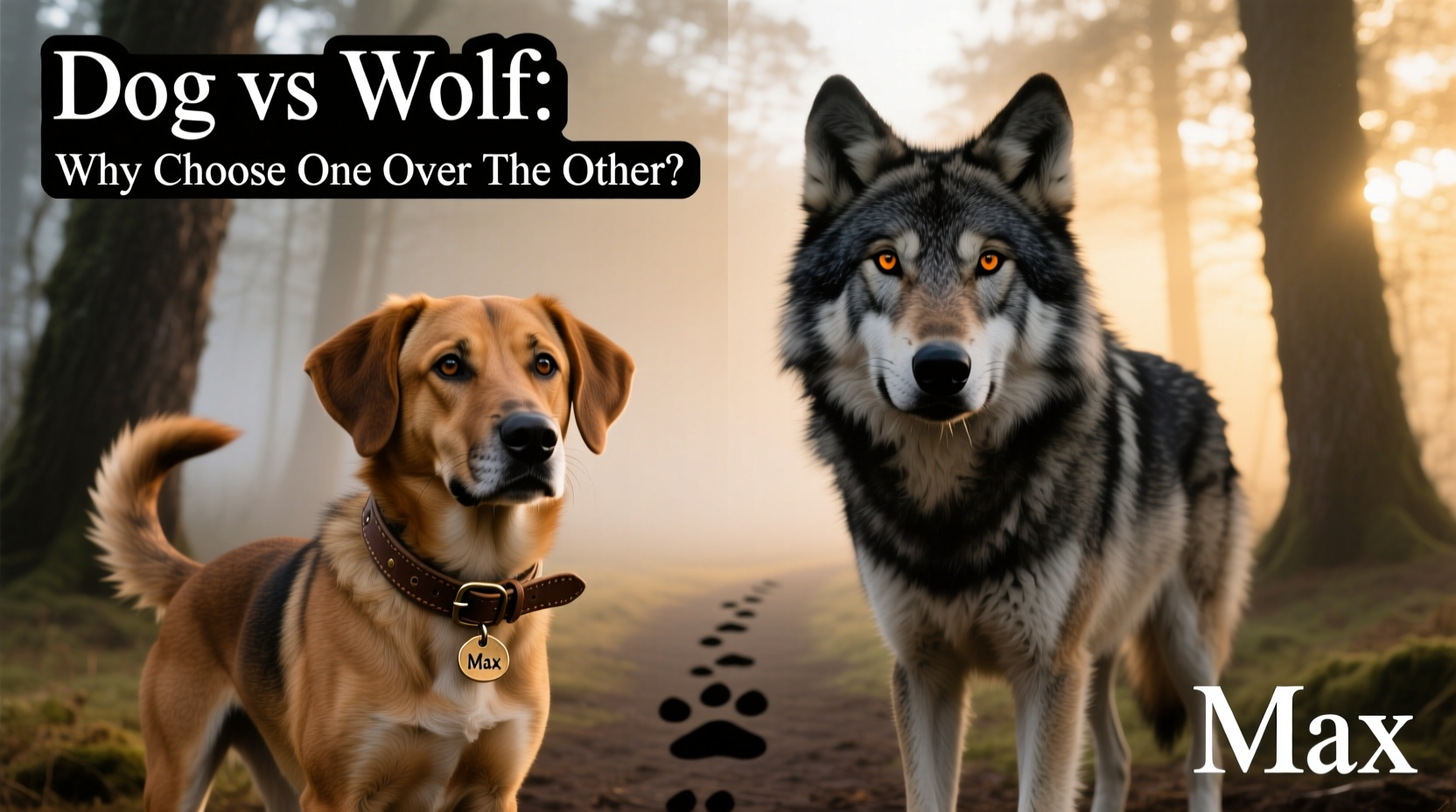
While dogs (Canis lupus familiaris) and gray wolves (Canis lupus) share a common ancestor, their paths diverged dramatically due to selective breeding. Early humans favored wolves with less aggressive tendencies, those more curious about human camps, and individuals willing to scavenge near settlements. Over generations, these traits were reinforced, leading to profound physiological and neurological changes.
Studies show that domesticated dogs have developed enhanced abilities to read human facial expressions, follow pointing gestures, and respond to vocal cues—skills largely absent in wolves, even when raised by humans from birth. This cognitive shift didn’t happen overnight; it was the result of millennia of co-evolution.
“Dogs aren’t just tamer wolves—they’re a different kind of animal altogether. Their brains have rewired to prioritize social cooperation with humans.” — Dr. Brian Hare, Cognitive Scientist, Duke University
This fundamental difference means that while a puppy might look like a miniature wolf, its mind operates on a completely different framework—one designed for partnership, not survival in the wild.
Behavioral Differences: Instincts You Can’t Train Away
A wolf’s behavior is governed by instinctual drives honed over eons: hunting, territorial marking, pack hierarchy, and avoidance of unfamiliar stimuli. Even hand-raised wolves retain these behaviors, which often clash with human expectations.
- Hunting drive: Wolves are apex predators. A toy squirrel tossed in the backyard may trigger a full predatory sequence—chase, kill bite, dismemberment.
- Flight response: Unlike dogs, who typically seek human reassurance during stress, wolves flee or freeze. Fireworks, children running, or sudden noises can cause panic attacks or escape attempts.
- Marking territory: Wolves urinate frequently to mark boundaries, including inside homes, furniture, and personal belongings.
- Pack structure: Wolves establish rigid dominance hierarchies. Attempting to assert control can lead to fear-based aggression or withdrawal.
Legal and Practical Realities of Wolf Ownership
In most U.S. states and many countries, owning a pure wolf is outright illegal. Hybrid animals (wolf-dog crosses) fall into a legal gray zone, often requiring special permits, secure enclosures, liability insurance, and registration. Even where allowed, local zoning laws may prohibit such ownership.
Consider the infrastructure needed:
- Enclosures must be at least 8 feet high with buried barriers to prevent digging.
- Fencing must withstand constant testing and chewing.
- Isolation from other pets is critical—wolves see smaller animals as prey.
- Veterinary care is limited; few clinics accept wolves due to danger and lack of expertise.
And then there’s cost: feeding a 100-pound carnivore raw meat diets runs $150–$300 monthly. Add enclosure maintenance, licensing, and emergency preparedness, and annual expenses can exceed $5,000.
Comparative Overview: Dog vs Wolf
| Aspect | Dog | Wolf |
|---|---|---|
| Domestication | Over 15,000 years of selective breeding | Never domesticated; wild species |
| Social Bonding | Forms strong attachments to humans | Bonds primarily within a pack; distrustful of strangers |
| Trainability | Highly responsive to commands and rewards | Resistant to obedience training; follows own instincts |
| Lifespan (Captive) | 10–15 years (varies by breed) | 12–16 years, but difficult to maintain health in captivity |
| Legal Status | Legal everywhere with standard pet regulations | Illegal or heavily restricted in most jurisdictions |
| Space Needs | Adaptable to apartments, yards, or rural areas | Requires acres of secured land |
| Risk to Humans/Pets | Low when properly socialized | High; unpredictable behavior, predation risk |
Real-Life Example: The Case of “Koda” the Wolf Hybrid
In Colorado, a family acquired a wolfdog hybrid believing it would be a loyal, exotic companion. At six months, Koda seemed manageable—curious, energetic, but affectionate. By age two, however, his behavior shifted. He began digging under fences, attacking neighborhood cats, and growling at children. After he lunged at a visiting toddler, animal control intervened. No sanctuary would accept him due to safety concerns, and euthanasia was the only option.
This tragic outcome wasn’t due to poor care—it stemmed from a fundamental misunderstanding of what a wolfdog truly is: a wild animal wearing the face of a pet. The family loved Koda, but love cannot override instinct.
Step-by-Step Guide: Choosing the Right Canine Companion
If you're drawn to wolves because of their beauty, intelligence, or perceived nobility, consider how those qualities can be fulfilled responsibly through dog breeds that resemble or emulate certain wolf-like traits.
- Identify your motivations: Are you seeking loyalty, protection, independence, or aesthetics?
- Match traits to breeds: Siberian Huskies, Alaskan Malamutes, or Saarloos Wolfdogs offer wolf-like appearance with domestic temperaments.
- Research breed needs: High-energy breeds require intense exercise and mental stimulation.
- Visit shelters: Many large, northern-type dogs are surrendered due to mismatched expectations—adopting one gives a second chance.
- Consult trainers: Ensure you understand the commitment before bringing any dog home.
Frequently Asked Questions
Can wolves be trained like dogs?
No. While wolves can learn simple commands through positive reinforcement, they lack the intrinsic motivation to please humans. Training is inconsistent and unreliable, especially as they mature.
Are wolf-dog hybrids safer or more domesticated?
Not necessarily. Even 90% dog / 10% wolf hybrids can display unpredictable wild behaviors. There’s no guarantee of temperament, and many exhibit the worst traits of both species—flightiness, aggression, and extreme wariness.
Don’t some people successfully keep wolves?
A tiny number of accredited sanctuaries and expert handlers manage wolves in controlled environments. These individuals have decades of experience, specialized facilities, and do not treat wolves as pets. This is not replicable in a home setting.
Tip: If you admire wolves, support conservation efforts instead. Organizations like Wolf Conservation Center or Yellowstone Forever offer educational programs and adoption symbolic packs.Conclusion: Respect the Wild, Love the Domestic
Choosing a dog over a wolf isn’t a compromise—it’s a recognition of mutual well-being. Dogs are companions built for life alongside humans. They greet us at the door, comfort us when we’re sad, and adapt to our routines with grace. Wolves, magnificent as they are, belong in forests, not backyards.
Our fascination with wolves speaks to a deep respect for nature’s power and elegance. But true respect means letting wild animals remain wild. It means appreciating them through documentaries, wildlife reserves, and responsible advocacy—not through ownership.
If you’re ready for a loyal, intelligent, and devoted companion, welcome a dog into your life. Choose one whose energy matches yours, whose needs align with your lifestyle, and whose ancestry—though shared with the wolf—is uniquely suited to love and live with you.
🚀 Ready to find your perfect canine match? Visit your local shelter or a reputable breeder today—and celebrate the legacy of partnership between humans and dogs.








