Many cat owners assume that once a feline reaches their golden years, their habits are set in stone. When it comes to scratching furniture instead of designated posts, this belief often leads to resignation: “She’s too old to learn new tricks.” But is that really true? The answer is a resounding no. With the right approach, even senior cats—those 7 years and older—can be trained to use a scratching post effectively. While it may take more time and patience than training a kitten, it's not only possible but also beneficial for both pet and owner.
Scratching is a natural behavior rooted in instinct. Cats scratch to mark territory, stretch muscles, shed claw sheaths, and relieve stress. When they direct this behavior toward your sofa or doorframe, it becomes a problem. Rather than punishing the cat or giving up entirely, redirecting the behavior with proper tools and understanding offers a humane and lasting solution. This guide dives into proven strategies, backed by animal behaviorists and experienced trainers, to help you successfully teach an older cat to embrace a scratching post.
Understanding Why Older Cats Resist Change
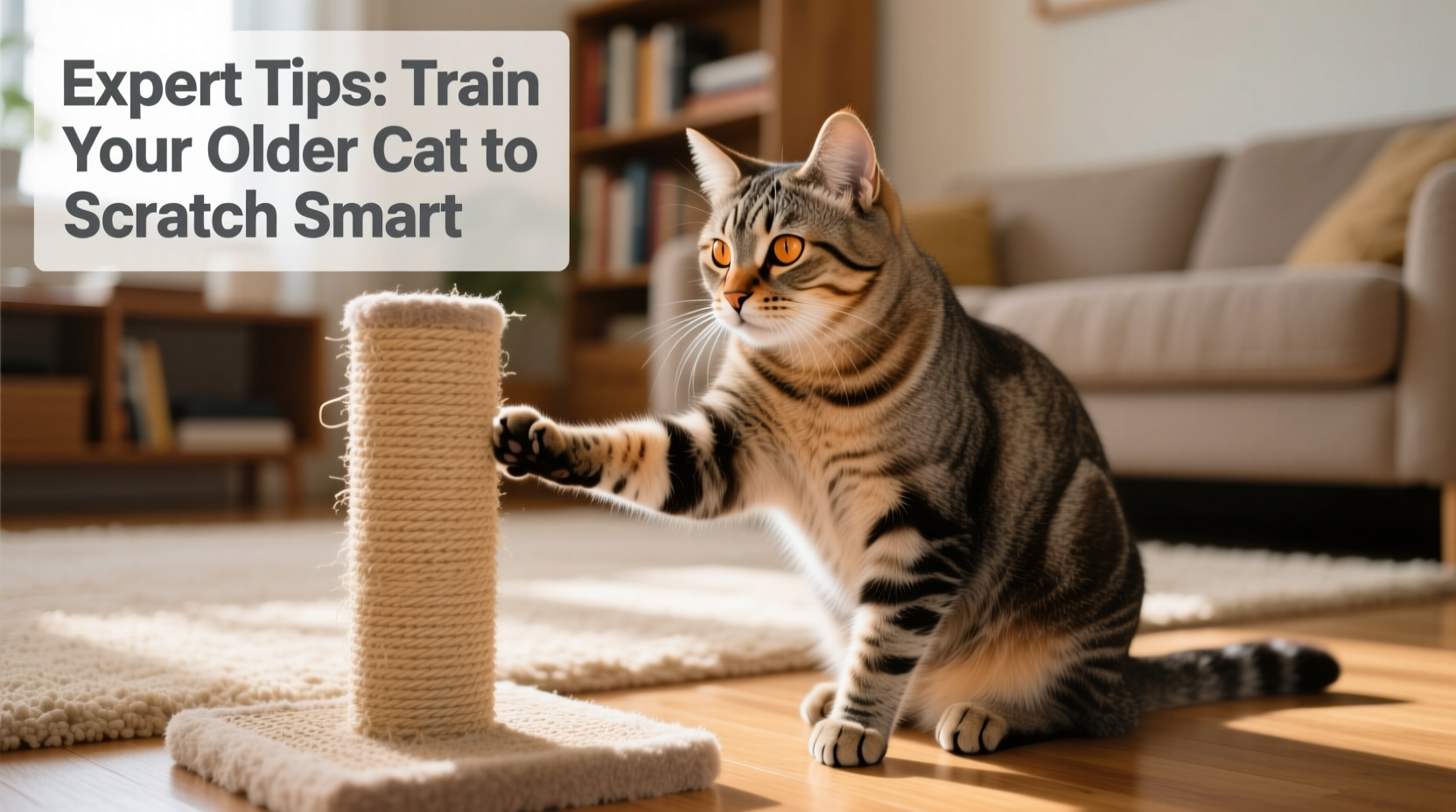
Cats are creatures of habit. As they age, their routines become more deeply ingrained. An older cat who has spent years scratching the same armchair isn’t simply being destructive; they’ve associated that spot with comfort, familiarity, and sensory feedback. Attempting to disrupt this pattern without addressing the underlying motivations can lead to frustration—for both you and your pet.
Additionally, physical changes in aging cats may influence their preferences. Arthritis, reduced flexibility, or diminished vision can make certain scratching surfaces or locations less accessible or appealing. A post that’s too short, too wobbly, or placed in a high-traffic area might be avoided not out of stubbornness, but discomfort.
Before beginning training, assess your cat’s health. Sudden behavioral shifts—such as avoiding a previously used scratching post—can indicate pain or illness. A veterinary check-up ensures that any training effort isn’t undermined by untreated medical issues.
Tip: Observe where your cat naturally scratches. Use this insight to place the new post in a similar location with a comparable texture.Step-by-Step Guide to Training an Older Cat
Retraining an older cat requires consistency, positive reinforcement, and environmental management. Follow these steps to create a successful transition:
- Choose the Right Scratching Post
Select a post that matches your cat’s preferences. Most cats prefer vertical scratching, especially if they’re older and need support. The post should be tall enough for a full stretch (at least 30 inches) and sturdy enough not to tip over. Materials like sisal rope, corrugated cardboard, or natural wood are highly effective. - Place It Strategically
Position the post near the furniture your cat currently scratches. Cats scratch after waking, so placing it beside their favorite sleeping spot increases usage. Avoid isolating the post in a quiet corner—it needs to be part of their daily path. - Make It Appealing
Rub catnip on the post or sprinkle silver vine to attract interest. You can also attach dangling toys or tie a feather on a string to encourage play near the post. - Use Positive Reinforcement
When your cat approaches or sniffs the post, offer treats and verbal praise. If they scratch, reward immediately. Never punish unwanted scratching—this creates fear and undermines trust. - Discourage Furniture Scratching
Temporarily cover scratched areas with double-sided tape, aluminum foil, or plastic runners. These textures are unpleasant but harmless. Remove them only after consistent use of the post. - Be Patient and Consistent
Training may take weeks or even months with older cats. Repeat the process daily, and avoid moving the post frequently, which confuses the cat.
Do’s and Don’ts When Retraining Senior Cats
| Do’s | Don’ts |
|---|---|
| Choose a stable, tall scratching post | Use flimsy or short posts that wobble |
| Place the post near current scratching zones | Put the post in a remote, unused room |
| Use catnip or toys to entice interest | Force your cat onto the post |
| Offer treats and praise for engagement | Punish or yell when they scratch furniture |
| Trim claws regularly to reduce damage | Ignore signs of joint pain or reluctance |
Expert Insight: What Animal Behaviorists Recommend
Dr. Sarah Bennett, a certified feline behavior consultant with over 15 years of clinical experience, emphasizes that age is not a barrier to learning. “Cats of any age can adapt to new behaviors when the motivation is strong and the environment supports change,” she explains.
“Older cats aren’t set in their ways because they’re stubborn—they’re set in their ways because their habits have been reinforced over time. Our job is to make the new option more rewarding than the old one.” — Dr. Sarah Bennett, Feline Behavior Specialist
She recommends pairing the scratching post with high-value rewards. “Use a treat your cat loves—something they don’t get every day. The stronger the reward, the faster the association forms.”
Bennett also warns against common misconceptions: “People think declawing solves the problem, but it’s both unethical and harmful. It removes the last bone of each toe, causing chronic pain and behavioral issues. Training is always the better path.”
Real-Life Example: Retraining Bella, a 10-Year-Old Tabby
Maria adopted Bella from a shelter at age 8. While affectionate, Bella had one major issue: she shredded the legs of Maria’s antique wooden chair every morning. Maria tried sprays, covers, and even relocating the chair—but nothing worked. Frustrated, she consulted a local cat behaviorist.
The trainer observed Bella’s routine and noticed she always scratched after napping on the nearby windowsill. The recommendation was simple: place a 32-inch sisal-wrapped post right beside the chair, angled slightly for stability. The post was rubbed with silver vine, and Maria began offering freeze-dried chicken treats whenever Bella interacted with it.
For the first week, Bella ignored it. In week two, she sniffed and batted at a dangling toy attached to the top. By day 18, she gave her first full scratch. Maria continued reinforcing the behavior, gradually covering the chair legs with textured tape. Within six weeks, Bella used the post exclusively. The chair was saved, and Maria felt empowered knowing she’d resolved the issue humanely.
Tip: Attach a feather or crinkle toy to the top of the post to encourage jumping and stretching—natural precursors to scratching.Essential Checklist for Success
- ✅ Assess your cat’s health with a vet visit
- ✅ Identify current scratching locations and patterns
- ✅ Purchase a tall, sturdy scratching post made of sisal or cardboard
- ✅ Place the post within 3 feet of the targeted furniture
- ✅ Apply catnip, silver vine, or valerian root to attract attention
- ✅ Reward every interaction—sniffing, touching, scratching—with treats
- ✅ Cover undesirable surfaces with deterrents (tape, foil, plastic)
- ✅ Trim your cat’s claws every 2–3 weeks to minimize damage during transition
- ✅ Be consistent for at least 4–6 weeks before expecting full compliance
- ✅ Monitor progress and adjust placement or type of post if needed
Frequently Asked Questions
Can you train a 12-year-old cat to stop scratching the couch?
Yes. Age does not eliminate a cat’s ability to learn. While it may take longer, using positive reinforcement, proper post selection, and environmental adjustments can shift the behavior. The key is consistency and making the post more appealing than the couch.
What if my older cat ignores the scratching post completely?
First, evaluate the post’s height, stability, and material. Many cats reject posts that are too short or unstable. Try a different type—horizontal cardboard pads sometimes work better for arthritic cats. Also, ensure the location is familiar and safe. Finally, use high-value lures like silver vine or interactive toys to spark interest.
Is it normal for older cats to scratch less?
Some senior cats may scratch less due to reduced mobility or energy, but the instinct remains. If a previously active scratcher suddenly stops, consult a veterinarian. Joint pain or discomfort could be preventing them from engaging in natural behaviors.
Final Thoughts: Patience Pays Off
Training an older cat to use a scratching post isn’t about domination or discipline—it’s about communication and cooperation. Cats respond best to environments where their instincts are respected and redirected, not suppressed. By understanding your cat’s motivations, choosing the right tools, and reinforcing desired behavior with kindness, you create a harmonious home where both furniture and feline thrive.
The journey may test your patience, but every small victory—a curious sniff, a tentative paw swipe, a full-body scratch—builds momentum. Remember, you’re not just teaching a trick; you’re strengthening your bond through mutual understanding.
💬 Have you successfully trained an older cat to use a scratching post? Share your story in the comments—your experience could inspire another cat owner to keep trying!








