In a world where smartphones are nearly universal, standing out requires more than just a sleek device. The phone case has become an extension of personal identity—a canvas for self-expression. While stickers and vinyl skins offer quick customization, they often peel, fade, or lack durability. For those seeking deeper, longer-lasting individuality, there are far more inventive and meaningful methods to transform a standard case into something uniquely yours.
From tactile embellishments to tech-integrated upgrades, the best personalization strategies go beyond surface-level decoration. They combine craftsmanship, functionality, and creativity to reflect personality, values, or even lifestyle needs. Whether you're drawn to handmade artistry, cutting-edge fabrication, or sentimental touches, this guide explores advanced, underused techniques that elevate your phone case from generic accessory to personal artifact.
Engraving: Precision Meets Permanence
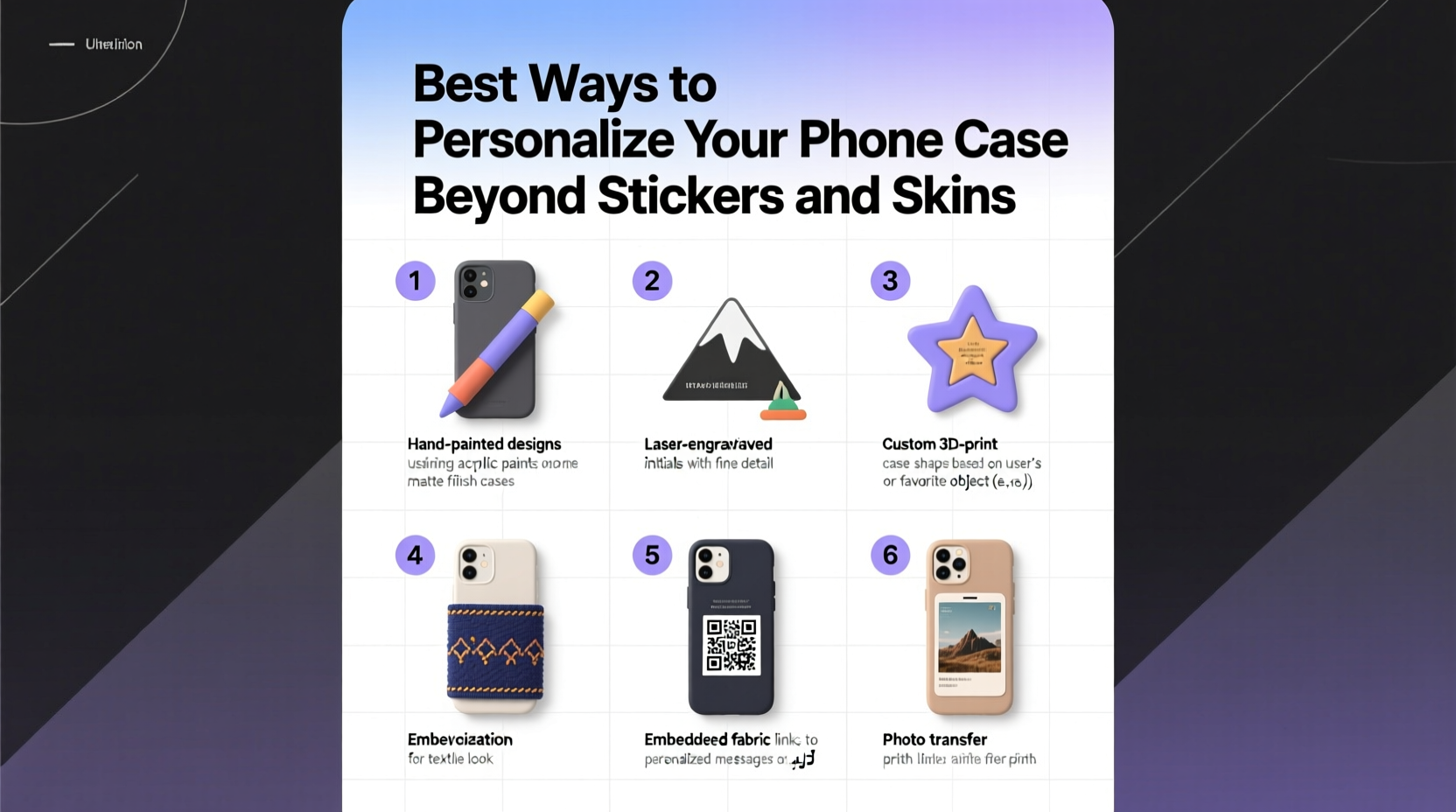
Laser or mechanical engraving allows you to etch intricate designs, names, quotes, or patterns directly onto your phone case. Unlike adhesive decals, engraved details are permanent and resistant to wear, making them ideal for minimalist yet impactful customization.
Materials like aluminum, polycarbonate, wood, and certain silicone blends respond well to engraving. Many online services let you upload vector artwork or text, which is then precisely carved using CO₂ lasers. The result is a subtle but refined finish—especially effective on matte or metallic surfaces.
Tip: Use high-contrast fonts and simple line art for best results in laser engraving; avoid overly complex images.For a personalized touch, consider engraving coordinates of a meaningful location, a short mantra, or even Morse code with a private message. Some users have had wedding dates or pet paw prints digitized and engraved—transforming everyday objects into emotional keepsakes.
Custom 3D Printing: Design Freedom Without Limits
3D printing offers unparalleled creative control. Instead of modifying an existing case, you design one from scratch using modeling software like Tinkercad, Fusion 360, or Blender. This method lets you integrate textures, shapes, ergonomic grips, and even functional features such as built-in stands or card slots.
Printers use materials ranging from flexible TPU (ideal for shock absorption) to rigid PLA or durable ABS. You can print in multiple colors using dual-extrusion printers or paint the case afterward with acrylics formulated for plastics.
Designers have created cases shaped like miniature books, architectural models, or replicas of famous artifacts. One user printed a case modeled after their favorite novel’s cover, complete with embossed title and faux leather texture—proving that imagination, not mass production, drives true uniqueness.
“3D-printed cases aren’t just customizable—they’re a form of wearable design. People are embedding symbolism, storytelling, and even utility into their devices.” — Dr. Lena Torres, Industrial Designer & Wearable Tech Researcher
Step-by-Step Guide: Creating Your Own 3D-Printed Case
- Measure your phone accurately: Note exact dimensions, camera cutout positions, button locations, and port placements.
- Choose modeling software: Beginners should start with Tinkercad; advanced users may prefer Fusion 360 for precision.
- Design the base shell: Create a snug-fit outer frame with proper clearance around edges and components.
- Add custom elements: Incorporate raised patterns, logos, textured grips, or hollow sections for inserts.
- Export as STL file: Ensure watertight mesh and correct scale before slicing.
- Prepare for printing: Use slicer software (e.g., Cura) to set layer height, infill density, and support structures.
- Print and test fit: Adjust tolerances if needed and sand rough edges for comfort.
Hand-Painted Art: Turn Your Case Into a Miniature Canvas
For artists or craft enthusiasts, hand-painting a phone case offers a deeply personal way to express creativity. Acrylic paints, fine brushes, and fabric markers work well on plastic, silicone, or resin-based cases. Once dry, the design can be sealed with a clear epoxy or UV-resistant varnish to prevent chipping.
Popular styles include watercolor washes, geometric patterns, anime characters, or abstract splatter effects. Some users paint seasonal themes and swap cases throughout the year, treating their device like a rotating art exhibit.
Tip: Lightly sand glossy surfaces with fine-grit paper before painting to improve paint adhesion.One designer in Portland began painting tiny landscapes on her cases—each representing a national park she visited. Over two years, she built a collection that doubled as a travel journal. Her project gained attention online, eventually leading to a small business selling painted eco-cases made from recycled ocean plastic.
Embroidery and Fabric Inlays: Soft Texture, Bold Style
This technique works best with hybrid cases that feature removable fabric panels or soft interiors. However, innovative users have embedded embroidered patches or stitched fabric swatches directly onto silicone or leather cases using micro-needles and strong thread.
You can embroider initials, symbols, or intricate motifs by hand or with a mini embroidery machine. Custom patches can be ironed or glued onto compatible surfaces. For a luxury feel, consider using silk, velvet, or denim scraps with contrasting stitching.
Fabric inlays also serve functional purposes—adding grip and reducing slippage while introducing warmth and tactility absent in plastic or metal cases.
| Method | Best For | Durability | DIY-Friendly? |
|---|---|---|---|
| Laser Engraving | Metal, hard plastic, wood | ★★★★★ | ★★☆☆☆ |
| 3D Printing | Full structural redesign | ★★★★☆ | ★★★☆☆ |
| Hand Painting | Artistic expression | ★★★☆☆ | ★★★★☆ |
| Embroidery/Fabric | Textured, soft finishes | ★★★☆☆ | ★★★★☆ |
| Resin Art | Glossy, layered visuals | ★★★★☆ | ★★★☆☆ |
Resin Art and Embedded Objects: Depth and Dimension
Epoxy resin opens up a world of three-dimensional customization. By pouring clear resin into a mold or over a flat surface, you can suspend dried flowers, glitter, sequins, micro-photographs, or even tiny trinkets inside a glossy, glass-like finish.
To create a resin case:
- Start with a shallow, rigid case (or build a mold using silicone).
- Arrange decorative items on the base layer and let them adhere with a thin resin coat.
- Pour subsequent layers slowly, allowing 12–24 hours of curing between coats to avoid bubbles.
- Sand and polish the final surface for a smooth, professional look.
Some users embed QR codes linking to personal websites or social profiles, turning the case into a digital calling card. Others preserve sentimental fragments—like a piece of concert ticket or a child’s drawing—encased in crystal-clear resin.
“I made a resin case with my late dog’s fur mixed into the pigment. It’s not just a phone—it’s a tribute I carry every day.” — Maya R., Brooklyn-based artist
Smart Integration: Functional Personalization
True personalization isn’t only visual—it can enhance usability. Integrating smart features transforms your case into a tailored tool. Examples include:
- Wallet integration: Add a slim RFID-blocking sleeve for cards and cash, customized with monogrammed stitching.
- PopSocket alternatives: 3D-print or attach a personalized grip shaped like your favorite animal, symbol, or initial.
- LED accents: Embed tiny programmable LEDs (like NeoPixels) along the rim, lighting up when notifications arrive. Controlled via app, these can pulse in your brand colors or react to music.
- Solar charging strips: Thin photovoltaic panels can be affixed to the back of rugged cases, offering passive charging during outdoor use—ideal for hikers or travelers.
While more technical, these modifications align personal style with practical innovation. A UX designer in Austin added a tiny OLED screen to his case, displaying weather updates, calendar events, or motivational quotes. He coded it using Arduino and open-source firmware, proving that personalization can merge aesthetics with intelligence.
Checklist: How to Choose the Right Personalization Method
- ✅ Assess your phone case material—some methods only work on specific types.
- ✅ Decide between DIY or professional service (e.g., local laser shop vs. home painting).
- ✅ Consider durability: Will it survive daily drops, pocket lint, and cleaning?
- ✅ Think about reversibility: Do you want a permanent change or seasonal swaps?
- ✅ Balance aesthetics with function—does it add grip, protection, or utility?
- ✅ Test on a spare case first if experimenting with paint, resin, or glue.
Mini Case Study: From Grief to Creation
After losing her grandmother, Clara M. struggled to find a way to honor her memory. She found solace in crafting and decided to personalize her phone case using a scanned copy of her grandmother’s handwritten recipe for apple pie. She printed the script in sepia tone, transferred it onto a wooden case using decoupage medium, and sealed it with several layers of food-safe resin.
The result was both beautiful and tactile—a warm brown surface with delicate cursive visible beneath a glassy finish. She didn’t stop there. Over the next year, she made similar cases for family members, each featuring a different recipe or note from her grandmother’s journals. What began as personal healing evolved into “Heritage Cases,” a small Etsy store specializing in heirloom-inspired tech accessories.
Clara’s story illustrates how deep personalization transcends decoration. It becomes narrative, connection, and legacy—all held in the palm of your hand.
FAQ
Can I personalize any type of phone case?
Most cases can be customized, but success depends on material and structure. Hard plastic, wood, and metal respond best to engraving and painting. Flexible silicone works well with paint and dye but may not hold embedded objects securely. Always research compatibility before starting.
Is it safe to modify my phone case with electronics?
Yes, as long as modifications don’t interfere with signal reception, heat dissipation, or charging. Avoid covering antennas or blocking vents. Use low-voltage components (like coin-cell-powered LEDs) and insulate wires properly. When in doubt, consult an electronics hobbyist or use modular add-ons instead of permanent installations.
How do I protect my custom design from wear?
Seal painted, resin, or fabric surfaces with a UV-resistant, non-yellowing clear coat. For engraved cases, apply a wax or nano-coating to resist fingerprints and minor scratches. Regular gentle cleaning with a microfiber cloth helps maintain appearance.
Conclusion
Personalizing your phone case shouldn’t end at stickers. True individuality emerges when customization reflects who you are—not just what you like. Whether through engraved mantras, hand-painted memories, 3D-printed innovation, or embedded meaning, these methods turn a utilitarian object into a statement of identity.
The most memorable designs aren’t the flashiest—they’re the ones with stories behind them. They carry emotion, intention, and craftsmanship. As technology becomes increasingly uniform, the human touch matters more than ever.
🚀 Ready to make your phone truly yours? Pick one technique—from painting to programming—and start creating this week. Share your design journey online and inspire others to move beyond skins and stickers.








