For collectors and fans of Spider-Man, choosing the right action figure is more than just a purchase—it’s an investment in display quality, authenticity, and long-term satisfaction. Two names consistently surface in high-end collectible conversations: Mafex and Kotobukiya. Both brands have built reputations for premium craftsmanship, but when it comes to Spider-Man figures, the debate intensifies. Is the Mafex Spider-Man truly superior, or does Kotobukiya offer better value and artistry? This deep dive compares both lines across key criteria to help you decide whether Mafex's popularity is justified—or overblown.
Design Philosophy: Realism vs Artistic Interpretation
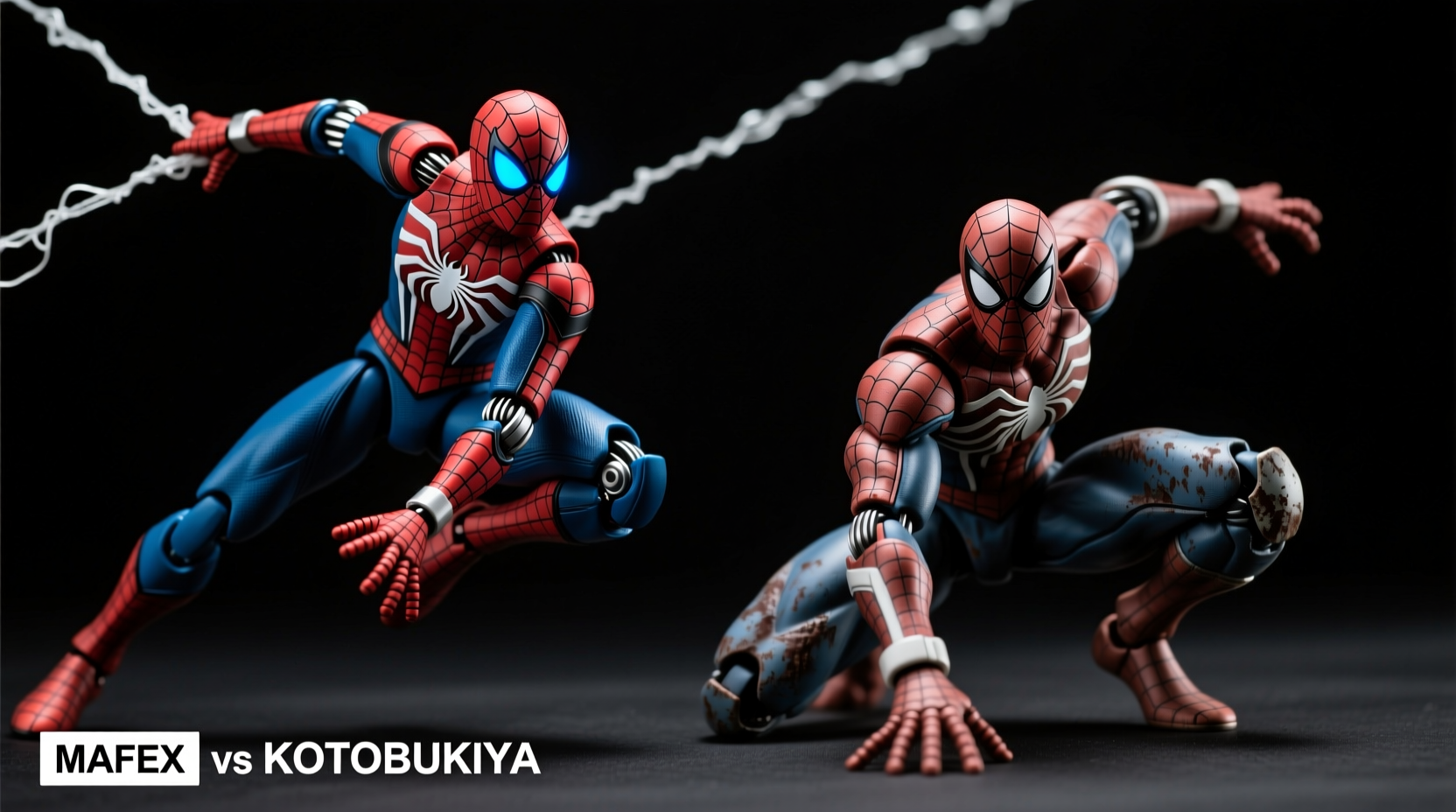
Mafex, produced by Medicom Toy, leans heavily into realism and screen accuracy. Their Spider-Man figures, especially those based on Tom Holland’s MCU portrayal, emphasize anatomical precision, fabric textures, and movie-accurate detailing. The suits often replicate stitching, weathering, and even subtle paneling seen in high-resolution film stills. Mafex uses soft PVC for webbing and includes multiple interchangeable hands and heads to capture dynamic expressions.
In contrast, Kotobukiya embraces a stylized, almost sculptural approach. Their ARTFX+ line treats characters like Spider-Man as artistic interpretations rather than direct replicas. While still highly detailed, these figures prioritize clean lines, dramatic poses, and visual impact from a distance. The plastic used is typically harder, with paint applications that enhance depth without mimicking real-world wear.
Tip: If you value screen-matched accuracy and intricate suit details, lean toward Mafex. For display-focused, poseable sculptures, Kotobukiya may be more satisfying.Articulation and Poseability Compared
Poseability is critical for collectors who enjoy dynamic dioramas or want to showcase their figures in action. Mafex excels here with up to 30 points of articulation. Hidden joints under the suit maintain clean silhouettes while allowing deep knee bends, shoulder rotations, and wrist articulation. The result is a figure that can realistically recreate web-swinging stances or combat poses without sacrificing aesthetic integrity.
Kotobukiya’s ARTFX+ figures, however, often use fixed poses or limited articulation. Most rely on magnetic hands or swappable limbs for variation. While this enhances stability and visual cohesion—especially on display shelves—it limits flexibility. You get one or two primary poses per figure, which works well for static setups but frustrates those seeking versatility.
“Mafex has redefined what articulated superhero figures can achieve. They’re not just poseable—they move like they’re alive.” — Daniel Reyes, Senior Editor at Collectible Times
Value Breakdown: Price, Accessories, and Long-Term Hold
Pricing plays a major role in the Mafex vs Kotobukiya decision. Mafex Spider-Man figures typically retail between $80–$100, depending on exclusivity and edition. This includes multiple heads (smiling, determined, masked), hands (webs, fists, gripping), a display stand, and sometimes alternate torso sections showing damaged suits.
Kotobukiya figures usually fall in the $60–$75 range. While more affordable, they come with fewer accessories. A standard release might include only one head, two hand sets, and a simple stand. However, their larger scale (often 1/10 vs Mafex’s 1/12) gives them greater presence on a shelf.
| Feature | Mafex Spider-Man | Kotobukiya ARTFX+ Spider-Man |
|---|---|---|
| Price Range | $80–$100 | $60–$75 |
| Scale | 1/12 | 1/10 |
| Articulation | High (28–30 points) | Low to moderate (magnetic/swappable parts) |
| Interchangeable Parts | 5+ heads/hands | 1–2 options |
| Suit Detailing | Film-accurate textures | Stylized, smooth finish |
| Display Flexibility | Excellent | Good (for static scenes) |
Real Collector Experience: A Case Study
Mark T., a longtime Marvel collector from Austin, TX, purchased both the Mafex No. 201 Spider-Man (Tom Holland, Far From Home version) and the Kotobukiya ARTFX+ Spider-Man Noir. His goal was to compare usability and satisfaction over six months.
Initially drawn to Kotobukiya’s bold silhouette and striking red-and-black contrast, Mark found the Noir figure visually impressive on his shelf. However, he quickly grew frustrated by its immobility. “I wanted to place him mid-leap between buildings, but there’s no way to adjust the legs or arms naturally,” he said. “It looks great from one angle, but loses impact when viewed from the side.”
The Mafex figure, meanwhile, became his go-to for photography and rotation displays. “I’ve set him in three different poses just this week—crouching on a ledge, mid-backflip, even sitting casually. The joints don’t show, and the detail holds up close. It feels like I own a piece of the movie.”
While he appreciates Kotobukiya’s artistry, Mark now reserves it for centerpiece displays and turns to Mafex for interactive collections.
Which Brand Fits Your Collection Style?
The answer depends on your priorities as a collector. Consider the following checklist before purchasing:
- ✅ Do you want to pose your Spider-Man in dynamic, cinematic stances?
- ✅ Are you focused on movie-accurate suit details and facial expressions?
- ✅ Will you rotate or photograph your figure frequently?
- ✅ Is budget flexible for higher upfront cost?
- ✅ Do you value engineering innovation in articulation?
If most of these apply, Mafex is likely worth the hype. But if you prefer minimalist, gallery-style presentation and want more figures for your money, Kotobukiya offers strong value.
Step-by-Step: Choosing the Right Figure for You
- Define your display goals: Are you building a dynamic scene or a curated shelf?
- Check available space: Kotobukiya’s larger scale needs more room.
- Review accessory needs: Mafex offers more customization; Kotobukiya focuses on completeness.
- Compare editions: Look for exclusive variants or bonus parts (e.g., damaged suit versions).
- Read recent reviews: Pay attention to durability reports—some early Mafex releases had weak ankle joints.
- Test availability: Mafex figures often sell out fast; pre-orders are recommended.
Frequently Asked Questions
Are Mafex figures durable enough for frequent posing?
Yes, modern Mafex releases use reinforced joints and flexible materials designed for repeated movement. Early models had issues with hip pegs, but current iterations (post-2020) are significantly improved. Avoid forcing joints beyond their natural range to maximize lifespan.
Can I customize Kotobukiya figures with third-party parts?
Limited compatibility exists, but due to proprietary magnetic systems and fixed bases, modifications are challenging. Unlike Mafex, which uses standard 3mm pegs, Kotobukiya relies on embedded magnets, making aftermarket upgrades difficult without altering the figure.
Do Mafex figures hold their value over time?
Generally, yes. Limited-run Mafex Spider-Man editions (like the black stealth suit or Miles Morales variants) have appreciated on resale markets like eBay and Mandarake. Standard releases maintain stable value, especially if kept in box. Kotobukiya figures rarely increase in value but also depreciate slowly due to broad appeal.
Final Verdict: Is the Mafex Hype Justified?
Mafex Spider-Man figures aren’t just hyped—they’re engineered for a specific kind of collector: one who values motion, realism, and interactivity. Their advanced articulation, meticulous detailing, and expressive versatility make them stand out in a crowded market. While more expensive, they deliver a level of engagement that static figures can’t match.
Kotobukiya, on the other hand, serves a different audience. Their strength lies in bold presentation and affordability. For fans who want a striking centerpiece without complex setup, Kotobukiya remains a smart choice.
In the end, “worth the hype” depends on what you want from your collection. If you crave a Spider-Man that feels alive—capable of swinging, fighting, and emoting—then yes, Mafex lives up to its reputation. But if your shelf is a gallery, not a stage, Kotobukiya might be the better fit.
🚀 Ready to upgrade your Spider-Man collection? Start by identifying your display style, then choose the brand that aligns with your vision. Whether you go Mafex or Kotobukiya, both prove that superhero figures have evolved far beyond toys—they’re wearable cinema.