In early 2017, many iPhone 6s Plus owners faced a pivotal decision: stick with Apple’s reliable ecosystem or switch to the rising Android contender, the LG G6. At the time, both phones represented different philosophies in smartphone design—one rooted in consistency and refinement, the other in bold innovation. For users weighing a change, the question wasn’t just about specs, but whether the upgrade truly improved daily experience, longevity, and overall satisfaction.
This article breaks down that transition by comparing key aspects like display, camera, software, battery life, and real-world usability—offering insight into whether switching from the iPhone 6s Plus to the LG G6 delivered tangible benefits.
Design and Display: A Shift in Philosophy
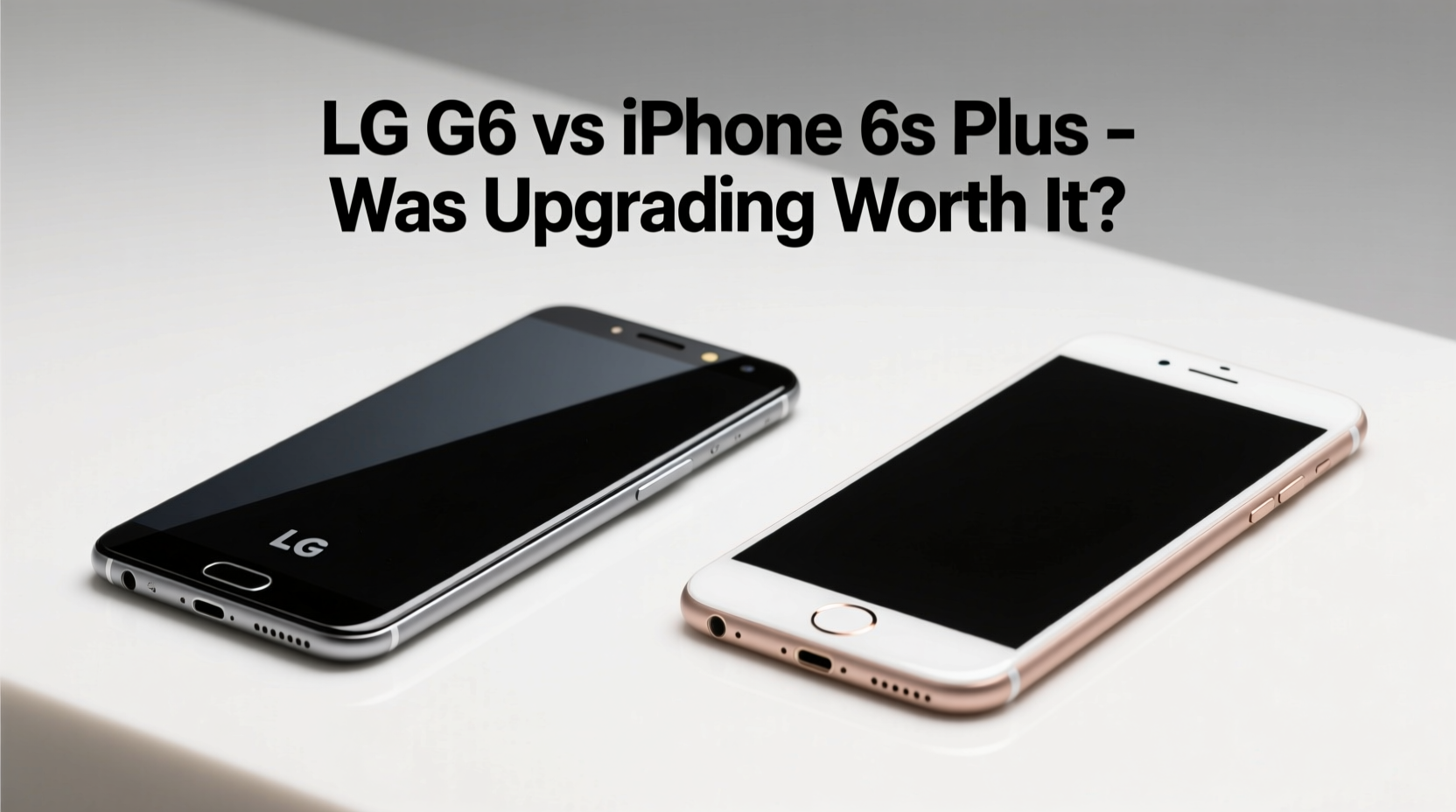
The most immediate difference between the two devices is their physical design and screen technology. The iPhone 6s Plus, released in 2015, featured a classic aluminum unibody with curved edges and a 5.5-inch 1080p LCD display. While solid and familiar, its thick bezels and home button limited screen-to-body ratio.
In contrast, the LG G6 launched in 2017 as a statement piece: a sleek, minimalist design with a near-bezel-less 5.7-inch Quad HD+ (1440 x 2880) IPS LCD FullVision display. Its 18:9 aspect ratio offered more vertical space, ideal for multitasking and media consumption. The glass-and-metal build felt modern, and IP68 water resistance added durability absent in the 6s Plus.
Tip: If you frequently use your phone outdoors, the LG G6’s higher-resolution display with better brightness and color accuracy provides a clearer viewing experience under sunlight.However, the iPhone’s build quality remained excellent. Its tactile home button with Touch ID was widely praised for reliability, while some early adopters of the G6 noted that its rear-mounted fingerprint sensor was less intuitive to reach.
Performance and Software Experience
Under the hood, the iPhone 6s Plus used Apple’s A9 chip—a powerful processor at launch, still capable in 2017 for everyday tasks. iOS 10 and later updates ran smoothly, though power users noticed occasional lag when switching between heavy apps or using augmented reality features.
The LG G6 countered with Qualcomm’s Snapdragon 821, paired with 4GB of RAM—more than double the 6s Plus’s 2GB. On paper, this gave the G6 an edge in multitasking and gaming performance. In practice, benchmarks confirmed faster app launches and smoother transitions, especially with split-screen mode enabled.
But raw speed isn't everything. iOS remained more optimized, delivering consistent frame rates and quicker app resume times. Meanwhile, LG’s UX interface, layered over Android 7.0 Nougat, introduced useful features like Google Assistant integration and multi-window support—but also occasional UI hiccups and bloatware.
“Android gives you flexibility; iOS gives you polish. The trade-off depends on how much control you want over your device.” — David Kim, Mobile Systems Analyst
Camera Comparison: Quality vs. Versatility
Camera performance was a major factor in the upgrade decision. The iPhone 6s Plus featured a 12MP rear camera with optical image stabilization, known for accurate colors, excellent dynamic range, and strong low-light performance for its time. Video recording topped out at 4K, a standout feature in 2015.
The LG G6 introduced a dual-camera setup: a standard 13MP sensor and a 13MP wide-angle lens (125° field of view). This allowed users to capture sweeping landscapes or fit more people into group shots—something the 6s Plus couldn’t do without stepping back.
However, image processing favored vibrancy over realism. Photos often appeared oversaturated, and low-light shots showed more noise compared to the iPhone’s consistently balanced output. The G6 also lacked optical image stabilization on either lens, making handheld night shots riskier.
| Feature | iPhone 6s Plus | LG G6 |
|---|---|---|
| Rear Camera | 12MP, f/1.8, OIS | 13MP + 13MP Wide, f/1.8 & f/2.4 |
| Front Camera | 5MP, f/2.2 | 5MP, f/2.2 |
| Video Recording | 4K @ 30fps | 4K @ 30fps |
| Low-Light Performance | Strong, minimal noise | Moderate, visible grain |
| Unique Feature | Live Photos | 125° Wide-Angle Lens |
For casual photographers, the G6’s wide-angle option was fun and practical. But professionals or those prioritizing photo fidelity often preferred the iPhone’s consistency.
Battery Life and Charging Realities
The iPhone 6s Plus came with a 2,915mAh battery, delivering around 10–12 hours of mixed usage. It supported fast charging only via third-party accessories (not officially endorsed by Apple until later models).
The LG G6 packed a slightly smaller 3,300mAh cell, but thanks to efficient software tuning and the ability to enter “Battery Saver Plus” mode, it frequently lasted a full day with moderate use. More importantly, it supported Qualcomm Quick Charge 3.0, allowing a 50% charge in about 35 minutes—an advantage for busy users.
Wireless charging was not included on either model, though the G6’s compatibility with standard Qi pads made adding the feature easier with a snap-on case.
Mini Case Study: Sarah’s Upgrade Journey
Sarah had used her iPhone 6s Plus since 2016. By late 2017, she found herself frustrated with slow app loading, limited storage, and a desire for better photo options during travel. She switched to the LG G6 primarily for the wide-angle camera and slimmer bezels.
Initially thrilled by the immersive display and multitasking capabilities, she quickly adapted to Android after using a transfer tool to move contacts and photos. However, she missed iMessage and FaceTime’s reliability. Over time, she appreciated the G6’s faster charging and greater customization but noted that some apps (especially banking tools) were slower to update on Android.
After 18 months, Sarah reported her G6 still performed well, though software updates stopped after Android 8.0 Oreo. Her 6s Plus, meanwhile, received iOS support until 2021, highlighting Apple’s longer software lifecycle.
Long-Term Value and Upgrade Satisfaction
When evaluating whether the upgrade was “worth it,” several factors come into play beyond initial excitement:
- Software Support: Apple provided five years of OS updates for the 6s series; LG offered two major Android upgrades for the G6.
- Ecosystem Lock-In: Users invested in iCloud, AirPods, or MacBooks often find staying within iOS more seamless.
- Resale Value: iPhones historically retain value better. After two years, a used 6s Plus typically fetched higher prices than a G6.
- Innovation vs. Stability: The G6 offered cutting-edge design; the 6s Plus offered proven reliability.
Checklist: Was Upgrading Right for You?
Use this checklist to reflect on whether moving from the iPhone 6s Plus to the LG G6 aligned with your needs:
- Did you want a larger, higher-resolution display with modern aesthetics? ✅
- Were you eager to try multi-window functionality or split-screen apps? ✅
- Did you value fast charging and expandable storage options? ✅
- Were you willing to leave iMessage and tight Apple ecosystem integration? ❌
- Could you accept shorter software update cycles? ❌
- Did the wide-angle camera solve a real photography need? ✅
If most checked boxes are positive, the upgrade likely felt rewarding. If negatives dominate, sticking with iOS may have been the wiser choice.
Frequently Asked Questions
Did the LG G6 have better battery life than the iPhone 6s Plus?
It depended on usage. The G6 had faster charging and better standby efficiency, but the 6s Plus offered more consistent all-day endurance under heavy use due to iOS optimization.
Was the LG G6 camera better overall?
Not necessarily. While the wide-angle lens added versatility, the iPhone 6s Plus produced more natural colors, better low-light results, and superior video stabilization.
Can I easily transfer data from iPhone to LG G6?
Yes. Tools like “Move to Android” (by Google) helped migrate contacts, messages, photos, and calendars. However, app data and iMessages couldn’t be transferred.
Final Verdict: Was the Upgrade Worth It?
For tech enthusiasts seeking innovation, a sharper display, and fresh features like wide-angle photography and quick charging, upgrading from the iPhone 6s Plus to the LG G6 was a worthwhile leap. The G6 represented forward-thinking design and meaningful improvements in screen real estate and performance.
Yet, compromises existed. Leaving the iOS ecosystem meant losing seamless integration with other Apple devices, enduring shorter software support, and adjusting to inconsistent app experiences. The iPhone 6s Plus, while aging, remained remarkably functional and polished through its extended update cycle.
In the end, the value of the upgrade wasn’t measured in specs alone—it came down to personal priorities. If you craved novelty and openness, the LG G6 delivered. If you valued stability, longevity, and ecosystem cohesion, staying put might have been smarter.
🚀 Still debating your next move? Reflect on what matters most—ecosystem loyalty, camera flexibility, or future-proofing—and let that guide your upgrade path. Share your own switch story in the comments below.