
The Neanderthals—our closest evolutionary relatives—thrived across Europe and parts of Asia for over 300,000 years. They were skilled hunters, used tools, buried their dead, and even created symbolic artifacts. Yet by about 40,000 years ago, they vanished. What caused the extinction of a species so well-adapted to its environment? Scientists have debated this question for decades, and while no single answer is definitive, a growing body of evidence points to a complex interplay of environmental, biological, and social factors.
Climate Change and Environmental Pressures
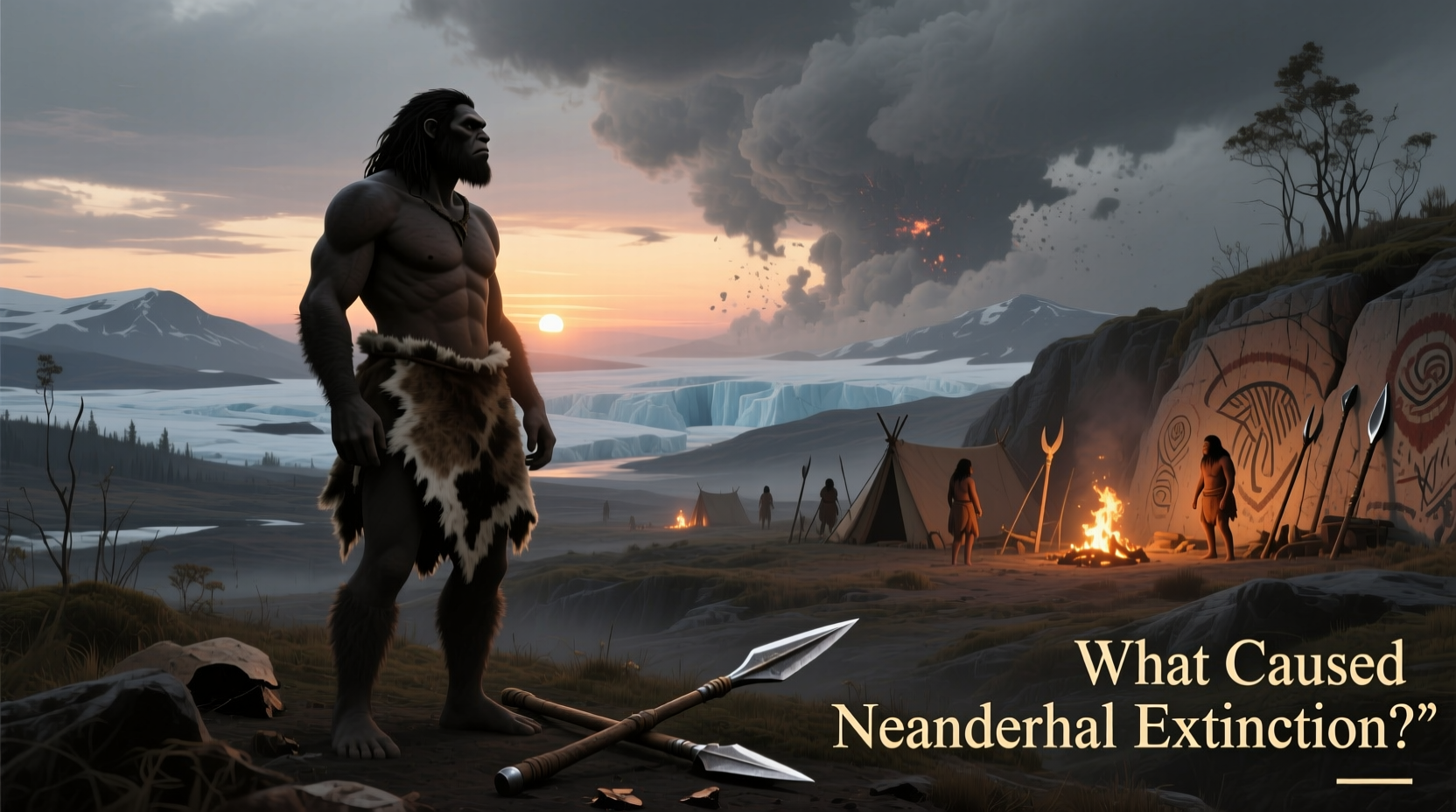
One of the most compelling explanations for Neanderthal extinction lies in the dramatic climatic shifts during the last Ice Age. Between 60,000 and 40,000 years ago, Earth experienced severe fluctuations in temperature, including abrupt cooling periods known as Heinrich events. These changes led to shrinking forests, expanding tundra, and reduced availability of large game—the primary food source for Neanderthals.
Unlike modern humans, who demonstrated greater dietary flexibility, Neanderthals relied heavily on megafauna such as mammoths, bison, and deer. As these animals declined due to habitat loss and overhunting, Neanderthal populations likely faced increasing nutritional stress. Their high-energy lifestyle—requiring up to 5,000 calories per day—made survival under resource scarcity especially difficult.
Tip: When studying ancient extinctions, consider not just one cause but the cumulative effect of multiple stressors acting together.Competition with Homo Sapiens
The arrival of anatomically modern humans (Homo sapiens) in Eurasia around 45,000 years ago coincided closely with the decline of Neanderthals. While there’s evidence of limited interbreeding—most non-African humans today carry 1–4% Neanderthal DNA—coexistence was likely more competitive than cooperative.
Homo sapiens may have held several advantages:
- Larger social networks: Evidence suggests modern humans maintained broader trade and communication systems, allowing better information sharing and resource pooling.
- Innovative technology: Sapiens developed lighter, more versatile tools, including projectile weapons like spear-throwers and eventually bows, giving them an edge in hunting efficiency and safety.
- Dietary adaptability: Isotopic studies show that early modern humans consumed a wider variety of foods, including fish, birds, plants, and small mammals—resources Neanderthals underutilized.
This competitive pressure may have gradually marginalized Neanderthal groups, especially in ecologically marginal regions where resources were already scarce.
“We’re not looking at a sudden replacement, but a slow erosion of Neanderthal populations through indirect competition.” — Dr. Clive Finlayson, Director of the Gibraltar Museum and paleoanthropologist
Genetic and Biological Limitations
Neanderthals lived in relatively small, isolated groups, which had long-term consequences for their genetic health. Studies of Neanderthal DNA reveal low genetic diversity, signs of inbreeding, and a higher load of harmful mutations compared to contemporary Homo sapiens populations.
Small population size reduces resilience to disease, environmental change, and random demographic events. If a group loses several key individuals in a single winter or epidemic, recovery becomes nearly impossible without external support. In contrast, larger, interconnected Homo sapiens communities could absorb losses and maintain cultural continuity.
Additionally, Neanderthals had higher energy requirements due to their robust, muscular build. This made them less efficient in times of food scarcity. Some researchers suggest that even a slight disadvantage in reproductive rate—such as one fewer child per woman every 25 years—could have led to gradual demographic collapse over millennia.
Timeline of Neanderthal Decline and Modern Human Expansion
The disappearance of Neanderthals was not instantaneous but occurred over several thousand years. The following timeline outlines key phases in their final millennia:
- 60,000–50,000 years ago: Neanderthals dominate western Eurasia; climate begins fluctuating unpredictably.
- 50,000–45,000 years ago: Early Homo sapiens migrate into the Middle East and southeastern Europe; limited overlap occurs.
- 45,000–42,000 years ago: Sapiens expand rapidly across Europe; tool complexity increases (Aurignacian culture).
- 42,000–40,000 years ago: Neanderthal sites become sparse; last known populations persist in southern refugia like Gibraltar and Croatia.
- ~40,000 years ago: No definitive Neanderthal remains dated beyond this point; extinction is complete.
Summary of Key Factors in Neanderthal Extinction
| Factor | Description | Impact Level |
|---|---|---|
| Climate Instability | Frequent cold snaps disrupted ecosystems and food sources. | High |
| Competition with Homo Sapiens | Sapiens had technological, social, and dietary advantages. | High |
| Low Genetic Diversity | Inbreeding and mutation load weakened population resilience. | Moderate |
| Small Population Size | Limited ability to recover from setbacks or migrate effectively. | Moderate |
| Cultural Rigidity | Slower innovation compared to Homo sapiens toolkits and symbolism. | Low-Moderate |
Mini Case Study: The Last Neanderthals of Gibraltar
The caves of Gorham’s Cave in Gibraltar represent one of the last known Neanderthal habitats. Excavations have revealed hearths, stone tools, and even possible engravings on cave walls—suggesting symbolic behavior. Radiocarbon dating places Neanderthal occupation here as recently as 39,000–40,000 years ago, making it one of their final strongholds.
Despite this late survival, the site also shows signs of stress: limited tool variety, absence of long-distance raw materials, and no evidence of fishing, despite proximity to rich marine resources. In contrast, early Homo sapiens sites from the same period in nearby regions show shellfish consumption, bone tools, and personal ornaments. The contrast underscores how adaptive flexibility may have tipped the balance in favor of modern humans.
Actionable Checklist: Understanding Ancient Extinctions
To evaluate extinction events like that of the Neanderthals, researchers and enthusiasts alike can follow this analytical checklist:
- ✅ Assess climatic data from the relevant time period (ice cores, sediment layers)
- ✅ Compare archaeological records before and after the decline
- ✅ Analyze fossil evidence for signs of malnutrition, injury, or disease
- ✅ Examine genetic data for inbreeding or low diversity
- ✅ Consider evidence of interaction with competing species
- ✅ Look for signs of cultural innovation or stagnation
Frequently Asked Questions
Did Homo sapiens kill the Neanderthals?
There is no direct evidence of widespread violence or genocide. While isolated conflicts may have occurred, extinction was likely due to indirect competition, environmental pressures, and demographic fragility rather than systematic killing.
Could Neanderthals have survived if the climate had been stable?
Possibly. A more stable environment might have allowed Neanderthals to persist longer, especially in refugia like southern Europe. However, competition with Homo sapiens would still have posed a significant challenge.
Are Neanderthals really extinct?
As a distinct population, yes. But fragments of their DNA live on in most modern humans of non-African descent, meaning their genetic legacy endures.
Conclusion: Why It Matters Today
Understanding the extinction of Neanderthals isn’t just about piecing together ancient history—it offers lessons about resilience, adaptation, and the fragility of even well-established species. Their disappearance reminds us that survival depends not only on physical strength or intelligence but on social connectivity, innovation, and the ability to respond to change.
💬 What do you think ultimately sealed the fate of the Neanderthals? Share your thoughts in the comments and join the conversation on human evolution and survival.