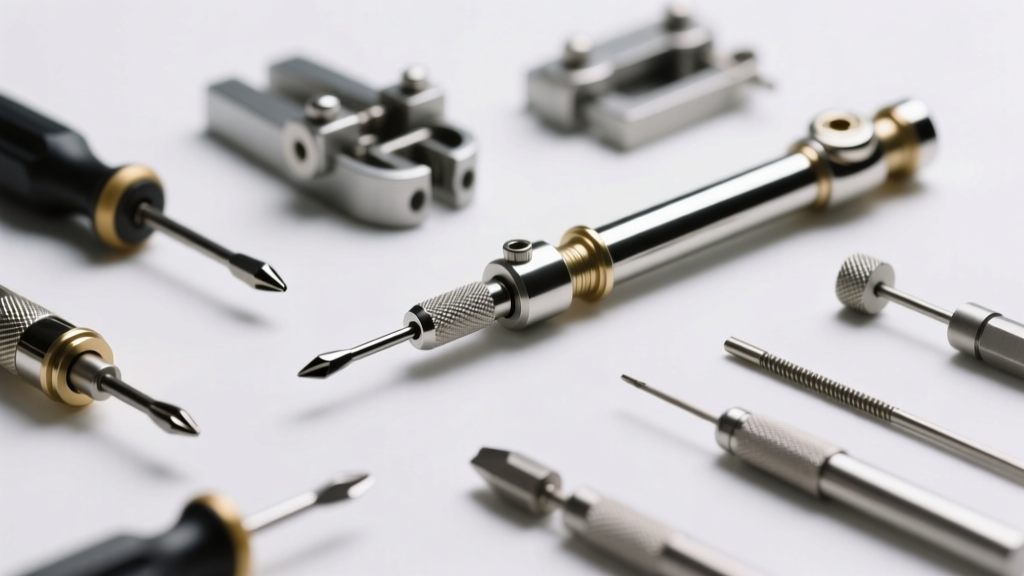
Types of Flute Repair Tools
Flute repair tools are essential for maintaining the instrument’s acoustic integrity, mechanical precision, and longevity. These specialized tools allow technicians to adjust pads, corks, springs, and key mechanisms with accuracy and care. Proper use of these tools ensures optimal airtight seals, smooth key action, and consistent tonal quality. Below is a comprehensive overview of the most important flute repair tools used by professional technicians and serious hobbyists.
Pad Remover
A precision tool designed to safely lift old or damaged pads from tone holes without scratching or deforming the delicate metal surface.
Advantages
- Prevents damage to tone holes
- Narrow blade fits under pad edges cleanly
- Allows controlled, gradual removal
- Essential for pad replacement and overhaul
Limitations
- Requires steady hand to avoid slipping
- May not work well on glued-in pads without heat
- Not suitable for all pad materials
Best for: Routine maintenance, pad replacement, restoration work
Pad Installing Tool
A flat, often weighted tool used to press new pads evenly into tone holes, ensuring full adhesion and proper seating.
Advantages
- Ensures even pressure distribution
- Prevents adhesive squeeze-out
- Minimizes risk of misalignment
- Improves long-term pad durability
Limitations
- Must be cleaned regularly to avoid glue buildup
- Incorrect use can damage soft pads
- Limited effectiveness without proper adhesive
Best for: Pad installation, instrument overhauls, precision repairs
Spring Tool (Spring Hook/Tweezers)
A fine-tipped instrument used to adjust or reposition flute springs, which control key return and tension.
Advantages
- Precise control over high-tension springs
- Reduces risk of spring deformation or breakage
- Available in various tip shapes for different spring types
- Essential for regulating key response
Limitations
- Learning curve for beginners
- Too much force can damage spring or post
- Requires good lighting and magnification
Best for: Spring adjustment, key regulation, performance tuning
Cork
High-quality cork materials used to seal key joints and tenons, ensuring airtight connections and proper alignment.
Advantages
- Excellent compression and recovery
- Natural sealing properties
- Available in multiple thicknesses and densities
- Customizable for precise fit
Limitations
- Wears down over time and needs replacement
- Sensitive to humidity and temperature
- Poor installation leads to leaks or stiffness
Best for: Tenon corks, hinge tube corks, alignment adjustments
Cork Remover
A specialized tool with a sharp or hooked edge designed to extract old, compressed, or deteriorated cork from tenons and posts.
Advantages
- Efficient removal without metal damage
- Prevents cork residue buildup
- Reduces repair time significantly
- Essential for professional-level servicing
Limitations
- Can gouge metal if used improperly
- Requires sharpening over time
- Not always effective on glued corks
Best for: Tenon servicing, joint cork replacement, instrument restoration
Lapped Seals
Thin, adhesive-backed sealing strips applied to key cups or joints to eliminate air leaks and improve pad seating.
Advantages
- Provides airtight seal between moving parts
- Extends time between full overhauls
- Available in various widths and thicknesses
- Can correct minor misalignments
Limitations
- Temporary fix if underlying issue persists
- Can degrade over time with moisture exposure
- Improper application causes binding or leaks
Best for: Leak prevention, cup sealing, pre-adjustment diagnostics
| Tool | Primary Function | Durability | Precision Level | Common Use Case |
|---|---|---|---|---|
| Pad Remover | Remove old pads safely | High | High | Pad replacement, restoration |
| Pad Installing Tool | Seat new pads evenly | High | High | Overhauls, repairs |
| Spring Tool | Adjust key springs | Very High | Very High | Regulation, performance tuning |
| Cork | Seal joints and tenons | Medium | Medium | Alignment, airtightness |
| Cork Remover | Extract old cork | High | High | Maintenance, servicing |
| Lapped Seals | Eliminate air leaks | Medium | Medium-High | Sealing, diagnostics |
Expert Tip: Always clean and inspect your flute repair tools after each use. Residue from adhesives, cork dust, or metal shavings can compromise future repairs. Store tools in a padded case to maintain their precision edges and prevent damage.
Durability of Flute Repair Tools
The durability of flute repair tools is a critical factor in achieving high-quality repairs, ensuring precision, and maintaining safety during delicate instrument maintenance. Durable tools not only perform more reliably over time but also reduce the risk of damaging sensitive flute components such as pads, tone holes, and key mechanisms. Below are the key factors that determine the long-term durability and effectiveness of flute repair tools.
Material Quality
High-performance flute repair tools—such as pad removers, cork removers, and spring tools—are typically constructed from hardened steel or industrial-grade alloys. These materials are selected for their exceptional resistance to deformation, wear, and corrosion. Bearing-quality steel, often used in precision tools, ensures that edges remain sharp and structural integrity is maintained even under repeated stress from prying, cutting, or twisting motions.
For instance, steel-tipped cork removers maintain their shape after hundreds of insertions, while alloy-based spring tools resist bending when manipulating stiff needle springs. The use of heavy metals also enhances cutting efficiency and longevity, making these tools indispensable for professional repair technicians who demand consistency and reliability.
Precision Engineering
Durable flute tools are manufactured using precision engineering techniques that ensure dimensional accuracy and functional consistency. Tools like pad lifters and key alignment jigs are machined to exact tolerances, allowing them to fit specific flute models without requiring excessive force.
This precision reduces user fatigue and minimizes the risk of slippage or damage to delicate flute parts. For example, a well-designed pad remover has a tapered tip that glides under pads without tearing them, reducing the need for brute force. In contrast, poorly engineered tools may deform after minimal use, leading to inconsistent results and shortened service life. Precision design directly contributes to both tool longevity and repair accuracy.
Proactive Maintenance
Even the highest-quality tools require regular care to maintain their performance and extend their usable lifespan. Simple maintenance practices—such as cleaning after each use, removing adhesive residue, and applying light lubrication to moving parts—can significantly delay wear and prevent corrosion.
Some tools, like lapped-seal cork removers or adjustable pad spacers, can be resurfaced or recalibrated to restore their original functionality. Storing tools in a dry, organized case further protects them from moisture, dust, and accidental impacts. Neglecting maintenance accelerates deterioration, especially in environments with high humidity or frequent chemical exposure (e.g., alcohol-based adhesives).
Ergonomic Design and Grip
Ergonomics play a vital role in both tool durability and user safety. Inexpensive or poorly designed tools often feature flimsy plastic handles or smooth metal shafts that increase the likelihood of slipping during use. This not only compromises repair quality but also forces technicians to apply excessive pressure, which can lead to tool deformation or breakage over time.
Durable, professional-grade tools incorporate textured rubberized grips, balanced weight distribution, and contoured handles that enhance control and reduce hand strain. These ergonomic features allow for precise, consistent operation even during extended repair sessions, ultimately preserving both the tool and the instrument. Investing in ergonomically sound tools improves efficiency and supports long-term tool integrity.
| Factor | Impact on Durability | Best Practices |
|---|---|---|
| Material Composition | High | Choose tools made from hardened steel or corrosion-resistant alloys; avoid soft metals or plastic components. |
| Manufacturing Precision | High | Select tools with tight tolerances and smooth finishes; verify fit and function before purchase. |
| Maintenance Routine | Medium-High | Clean after use, store properly, and lubricate moving parts periodically to prevent rust and wear. |
| Ergonomic Features | Medium | Opt for tools with non-slip grips and balanced design to reduce stress and prevent misuse-related damage. |
Why Durability Matters in Flute Repairs
Important: Always inspect your flute repair tools before and after each use. Replace any tool showing signs of wear, deformation, or corrosion to avoid compromising repair quality or damaging valuable instruments. Proper storage and adherence to manufacturer care guidelines are essential for maximizing tool lifespan and ensuring consistent performance.
How to Choose Flute Repair Tools
Selecting the right flute repair tools is essential for achieving precision, maintaining instrument integrity, and delivering professional-quality results. Whether you're a seasoned technician or starting a new repair business, understanding the key factors in tool selection ensures longevity, accuracy, and efficiency in your work.
Type of Repairs
The nature and complexity of repairs directly determine the tools required. Simple maintenance tasks demand basic tools, while structural or precision work requires specialized equipment.
- Minor Repairs: Pad replacement, cork adjustments, and key alignment can be handled with pad installers/removers, cork picks, precision screwdrivers, and gauge feelers
- Structural Work: Dent removal, key reshaping, or bridge alignment may require dental tools, pull rods, mandrels, and an anvil or bench block
- Advanced Adjustments: Spring tensioning, key height calibration, and mechanism lubrication need specialized tweezers, pliers, and micro-screwdrivers
Pro tip: Start with a core set of tools for common repairs, then expand based on your service specialization.
Instrument Material & Finish
Flutes are crafted from various materials—silver, gold, nickel-plated brass, or even wooden keys—each requiring compatible tools to avoid scratching or damaging delicate surfaces.
- Precious Metals: Silver and gold-plated flutes require non-marring, corrosion-resistant tools made from hardened stainless steel or titanium-coated alloys
- Delicate Surfaces: Use plastic or nylon-tipped tools when working near polished finishes to prevent scuffing
- Wooden Components: Instruments with wooden keys (e.g., historical or folk flutes) need gentler tools to avoid splitting or cracking
- Specialized Needs: Some tools, like dent rods or bezel pushers, must be matched to the flute’s bore size and key thickness
Key consideration: Always verify tool hardness and tip material to prevent cosmetic or structural damage.
Quality & Brand Reputation
High-quality tools offer precision, consistency, and long-term reliability—critical for maintaining tight tolerances in flute mechanisms.
- Premium brands like Buffet, Wittner, or Protech invest in precision engineering and rigorous testing
- Look for tools with laser-etched markings, balanced weight, and smooth action
- Inexpensive tools may have inconsistent tolerances, leading to misalignment or stripped screws
- Customer reviews and technician forums are valuable resources for assessing real-world performance
Smart investment: Higher initial cost often translates to lower long-term expenses due to reduced replacement frequency.
Comprehensiveness of Tool Set
A well-rounded toolkit enables you to handle a wide range of repairs without delays or improvisation.
- Essential Starter Kit: Includes pad tools, screwdrivers (JIS and Phillips), cork removers, gauge wires, and key oilers
- Intermediate Expansion: Add dent rods, key shapers, spring hooks, and alignment gauges
- Model-Specific Tools: Some flutes (e.g., vintage or custom models) require unique tools for pad cup alignment or split-ring mechanisms
- Avoid generic "multi-instrument" kits that lack flute-specific precision
Expert advice: Prioritize quality over quantity—owning fewer, well-chosen tools is better than a cluttered, ineffective collection.
Ergonomics & Usability
Flute repair involves fine motor skills and prolonged focus. Comfortable tools reduce fatigue and improve accuracy during detailed work.
- Choose tools with non-slip, contoured grips to minimize hand strain during long sessions
- Lightweight construction enhances control and reduces wrist fatigue
- Tools with magnetic tips or secure bit retention prevent dropped components inside tight mechanisms
- Consider tools with ergonomic angles for hard-to-reach areas like the foot joint or trill keys
Critical factor: Ergonomic design directly impacts repair consistency and technician well-being.
Durability & Long-Term Value
Durable tools withstand repeated use without losing calibration or degrading in performance.
- High-carbon steel or hardened alloy tools resist wear, bending, and corrosion
- Heat-treated tips maintain sharpness and precision over time
- Corrosion-resistant coatings protect against moisture and fingerprints
- Check for replaceable tips or modular designs that extend tool life
Pro tip: Invest in tools with warranties or manufacturer support for sharpening and recalibration.
Professional Recommendation: Begin with a curated set of high-quality, flute-specific tools from reputable suppliers. Focus on precision, material compatibility, and ergonomics. As your expertise grows, expand your collection with specialized tools for advanced repairs. Always prioritize tools that enhance accuracy and protect the instrument's finish—your reputation depends on both the function and appearance of your work.
| Repair Type | Essential Tools | Recommended Material | Tool Longevity (Est.) |
|---|---|---|---|
| Pad Replacement | Pad installer/remover, screwdriver, gauge feeler | Stainless steel with rubber tips | 5+ years |
| Cork Adjustment | Cork pick, alignment gauge, key oiler | Nylon-tipped or plastic | 4+ years |
| Dent Removal | Dental tools, pull rod, mandrel, bridge | Hardened alloy or titanium-coated | 6+ years |
| Key Mechanism Tune-up | Micro-screwdrivers, spring hooks, alignment jig | Chrome-vanadium steel | 7+ years |
Additional Considerations
- Storage & Organization: Use padded roll cases or modular trays to protect tools and ensure quick access
- Maintenance: Regular cleaning and light oiling prevent corrosion and ensure smooth operation
- Compatibility: Ensure tools fit common flute models (e.g., Yamaha, Gemeinhardt, Powell) and key systems (Boehm, closed-hole, open-hole)
- Training & Support: Some brands offer instructional guides or videos to help technicians master tool use
- Future-Proofing: Choose tools that can adapt to evolving flute designs and repair techniques
Scenarios of Flute Repair Tools: Essential Applications for Instrument Maintenance
Maintaining a flute in optimal playing condition requires precision, care, and the right set of specialized tools. Over time, wear and environmental factors can degrade performance, affecting tone, intonation, and mechanical responsiveness. This guide explores the most common scenarios where flute repair tools are indispensable, helping musicians, technicians, and educators preserve the integrity and sound quality of their instruments. Whether you're maintaining a student-level flute or a professional handcrafted model, understanding these repair situations ensures longevity and peak performance.
Important Note: Flute repair involves delicate mechanisms and materials. Always proceed with caution. If you're unsure about a repair, consult a qualified flute technician to avoid permanent damage to your instrument.
Common Flute Repair Scenarios and Required Tools
- Replacing Pads
One of the most frequent maintenance tasks for flutes is replacing worn or damaged pads. Over time, pads can harden, crack, or lose their seal due to moisture, temperature changes, and regular use. This results in air leaks that compromise tone, response, and tuning stability.
A dedicated pad removal tool allows technicians to gently lift old pads without scratching tone holes or damaging the pad cups. Once removed, a pad seating tool or press ensures new pads are evenly and firmly installed, creating an airtight seal. Proper pad alignment and compression are crucial—misaligned pads can cause uneven wear and recurring leaks.
- Cork Replacement
Flute keys rely on small cork pads to cushion contact points and ensure smooth, silent key action. These corks degrade over time, becoming compressed or brittle, which leads to noisy operation, key misalignment, or sluggish response.
A cork removal pick enables careful extraction of old corks without gouging the metal or wood beneath. After cleaning the surface, a cork installation tool helps fit new corks of the correct thickness and density. High-quality cork ensures consistent key height and enhances the tactile feel of the instrument. Common cork thicknesses range from 0.5mm to 1.5mm, depending on the key and manufacturer specifications.
- Spring Adjustment
The flute’s key mechanism depends on tiny, precision springs to return keys to their resting position. Misaligned, weakened, or overstretched springs can cause keys to stick, respond slowly, or fail to close completely—leading to air leaks and poor articulation.
A spring hook tool or key oiling tool with hook provides fine control for adjusting spring tension and positioning. Technicians use these tools to reposition spring ends without bending or breaking the delicate metal. Proper spring alignment ensures balanced touch and responsive key action across all registers. Regular lubrication with key oil complements spring maintenance for smooth operation.
- Dent Removal
Dents in the flute body—especially near tone holes or in the headjoint—can significantly alter airflow and pitch accuracy. Even minor dents can disrupt the instrument’s resonance and tonal clarity.
To repair dents safely, technicians use a dent removal kit consisting of a tapered dent rod inserted inside the tube and a matching set of external dent spoons. The rod supports the interior surface while the spoon gently reshapes the exterior metal. A felt or rubber mallet may be used for controlled tapping. This process requires patience and precision to avoid over-correction or thinning the metal, particularly on silver or gold flutes.
- Tightening Loose Joints
Flute sections (headjoint, body, footjoint) connect via tenons that can loosen over time due to repeated assembly and disassembly. A loose joint causes air leakage, reducing projection and responsiveness, and may produce a “fuzzy” or airy tone.
To restore a snug fit, a thin layer of tenon wrap—typically made of cork, Teflon tape, or specialized joint grease—is applied to the tenon. A tenon gauge helps determine the appropriate thickness of wrap material. Over-wrapping can make joints difficult to assemble or damage the receiver, so precision is key. Regular inspection and maintenance of joints prevent long-term wear and ensure consistent airtight connections.
| Repair Scenario | Purpose | Essential Tools | Frequency (Recommended) |
|---|---|---|---|
| Pad Replacement | Restore airtight seal and improve tone quality | Pad remover, pad press, shellac, burnisher | Every 2–5 years, depending on use |
| Cork Replacement | Ensure silent, smooth key closure | Cork pick, cork cutter, installation tool | Every 1–3 years |
| Spring Adjustment | Fix sticking keys and improve response | Spring hook, key oil, alignment gauge | As needed; check during annual servicing |
| Dent Removal | Restore structural integrity and acoustic performance | Dent rod, dent spoons, mallet, cushion block | Only when dents affect playability |
| Joint Tightening | Eliminate air leaks and stabilize connections | Teflon tape, cork wrap, joint brush, gauge | Every 6–12 months or as needed |
Expert Tip: Always clean the flute thoroughly before any repair work. Use a cleaning rod and soft cloth to remove moisture from the interior, and wipe down keys and pads to prevent debris from interfering with adjustments. A clean instrument ensures accurate assessments and smoother repairs.
Additional Maintenance Recommendations
- Store your flute in its case with the pads facing up to prevent warping or sagging.
- Handle the instrument by the barrel or body—never by the keys—to avoid bending delicate mechanisms.
- Schedule a professional cleaning and adjustment at least once a year, especially for frequently used instruments.
- Keep a log of repairs and adjustments for tracking wear patterns and planning future maintenance.
- Use only flute-specific lubricants and materials—substitutes can cause damage or void warranties.
Proper care and timely use of flute repair tools are essential for preserving both the mechanical function and tonal beauty of your instrument. By understanding these common scenarios and their solutions, you empower yourself to maintain your flute with confidence and precision. Remember, when in doubt, seek professional assistance—your flute deserves the best care possible.
Frequently Asked Questions About Flute Repair Tools
Q1: How durable are flute repair tools?Most flute repair tools—such as pad removers, cork removers, pad installers, and spring tools—are crafted from high-quality steel or other durable metals. These materials are specifically chosen for their strength and resistance to wear, enabling the tools to endure repeated use involving cutting, prying, and pulling without bending, breaking, or developing dull edges.
With proper care, flute repair tools can last for decades. Key maintenance practices include:
- Cleaning after use: Wipe down tools to remove residue from adhesives, cork dust, or metal shavings.
- Moisture protection: Store tools in a dry environment to prevent rust and corrosion, especially important for precision instruments.
- Proper storage: Use tool rolls or cases to avoid scratches, dents, or contact with other metallic objects that could compromise their integrity.
Well-maintained tools not only perform more reliably but also ensure consistent results during delicate repair work on flutes.
Q2: What are the most common types of flute repair tools available?Flute repair tools range from basic hand tools to specialized instruments designed for intricate adjustments. They can be broadly categorized into two groups: consumable replacement parts and long-lasting repair tools.
| Tool Type | Examples | Purpose | Lifespan |
|---|---|---|---|
| Replacement Components | Pads, corks, springs | Used to replace worn or damaged parts of the flute mechanism | Consumable – replaced regularly |
| Hand Tools | Pad remover, pad installer, cork remover, spring tweezers | For removing and installing pads, corks, and small components | Durable – long-term use with care |
| Specialized Instruments | Flute pad screwdriver, dent removal tool, pull rod, lapping sealer | For structural repairs, alignment, and sealing adjustments | Long-lasting – engineered for precision and repeated use |
Having a well-rounded toolkit allows technicians to handle both routine maintenance and complex restorations efficiently.
Q3: How do I choose the right flute repair tools for my needs?Selecting the appropriate flute repair tools depends on several factors, including your skill level, the frequency of repairs, and the types of issues you typically encounter. Here’s a guide to help you make informed decisions:
- For beginners or hobbyists: Start with essential tools like a pad remover, pad installer, cork remover, and a set of precision screwdrivers. These cover most common maintenance tasks such as pad replacement and key adjustments.
- For intermediate repairers: Add tools like a lapping sealer, spring hook, and alignment gauge to improve pad sealing and mechanical consistency.
- For professional technicians: Invest in advanced tools such as dent pull rods, mandrels, and tone hole shapers for full restoration work. Precision calibration tools ensure optimal performance after repairs.
Always consider the make and model of the flutes you work on—some brands have unique mechanisms requiring specific tools. Consulting manufacturer guidelines or experienced repairers can help tailor your toolkit effectively.
Q4: Are flute repair tools compatible with all types of flutes?While many flute repair tools are designed to work across a wide range of instruments, compatibility can vary based on the flute’s construction materials and design. Here are key considerations:
- Material sensitivity: Flutes made from precious metals like silver or gold require gentler tools made from softer alloys or coated tips to avoid scratching or marring the surface.
- Wooden-bodied flutes: These delicate instruments demand non-abrasive tools and careful handling to prevent cracking or damage to the wood, especially around tenons and tone holes.
- Size and fit: Tools like dent pull rods and mandrels must match the bore diameter of the flute tube. Using improperly sized tools can cause internal damage or misalignment.
- Brand-specific mechanisms: Some manufacturers (e.g., Yamaha, Powell, Brannen) use proprietary key systems that may require specialized tools for disassembly and adjustment.
To ensure compatibility, always verify tool specifications against your instrument’s requirements. When in doubt, consult repair manuals or seek advice from experienced flute technicians to avoid costly mistakes.