For Pokémon collectors and fans of the original Kanto region, Bulbasaur holds a special place—not just as one of the three starter Pokémon, but as an enduring symbol of growth, balance, and nostalgia. As merchandise evolves, so do the options for displaying your favorite bulb-backed companion. Today, you can choose between mass-produced figures and high-end statues—each offering distinct advantages. But with price gaps often exceeding 200%, the real question emerges: Is the extra detail of a Bulbasaur statue truly worth the investment?
This isn’t just about aesthetics; it’s about purpose, longevity, and personal value. Whether you're curating a shelf for daily enjoyment or building a legacy collection, understanding the tangible differences between figures and statues helps ensure your money supports what matters most to you.
Understanding the Difference: Figure vs Statue
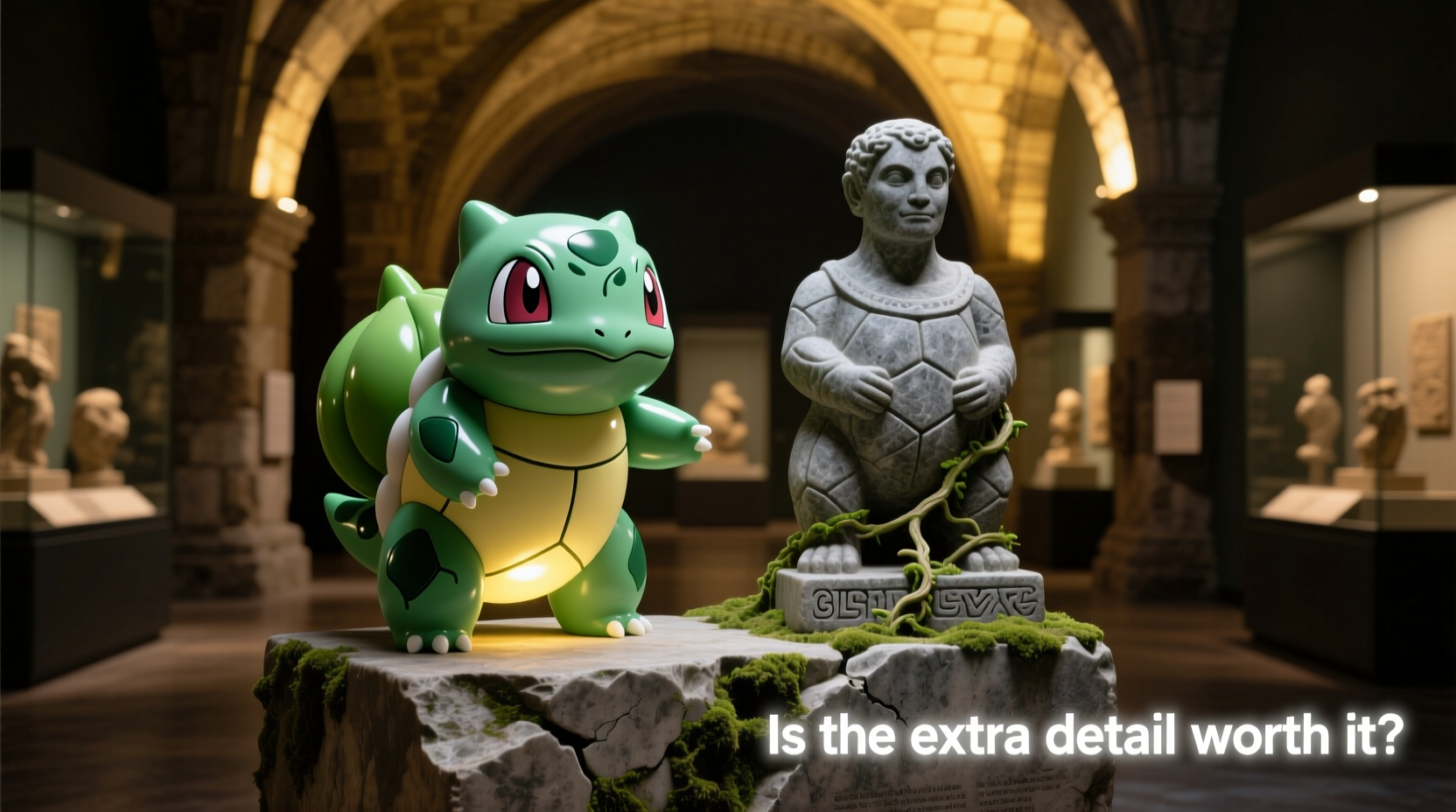
The terms \"figure\" and \"statue\" are often used interchangeably, but in collectible circles, they represent different tiers of craftsmanship and intent.
A **figure** typically refers to a mass-produced, smaller-scale model made from PVC or ABS plastic. These are designed for affordability, accessibility, and broad appeal. They’re commonly found in blind box sets, retail stores, or as promotional items. While some figures feature excellent paintwork and articulation, their primary goal is representation rather than realism.
A **statue**, by contrast, is usually a limited-edition piece crafted with premium materials like polystone, cold-cast resin, or mixed media. These are larger, heavier, and demand higher precision in sculpting, painting, and finishing. Statues are often hand-numbered, come with certificates of authenticity, and are marketed toward serious collectors.
Tip: Always check the material composition before purchasing—resin statues require more careful handling than durable PVC figures.Detail Comparison: Where Statues Shine
The most compelling argument for upgrading to a statue lies in its level of detail. Let’s dissect where that extra craftsmanship becomes visible:
- Sculpting Fidelity: Statues capture subtle textures—the veining on Bulbasaur’s leaves, the grain of its skin, even the slight creases around its eyes—are rendered with lifelike precision.
- Paint Application: High-end statues use layered airbrushing and hand-painting techniques. This results in depth, shading, and color gradients impossible in standard factory paint jobs.
- Base Design: Statues often include elaborate diorama-style bases. A premium Bulbasaur statue might feature overgrown grass, cracked earth, or a sunrise effect, turning the piece into a standalone scene.
- Scale and Presence: While figures average 4–6 inches tall, statues range from 12 to 24 inches, making them focal points in any room.
Consider Good Smile Company’s Nendoroid Bulbasaur versus a 1:4 scale statue from First 4 Figures. The former is charming and stylized, perfect for playful displays. The latter, however, captures Bulbasaur mid-stride through a misty forest, with translucent petals on its bulb glowing under embedded LED lighting—a level of immersion no figure can match.
“Statues aren’t just collectibles—they’re narrative objects. They tell a story in three dimensions.” — Lena Torres, Senior Curator at Pop Culture Archive
Cost vs. Value: Breaking Down the Investment
Statues often cost between $150 and $500, while quality figures rarely exceed $60. That gap raises a critical question: Does the added expense translate into lasting value?
To answer this, consider these factors:
| Feature | Figure | Statue |
|---|---|---|
| Average Price | $20–$60 | $150–$500+ |
| Material | PVC, ABS Plastic | Polystone, Resin |
| Lifespan (with care) | 5–10 years | 15+ years |
| Resale Value Retention | 30–50% | 70–100% (limited editions) |
| Display Impact | Decorative accent | Centerpiece |
While figures depreciate quickly after opening, limited-run statues—especially those tied to anniversaries or collaborations—often appreciate. For example, the 25th Anniversary Bulbasaur Premium Statue by Beast Kingdom sold out within hours and now trades for double its original price.
When a Statue Makes Sense
If you view your collection as both a passion project and a potential long-term asset, a statue offers measurable returns. Additionally, if display space is limited, investing in one standout piece may be smarter than filling shelves with multiple figures.
Real Collector Scenario: Sarah’s Display Dilemma
Sarah, a graphic designer and lifelong Pokémon fan, had collected over 30 Bulbasaur figures since childhood. Her desk was cluttered with variants—from McDonald’s toys to anime exclusives. While nostalgic, she felt none stood out.
After researching, she invested $220 in a Kotobukiya ARTFX+ Jumbo Bulbasaur statue. At 14 inches tall, it became the centerpiece of her home office. “It changed everything,” she said. “People don’t just glance—they stop and ask about it. It feels like art, not just merchandise.”
She later sold 20 of her older figures to offset the cost and now focuses on acquiring one premium piece per year. Her satisfaction didn’t come from owning more—it came from owning something meaningful.
Practical Checklist: Choosing What’s Right for You
Before deciding, evaluate your priorities with this checklist:
- ✅ Do I have dedicated, dust-free display space for a large piece?
- ✅ Am I willing to handle cleaning and maintenance carefully (no direct sunlight, gentle dusting)?
- ✅ Is this purchase for emotional enjoyment, investment, or both?
- ✅ Will I buy multiple figures or save for one high-end statue?
- ✅ Does the design of available statues align with my aesthetic preferences?
- ✅ Can I afford potential import fees or shipping risks for limited editions?
If four or more apply, a statue is likely a worthwhile upgrade. If not, a well-chosen figure delivers joy without financial strain.
Frequently Asked Questions
Are Bulbasaur statues fragile?
Yes, especially those made from cold-cast resin. They’re more prone to chipping and cracking than PVC figures. Always keep them on stable surfaces away from foot traffic or pets.
Do statues come with warranties?
Rarely. Most manufacturers exclude damage from handling or environmental exposure. However, reputable sellers offer replacements for factory defects if reported within 30 days.
Can I customize or repaint a statue?
Advanced collectors sometimes do, but it voids resale value. If you plan to modify it, buy a second-hand or damaged unit rather than a mint-condition collectible.
Final Verdict: Detail Matters—But So Does Purpose
The extra detail in a Bulbasaur statue is undeniably impressive. From the delicate dewdrops on its back to the lifelike gradient in its eyes, every element reflects a commitment to artistry. But whether that justifies the cost depends entirely on your relationship with the item.
If you seek a conversation starter, a tribute to your fandom, or a legacy piece to pass down, a statue is absolutely worth it. Its presence commands attention, and its craftsmanship honors the character in a way few figures can.
However, if your goal is variety, playability, or casual decoration, a high-quality figure remains the smarter choice. There’s no shame in preferring accessibility over exclusivity.
In the end, collecting should enhance your life—not burden it. Choose based on what brings you genuine delight, not what others deem “premium.” After all, Bulbasaur’s greatest lesson isn’t about strength or rarity—it’s about growing at your own pace.
🚀 Ready to upgrade your collection? Start by identifying one signature piece that speaks to you—then build your display around meaning, not just quantity.