Re-engaging cold or inactive prospects is one of the most delicate challenges in sales and marketing. Send too many emails, and you risk being marked as spam. Be too aggressive, and you damage trust before it’s built. Yet, letting promising leads go dark means missed opportunities. The key isn’t persistence at all costs—it’s thoughtful, value-first communication that respects the recipient’s time and autonomy.
The most effective re-engagement emails don’t feel like sales pitches. They feel like helpful check-ins from someone who understands the prospect’s needs. When done right, these messages can revive stalled conversations, rebuild rapport, and even convert hesitant leads into loyal customers.
1. Understand Why Prospects Go Silent
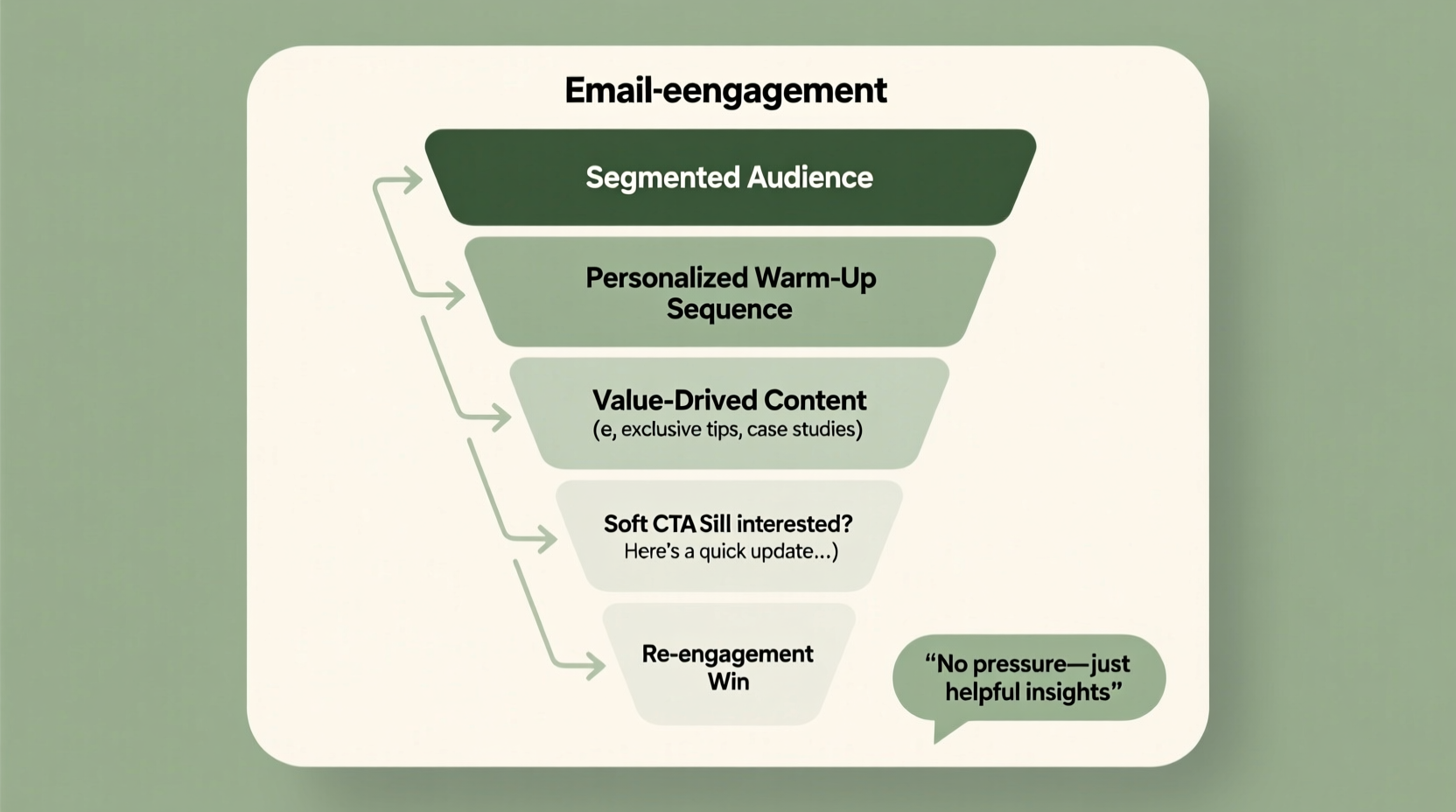
Before crafting a follow-up, ask: why did they disengage? Common reasons include shifting priorities, information overload, lack of urgency, or simply not seeing immediate value in your offering. Pushing harder without addressing these root causes often backfires.
Instead of assuming disinterest, consider that your prospect may still be evaluating options—quietly. A 2023 HubSpot report found that 79% of marketing leads never convert, not because they weren’t qualified, but because they weren’t nurtured effectively.
“People don’t ignore emails because they’re indifferent—they ignore them because they don’t see relevance.” — Sarah Lin, Senior Conversion Strategist at GrowthPulse
Re-engagement works best when it shifts focus from “selling” to “serving.” This mindset change alone can transform your outreach from intrusive to insightful.
2. Reframe Your Approach: From Follow-Up to Follow-Through
The word “follow-up” implies chasing. “Follow-through,” however, suggests completion, care, and consistency. When you reframe your intent, your tone naturally becomes more supportive.
Start by reviewing past interactions. Did they download a guide? Attend a webinar? Ask a specific question? Use that context to personalize your message—not just with their name, but with real insight into their interests.
Tip: Reference a prior conversation detail (“Last time we spoke, you mentioned concerns about onboarding time”) to show genuine attention.Example Re-Engagement Email (Non-Pushy Tone)
Subject: Quick thought based on our last chat
Hi Alex,
I’ve been thinking about our conversation last month regarding team productivity tools. Since then, we helped a similar company reduce meeting fatigue by 40% using automated standup summaries—a small feature, but one that freed up nearly 10 hours per employee monthly.
If that’s still on your radar, I’d be happy to share how they implemented it. No pressure either way—I know how fast priorities shift.
Either way, hope things are going well on your end.
Best,
Jamie
This email works because it offers value, acknowledges uncertainty, and removes obligation—all while keeping the door open.
3. Timing and Cadence: The Rhythm of Reconnection
Sending one reminder after two days won’t move the needle. Bombarding inboxes weekly will get you ignored or unsubscribed. The sweet spot lies in strategic spacing.
A proven cadence for re-engagement:
- Day 7: Light check-in referencing prior discussion
- Day 14: Share relevant content (e.g., case study, tip sheet)
- Day 28: Breakup email (“Should I close your file?”)
- Day 60: Reconnect with new insight or offer
This sequence balances presence with patience. Each message stands alone yet contributes to a larger narrative of helpfulness.
Breakup Emails That Work
One of the most effective—but underused—tactics is the breakup email. It flips the script by giving the prospect permission to opt out.
Subject: Should I close your file?
Hi Taylor,
I haven’t heard back and wanted to check in. If now isn’t the right time, no problem—I can close your file so you stop receiving updates.
Or, if you’d prefer, I can send over a quick one-pager showing how [Client X] achieved [specific result]. Up to you.
No hard feelings either way.
—Jordan
Data from Yesware shows breakup emails generate response rates up to 30% higher than standard follow-ups. Why? They reduce psychological pressure and invite honesty.
4. Add Value Before Asking for Action
The strongest re-engagement emails lead with generosity. Instead of asking “Are you ready to move forward?”, try “Here’s something useful I thought of you.”
Examples of value-first outreach:
- Share an industry report relevant to their role
- Send a template or tool they can use immediately
- Tag them in a LinkedIn post addressing a challenge they mentioned
- Introduce them to a peer facing similar issues
Each of these actions positions you as a resource, not a salesperson.
| Approach | What to Do | What to Avoid |
|---|---|---|
| Value-Driven Subject Line | \"A template for streamlining Q3 planning\" | \"Following up again!\" |
| Tone | Casual, empathetic, low-pressure | Demanding, urgent, guilt-based |
| Call to Action | \"Let me know if you'd like the full version\" | \"Respond now before it's too late!\" |
| Frequency | Every 2–4 weeks, max | Daily or multiple weekly touches |
5. Real Example: How a SaaS Company Revived 22% of Dormant Leads
A mid-sized SaaS platform noticed 60% of trial signups weren’t converting. Instead of doubling down on demos, they launched a three-email re-engagement series focused on education.
Email 1 (Day 5): “Most teams miss this setup step” — included a 90-second video tutorial.
Email 2 (Day 12): “How [Similar Company] saved 7 hrs/week” — short case study with metrics.
Email 3 (Day 20): “Closing your account soon?” — breakup-style message with opt-in to keep access.
Result: 22% of previously inactive users resumed engagement, and 9% converted to paid plans—all without a single direct sales push.
Checklist: Non-Pushy Re-Engagement Best Practices
Action Checklist:- Review past interactions for personalization hooks
- Lead with value, not urgency
- Use breakup emails to reduce pressure
- Space follow-ups 2–4 weeks apart
- Include an easy opt-out option
- Track open and reply rates to refine messaging
- Test subject lines that spark curiosity, not fear
Frequently Asked Questions
How do I re-engage without seeming desperate?
Focus on the prospect’s world, not yours. Mention changes in your product only if they solve a known pain point. Use neutral language (“no worries if not”) and avoid emotional manipulation (“I’ve been waiting!”).
Is it okay to call instead of emailing?
Only if there was prior phone contact. Cold calls after silent emails often feel invasive. If you do call, start with, “I sent an email earlier—just checking if it landed or if you’d prefer I pause outreach.”
What if they never respond, even after multiple tries?
Respect silence. After 3–4 value-based touches over 60 days, pause indefinitely. Reactivate only if they engage with another channel (e.g., website visit, content download).
Conclusion: Build Trust, Not Pressure
Re-engaging prospects isn’t about convincing—it’s about reconnecting. The most successful outreach doesn’t remind people you exist; it reminds them you understand.
When you replace pushiness with empathy, frequency with relevance, and demands with discretion, you don’t just revive conversations—you build relationships. And those relationships become the foundation of sustainable growth.
🚀 Ready to refine your re-engagement strategy? Pick one email from your last campaign and rewrite it using these principles. Test it, track results, and iterate. Small shifts create lasting impact.