
For individuals with sensitive skin, choosing the right winter beanie isn’t just a matter of style or warmth—it’s a question of comfort and tolerance. Many people experience redness, itching, or even rashes when wearing certain fabrics against their scalp and forehead. Two of the most common materials used in beanies are cashmere and acrylic. While both offer insulation and versatility, they differ dramatically in composition, feel, and skin compatibility. Understanding these differences is essential for anyone who wants to stay warm without sacrificing comfort.
Cashmere comes from the soft undercoat of Himalayan goats, primarily found in Mongolia and China. It's prized for its luxurious texture, lightweight warmth, and natural breathability. Acrylic, on the other hand, is a synthetic fiber engineered to mimic wool at a lower cost. Though durable and easy to care for, it lacks the nuanced properties of natural fibers. When it comes to skin sensitivity, one material clearly outperforms the other—but not always in the way marketing suggests.
Natural vs Synthetic: The Core Difference
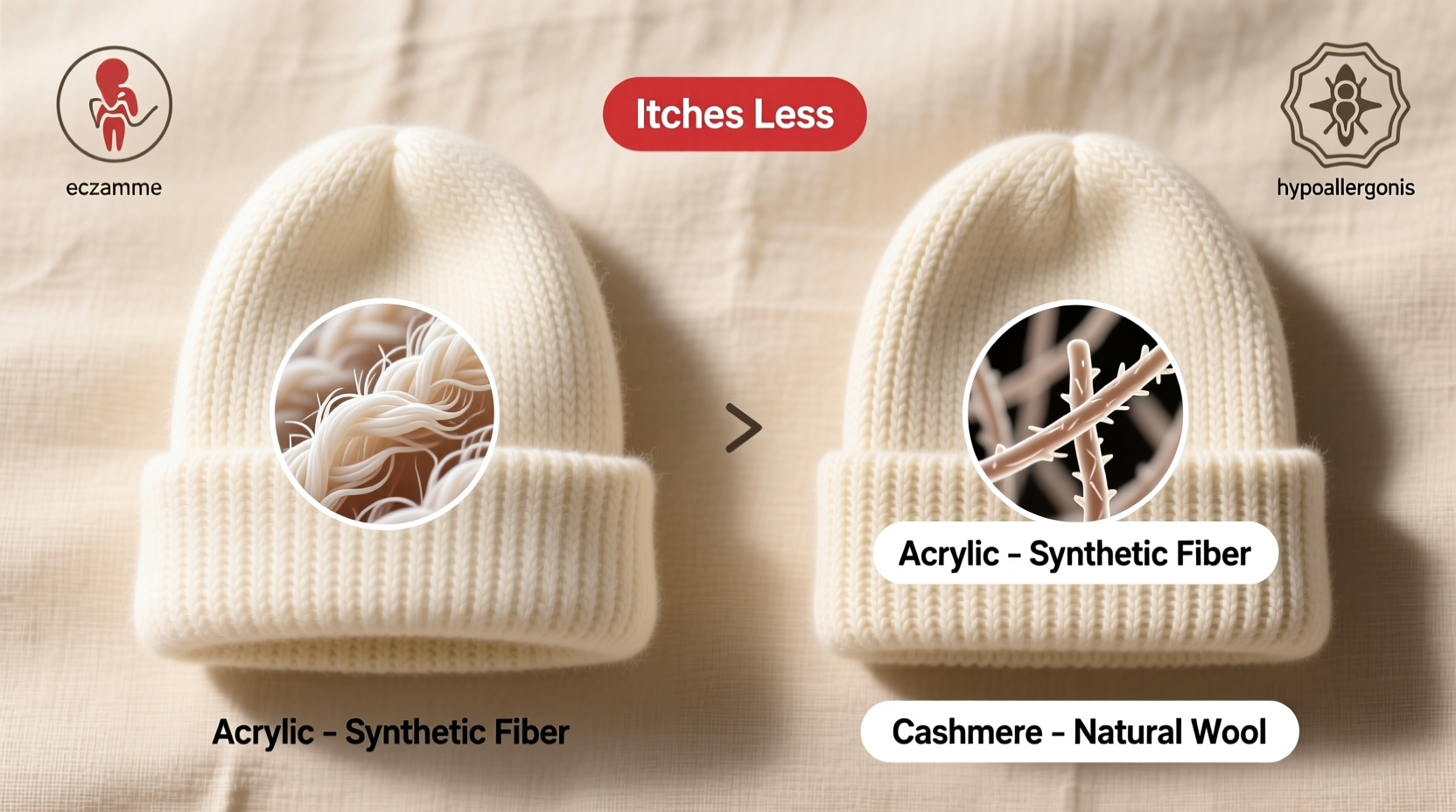
The fundamental distinction between cashmere and acrylic lies in their origin. Cashmere is a natural protein fiber, much like human hair or wool. This gives it inherent softness, elasticity, and moisture-wicking ability. Acrylic is derived from petrochemicals—specifically acrylonitrile—and manufactured through polymerization. While modern processing can make acrylic feel soft initially, its chemical structure doesn't interact with skin in the same biocompatible way as natural fibers.
Natural fibers like cashmere allow the skin to breathe, regulate temperature, and manage moisture more effectively. They absorb small amounts of sweat and release it into the air, reducing the chance of irritation caused by dampness trapped against the skin. Acrylic, being hydrophobic (water-repelling), does not absorb moisture. Instead, perspiration sits on the surface or evaporates slowly, potentially leading to overheating and itchiness, especially during physical activity or indoor wear.
Tip: If you have eczema, rosacea, or dermatitis, prioritize natural, breathable fibers like cashmere over synthetics to minimize flare-ups.Skin Sensitivity and Fabric Interaction
Sensitive skin reacts poorly to several textile factors: fiber coarseness, chemical residues from manufacturing, poor breathability, and static buildup. Acrylic scores poorly across multiple categories. Its fibers are often stiff at a microscopic level, causing micro-abrasions that trigger histamine release—leading to itching. Additionally, many acrylic garments retain chemical finishes such as formaldehyde-based resins used to reduce wrinkling or improve shape retention. These substances are known irritants, particularly for those prone to contact dermatitis.
Cashmere, when properly processed, undergoes minimal chemical treatment. High-grade cashmere is washed with gentle soaps and combed to remove coarse guard hairs, leaving only the finest down fibers—typically 14–16 microns in diameter (human hair averages around 70 microns). This fineness translates to a smoother surface that glides over the skin rather than scratching it. However, not all cashmere is created equal. Lower-quality cashmere may contain residual coarse fibers or be blended with wool or synthetic materials, increasing the risk of irritation.
“Natural fibers like cashmere have a biomimetic advantage—they behave more like our own skin, reducing friction and thermal shock.” — Dr. Lena Patel, Dermatological Textile Researcher, King’s College London
Comparative Analysis: Cashmere vs Acrylic
| Feature | Cashmere | Acrylic |
|---|---|---|
| Fiber Origin | Natural (goat undercoat) | Synthetic (petrochemical) |
| Average Fiber Diameter | 14–16 microns | 15–25 microns (but rigid structure) |
| Mechanical Softness | High – fine, flexible fibers | Moderate – initially soft but stiffens over time |
| Breathability | Excellent – allows moisture vapor transfer | Poor – traps heat and sweat |
| Static Buildup | Low – naturally dissipates charge | High – prone to static, especially in dry air |
| Chemical Residue Risk | Low – minimal processing | High – dye carriers, anti-pilling agents, etc. |
| Hypoallergenic Potential | High – if pure and well-combed | Low – common allergen triggers |
| Durability | Moderate – delicate with proper care | High – resistant to abrasion and pilling |
This comparison reveals that while acrylic wins in durability and affordability, cashmere excels in comfort, breathability, and skin compatibility—especially for those with sensitivities.
Real-World Example: A Case of Chronic Scalp Irritation
Consider Sarah, a 34-year-old teacher from Vermont with a history of mild eczema. Each winter, she experienced recurring itching and flaking along her hairline after wearing her favorite navy-blue acrylic beanie. She assumed it was seasonal dryness and increased moisturizer use, but symptoms persisted. After consulting a dermatologist, she learned that her beanie was likely the culprit. Switching to a 100% pure cashmere beanie—labeled “baby grade” and untreated with dyes—resulted in immediate improvement. Within two weeks, her scalp irritation subsided completely.
Her case illustrates a broader pattern: symptoms attributed to weather or skincare are often caused by clothing materials. The change wasn’t due to superior hydration but reduced mechanical and chemical stress on the skin barrier. In controlled conditions, dermatologists have observed similar results in patients who switch from synthetic to natural fiber headwear.
How to Choose a Truly Skin-Friendly Beanie
Selecting a non-irritating beanie involves more than just picking “cashmere” off the label. Mislabeling, blending, and poor processing are common. Follow this checklist to ensure you’re getting a genuinely gentle product:
- Check the Label: Look for “100% cashmere.” Avoid blends with acrylic, polyester, or even wool unless specified as ultrafine merino.
- Feel the Weight: Genuine cashmere is lightweight despite its warmth. Heavy beanies may contain fillers or synthetic layers.
- Assess Texture: Run the inside of the beanie across your wrist or neck. If it feels scratchy or rough, it will likely irritate your scalp.
- Smell Test: New cashmere should have a faint earthy or neutral scent. Strong chemical odors suggest heavy processing.
- Washing Instructions: Authentic cashmere requires hand washing or dry cleaning. Machine-washable claims may indicate synthetic blends.
- Color Considerations: Opt for undyed, natural tones (ivory, beige, gray) if you're highly sensitive. Dyes can introduce allergens.
Step-by-Step Guide to Testing a Beanie for Skin Compatibility
If you're unsure whether a beanie will irritate your skin, follow this methodical testing process:
- Inspect the Label: Confirm fiber content and care instructions.
- Conduct a Patch Test: Wear the beanie for 15 minutes indoors. Remove and check for redness or tingling on the forehead or behind the ears.
- Extend Exposure: If no reaction occurs, wear it for 1 hour the next day. Monitor for delayed reactions.
- Test During Activity: Wear it while walking or doing light exercise to assess breathability and moisture response.
- Evaluate Overnight Effects: Sleep with the beanie on (if practical) and note any morning discomfort or flaking.
- Repeat After Washing: Some irritants emerge only after laundering. Re-test post-wash if concerns arise.
This protocol mimics clinical patch testing methods and helps prevent full-scale irritation episodes.
Common Myths About Winter Hats and Sensitive Skin
Several misconceptions cloud judgment when selecting beanies:
- Myth: “Thicker means warmer and better.” Reality: Excessive thickness increases friction and traps sweat. Lightweight cashmere often provides superior insulation due to trapped air in fine fibers.
- Myth: “All soft fabrics are safe.” Reality: Some acrylics feel soft initially but stiffen with wear and washing, becoming abrasive over time.
- Myth: “Organic labeling guarantees safety.” Reality: “Organic” applies to farming practices, not fabric softness. A certified organic cotton beanie might still be too coarse for sensitive scalps.
- Myth: “Expensive = non-itchy.” Reality: Poorly made luxury cashmere with short fibers or impurities can irritate more than high-quality budget options.
Frequently Asked Questions
Can I wear acrylic if I have sensitive skin?
You can, but with caution. Some high-end acrylics are treated to reduce stiffness and static. However, long-term wear often leads to discomfort. If you must use acrylic, choose lined versions where the synthetic layer doesn’t touch the skin directly.
Is cashmere itchy for everyone with sensitive skin?
No, but quality matters. Poorly sorted cashmere containing coarse guard hairs can cause irritation. Always opt for “Grade A” or “baby cashmere” from reputable brands. Handfeel is a reliable indicator—true cashmere should feel silky, not scratchy.
How do I care for a cashmere beanie to maintain softness?
Hand wash in cool water with a pH-neutral detergent. Lay flat to dry away from direct heat. Store folded in a breathable cotton bag, not hung, to preserve shape. Avoid mothballs; use cedar blocks instead.
Final Recommendation
When comparing cashmere and acrylic beanies for sensitive skin, cashmere is the superior choice—provided it is genuine, high-quality, and properly cared for. Its natural softness, breathability, and low chemical load make it far less likely to cause itching than acrylic. Acrylic, despite advances in textile engineering, remains fundamentally incompatible with highly reactive skin due to its synthetic nature, moisture resistance, and tendency to generate static and retain irritants.
That said, price and maintenance are real considerations. A $200 cashmere beanie isn’t feasible for everyone. In such cases, consider mid-tier alternatives like ultrafine merino wool or TENCEL™-blends, which offer better skin compatibility than acrylic at a more accessible price point. But if itch-free comfort is your priority, investing in a well-made cashmere beanie pays off in both health and long-term satisfaction.
💬 Have you switched from acrylic to cashmere and noticed a difference? Share your experience in the comments—your story could help someone avoid months of discomfort.








