
Every year, as homes fill with the warmth of holiday lights and festive decorations, an often-overlooked danger lurks in the corner: the Christmas tree. While a symbol of joy and tradition, a live or artificial tree can become a fire hazard if not properly maintained. According to the National Fire Protection Association (NFPA), an estimated 200 home fires per year are caused by Christmas trees, resulting in dozens of injuries, millions in property damage, and even fatalities. Understanding why these fires occur—and how to stop them before they start—is essential for every household during the holidays.
The Hidden Danger Behind Holiday Cheer
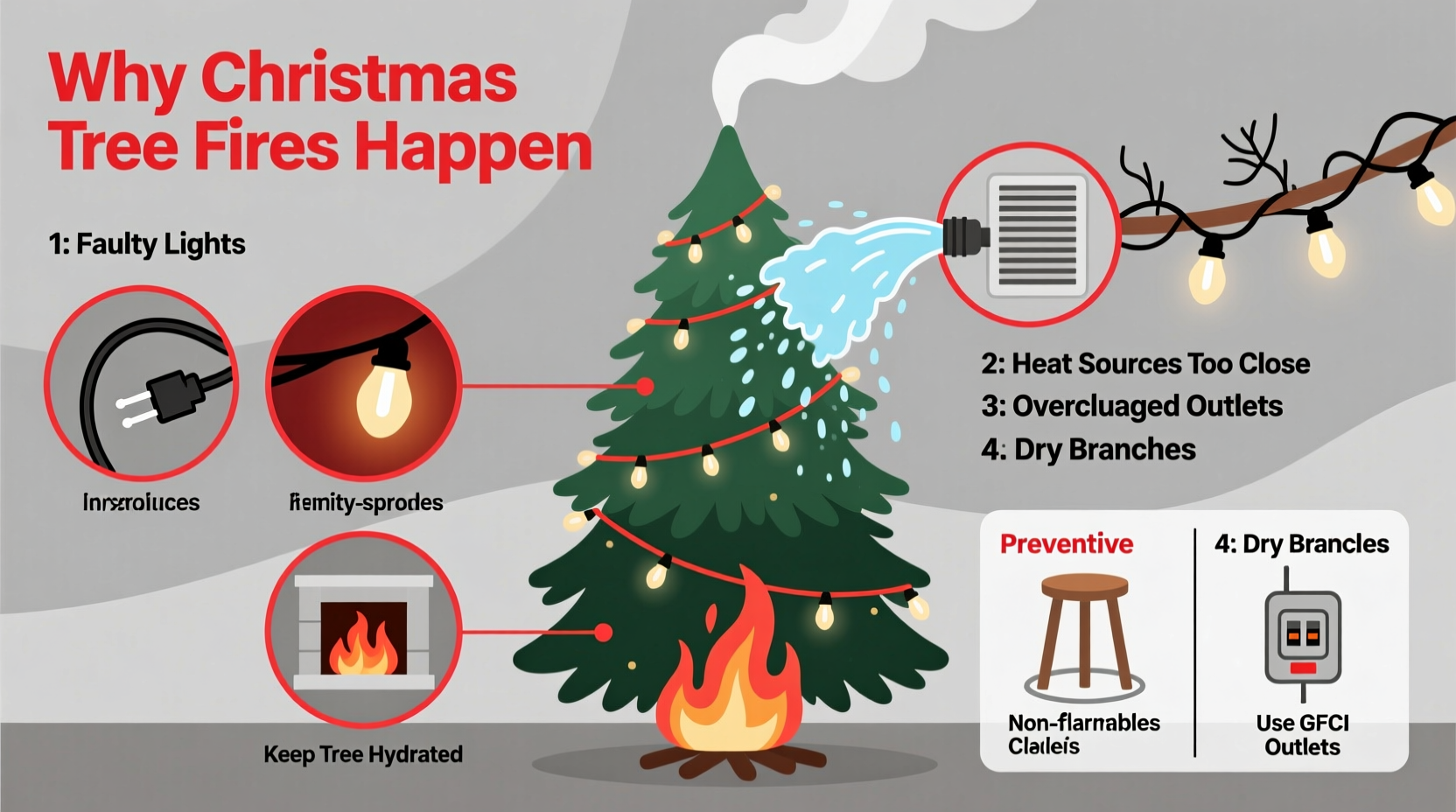
Christmas tree fires may seem rare, but their consequences are disproportionately severe. The NFPA reports that although tree fires represent less than 0.5% of all home fires annually, they account for nearly 14% of home fire deaths when they do occur. This stark contrast underscores the rapid and deadly nature of such blazes. A dry tree can go from smoldering to fully engulfed in flames in under 30 seconds, leaving little time to react.
The primary culprit? Combustible materials meeting heat sources. Whether it’s faulty wiring, candles, or simply a neglected tree losing moisture, the combination creates a perfect storm. Artificial trees aren’t immune either—especially if made from flammable materials or placed too close to heaters or open flames.
“Once a dry Christmas tree ignites, the fire spreads rapidly due to the high surface-area-to-mass ratio of the needles. It’s not a slow burn—it’s a flash event.” — Dr. Steve Kerber, Director of Fire Safety Research at UL (Underwriters Laboratories)
Why Christmas Tree Fires Happen: The Top Causes
Understanding the root causes is the first step toward prevention. Most Christmas tree fires stem from predictable and avoidable factors.
1. Electrical Issues with Holiday Lights
Faulty or damaged light strings are one of the leading causes of tree fires. Many people reuse old lights year after year without inspecting them for frayed wires, cracked sockets, or loose connections. Overloaded circuits and improper outdoor use indoors also increase risk.
According to the U.S. Consumer Product Safety Commission (CPSC), decorative lighting alone accounts for over 40% of Christmas tree fire incidents linked to electrical distribution systems.
Tip: Never use lights with exposed wires or broken sockets—even if they still “work.” Replace them immediately.2. Dry Trees Ignited by Heat Sources
A live Christmas tree loses moisture quickly. If not watered daily, it becomes highly combustible. Once the moisture content drops below 50%, the tree can ignite almost instantly when exposed to flame or heat.
Placing trees near radiators, space heaters, fireplaces, or even intense holiday lighting increases ignition risk. One experiment by UL showed a dry tree fully engulfed in flames within 10 seconds of ignition.
3. Open Flames and Candles
Despite growing awareness, many households still use real candles on or near trees. Even a slight draft can cause a flame to leap onto low-hanging branches. In homes where traditions include Advent candles or menorahs, placement becomes critical.
4. Improper Use of Extension Cords and Power Strips
Using indoor extension cords outdoors or plugging too many devices into a single outlet can lead to overheating. Many people daisy-chain power strips to accommodate multiple strands of lights, which exceeds load capacity and generates dangerous heat.
5. Flammable Artificial Trees and Decorations
Not all artificial trees are created equal. Older models, especially those manufactured before modern fire-resistant standards, are made from polyvinyl chloride (PVC) or other plastics that melt and burn rapidly. Look for labels indicating “fire resistant” or “flame retardant,” but remember: no tree is fireproof.
How to Prevent Christmas Tree Fires: A Practical Guide
Prevention isn’t complicated—it just requires attention, consistency, and a few proactive steps. Follow this comprehensive approach to keep your tree safe throughout the season.
Step-by-Step: Setting Up a Safe Christmas Tree
- Choose a fresh tree: If buying a live tree, shake the trunk gently. Few falling needles indicate freshness. The bark should be sticky, and branches springy when bent.
- Cut the base: Before placing in the stand, make a fresh 1/4-inch cut off the bottom to help it absorb water.
- Use a sturdy stand with a large water reservoir: A good stand holds at least one gallon of water for a typical 6–7 foot tree.
- Place away from heat sources: Keep at least three feet from heaters, fireplaces, candles, and TVs.
- Inspect all lights: Check for damaged wires, discoloration, or loose bulbs. Only use lights labeled for indoor or outdoor use as appropriate.
- Don’t overload outlets: Plug no more than three light strings into a single outlet or power strip.
- Turn off lights when sleeping or leaving home: This simple habit eliminates unattended ignition risks.
Watering Schedule for Live Trees
Live trees can consume up to a quart of water per day for each inch of trunk diameter. During the first few days, monitor water levels closely—trees absorb the most right after being cut.
| Day After Setup | Expected Water Consumption | Action Required |
|---|---|---|
| Day 1 | Up to 1 gallon | Check water every 4–6 hours initially |
| Day 2–7 | 0.5–1 gallon daily | Refill daily; never let water drop below base |
| After Week 2 | Gradually decreases | Continue daily checks; assess needle loss |
| When needles fall easily, branches bend poorly | N/A | Tree is too dry—remove immediately |
Safety Checklist: Protect Your Home This Holiday Season
Prevention Checklist:- ☑ Inspect all lights for damage before use
- ☑ Use only UL-listed or ETL-certified lighting products
- ☑ Place tree at least 3 feet from heat sources
- ☑ Use a stable stand that prevents tipping
- ☑ Fill tree stand with water daily
- ☑ Avoid using real candles near the tree
- ☑ Turn off tree lights before bed or leaving home
- ☑ Keep matches and lighters out of children’s reach
- ☑ Install working smoke alarms on every level of your home
- ☑ Test smoke detectors monthly; replace batteries annually
Real Example: A Close Call in Denver
In December 2022, a family in Denver narrowly escaped a Christmas tree fire that began just after midnight. They had left their tree lights on overnight—a common but risky practice. An older strand of mini-lights, stored in a damp garage for years, developed internal corrosion. When powered on, one socket overheated and sparked onto nearby tinsel and dry lower branches.
Within seconds, flames climbed the trunk. Fortunately, a hardwired smoke alarm in the hallway activated immediately. The family evacuated safely, but the living room was severely damaged. Fire investigators noted the tree hadn’t been watered in five days and was visibly dry. The total loss exceeded $45,000.
“We thought it was fine because it still looked green,” said homeowner Maria Thompson. “We didn’t realize how fast it could go up. Now we unplug everything every night.”
Do’s and Don’ts: A Quick Reference Table
| Do’s | Don’ts |
|---|---|
| Use LED lights—they run cooler and use less energy | Use incandescent lights near dry trees without supervision |
| Water your tree daily | Assume your tree doesn’t need water because it “still looks good” |
| Place the tree away from exits | Block doorways or hallways with the tree |
| Dispose of your tree promptly after the holidays | Keep a dried-out tree standing past early January |
| Use a timer for holiday lights | Leave lights on 24/7, especially when unattended |
| Check local recycling programs for disposal | Burn your tree in a fireplace or wood stove (can cause chimney fires) |
Frequently Asked Questions
How long can I keep my live Christmas tree indoors safely?
Most experts recommend no more than four weeks. Beyond that, even well-watered trees begin to dry out significantly, especially in heated homes. Monitor needle retention and flexibility. If branches snap instead of bending, remove the tree immediately.
Are artificial trees safer than real ones?
Artificial trees eliminate the need for watering and don’t dry out, making them inherently less flammable over time. However, if made from non-fire-resistant materials or placed near heat sources, they can still ignite and produce toxic smoke. Choose models labeled “fire resistant” and follow manufacturer instructions.
Can I recycle my Christmas tree after the holidays?
Yes—most municipalities offer curbside pickup or drop-off locations in January. Recycled trees are often chipped into mulch for parks and trails. Do not burn your tree in a fireplace or stove; sap buildup in the wood can ignite creosote in chimneys, causing secondary fires.
Final Thoughts: Safety Is Part of the Tradition
The Christmas tree stands as a centerpiece of celebration, memory, and family. But its beauty comes with responsibility. A moment of neglect—a forgotten water refill, a frayed wire ignored, a candle left burning—can undo months of joyful preparation.
Fire safety isn’t about fear; it’s about respect. Respect for the traditions we uphold, the homes we’ve built, and the people we love. By taking a few deliberate steps—checking lights, watering daily, unplugging at night—you preserve not just the tree, but the peace of mind that makes the season meaningful.
This holiday, let safety be part of your ritual. Share these practices with family, teach children why we unplug the lights, and lead by example. A small effort today ensures your tree remains a symbol of warmth—not a warning.
💬 Your home, your holiday, your safety. Review your tree setup tonight. Share this guide with a friend or neighbor—because a safer season starts with awareness.