The caipirinha is Brazil’s national cocktail—a deceptively simple trio of cachaça, lime, and sugar. Yet its elegance lies not in minimalism, but in precision. When a bartender swaps cachaça for rum—often citing “availability,” “familiarity,” or “smoother profile”—they aren’t making a neutral substitution. They’re altering the cocktail’s DNA. This isn’t about purism for its own sake; it’s about understanding how raw material identity, fermentation character, distillation method, and regional terroir converge in one glass. A rum-based caipirinha may taste pleasant—but it ceases to be a caipirinha. It becomes something else entirely: a lime-and-sugar rum sour with Brazilian styling. And that distinction matters—not only to bartenders and enthusiasts, but to the integrity of Latin American spirits culture.
What Makes Cachaça Irreplaceable?
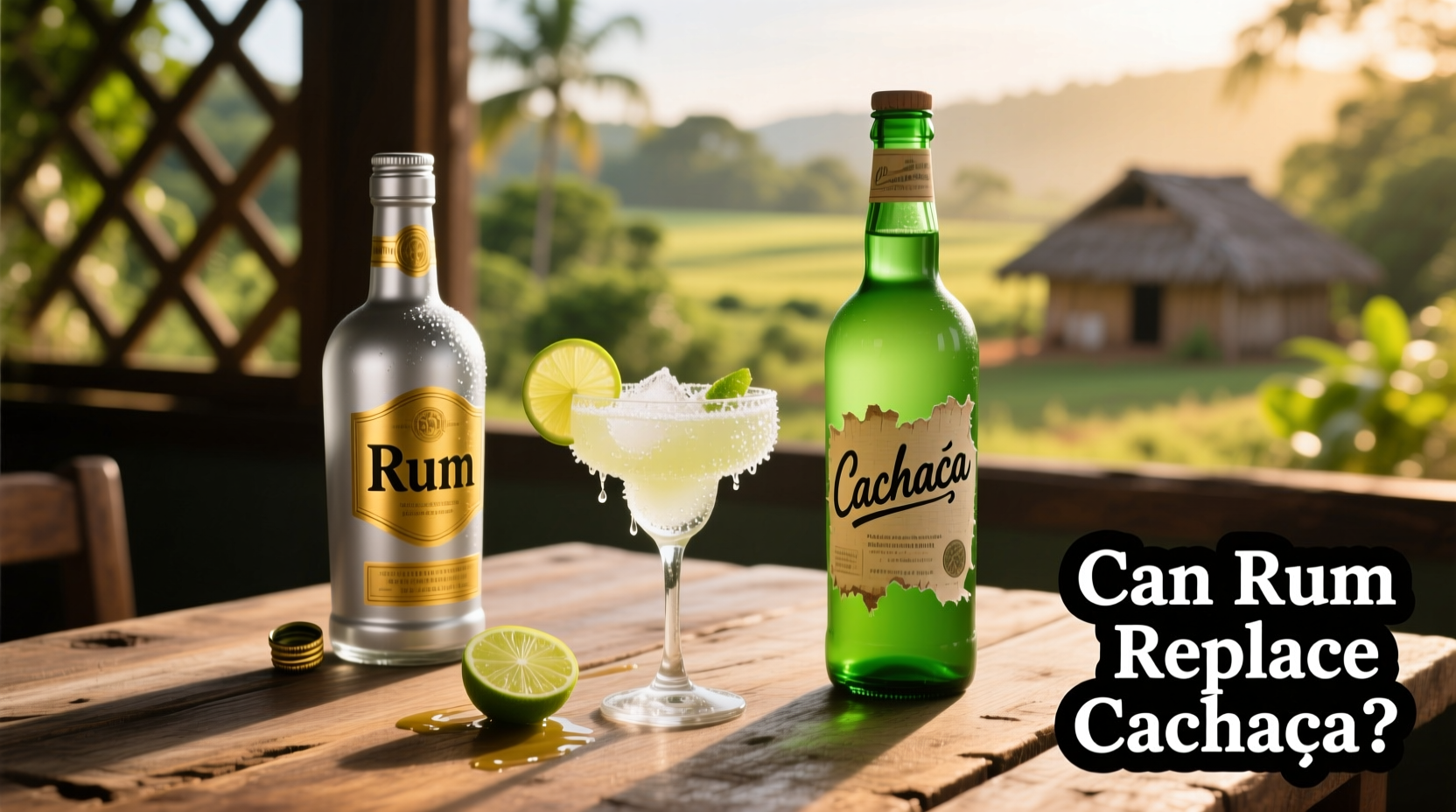
Cachaça is a protected geographical indication (PGI) spirit under Brazilian law and recognized by the EU since 2013. To qualify as cachaça, it must be distilled from fresh sugarcane juice—not molasses—and produced exclusively in Brazil. That single requirement carries profound implications. Sugarcane juice ferments rapidly, developing vibrant lactic and acetic notes, banana esters, grassy top notes, and subtle funk—especially in artisanal, small-batch expressions aged in native woods like amburana or bálsamo. Industrial cachaças (like those used in high-volume bars) retain more vegetal brightness and higher volatile acidity than most rums, giving them an assertive, almost saline cut that slices through lime’s tartness and sugar’s weight.
Rum, by contrast, is defined by its feedstock: molasses or sugarcane syrup. Even “agricultural” rums—like Martinique’s rhum agricole—are made from sugarcane juice *but fermented and distilled under French AOC regulations*, using different yeast strains, copper column stills (not pot stills), and aging traditions that emphasize refinement over rusticity. Rhum agricole shares some aromatic kinship with cachaça, yet it’s consistently drier, more linear, and less earthy. Caribbean rums—especially molasses-based gold or dark styles—introduce caramel, oak, and spice that overwhelm the caipirinha’s clean architecture.
“Cachaça isn’t ‘Brazilian rum.’ It’s a distinct category born from a specific agricultural rhythm—harvesting cane within 24 hours of cutting, fermenting in open vats, distilling in copper pots. You can’t replicate that alchemy with a different base, different microbes, or different stills.” — Dr. Mariana Costa, Oenologist & Spirits Historian, Universidade Federal do Rio de Janeiro
The Structural Breakdown: Why Rum Fails the Caipirinha Test
A well-made caipirinha relies on three interlocking elements: acidity (from fresh lime), sweetness (from granulated sugar muddled into the lime pulp), and spirit backbone (cachaça). The spirit doesn’t merely carry flavor—it provides *textural tension*. Cachaça’s natural acidity and lighter body (typically 38–48% ABV) allow the lime oils and juice to remain vivid and unmasked. Its ester profile—particularly ethyl acetate and isoamyl acetate—resonates with lime’s limonene and citral, creating a synergistic lift.
Rum disrupts this balance in four measurable ways:
- ABV mismatch: Most rums served in bars are 40% ABV, but many popular white rums (e.g., Bacardí Superior) are filtered post-distillation to remove congeners—stripping the very compounds that would harmonize with lime.
- pH divergence: Cachaça typically registers pH 3.2–3.6; light rums average pH 4.0–4.5. That seemingly small shift reduces the perception of brightness and allows sugar to read as cloying rather than balancing.
- Ester deficit: A benchmark artisanal cachaça contains 200–400 mg/L total esters; light rum averages 80–150 mg/L. Lower ester content means less aromatic amplification of citrus oils.
- Body interference: Rum’s heavier mouthfeel—especially when aged or blended with molasses-heavy distillates—coats the palate, muting lime’s sharp finish and dulling the drink’s refreshing snap.
Real-World Impact: A Mini Case Study from São Paulo
In early 2023, a respected craft cocktail bar in Vila Madalena, São Paulo, launched a “Global Caipirinha Series” featuring rums from Jamaica, Barbados, and Guadeloupe alongside traditional cachaça. Patrons loved the novelty—until blind tastings revealed a stark pattern. Among 87 regular customers, 73% correctly identified the cachaça version as “more refreshing,” “sharper,” and “truer to memory.” When asked to describe the rum variants, descriptors included “muted,” “syrupy,” “wood-forward,” and “missing the bite.” One guest, a retired sugarcane agronomist from Minas Gerais, noted: “The rum version tastes like dessert. The cachaça version tastes like the field after rain—green, alive, urgent.” The bar discontinued the series after six weeks—not due to poor reception, but because the experiment underscored how deeply cachaça’s terroir informs the drink’s emotional resonance. As the bar’s head mixologist told Revista da Cozinha: “We thought we were expanding the caipirinha. We realized we were erasing it.”
Cachaça vs Rum: A Comparative Framework
The differences go beyond philosophy—they’re empirically observable. Below is a side-by-side analysis of key functional attributes affecting caipirinha performance:
| Attribute | Cachaça (Artisanal, Unaged) | Rhum Agricole (Unaged) | Light Molasses Rum (e.g., Bacardí) |
|---|---|---|---|
| Base Material | Fresh sugarcane juice | Fresh sugarcane juice | Molasses |
| Fermentation Time | 12–36 hours (spontaneous or wild yeast) | 24–48 hours (selected yeast) | 24–72 hours (controlled, high-yield yeast) |
| Distillation Method | Copper pot still (batch) | Copper column still (continuous) | Column still (high-efficiency) |
| Typical Ester Content (mg/L) | 250–400 | 180–300 | 70–120 |
| pH Range | 3.2–3.6 | 3.4–3.7 | 4.0–4.5 |
| Perceived Acidity in Cocktail | High—cuts cleanly | Moderate—balanced but less aggressive | Low—requires extra lime or acid adjustment |
| Lime Synergy | Enhances oil expression; lifts citrus top notes | Supports lime but lacks vibrancy boost | Overpowers lime; creates disjointed aroma profile |
Step-by-Step: How to Taste the Difference Yourself
You don’t need a lab to verify this. With five minutes and three glasses, you can experience the structural divergence firsthand:
- Gather materials: 15 ml each of unaged cachaça (e.g., Avuá Prata), unaged rhum agricole (e.g., Damoiseau Blanc), and light molasses rum (e.g., Plantation 3 Stars); fresh Persian limes; granulated sugar; muddler; three identical rocks glasses.
- Prepare identically: In each glass, add 1 lime wedge (½-inch thick, peel intact), 1 tsp sugar, and gently muddle for 8 seconds—just until juice releases and sugar dissolves slightly. Do not shred the pith.
- Add spirit: Pour 45 ml of one spirit into Glass 1, 45 ml of the second into Glass 2, and 45 ml of the third into Glass 3. Stir vigorously with ice for 12 seconds—no shaking, to preserve texture.
- Taste in order: Start with cachaça, then rhum agricole, then molasses rum. Rinse your mouth with water between samples. Note: (a) first impression aroma, (b) mid-palate brightness, (c) finish length and cleansing quality.
- Compare notes: Does one version make your mouth water immediately? Which leaves the cleanest finish? Which feels integrated versus layered or disjointed? The cachaça should feel like a single, urgent note—lime, grass, and fire in one breath.
FAQ: Addressing Common Misconceptions
Isn’t all sugarcane spirit basically the same?
No. Sugarcane juice vs. molasses creates fundamentally different fermentation substrates. Juice contains amino acids, minerals, and enzymes absent in molasses, leading to distinct microbial activity and congener profiles. Even two cachaças from neighboring farms in São Paulo will differ more than a Jamaican rum and a Barbadian rum—because terroir expresses itself most intensely in fresh-juice distillates.
Can I fix a rum-based caipirinha with extra lime or acid?
Not structurally. Adding more lime increases sourness but doesn’t restore lost ester synergy or pH-driven brightness. It risks overwhelming the palate with one-dimensional acidity. A better solution is to embrace the rum as a new base and build a different cocktail—e.g., a “Caipirissima” with rum, lime, mint, and a touch of falernum—but don’t call it a caipirinha.
Are there any rums that work acceptably in a pinch?
Only unaged rhum agricole—never molasses-based rums. Even then, expect reduced complexity and a smoother, less confrontational profile. It’s a functional stand-in, not a true equivalent. For authenticity, seek certified cachaça: look for the “Denominação de Origem Controlada” (DOC) seal or check the ABV (must be 38–48%) and ingredient list (“destilado de caldo de cana” only).
Why This Matters Beyond the Bar
Substituting rum for cachaça in a caipirinha isn’t a trivial mixology quibble—it’s a microcosm of broader issues in global spirits culture: the flattening of regional identity, the privileging of familiarity over fidelity, and the quiet erosion of protected designations. Cachaça represents over 500 years of Brazilian agricultural knowledge—from soil management in the Zona da Mata to fermentation techniques adapted to tropical humidity. When bars default to rum, they sideline that legacy. Worse, they mislead consumers into believing cachaça is merely “rum’s cousin,” delaying its rightful place alongside tequila, mezcal, and pisco in the pantheon of culturally anchored spirits.
This isn’t about gatekeeping. It’s about precision. Just as a Manhattan demands rye (not bourbon) for its peppery spine, or a Pisco Sour requires Peruvian pisco for its floral lift, the caipirinha demands cachaça—not for tradition’s sake, but because no other spirit delivers the exact chemical and sensory architecture required to make the drink cohere.
💬 Your palate is your best tool. Seek out authentic cachaça, taste it neat, then in a properly built caipirinha. Notice the difference—not as a flaw in rum, but as a testament to cachaça’s irreplaceable voice. Share your tasting notes, ask questions, and help preserve the integrity of one of the world’s most vital cocktails.