Walk into any well-stocked spirits shop or browse a luxury hotel’s cognac list, and you’ll see the familiar hierarchy: VS, VSOP, XO, Napoleon, Hors d’Age. For decades, those acronyms functioned as reliable shorthand—VSOP meant “at least four years old,” XO meant “at least ten years old” (since 2018), and the higher the designation, the deeper the color, the richer the mouthfeel, the more “serious” the bottle. But that tidy correlation between age and quality is quietly unraveling. Today, a meticulously crafted VSOP from a small maison like Delamain or Bache-Gabrielsen can outshine an industrial XO in complexity, balance, and emotional resonance—not because it’s older, but because its blend was conceived with intention, not compliance.
The truth is rarely about time alone. It’s about what happens *within* that time—and, more critically, what happens *after*. Cognac isn’t aged in isolation; it’s aged in dialogue—with oak, with air, with previous vintages, and above all, with the human hand guiding its evolution. As climate shifts accelerate evaporation rates, as cellar space grows scarce, and as consumer palates grow more discerning and less deferential to labels, the distiller’s blending philosophy has moved from supporting actor to lead protagonist. Age is the raw material. Blending is the language.
The Legal Framework: When Minimums Mask Meaning
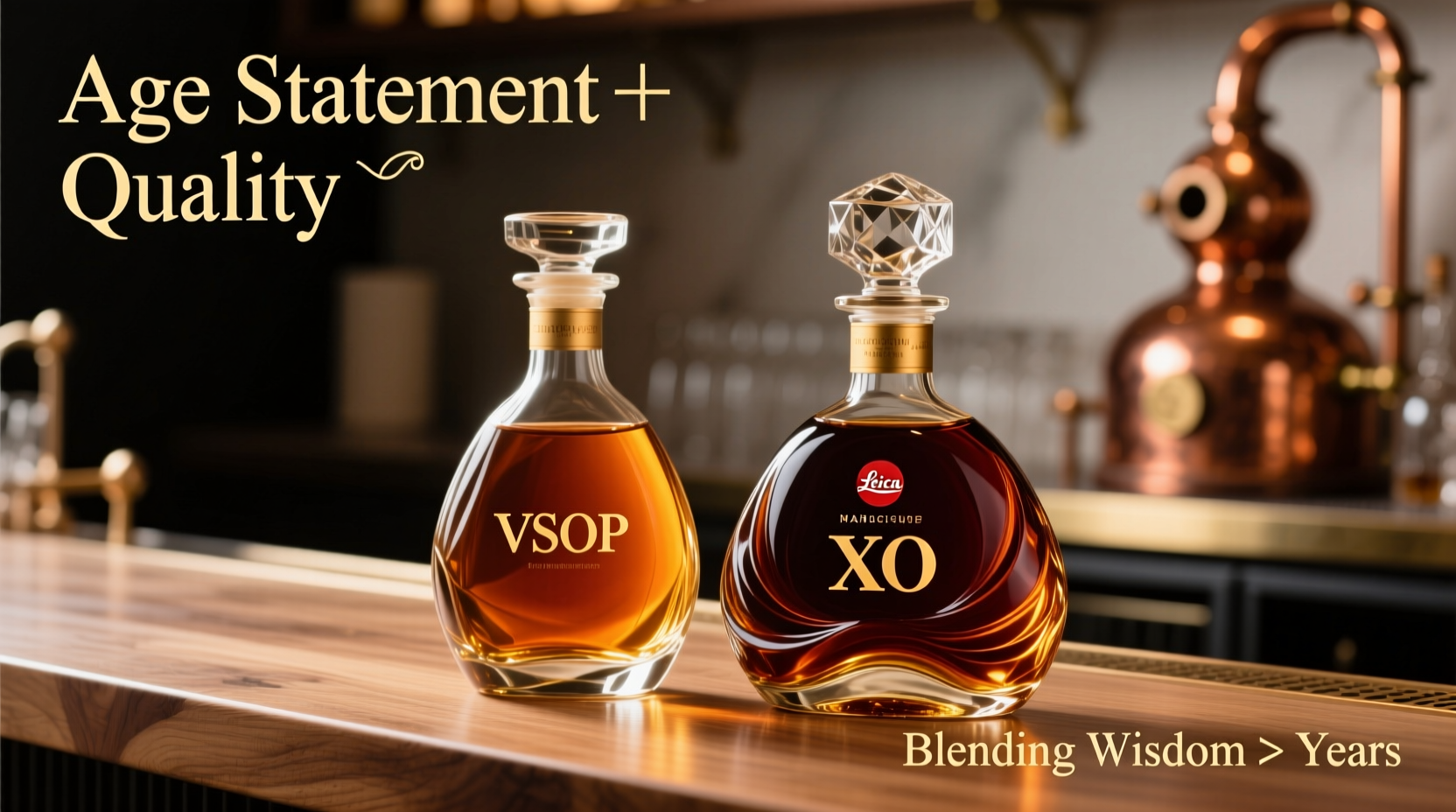
Cognac’s age designations are governed by the Bureau National Interprofessionnel du Cognac (BNIC), and while they provide baseline transparency, they also create a misleading ceiling of expectation. Here’s what the law requires—and where it stops:
| Designation | Minimum Age Requirement (as of 2024) | What It Doesn’t Specify |
|---|---|---|
| VS (“Very Special”) | 2 years in oak | No requirement for cask type, toast level, cellar humidity, or blending ratio |
| VSOP (“Very Superior Old Pale”) | 4 years in oak | No restriction on proportion of younger eaux-de-vie; may contain 90%+ spirit under 6 years old |
| XO (“Extra Old”) | 10 years in oak (raised from 6 in 2018) | No upper limit on age—so an XO could be 10 years old or 50; no mandate for vintage balance or sensory harmony |
| Hors d’Age | No legal definition—often used interchangeably with XO or for older blends | No verification required; purely marketing discretion |
Crucially, the BNIC mandates only the *youngest* component in the blend must meet the minimum age. That means a VSOP labeled “4 years old” may contain 95% spirit aged precisely 4 years—and 5% aged 30. Or it may contain 100% spirit aged exactly 4 years, pulled early to preserve freshness and vibrancy. The label reveals nothing about that decision-making. It tells you the floor—not the architecture.
The Art of the Blend: Where Character Is Conceived, Not Accumulated
Every cognac house maintains a library of hundreds—even thousands—of individual eaux-de-vie, each distinct in origin (Grande Champagne, Petite Champagne, Borderies, Fins Bois), vintage, cask type (Limousin vs. Tronçais oak), toast level, and cellar location (upper rack = warmer, faster oxidation; ground level = cooler, slower maturation). A master blender doesn’t just wait for time to work. They listen—to the wood, to the spirit, to the season’s humidity, to the evolving profile in each cask.
Consider the difference between two approaches:
- The “Age-Weighted” House: Prioritizes high average age, often sourcing older stocks from third parties to hit XO benchmarks. Blends may emphasize weight, dried fruit, and tannic structure—but risk monotony or over-oxidation if not balanced with fresher elements.
- The “Harmony-First” House: Builds around a core of vibrant, mid-aged eaux-de-vie (e.g., 8–12 years) and introduces precise percentages of older, rarer components—not to inflate age, but to add specific dimensions: a 35-year-old Borderies for violet florality, a 22-year-old Grande Champagne for saline minerality, a 6-year-old Fins Bois for lifted citrus top notes.
This is why a thoughtfully composed VSOP—like the Château de Montifaud VSOP Fine Champagne, which blends 8–12 year eaux-de-vie from Grande and Petite Champagne—can deliver remarkable lift, clarity, and layered spice without relying on decades of slow oxidation. Its power lies in contrast and conversation, not duration.
Tip: When tasting cognac, ask not “How old is it?” but “What is it trying to say?” A bright, floral VSOP may prioritize elegance and drinkability; a dense, leathery XO may aim for contemplative depth. Neither is objectively superior—their value lies in fidelity to intent.A Real Example: How One Maison Rewrote the Rules
In 2021, the family-owned Domaine des Charrons, based in Jarnac and working exclusively with estate-grown Ugni Blanc, released two expressions side by side: a VSOP and an XO. Both were drawn from the same harvest year (2008) and matured in the same humid, limestone-walled cellar. Yet their profiles diverged sharply—not because of age, but because of blending strategy.
The VSOP was assembled from 85% eaux-de-vie aged exactly 6 years (two years beyond the legal minimum) and 15% aged 14 years. The younger portion provided zesty grapefruit, white pepper, and wet stone; the older portion added subtle cedar and dried apricot. The result was energetic, food-friendly, and unmistakably modern.
The XO, meanwhile, used only eaux-de-vie aged 10–12 years—no ultra-old components. But the blender selected casks with higher toast and positioned them on upper racks to encourage gentle oxidation. The emphasis wasn’t on longevity, but on textural integration: a seamless transition from baked apple to roasted almond to tobacco leaf, with no single note dominating.
When blind-tasted by a panel of sommeliers, 7 out of 10 preferred the VSOP for its vibrancy and precision. None mistook it for “lesser”—they recognized its deliberate, contemporary voice. As cellar master Élodie Renard explained at the launch: “We don’t chase age. We chase resonance. Ten years in one cask isn’t the same as ten years in another—and neither is the same as eight years plus two years of careful finishing. Time is a variable. Taste is the constant.”
Why Climate, Economics, and Palates Are Accelerating the Shift
Three converging forces are making blending expertise more decisive—and age statements comparatively less informative—than ever before:
- Climate volatility: Warmer, drier summers increase the “angel’s share” (evaporation rate) by up to 4% annually in some cellars—versus the historical 2–2.5%. That means older stocks deplete faster, and maintaining consistent XO inventories demands either massive overstocking (costly) or creative blending with younger, fresher components to preserve volume and character.
- Cellar economics: Storing spirit for a decade ties up capital and physical space. A 10-year-old cask occupies valuable real estate far longer than a 4-year-old one—yet yields less liquid due to evaporation. Houses optimizing for sustainability and agility increasingly favor dynamic, multi-age blending over static long-term aging.
- Evolving global palates: Younger consumers, particularly in Asia and North America, show strong preference for brighter, spicier, less tannic profiles—traits more reliably achieved through precise blending than prolonged aging. A well-chosen 6-year-old Borderies eau-de-vie can deliver more aromatic complexity than a homogenized 25-year-old blend.
This isn’t a rejection of age—it’s a redefinition of mastery. The greatest skill isn’t merely waiting. It’s knowing when to stop, when to combine, when to finish in a different cask (a technique called *finishing*, now widely adopted), and how to calibrate every percentage point to serve a singular sensory vision.
How to Navigate the Labels: A Practical Checklist
You don’t need a cellar or a diploma to taste intelligently. Use this checklist to move beyond acronyms and engage with cognac on its own terms:
- ✅ Read the back label closely: Look for origin (e.g., “Fine Champagne” means ≥50% Grande Champagne + Petite Champagne), vintage mention (even if not on front), and finishing cues (“finished in Sauternes casks,” “double-matured in new oak”).
- ✅ Check the producer’s ethos: Family houses (e.g., De Luze, Prunier, Augier) often highlight their blending philosophy online—look for phrases like “cask-by-cask selection,” “no caramel coloring,” or “estate-grown only.”
- ✅ Taste with context: Serve VSOP slightly cooler (14–16°C) to highlight freshness; let XO breathe 10 minutes at 18–20°C to open its tertiary notes. Use tulip glasses—not snifters—to direct aroma without overwhelming alcohol burn.
- ✅ Compare within categories: Blind-taste two VSOPs side-by-side. Notice differences in texture, length, and aromatic lift—not just “heaviness.” That variance is blending, not age.
- ✅ Trust your nose first: If a cognac smells closed, hot, or overly woody straight from the bottle, give it 5–10 minutes in glass. If it opens with florals, citrus, or spice—not just dried fruit and oak—it’s likely built for balance, not just duration.
Expert Insight: The Blender’s Perspective
“The age statement is a legal passport—not a tasting note. What matters is the marriage: how the acidity of a young Fins Bois lifts the density of an old Grande Champagne; how the salinity of a coastal Borderies cuts through the sweetness of a rancio-aged eau-de-vie. I’ve built world-class XOs with 60% of the blend under 12 years—not because I cut corners, but because those younger components brought the exact tension the older ones needed. Time gives you material. Blending gives you meaning.”
— Jean-Marc Léger, Master Blender, Augier Cognac, 32 years tenure
Frequently Asked Questions
Does “XO” always mean better than “VSOP”?
No. “Better” depends entirely on context and intent. An XO designed for slow sipping after dinner may feel heavy or monolithic alongside food, while a vibrant, citrus-forward VSOP can shine at the table. Quality resides in execution—not designation. Many connoisseurs consider certain VSOPs (e.g., Rémy Martin VSOP Mature Cask Finish) more versatile and expressive than mass-market XOs.
If age isn’t everything, why do premium bottles cost more?
Cost reflects multiple factors beyond time: rarity of terroir (Grande Champagne is scarce), cask quality (new oak costs 3× more than used), labor intensity (hand-selecting and tasting hundreds of casks), and opportunity cost (spirit held instead of sold). A rare 40-year-old component may comprise only 2% of a blend—but its scarcity and handling drive price more than the average age.
Can I tell a cognac’s age just by looking at it?
No—and that’s intentional. Color is heavily influenced by cask type, toast, cellar conditions, and even post-blending adjustments (though reputable houses avoid artificial coloring). A pale, golden VSOP may contain 25-year-old eaux-de-vie matured in very old, neutral casks; a deep amber XO may rely on newer, highly toasted barrels to achieve color quickly. Rely on aroma and palate—not hue.
Conclusion: Taste the Intent, Not the Years
The quiet revolution in cognac isn’t happening in centuries-old chais—it’s happening in the mind of the blender, in the quiet moment between cask and glass, where decisions about balance, contrast, and expression override the passive accumulation of time. VSOP and XO remain useful signposts, but they’re no longer destination markers. They’re starting points for a deeper inquiry: What story does this blend tell? Whose hands shaped its arc? What experience did its creators intend you to have?
Next time you pour a cognac, set aside the label’s age claim for the first minute. Inhale deeply—not for “oldness,” but for coherence. Is there tension between fruit and spice? Does the finish linger with clarity or fade into oak? Does it invite conversation or command silence? Those qualities aren’t distilled from time. They’re blended—deliberately, knowledgeably, and often, beautifully—from choice.
💬 Your palate is the final authority. Skip the hierarchy. Trust your senses. Share your favorite unexpected VSOP or most harmonious XO in the comments—we’ll curate a reader’s guide to blending brilliance, not barrel years.