Oat milk has surged in popularity over the past five years, becoming a staple in coffee shops, grocery stores, and kitchen fridges worldwide. Marketed as creamy, sustainable, and dairy-free, it’s often positioned as a healthier alternative to cow’s milk. But behind the marketing buzz lies a more complex reality. Is oat milk truly a nutritional upgrade, or is its rise driven more by lifestyle trends than science? To answer this, we need to look beyond the label at nutrient profiles, processing methods, environmental costs, and individual health needs.
Nutritional Breakdown: Oat Milk vs. Dairy Milk
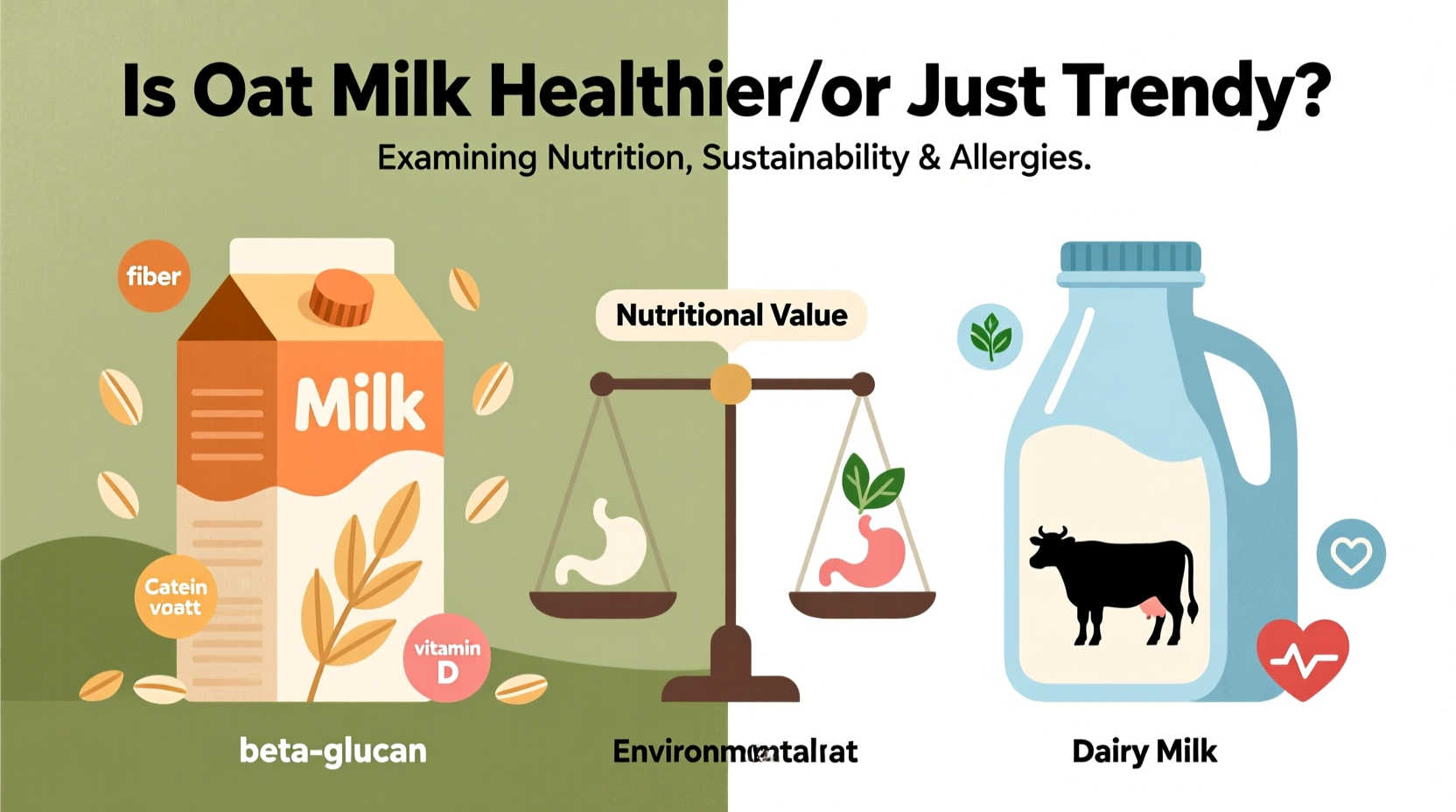
The most direct way to assess whether oat milk is “healthier” is through a side-by-side comparison of key nutrients. While both beverages serve as liquid bases for cereals, smoothies, and lattes, their compositions differ significantly.
| Nutrient (per 1 cup / 240ml) | Whole Cow’s Milk (3.25% fat) | Unsweetened Oat Milk (fortified) | Sweetened Oat Milk (average brand) |
|---|---|---|---|
| Calories | 149 | 120 | 160 |
| Protein | 8g | 3g | 2–3g |
| Fat | 8g | 3–4g | 4–5g |
| Carbohydrates | 12g | 16–20g | 27–30g |
| Sugars (natural + added) | 12g (lactose) | 4–7g | 15–20g |
| Fiber | 0g | 2g | 2g |
| Calcium (fortified) | 276mg (22% DV) | 350mg (25–30% DV) | 350mg |
| Vitamin D | 98 IU (25% DV) | 100 IU (25% DV) | 100 IU |
| Vitamin B12 | 1.1mcg (46% DV) | 1.2mcg (50% DV) | 1.2mcg |
At first glance, fortified oat milk appears comparable to dairy in terms of calcium and vitamin D—key nutrients for bone health. However, dairy delivers nearly three times more protein and contains all nine essential amino acids, making it a complete protein source. Oat milk, derived from a grain, lacks this completeness and offers less satiety per serving. On the other hand, oat milk naturally contains beta-glucans, a type of soluble fiber linked to improved cholesterol levels and heart health—a benefit absent in regular dairy.
Tip: If you rely on plant-based milk for daily nutrition, pair oat milk with protein-rich foods like nuts, seeds, or legumes to compensate for lower protein content.Processing and Additives: What’s Really in Your Carton?
Despite originating from oats, most commercial oat milks are far from whole grain. The process typically involves blending oats with water, then separating the liquid via filtration. What remains is a thin, starchy liquid that’s often enhanced with oils (like sunflower or rapeseed), stabilizers (such as gellan gum), and flavorings.
Many brands also add sugar—sometimes as much as 7 grams per serving—even in products labeled “original.” Sweetened versions can contain up to 20 grams of sugar per cup, rivaling some soft drinks. This undermines one of oat milk’s supposed health advantages, especially for those managing blood sugar or weight.
“Oat milk isn’t inherently unhealthy, but consumers should read labels carefully. Just because it’s plant-based doesn’t mean it’s minimally processed or low in sugar.” — Dr. Lena Patel, Registered Dietitian and Nutrition Scientist
Additionally, the enzymatic treatment used to break down oats into a smoother texture increases the glycemic index of oat milk. Some studies suggest that certain oat milks can spike blood glucose nearly as much as white bread, which may be concerning for people with insulin resistance or type 2 diabetes.
Environmental Impact: Sustainability Beyond the Hype
One of the strongest arguments for oat milk isn’t about health—it’s about the planet. Compared to dairy, oat milk has a dramatically lower environmental footprint.
- Water use: Producing one liter of oat milk requires about 48 liters of water, versus 628 liters for cow’s milk.
- Land use: Oats require significantly less land than dairy farming, which is a major driver of deforestation and habitat loss.
- Greenhouse gas emissions: Oat milk generates roughly 0.8 kg CO₂ equivalent per liter, compared to 3.2 kg for dairy milk.
Oats are also typically grown in cooler climates like Canada and Northern Europe, where crop rotation with legumes reduces the need for synthetic fertilizers. When sourced responsibly, oat milk represents one of the most eco-friendly milk alternatives available.
That said, not all brands are equal. Large-scale oat milk production still relies on transportation, packaging (often non-recyclable cartons), and energy-intensive processing. Choosing locally produced or packaged-in-glass options can further reduce environmental impact.
Who Benefits Most from Oat Milk?
Oat milk isn’t a one-size-fits-all solution. Its suitability depends on individual dietary needs, allergies, and health goals.
Lactose-Intolerant Individuals
For the estimated 68% of the global population with lactose malabsorption, oat milk offers a safe, digestible alternative. Unlike dairy, it contains no lactose, eliminating bloating, gas, and discomfort.
Those Seeking Heart Health Support
The beta-glucan in oats has been shown in clinical trials to reduce LDL (“bad”) cholesterol by 5–10% when consumed regularly. Though oat milk contains less beta-glucan than whole oats, consistent intake may still contribute to cardiovascular benefits.
Vegans and Plant-Based Eaters
Oat milk aligns well with ethical and environmental values common in vegan lifestyles. It’s free from animal products and often fortified to match key nutrients found in dairy, helping prevent deficiencies in calcium and B12.
People Managing Diabetes or Insulin Resistance
This group should exercise caution. Due to its higher carbohydrate content and moderate glycemic index, unsweetened oat milk should be consumed in moderation. Pairing it with protein or fat can help blunt blood sugar spikes.
Children and Athletes with High Protein Needs
Oat milk’s low protein content makes it a poor standalone substitute for growing children or active adults. If used in place of dairy, additional protein sources must be incorporated into the diet to avoid shortfalls.
Tip: For families using oat milk, consider supplementing meals with eggs, tofu, lentils, or Greek yogurt to ensure adequate protein intake.Real-World Example: A Family’s Switch to Oat Milk
The Thompson family from Portland, Oregon, switched to oat milk two years ago after their youngest child was diagnosed with a mild dairy sensitivity. Initially drawn by environmental messaging, they assumed oat milk was automatically healthier.
After six months, however, their daughter began experiencing afternoon energy crashes. A consultation with a pediatric dietitian revealed that her morning oat milk smoothie—blended with fruit and sweetened oat milk—was delivering over 40 grams of carbohydrates with only 5 grams of protein.
The family adjusted by switching to unsweetened oat milk, adding chia seeds and nut butter to smoothies, and incorporating more lean proteins at meals. Energy stabilized, and the child continued to thrive without dairy. Their experience highlights a crucial point: swapping dairy for oat milk isn’t inherently healthier unless the overall diet is balanced.
Step-by-Step Guide: Choosing the Right Oat Milk
If you’re considering oat milk, follow this practical guide to make an informed choice:
- Determine your goal: Are you avoiding lactose, reducing environmental impact, or managing cholesterol? Your purpose will guide your selection.
- Read the ingredient list: Look for short lists: oats, water, oil, salt, vitamins. Avoid brands with multiple gums, preservatives, or unpronounceable additives.
- Check the sugar content: Opt for unsweetened versions if you’re monitoring sugar or calories. Compare brands—some have half the sugar of others.
- Verify fortification: Ensure the product includes calcium, vitamin D, and B12, especially if replacing dairy entirely.
- Consider homemade options: Blend 1 cup of rolled oats with 4 cups of water, strain through a nut milk bag, and store for up to 5 days. No additives, full control.
- Monitor how you feel: Track digestion, energy levels, and cravings after switching. Adjust based on personal response.
Common Myths About Oat Milk Debunked
- Myth: Oat milk is as nutritious as dairy. Reality: It lacks comparable protein and may contain added sugars that offset benefits.
- Myth: All plant milks are low-carb. Reality: Oat milk is among the highest in carbs and sugars among non-dairy options.
- Myth: Oat milk is always organic or non-GMO. Reality: Many brands use conventionally grown oats. Look for certified labels if this matters to you.
- Myth: It’s the best option for everyone avoiding dairy. Reality: Almond, soy, and pea milk may offer better protein or lower carb profiles depending on needs.
FAQ
Can oat milk help lower cholesterol?
Yes, to a degree. The beta-glucan fiber in oats has been proven to reduce LDL cholesterol. While oat milk contains less beta-glucan than whole oats, regular consumption as part of a heart-healthy diet may contribute to modest improvements.
Is oat milk safe for people with gluten intolerance?
Not always. While oats are naturally gluten-free, cross-contamination during processing is common. People with celiac disease should choose oat milk labeled “certified gluten-free” to avoid adverse reactions.
How does oat milk compare to soy milk nutritionally?
Soy milk generally provides 7–8g of complete protein per cup, similar to dairy, while oat milk offers only 2–3g. Soy is lower in carbs and sugar but may carry hormonal concerns for some (though research shows moderate intake is safe). Oat milk wins in creaminess and environmental sustainability; soy leads in protein and muscle support.
Final Verdict: Healthier or Trendier?
Oat milk is neither a miracle health drink nor a meaningless fad. It occupies a middle ground: a viable, sustainable alternative for many, but not a universal upgrade over dairy. Its benefits—eco-friendliness, digestibility for lactose-sensitive individuals, and heart-supportive fiber—are real. Yet its drawbacks—lower protein, higher sugar in many brands, and processing intensity—mean it shouldn’t be chosen blindly.
The healthiest choice depends on context. For someone reducing dairy for environmental or digestive reasons, unsweetened, fortified oat milk can be a smart addition. For athletes, children, or those needing high-quality protein, it’s a poor substitute without dietary adjustments. And for anyone assuming “plant-based = healthier,” a closer look at the label is essential.
“The trend toward plant milks reflects a positive shift in consumer awareness. But health isn’t determined by category—it’s determined by ingredients, portions, and overall diet quality.” — Dr. Marcus Liu, Public Health Nutritionist
Take Action Today
Don’t let marketing claims dictate your choices. Next time you reach for a carton of oat milk, pause and ask: Does this fit my nutritional needs? Is it minimally processed? Could I make a better choice? Whether you stick with dairy, switch to oat milk, or blend both, the goal is informed, intentional eating. Share your experience, experiment wisely, and remember—true health comes not from trends, but from understanding what works for your body and your values.
💬 Have you made the switch to oat milk? What worked—or didn’t work—for you? Join the conversation and help others navigate the evolving world of dairy alternatives.