It happens more often than many admit: a few glasses of Pinot Noir at dinner, a shared bottle with friends, or even a quiet solo pour—and suddenly, tears well up without warning. The emotion feels disproportionate, unbidden, and sometimes deeply confusing. This isn’t just “wine making you sad.” It’s a complex interplay of neurochemistry, psychological vulnerability, and social context. Understanding why crying after wine occurs isn’t about pathologizing a normal human response—it’s about recognizing it as a meaningful signal from your nervous system, one that deserves curiosity, not shame.
The Neurochemical Shift: How Alcohol Lowers Emotional Guardrails
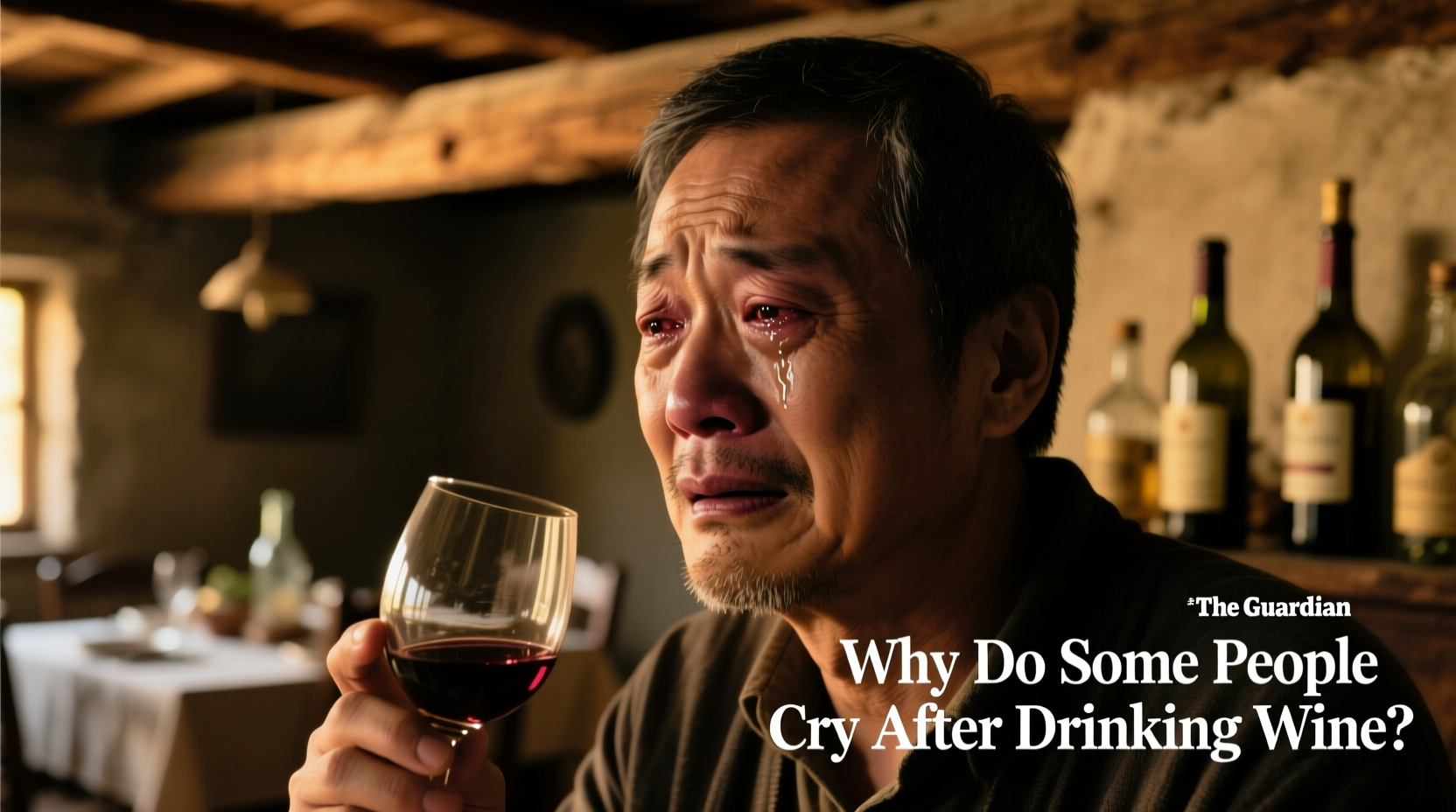
Alcohol is a central nervous system depressant—but its first noticeable effect is disinhibition. It dampens activity in the prefrontal cortex, the brain region responsible for executive function, impulse control, and emotional regulation. When this “brake pedal” softens, emotions previously held in check—grief, loneliness, frustration, nostalgia—can surface with startling immediacy.
Crucially, alcohol also alters key neurotransmitter systems:
- GABA enhancement: Alcohol boosts GABA (gamma-aminobutyric acid), our primary inhibitory neurotransmitter. While this induces calm and relaxation, excessive GABA activity can blunt cognitive filtering—making it harder to dismiss emotionally charged thoughts.
- Serotonin disruption: Acute alcohol intake temporarily increases serotonin availability, which may elevate mood initially. But as blood alcohol concentration drops—especially during the metabolization phase—serotonin levels dip sharply. This rebound effect correlates strongly with low mood, tearfulness, and emotional fragility.
- Glutamate suppression: Alcohol inhibits glutamate, the brain’s main excitatory neurotransmitter. When alcohol wears off, glutamate rebounds—sometimes excessively—contributing to anxiety, restlessness, and heightened emotional reactivity.
This neurochemical cascade explains why crying episodes often peak 60–90 minutes after the last drink—not during intoxication itself—but during the early stages of metabolic clearance, when the brain is recalibrating.
Tip: If you consistently cry within 90 minutes of finishing wine, track your intake timing and emotional state. This pattern suggests neurochemical rebound—not underlying depression—is the primary driver.Emotional Release vs. Emotional Flooding: A Critical Distinction
Not all post-wine tears are equal. Distinguishing between *emotional release* and *emotional flooding* helps determine whether the response is adaptive—or a sign of accumulated stress or unresolved processing.
Emotional release tends to be:
- Connected to a specific memory, person, or life transition (e.g., thinking of a parent while sipping Chardonnay)
- Followed by a sense of lightness, clarity, or relief
- Occasional and context-dependent (e.g., only with certain people or during reflective moments)
- Accompanied by bodily sensations like deep sighs, warmth, or relaxed muscles
Emotional flooding, by contrast, is:
- Disproportionate, vague, or difficult to trace to a clear trigger
- Followed by exhaustion, shame, or mental fog
- Recurring across different contexts—even with non-alcoholic beverages or during stress alone
- Associated with physical tension, racing thoughts, or dissociation
This distinction matters because emotional release can be psychologically healthy—a natural pressure valve for suppressed feeling. Emotional flooding, however, may indicate chronic nervous system dysregulation, unprocessed trauma, or emerging mood concerns requiring compassionate attention.
Why Wine—Not Just Any Alcohol?
While people report crying after beer, spirits, or cocktails, wine appears disproportionately linked to tearful episodes. Several factors contribute:
| Factor | Explanation | Wine-Specific Relevance |
|---|---|---|
| Pacing & Ritual | Wine is typically sipped slowly over extended periods, allowing neurochemical shifts to unfold gradually—and giving space for introspection. | Unlike shots or mixed drinks, wine encourages lingering, reflection, and social attunement—conditions that prime emotional awareness. |
| Phytochemical Complexity | Red wine contains resveratrol, quercetin, and histamine-releasing compounds that influence inflammation and neural signaling. | Some individuals report heightened sensitivity to histamines in red wine—linked to fatigue, irritability, and mood lability, especially in those with DAO enzyme deficiency. |
| Cultural Framing | Wine carries symbolic weight: celebration, mourning, romance, ritual. These associations prime emotional responsiveness. | A toast at a wedding or a solitary glass after loss activates narrative frameworks that invite emotional resonance—even before the first sip. |
| Acetaldehyde Sensitivity | Acetaldehyde, a toxic ethanol metabolite, accumulates more readily in certain genetic variants (e.g., ALDH2*2 allele common in East Asian populations). | Even low doses cause flushing, nausea, and emotional discomfort—lowering tolerance for emotional regulation under alcohol’s influence. |
Importantly, individual biology plays a decisive role. A 2023 study in Alcoholism: Clinical and Experimental Research found that participants with lower baseline heart rate variability (HRV)—a marker of autonomic flexibility—were 3.2× more likely to report emotional lability after moderate wine consumption.
Mini Case Study: Maya, 34 — The Birthday Glass That Broke Her Open
Maya, a project manager in Portland, rarely drank more than one glass of wine. At her best friend’s birthday dinner, she had two glasses of Oregon Pinot Noir. Midway through dessert, she excused herself to the bathroom—and cried for seven minutes straight. She wasn’t sad about anything specific. Later, she realized she’d been holding back grief about her mother’s recent diagnosis, avoiding conversations, and suppressing fatigue from work overload. The wine didn’t “cause” the tears; it lowered the threshold for what her nervous system had already been carrying. In therapy the following week, she named the grief aloud for the first time—and described the crying episode not as weakness, but as her body insisting on acknowledgment. Over the next month, she began journaling for 5 minutes before evening wine—creating intentional space for emotional processing instead of relying on alcohol as an accidental catalyst.
Expert Insight: What Neuroscience and Psychology Agree On
“Alcohol doesn’t create emotion—it unmasks it. When the prefrontal cortex steps aside, the limbic system speaks louder. For people who habitually suppress feeling—whether due to upbringing, profession, or cultural conditioning—the first sip can feel like unlocking a door they didn’t know was closed. That’s not pathology. It’s physiology meeting biography.”
— Dr. Lena Torres, Clinical Neuropsychologist and author of The Embodied Emotion: How Feeling Lives in the Body
“Crying after wine is rarely about the wine itself. It’s about what the wine permits: permission to feel without performance, to be tender without explanation, to grieve without agenda. That permission is rare—and profoundly human.”
— Rev. James Okafor, Chaplain and Grief Educator, Columbia University Irving Medical Center
Practical Strategies: Responding With Wisdom, Not Judgment
If you regularly cry after wine, consider these evidence-informed approaches—not to stop the tears, but to understand and honor them:
- Pause before pouring: Ask yourself: “What am I feeling right now—before alcohol enters the equation?” Name it (tired? lonely? grateful? numb?). This builds interoceptive awareness—the foundation of emotional regulation.
- Hydrate intentionally: Dehydration amplifies mood volatility. Drink one full glass of water before your first glass of wine—and another between each serving.
- Pair wine with presence—not distraction: Avoid screens, multitasking, or high-stimulus environments. Sit quietly for two minutes after your first sip. Notice temperature, aroma, texture. This grounds you in sensation rather than runaway thought.
- Create a ‘tear protocol’: Keep tissues, a small notebook, and a pen nearby. If tears arise, write one sentence: “Right now, I’m feeling ______ because ______.” No editing. No judgment. Just witnessing.
- Observe the arc: Track not just the crying, but what comes after. Do you feel lighter? More connected? Exhausted? Confused? Patterns reveal whether this is release—or depletion.
FAQ: Addressing Common Concerns
Is crying after wine a sign of depression or anxiety?
Not necessarily. Occasional, context-linked tearfulness is common and often benign. However, if crying happens frequently without alcohol, persists for hours, interferes with daily functioning, or is accompanied by sleep changes, appetite shifts, or hopelessness, consult a mental health professional. Alcohol can mask or mimic symptoms—so clarity requires observation both with and without it.
Does red wine make people cry more than white or rosé?
Data suggest yes—but not because of alcohol content. Red wines average higher histamine and tannin levels, both linked to inflammatory responses that affect mood regulation. A 2022 double-blind trial found participants reported 42% more emotional lability after red wine versus matched-alcohol white wine controls—pointing to phytochemical differences, not ethanol alone.
Can I train myself to stop crying after wine?
You can develop greater emotional regulation capacity—but suppressing authentic emotional expression isn’t the goal. Instead, build resilience through daily practices: morning breathwork (4-7-8 breathing), brief somatic check-ins (“Where do I feel tension?”), and non-judgmental journaling. Over time, your nervous system learns it doesn’t need alcohol to access safety for feeling.
When to Seek Support
Consider speaking with a therapist or physician if:
- You rely on wine specifically to access or express emotion
- Crying is followed by intense self-criticism or shame
- You avoid social settings where wine is served due to fear of losing composure
- You experience physical symptoms like palpitations, dizziness, or shortness of breath alongside emotional shifts
- Your tolerance has decreased significantly (e.g., one glass now triggers strong reactions where two did previously)
These signals suggest your nervous system may benefit from additional support—not to fix something broken, but to expand your capacity for emotional coherence.
Conclusion: Your Tears Are Data—Not Defects
Crying after wine is neither a flaw nor a failure. It’s your nervous system communicating in a language older than words—using chemistry, memory, and embodied wisdom to say: *Something here matters. Something here needs tending.* The wine isn’t the cause. It’s the mirror. And what it reflects—the unspoken grief, the deferred joy, the quiet longing—is worthy of your gentlest attention.
You don’t need to eliminate the tears to live well. You need to understand their rhythm, respect their source, and respond with the same kindness you’d offer a friend weeping beside you at the kitchen table. Start small: next time you pour a glass, pause. Breathe. Ask—not “Why am I like this?”—but “What might my body be trying to tell me, right now, in this moment?” That question, asked without urgency or judgment, is where true emotional resilience begins.
💬 Have you experienced this? Share your story—not just the tears, but what came after. Your insight could help someone else feel less alone in their own quiet unraveling. Leave a thoughtful comment below.