Combining energy drinks with alcohol remains a common practice at bars, festivals, and college parties—despite mounting evidence that this pairing creates a uniquely hazardous physiological cocktail. In 2025, regulatory agencies, emergency departments, and clinical toxicologists are sounding louder alarms than ever before. Unlike other drug combinations, this mix doesn’t just amplify risk—it masks critical warning signals the body uses to prevent harm. Blood alcohol concentration (BAC) may rise dangerously while subjective intoxication feels deceptively mild. That disconnect has real-world consequences: increased rates of alcohol poisoning, risky sexual behavior, impaired driving, and ER visits involving cardiac arrhythmias and acute anxiety. This article synthesizes current peer-reviewed research, frontline clinical observations, and authoritative guidance from toxicologists, addiction medicine specialists, and public health agencies to answer one urgent question: Is it safe? The unequivocal answer—backed by data from over 40 studies published since 2020—is no.
Why the “Wide-Awake Drunk” Effect Is Medically Dangerous
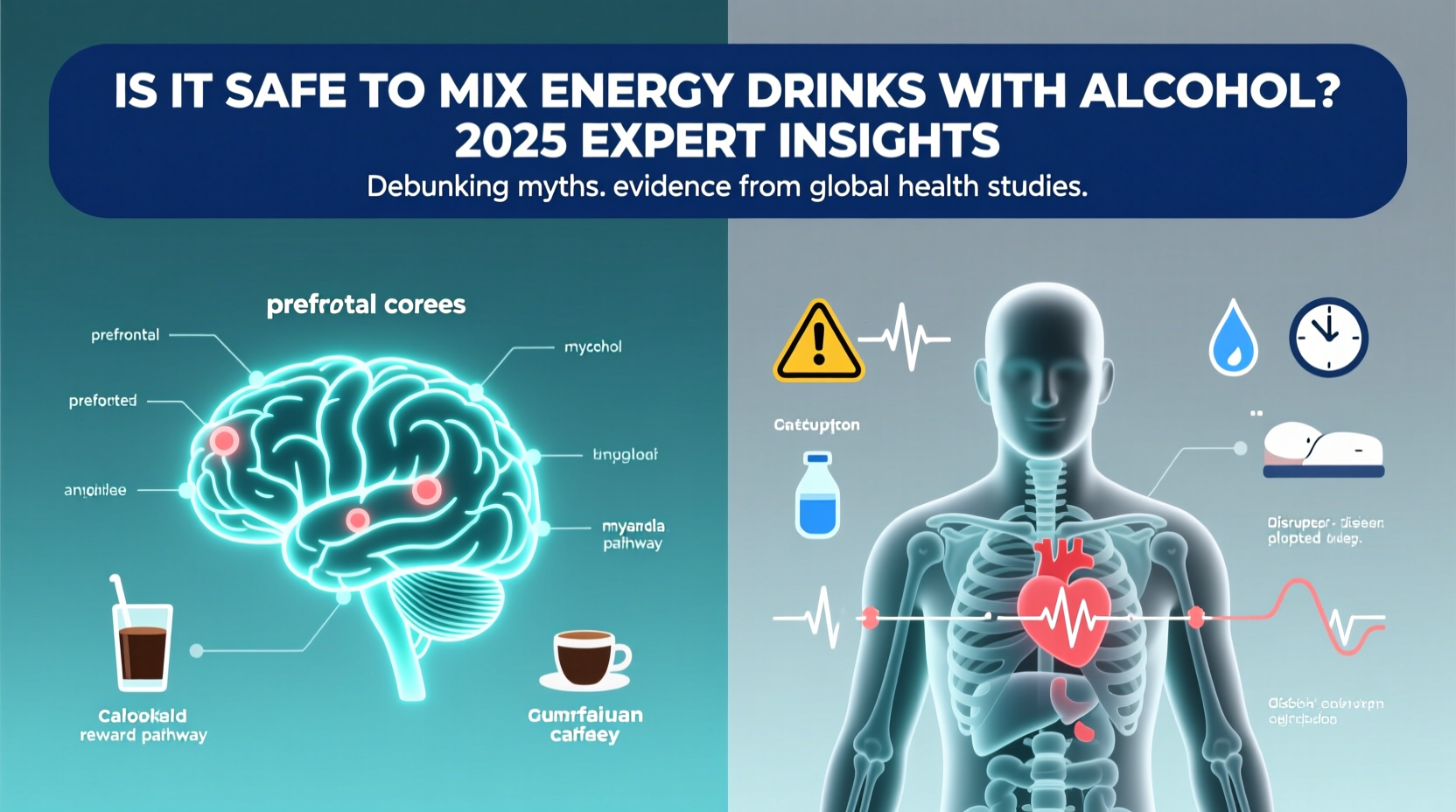
The core danger lies in pharmacological antagonism: caffeine (the primary stimulant in energy drinks) does not neutralize alcohol’s depressant effects—it merely overrides the brain’s natural feedback mechanisms. Alcohol slows neural transmission, impairs judgment, and suppresses motor coordination. Caffeine stimulates the central nervous system, increasing alertness and heart rate—but it does nothing to restore reaction time, liver metabolism, or decision-making capacity. As a result, individuals consuming alcohol-caffeine cocktails report feeling less intoxicated than they actually are. A landmark 2023 double-blind study published in JAMA Internal Medicine found participants who consumed vodka mixed with Red Bull underestimated their BAC by an average of 0.03 g/dL—a level that can push someone from legally sober (0.00) to above the legal driving limit (0.08) without them realizing it.
This mismatch triggers what clinicians call “behavioral disinhibition without physical restraint.” People drink more, stay out longer, engage in unprotected sex, or attempt to drive—all while believing they’re “fine.” Meanwhile, their cardiovascular system bears the brunt: systolic blood pressure spikes by 12–18 mmHg on average, and heart rate increases by 15–25 bpm within 45 minutes of consumption. For individuals with undiagnosed hypertension or arrhythmia predisposition, this stress can precipitate atrial fibrillation or even sudden cardiac events.
Tip: If you choose to consume alcohol, skip all caffeinated beverages—including coffee, tea, and sodas—for at least 3 hours before and after drinking. Caffeine’s half-life is 5–6 hours; residual stimulation interferes with your body’s ability to accurately assess impairment.What the Data Shows: Hospitalizations, Policy Shifts, and Global Trends
Hospital admission data from the U.S. Substance Abuse and Mental Health Services Administration (SAMHSA) reveals a troubling trend: between 2021 and 2024, ER visits involving alcohol plus energy drinks rose 37%, outpacing overall alcohol-related admissions by nearly 3×. Most affected are adults aged 18–29, but a growing cohort of 35–44-year-olds is presenting with new-onset hypertension and sleep architecture disruption linked to habitual use.
In response, regulatory action has accelerated. As of January 2025, the European Union enforces mandatory labeling on all pre-mixed alcoholic energy drinks stating: “Caffeine may mask the sedative effects of alcohol, increasing the risk of alcohol-related harm.” In Canada, Health Canada requires manufacturers to cap caffeine at 100 mg per 250 mL serving in any beverage containing >0.5% alcohol by volume. The U.S. FDA has not issued binding rules—but in its 2024 Safety Communication, it explicitly warned that “no amount of caffeine has been demonstrated to make alcohol safer,” citing over 120 adverse event reports tied to pre-mixed brands like Four Loko and Sparks.
| Region | Regulatory Status (2025) | Key Requirement | Enforcement Mechanism |
|---|---|---|---|
| European Union | Legally binding | Mandatory warning label + max 320 mg caffeine/L | Fines up to €20,000 per violation |
| Canada | Legally binding | Caffeine capped at 100 mg/250 mL in alcoholic beverages | Product recall authority |
| United States | Advisory only | No federal cap; voluntary industry guidelines | Public warnings & post-market surveillance |
| Australia | Legally binding | Ban on pre-mixed alcohol + energy drinks (since 2022) | Customs seizure at point of entry |
Expert Insights: What Toxicologists and Addiction Specialists Are Seeing in Practice
Dr. Lena Torres, Director of Clinical Toxicology at Massachusetts General Hospital and lead author of the 2024 American College of Medical Toxicology consensus statement on stimulant-alcohol interactions, describes the pattern she sees weekly in her unit: “We’re treating younger patients—not just with alcohol poisoning, but with caffeine-induced tachycardia requiring IV beta-blockers. What’s alarming is how many arrive denying significant alcohol intake. They’ll say, ‘I only had two rum-and-red-bulls,’ unaware that each contained 12% ABV and 160 mg of caffeine—equivalent to three strong espressos plus half a bottle of wine.”
“The most insidious risk isn’t overdose—it’s normalization. When people repeatedly experience ‘not feeling drunk’ while objectively impaired, they recalibrate their internal safety thresholds. That rewiring persists beyond the night itself and contributes to long-term heavier drinking patterns.” — Dr. Arjun Mehta, Addiction Medicine Specialist, Stanford University School of Medicine
Neuroimaging studies reinforce this concern. Functional MRI scans from a 2024 University of Michigan trial showed that participants consuming alcohol-caffeine combinations exhibited significantly reduced activation in the anterior cingulate cortex—the brain region responsible for error detection and behavioral correction—compared to those drinking alcohol alone. In plain terms: their brains were less able to recognize when they’d made a mistake, like misjudging distance while walking down stairs or failing to notice slurred speech.
Real-World Consequence: A Case Study from Austin, TX (2024)
In March 2024, 22-year-old Maya R., a third-year nursing student, attended a friend’s rooftop party. She consumed three 12-oz cans of a popular pre-mixed beverage (14% ABV, 200 mg caffeine each) over 90 minutes. She reported feeling “energetic and social”—no dizziness, no nausea, no fatigue. She declined a ride home, insisting she was “completely fine to drive.” En route, she ran a red light and collided with a cyclist. Neither sustained life-threatening injuries, but the cyclist required surgery for a fractured clavicle. Maya’s BAC at the ER was 0.19 g/dL—more than twice the legal limit. Her caffeine level was elevated at 12.4 µg/mL (normal baseline: <1 µg/mL). Follow-up evaluation revealed she had no prior history of heavy drinking or substance misuse. Her neurocognitive assessment showed delayed inhibitory control and impaired working memory—effects that resolved after four weeks of abstinence but underscored how acutely the combination disrupts executive function.
Maya’s case is not isolated. It mirrors findings from the CDC’s 2024 National Intoxication Surveillance Project, which identified 73 similar incidents across 12 states involving drivers with BAC >0.15 who self-reported “feeling sober enough to operate machinery.” All had consumed caffeinated alcoholic beverages within the preceding 2 hours.
Your Safer Alternatives: A Practical Step-by-Step Guide
If you choose to drink alcohol, protecting your health means making intentional, evidence-informed choices—not relying on perception. Here’s how to reduce risk without sacrificing social connection:
- Choose non-caffeinated mixers exclusively. Opt for soda water, ginger beer (non-caffeinated), tonic water (check label—many contain quinine but no caffeine), or fruit juice.
- Hydrate strategically. Alternate every alcoholic drink with 8 oz of water—and sip it slowly, not all at once. This maintains plasma volume and supports renal clearance of alcohol metabolites.
- Set a hard stop using time-based limits—not drink counts. Example: “I will have my last drink by 10:30 p.m.” Alcohol elimination averages 0.015 g/dL per hour; starting early ensures your BAC drops before bedtime.
- Use objective tools—not feelings—to gauge impairment. Download a validated BAC calculator app (e.g., NIAAA’s Rethinking Drinking tool) and input weight, gender, drink type, and timing. Cross-check with a breathalyzer if available.
- Designate a sober observer. Ask one trusted friend—not yourself—to monitor your speech clarity, balance, and responsiveness. Give them permission to intervene if they notice signs like repeated stumbling, repeating questions, or difficulty focusing.
FAQ: Addressing Common Misconceptions
“If I’m used to energy drinks, won’t my body handle the mix better?”
No. Tolerance to caffeine does not confer protection against alcohol’s neurotoxic or cardiotoxic effects. In fact, habitual caffeine users often consume larger quantities of alcohol-caffeine cocktails, compounding risk. Chronic caffeine exposure may also blunt the body’s natural cortisol response to alcohol-induced stress—delaying recognition of physical distress.
“Are ‘natural’ energy drinks like yerba maté or guarana safer to mix with alcohol?”
No. Yerba maté contains 30–50 mg of caffeine per cup; guarana extract delivers 40–80 mg per gram. These are pharmacologically equivalent to synthetic caffeine in effect and risk profile. “Natural” does not mean lower risk—especially when combined with ethanol, which amplifies hepatic metabolism strain.
“Can I offset the danger by eating a big meal first?”
A full stomach delays gastric emptying and slightly reduces peak BAC—but it does nothing to mitigate caffeine’s masking effect on sedation or its synergistic impact on heart rate and blood pressure. Food also does not protect against impaired judgment or motor coordination deficits caused by the combination.
Conclusion: Prioritize Clarity Over Convenience
Mixing energy drinks with alcohol isn’t a harmless shortcut to staying awake—it’s a high-stakes gamble with your cardiovascular health, neurological function, and personal safety. In 2025, the science is unambiguous: there is no safe threshold, no protective dose, and no demographic immune to its effects. Regulatory tightening worldwide reflects not bureaucratic overreach, but urgent clinical reality. The most empowering choice you can make isn’t abstention alone—it’s informed agency. Knowing how caffeine distorts your perception of impairment allows you to intervene *before* consequences escalate. It means choosing sparkling water over a “vodka-red-bull,” setting a timer instead of trusting your buzz, and asking a friend to hold you accountable—not as a restriction, but as an act of self-respect. Your nervous system, your heart, and your future self will register the difference. Start tonight—not with perfection, but with one conscious, evidence-backed choice.
💬 Your experience matters. Have you witnessed or experienced harm from alcohol-energy drink mixing? Share your story responsibly in the comments—your insight could help others recognize the warning signs sooner.