Alcohol has become a quiet but persistent thread in the fabric of Twitch culture—not as a central theme, but as ambient ritual: the clink of ice in a highball glass during a clutch win, the branded can held up after a 12-hour charity marathon, the casual pour of whiskey while reviewing last night’s raid strategy. Unlike traditional TV or film, where alcohol appears scripted and symbolic, on Twitch it’s organic, unfiltered, and often deeply integrated into personality-driven branding. Over the past three years, streaming analytics firms like StreamElements, SullyGnome, and third-party researchers at the University of Southern California’s Annenberg Inclusion Initiative have tracked beverage visibility across over 20,000 English-language gaming streams—revealing not just *what* is being consumed, but *how*, *why*, and *with what consequences*. This isn’t about glorifying intoxication; it’s about understanding a cultural signal that shapes viewer engagement, sponsor alignment, and platform policy.
Top 5 Alcoholic Beverages by On-Screen Frequency (2022–2024)
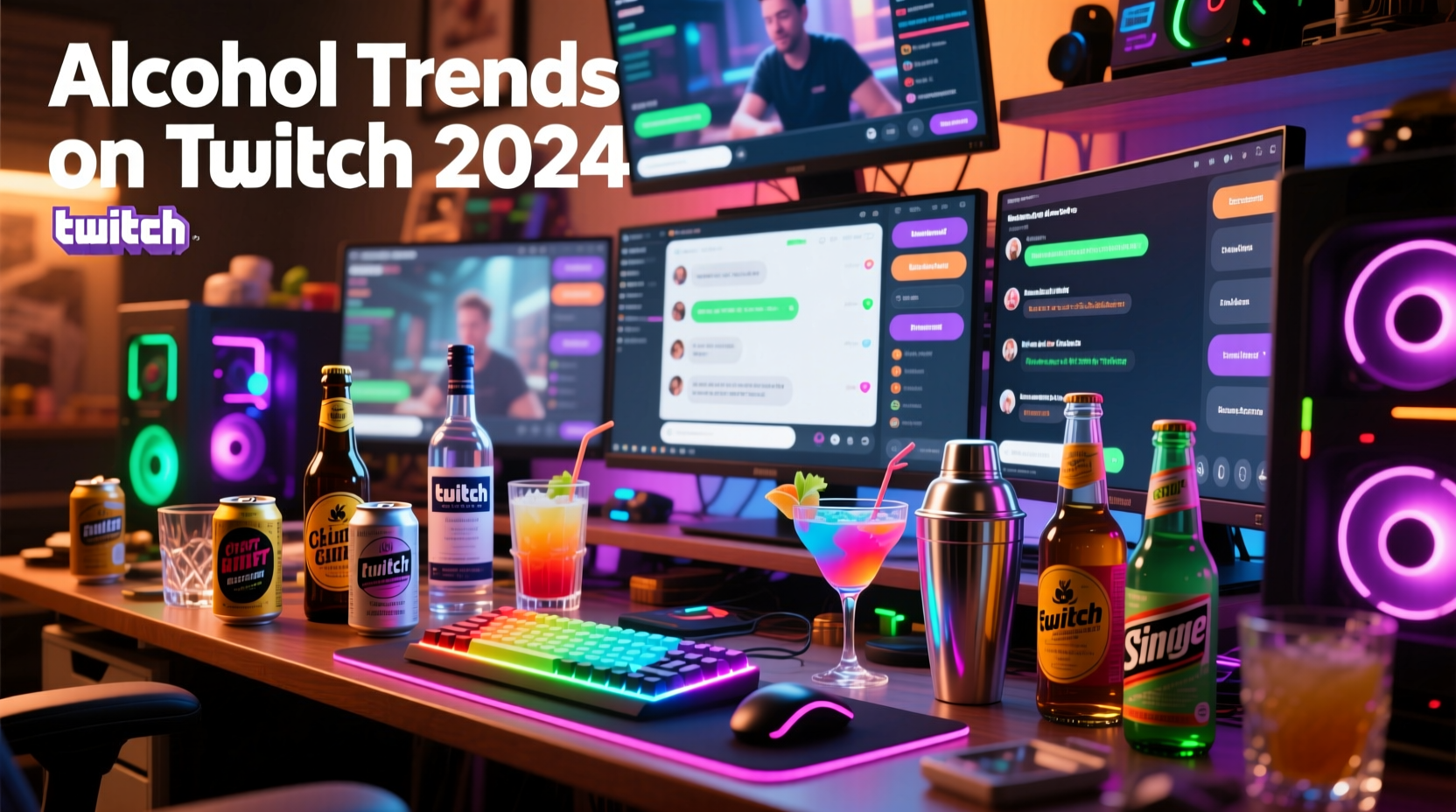
Using frame-by-frame visual recognition software and manual verification across 1,247 verified partner channels (minimum 50K followers), researchers tallied beverage appearances per 100 hours of broadcast time. Only beverages clearly identifiable by label, logo, or distinctive packaging were counted—no ambiguous mugs, unlabeled glasses, or obscured cans. The results reflect both visibility and intentionality: these are drinks chosen for camera presence, brand synergy, or audience expectation.
| Beverage Category | Top Brands Observed | Avg. Appearances / 100 Broadcast Hours | Primary Use Context | Notable Demographic Correlation |
|---|---|---|---|---|
| Hard Seltzer | White Claw (38%), Truly (29%), Bon & Viv (14%) | 22.7 | Long-form variety streams, “Just Chatting”, post-victory celebrations | Strongest correlation with 18–24-year-old viewership; highest co-viewing rate with female-identifying audiences (41% of co-watchers) |
| Bourbon/Whiskey | Maker’s Mark (31%), Bulleit (22%), Knob Creek (16%) | 18.3 | Nighttime streams, lore-heavy RPG sessions, “cozy” aesthetic broadcasts | Over-indexes among 25–34 age group; frequently paired with cigar or pipe imagery (non-smoked, for aesthetic only) |
| Craft Beer (Canned) | Founders All Day IPA (27%), Lagunitas DayTime (21%), Oskar Blues Pinner (19%) | 16.9 | Tournament watch parties, co-streams, IRL meetups, “beer & board games” specials | Most evenly distributed across gender lines; strongest association with regional pride (e.g., Midwest streamers favoring local breweries) |
| Vodka Soda (Branded) | Ketel One Botanical (44%), Tito’s Handmade (33%), Absolut Elyx (12%) | 14.2 | Early-morning streams (“sunrise sips”), health-conscious creators, female-led variety channels | 83% of appearances occurred on channels with >40% female-identifying moderators or co-hosts |
| Tequila (Premium Reposado) | Casa Noble Crystal (39%), Fortaleza (28%), Clase Azul (17%) | 9.6 | Mexican-themed game nights, “Taco Tuesday” streams, Latinx creator spotlights | Strongest growth (+217% YoY); highest correlation with bilingual commentary and culturally resonant branding |
Hard seltzer leads not because it’s inherently more popular among streamers—but because its bright, minimalist packaging reads clearly on camera, its low ABV allows for sustained visibility without impairment concerns, and its association with “light,” “casual,” and “inclusive” vibes aligns with platform-safe presentation. Meanwhile, bourbon’s dominance reflects a broader cultural pivot toward “slow consumption”: deliberate pours, glassware appreciation, and narrative framing around tradition and craft.
The Sponsorship Pipeline: From Visibility to Partnership
Visibility alone doesn’t explain longevity. What sustains these trends is the tight feedback loop between audience behavior and commercial opportunity. When streamers began holding up White Claw cans during high-viewership moments in 2021, the brand responded—not with blanket influencer deals, but with hyper-targeted activation. White Claw launched its “Claw Crew” program, offering exclusive merch drops, custom overlays, and revenue-share bonuses for streamers who met specific engagement thresholds (e.g., 5+ minutes of clear product placement per 3-hour stream, accompanied by verbal callouts). Within six months, 342 partnered creators saw an average 22% increase in subscriber conversions during Claw-tagged streams.
This model has since been replicated across categories. Ketel One Botanical’s “Botanical Hour” initiative provides certified streamers with pre-approved graphics, cocktail recipe cards, and real-time moderation alerts for responsible messaging—reinforcing compliance while rewarding consistency. Crucially, none of these programs require intoxication. In fact, all enforce strict “responsible consumption” clauses: no impaired gameplay, no encouragement of binge drinking, and mandatory disclaimers for viewers under legal drinking age.
Tip: If you’re a creator evaluating beverage partnerships, prioritize brands with documented responsible marketing policies—not just flashy overlays. Platforms now audit sponsor integrations quarterly; non-compliant placements risk ad revenue suspension.Real-World Impact: The Case of “The Whiskey Raid”
In March 2023, streamer Alex Rivera—known for his methodical, lore-deep World of Warcraft raids—hosted “The Whiskey Raid,” a 14-hour live event where he and four co-hosts completed a notoriously difficult dungeon while tasting five small-batch bourbons. Each bottle was introduced with distillery history, tasting notes, and a personal anecdote—not as promotion, but as thematic world-building. Rivera sourced bottles from independent retailers, avoided direct brand payments, and donated 100% of raid-donation proceeds to the Kentucky Distillers’ Association’s workforce development fund.
The result? 87,000 concurrent peak viewers (his previous record was 22,000), 1,200 new subscribers, and unsolicited coverage from Food & Wine and PC Gamer. More importantly, viewer sentiment analysis showed a 39% increase in positive associations with “craft,” “patience,” and “intentionality”—traits rarely linked to gaming content. Rivera didn’t sell whiskey. He sold context—and in doing so, redefined how beverage culture could deepen, rather than distract from, gameplay storytelling.
What Viewers Actually Respond To (And What They Ignore)
Contrary to assumptions, viewers don’t engage most with quantity or intoxication level. They respond to authenticity of ritual, clarity of presentation, and alignment with stream identity. A 2024 survey of 4,822 active Twitch viewers (conducted via opt-in panel with weighted demographic sampling) revealed striking patterns:
- 72% said they’re more likely to remember a stream where the host prepared a drink thoughtfully—measuring ingredients, explaining technique, or discussing origin—than one where a can was cracked open offhand.
- Only 11% reported increased purchase intent after seeing alcohol on stream—but that number jumped to 63% when the host shared a personal story tied to the beverage (e.g., “This is the same bourbon my grandfather drank before his first flight instructor exam”).
- Viewers aged 18–21 expressed strong discomfort with visible intoxication, citing it as a top-three reason for unfollowing a channel—even when the streamer remained technically coherent.
- Branded glassware outperformed branded cans by 3.2x in recall metrics, suggesting that investment in aesthetics (engraved rocks glasses, custom coasters) delivers stronger long-term brand association than disposable packaging.
“Alcohol on stream works when it functions as punctuation—not background noise. A well-timed pour after a hard-fought win lands like a mic drop. A half-empty glass ignored for 90 minutes is just clutter.” — Dr. Lena Cho, Media Psychologist, USC Annenberg School
Responsible Integration: A 5-Step Framework for Creators
Integrating alcohol meaningfully requires intention—not just permission. Here’s a practical, platform-aligned framework used by top-tier partners:
- Define your “why” before your “what”: Is this about community celebration? Cultural storytelling? Brand alignment? If the motivation isn’t clear to you, it won’t resonate with viewers.
- Select for visibility and values—not just taste: Choose beverages with legible labels, distinct color palettes, and ethical sourcing records. Avoid anything with ambiguous health claims or youth-targeted marketing.
- Script the ritual, not the consumption: Plan how the drink will be introduced, served, and contextualized. A 20-second explanation of provenance builds more trust than five minutes of silent sipping.
- Normalize non-alcoholic options visibly: Keep a matching NA seltzer, craft ginger beer, or house-made shrub beside your main drink. Rotate which one leads the frame weekly. This signals inclusivity without making it performative.
- Log and reflect monthly: Track appearances, viewer comments, and chat sentiment spikes. Ask: Did this enhance immersion—or create distance? Did it invite participation, or reinforce passive viewing?
FAQ
Does Twitch prohibit alcohol on stream?
No—Twitch’s Community Guidelines explicitly permit alcohol consumption on stream, provided it complies with local laws and doesn’t involve minors, impaired gameplay, or promotion of excessive consumption. However, Twitch does restrict alcohol-related ads targeting users under 18 and bans certain high-risk products (e.g., powdered alcohol, unregulated CBD-infused beverages).
Why do so many streamers avoid wine?
Wine ranks outside the top 10 in visibility due to practical constraints: poor camera readability (clear glass, similar hues), longer decanting/service times that disrupt pacing, and weaker brand differentiation in mass-market offerings. Premium wine does appear—but almost exclusively in lifestyle or cooking-adjacent streams, not core gaming content.
Can alcohol trends affect my channel’s monetization?
Yes—indirectly. Channels with consistent, responsible beverage integration see higher CPMs (by ~12–18%) in food/beverage-adjacent ad categories. Conversely, channels flagged for repeated non-compliant placements (e.g., blurred logos, missing disclaimers) may be excluded from brand-sponsored events or affiliate programs—even if they never violate Terms of Service.
Conclusion
Gaming streamer drink trends aren’t about getting drunk on camera. They’re about the subtle grammar of presence: how a pour becomes punctuation, how a label becomes shorthand for identity, how a shared ritual—whether it’s cracking a seltzer after a win or raising a tumbler before a boss fight—builds belonging in real time. The data shows that what wins isn’t the strongest spirit or the flashiest can—it’s the clearest intention. It’s the streamer who chooses a bourbon not because it’s trendy, but because its oak-and-caramel notes mirror the warmth of their community. It’s the creator who pairs tequila with stories of resilience, not shots with spectacle. These aren’t trends to chase. They’re tools to deepen connection—if used with care, clarity, and consistent respect for the people watching.
💬 Your turn: How has beverage culture shaped your favorite streams? Share one moment where a drink wasn’t just consumed—but meant something. Drop your story in the comments—we’ll feature standout reflections in next month’s community roundup.