
For centuries, the cross has stood as a symbol of faith, resilience, and personal identity. Today, it’s also a prominent fashion statement—worn by believers and style enthusiasts alike. As craftsmanship and materials evolve, two versions dominate the market: the classic gold cross and its more dazzling counterpart, the diamond-studded cross. But with prices that can differ by thousands of dollars, many ask: does the sparkle truly justify the premium?
The answer isn’t just about aesthetics. It involves understanding material costs, symbolic weight, maintenance demands, long-term value, and personal priorities. Whether you're selecting a gift, making a spiritual statement, or investing in jewelry, knowing what sets these pieces apart is essential.
Material Composition and Cost Drivers
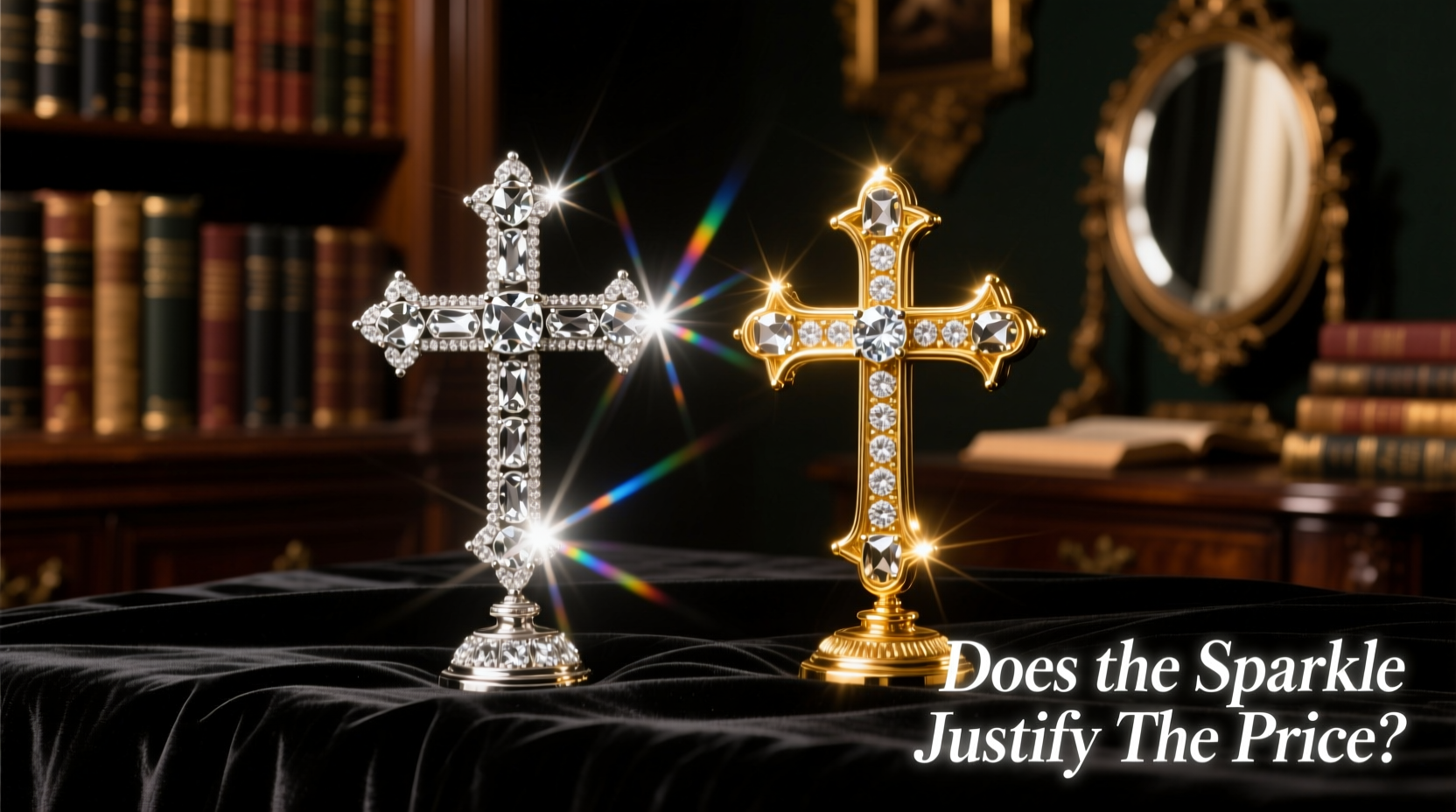
The most immediate difference between a diamond cross and a gold cross lies in composition. A solid gold cross is typically crafted from 10k, 14k, or 18k gold—each varying in purity, color (yellow, white, or rose), and price. The cost is determined primarily by weight and current gold market rates.
In contrast, a diamond cross features the same gold base but includes natural or lab-grown diamonds set into the design. Even small stones multiply the price due to labor-intensive setting processes, gem certification, and the intrinsic value of the diamonds themselves.
To illustrate, consider this comparison:
| Feature | Gold Cross (14k) | Diamond Cross (14k with 0.5ct TDW) |
|---|---|---|
| Base Material | 14k Solid Gold | 14k Solid Gold |
| Gemstones | None | ~20–30 small diamonds (Total: 0.5 carat) |
| Average Price Range | $400 – $1,200 | $2,000 – $5,000+ |
| Maintenance Needs | Low (occasional polishing) | Moderate (cleaning, prong checks) |
| Resale Value Retention | High (based on gold weight) | Moderate (depends on stone quality & trends) |
The jump in price isn't arbitrary—it reflects both tangible and intangible factors. While gold has intrinsic melt value, diamonds add emotional appeal and visual impact, often associated with luxury and permanence.
Tip: Always request a certificate of authenticity for diamonds, especially if purchasing above $1,000.Spiritual Symbolism vs. Fashion Statement
The cross carries deep religious significance for many. In Christian tradition, it represents sacrifice, redemption, and hope. For some wearers, simplicity enhances reverence—a plain gold cross serves as an unbroken reminder of faith without distraction.
Others view jewelry as an extension of self-expression. A diamond cross may symbolize triumph, celebration, or a milestone—such as a baptism, confirmation, or recovery. The brilliance of the stones can represent divine light or personal clarity.
“Jewelry can be devotional art. A diamond cross isn’t inherently less spiritual—it’s just a different language of reverence.” — Dr. Lila Montgomery, Cultural Anthropologist specializing in religious adornment
Ultimately, the choice depends on intent. If your priority is quiet devotion, a minimalist gold cross may resonate more deeply. If you seek a bold emblem of personal journey or achievement, the sparkle may carry profound meaning—even if it comes at a higher cost.
Durability and Long-Term Care
Beyond symbolism, practicality matters. Gold is durable but softens with lower karat ratings. A 14k gold cross balances strength and richness, resisting daily wear better than 18k. Without stones, it requires minimal upkeep—just occasional cleaning with mild soap and a soft cloth.
Diamond crosses introduce complexity. While diamonds are the hardest natural substance (rated 10 on the Mohs scale), their settings can loosen over time. Prongs may wear down, especially with frequent use, risking stone loss. Regular inspections—at least once a year—are recommended.
- Cleaning: Use a soft brush and non-abrasive cleaner; avoid ultrasonic machines unless approved by a jeweler.
- Storage: Keep separate from other jewelry to prevent scratches.
- Wear Frequency: Reserve diamond crosses for special occasions if preserving condition is a priority.
Checklist: Maintaining Your Diamond Cross
- Inspect prongs every 6 months for looseness.
- Clean gently with lukewarm water and mild dish soap weekly.
- Avoid wearing during physical activity or swimming.
- Store in a fabric-lined box, away from direct sunlight.
- Have a professional appraisal every 2–3 years.
Value Retention and Investment Potential
When evaluating whether the sparkle justifies the price, consider long-term value. Gold retains intrinsic worth based on weight and purity. Even if fashion trends shift, scrap gold has consistent market demand.
Diamonds, however, are more volatile. Retail markup is high, and resale value often drops significantly after purchase. According to the Gemological Institute of America (GIA), most diamonds sell for 30–50% less than original retail when resold privately.
That said, certain factors can improve resale potential:
- Certification: GIA or AGS-graded stones hold value better.
- Design: Timeless settings outlast trendy ones.
- Brand: Pieces from reputable jewelers (e.g., Tiffany, Cartier) command higher secondary market prices.
If investment is a goal, a high-karat gold cross may offer more predictable returns. A diamond cross, meanwhile, is better viewed as a sentimental or aesthetic asset—one valued more for personal meaning than financial gain.
Real-World Example: Choosing for a Milestone Gift
Sophia, a 32-year-old nurse, wanted to mark her mother’s recovery from illness with a meaningful gift. She considered both a 14k gold cross ($950) and a similar design with pavé diamonds ($3,200).
Her mother had worn a simple gold cross for decades. Sophia worried the diamond version might feel ostentatious. Yet she also knew her mother had always admired fine details and had whispered, “I’ve never owned anything that sparkled.”
After consulting a jeweler and learning about lab-grown diamond options (which reduced cost by 40%), Sophia chose a hybrid: a 14k white gold cross with ethically sourced lab diamonds totaling 0.4 carats. Priced at $1,800, it balanced beauty, budget, and sentiment.
Her mother later said, “It’s not the diamonds I love—it’s knowing you saw me, not just my faith, but my joy too.”
This case underscores a key truth: the right choice isn’t defined by price tags, but by alignment with the wearer’s story.
Frequently Asked Questions
Is a diamond cross appropriate for everyday wear?
It depends on lifestyle. If your day involves manual work, exercise, or exposure to chemicals, a plain gold cross is safer. Diamond crosses are best preserved for semi-formal or ceremonial wear unless the setting is exceptionally secure.
Do lab-grown diamonds make diamond crosses more affordable?
Yes. Lab-created diamonds offer the same optical and chemical properties as mined diamonds but typically cost 30–50% less. They’re an ethical and budget-conscious alternative without sacrificing sparkle.
Can I upgrade a gold cross to include diamonds later?
In many cases, yes. Reputable jewelers can add pave or accent stones to existing pendants, though structural integrity must be assessed first. This allows wearers to start simple and personalize over time.
Conclusion: Does the Sparkle Justify the Price?
The question isn’t whether one option is objectively better, but whether the added expense aligns with your values, lifestyle, and intentions. A gold cross offers timeless elegance, low maintenance, and steady value. A diamond cross delivers radiance, emotional resonance, and a sense of occasion—but at a higher cost and care commitment.
There’s no universal answer. For some, the sparkle embodies divine light. For others, simplicity speaks louder. What matters is choosing intentionally—not because of trend, guilt, or pressure, but because the piece feels like a true reflection of belief, memory, or identity.
🚀 Ready to make an informed decision? Evaluate your priorities—faith, fashion, function, or investment—and let them guide your choice. Share your thoughts or experiences in the comments below; your insight might help someone find their perfect cross.








