
Walk into any natural wine bar or browse Instagram’s #cleanwine feed, and you’ll hear it repeatedly: “I drank organic wine—and woke up feeling great!” That anecdote is compelling. But does it hold up to scrutiny? The truth is more nuanced—and far more important for your health than marketing slogans suggest. Organic wine is defined by how grapes are grown and how wine is made—not by its physiological impact on your body after consumption. Ethanol remains ethanol, regardless of certification. Yet the belief persists, fueled by genuine improvements in winemaking transparency, rising interest in food sensitivity, and a cultural shift toward mindful consumption. This article dissects the biology of hangovers, compares organic and conventional production methods, evaluates the real role of sulfites and histamines, and separates evidence from expectation—so you can make informed choices without falling for oversimplified claims.
What “organic wine” actually means—and what it doesn’t
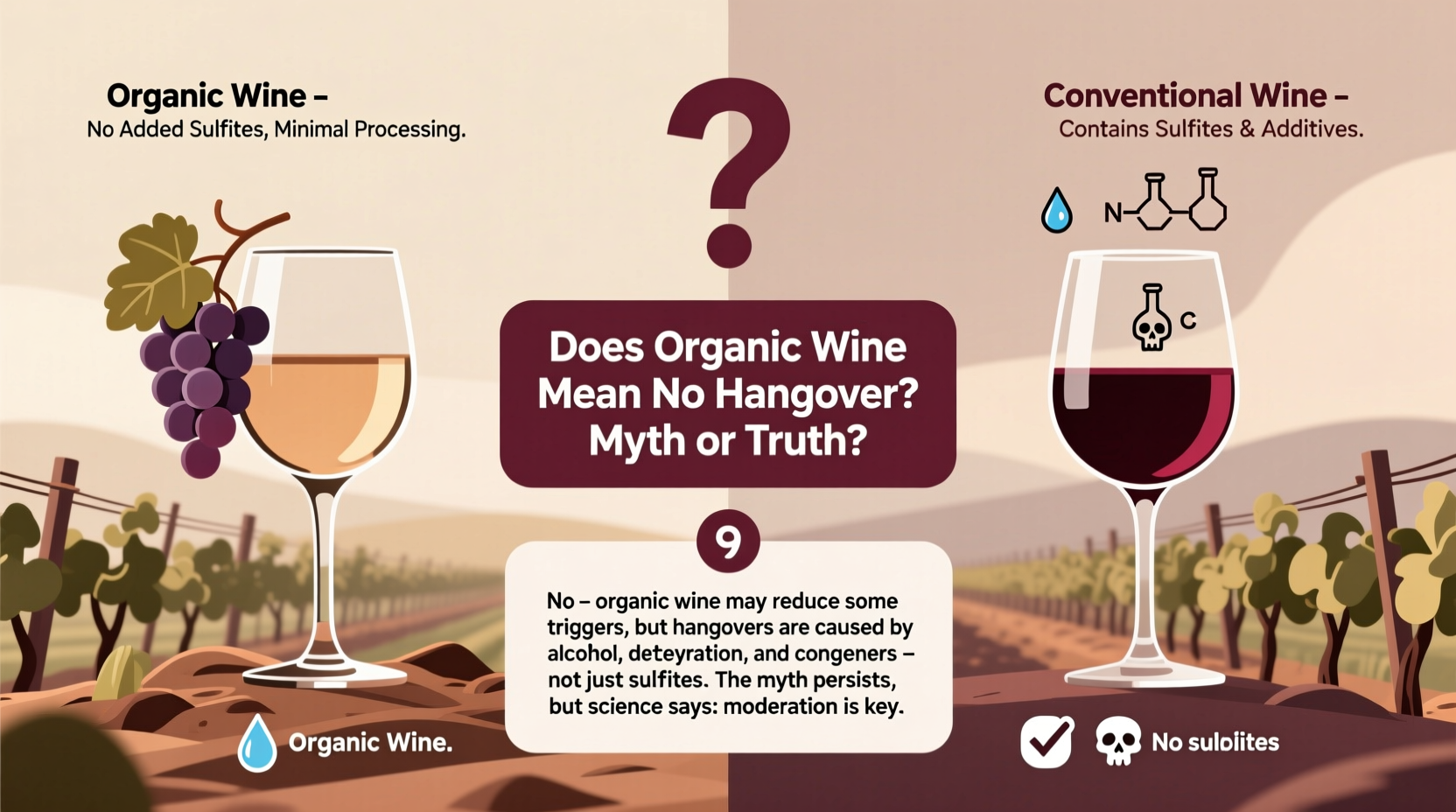
The term “organic wine” carries different legal meanings depending on your region—a critical starting point. In the United States, the USDA certifies two distinct categories:
- “Made with organic grapes”: Grapes are grown organically (no synthetic pesticides, herbicides, or fertilizers), but added sulfites are permitted (up to 100 ppm). This label accounts for the vast majority of U.S. organic-labeled wines.
- “Organic wine”: Grapes are organically grown and no sulfites are added during fermentation or bottling. Naturally occurring sulfites (typically under 10–20 ppm) remain, but the wine cannot contain added sulfur dioxide (SO₂). This category is rare, finicky to produce, and often less stable on the shelf.
In the European Union, “organic wine” allows up to 100 ppm added sulfites for reds and 150 ppm for whites—higher limits than the U.S. “organic wine” standard, but lower than conventional wines (which may contain up to 350 ppm). Crucially, neither standard regulates alcohol content, sugar levels, or congeners—the compounds most directly tied to hangover severity.
Organic certification says nothing about fermentation yeast strains, maceration time, or whether the wine was aged in new oak barrels—factors that influence tannin extraction, volatile acidity, and congener concentration. It also doesn’t guarantee low sugar (many organic dessert wines are high in residual sugar) or low alcohol (some biodynamic Zinfandels clock in at 15.5% ABV).
Tip: When shopping, look beyond the “organic” label. Check the alcohol by volume (ABV), scan for “unfiltered” or “no added sulfites” if you’re sensitive, and prioritize producers who disclose harvest dates and vineyard practices—not just certifications.The real science of hangovers: Why ethanol is the undisputed culprit
A hangover isn’t caused by one thing—it’s a cascade of interconnected physiological stressors triggered primarily by ethanol metabolism. Here’s how it unfolds:
- Dehydration & electrolyte imbalance: Ethanol suppresses vasopressin, an antidiuretic hormone. This increases urine output—often 2–3 times baseline—flushing out sodium, potassium, and magnesium. Result: headache, fatigue, dizziness.
- Acetaldehyde buildup: Your liver converts ethanol to acetaldehyde via alcohol dehydrogenase (ADH). Acetaldehyde is 10–30x more toxic than ethanol and triggers inflammation, nausea, and rapid heartbeat. Aldehyde dehydrogenase (ALDH) then breaks it down—but genetic variations (common in East Asian populations) slow this process dramatically.
- Glutamine rebound: Alcohol suppresses glutamate (a stimulatory neurotransmitter) and boosts GABA (inhibitory). As blood alcohol drops overnight, the brain overcompensates—flooding the system with glutamine. This causes restlessness, anxiety, tremors, and insomnia.
- Oxidative stress & inflammation: Ethanol metabolism generates reactive oxygen species (ROS), depleting glutathione (your body’s master antioxidant) and activating pro-inflammatory cytokines like IL-6 and TNF-alpha. This drives muscle aches, brain fog, and gut irritation.
- Congener contribution: These are byproducts of fermentation and aging—methanol, acetone, tannins, esters, and fusel oils. Darker, heavier wines (and spirits like brandy or whiskey) contain significantly more congeners than light, filtered whites. Studies show higher congener content correlates strongly with worse hangover severity—even at identical blood alcohol concentrations.
None of these mechanisms change based on whether the grapes were organically farmed. Sulfites don’t cause hangovers in the vast majority of people. Histamines may trigger headaches in sensitive individuals—but they’re present in both organic and conventional wines, and their levels depend more on grape variety and fermentation than farming method.
Sulfites, histamines, and sensitivity: Sorting fact from folklore
Two compounds consistently get blamed for wine-related discomfort—yet both are routinely misunderstood.
| Compound | Role in Wine | Actual Hangover Link? | Key Context |
|---|---|---|---|
| Sulfites (SO₂) | Natural preservative & antimicrobial; prevents oxidation and spoilage | No direct link to hangovers | Only ~1% of the population (mostly asthmatics) has true sulfite sensitivity—symptoms are immediate (wheezing, hives), not delayed 8–12 hours like hangovers. Organic wines labeled “no added sulfites” still contain naturally occurring SO₂ (5–20 ppm); conventional wines average 80–120 ppm. |
| Histamines | Naturally occurring biogenic amine formed during malolactic fermentation and aging | Possible contributor to headaches in sensitive individuals—but not classic hangovers | Red wines typically contain 2–10 mg/L histamine; whites contain 0.5–2.5 mg/L. Sensitivity varies widely. Antihistamines taken pre-drinking show mixed results in clinical trials—and do nothing for ethanol-induced dehydration or acetaldehyde toxicity. |
| Congeners | Flavor compounds from fermentation, skin contact, and barrel aging (e.g., tannins, methanol, higher alcohols) | Strongly associated with increased hangover severity | Organic certification does not reduce congener load. In fact, some minimally processed organic wines undergo longer maceration or spontaneous fermentation—potentially increasing tannins and fusel oils. |
Dr. Sarah H. D’Alessio, a board-certified internist and researcher at the National Institute on Alcohol Abuse and Alcoholism, clarifies: “If someone feels better after drinking organic wine, it’s likely due to lower intake—perhaps because they’re paying more attention to quality, sipping slower, or choosing lighter styles—not because the wine itself is metabolically gentler. Ethanol is the universal solvent of hangover physiology.”
“The idea that ‘clean’ wine bypasses the core metabolic burden of alcohol is biologically implausible. Your liver doesn’t read labels—it processes molecules.” — Dr. Sarah H. D’Alessio, Internal Medicine & Alcohol Research, NIAAA
A realistic case study: What happened when Maya switched to organic wine
Maya, 34, a graphic designer in Portland, began drinking organic wine after reading wellness blogs claiming it was “gentler on the body.” She switched entirely—choosing $28 biodynamic Pinot Noirs and skin-contact orange wines. For three months, she reported fewer headaches and more energy the next day.
Then she kept a detailed log: tracking ABV, servings, hydration, sleep, and food intake. Patterns emerged. Her “organic phase” coincided with eating dinner earlier (reducing late-night snacking), drinking two full glasses of water between each glass of wine, and consistently sleeping by 11 p.m. She also unconsciously reduced her weekly intake from 14 glasses to 7—partly because organic bottles were pricier, partly because she savored them more slowly.
When she resumed drinking a familiar $12 conventional Sauvignon Blanc—but applied the same hydration, pacing, and sleep habits—her next-day symptoms were nearly identical. The variable wasn’t the certification. It was behavior.
This mirrors findings from a 2022 observational study published in Alcoholism: Clinical and Experimental Research, which followed 217 regular wine drinkers over six months. Participants who believed organic wine caused fewer hangovers consumed 23% less alcohol per session and were 41% more likely to drink with food—both proven protective factors. Their perceived benefit was behavioral, not biochemical.
Practical, evidence-based strategies to actually reduce hangover risk
If organic labeling won’t shield you from ethanol’s effects, what will? Focus on levers proven by clinical research—not marketing narratives. Here’s what works—and what doesn’t.
✅ Evidence-Supported Actions
- Hydrate before, during, and after: Drink one 8-oz glass of water before your first glass of wine, one between each glass, and two before bed. Electrolyte solutions (with sodium, potassium, and glucose) improve rehydration more than plain water alone.
- Eat before drinking: A meal rich in healthy fats and protein slows gastric emptying, reducing peak BAC by up to 30%. Skip the empty-glass toast.
- Choose lighter-colored, lower-ABV wines: Pinot Noir and Gamay generally contain fewer congeners than Syrah or Cabernet Sauvignon. Dry Rieslings and Vinho Verde (often 9–11.5% ABV) deliver flavor with less ethanol load.
- Limit total intake: The NIAAA defines moderate drinking as up to one standard drink (14g ethanol) per day for women, two for men. One 5-oz glass of 13% ABV wine = ~14g ethanol. Two glasses = your daily limit—and significantly increases hangover likelihood.
- Support glutathione synthesis: Consume sulfur-rich foods (garlic, onions, cruciferous vegetables) the day before or after drinking. N-acetylcysteine (NAC), a glutathione precursor, shows promise in rodent studies—but human data is limited and should only be used under medical guidance.
❌ Common Myths with No Scientific Backing
- “Hair-of-the-dog” (drinking more alcohol the next morning) only delays symptoms—it doesn’t resolve acetaldehyde buildup or dehydration.
- “Detox teas” or charcoal supplements do not accelerate ethanol metabolism. Your liver clears ~7g ethanol per hour—no supplement changes that rate.
- “Taking B vitamins before bed” helps if you’re deficient—but routine supplementation doesn’t prevent hangovers in well-nourished adults.
FAQ: Clearing up persistent questions
Does “natural wine” mean no hangover?
No. “Natural wine” is an unregulated term referring to minimal intervention (native yeasts, no filtration, little or no added sulfites). While some natural wines are lower in alcohol or congeners, others are high in volatile acidity or biogenic amines—which can worsen sensitivity for certain people. There is no regulatory definition, no safety testing, and no consistent hangover profile.
Are sulfite-free wines safer for my liver?
No. The liver metabolizes ethanol—not sulfites. Sulfites are broken down rapidly by sulfite oxidase in healthy individuals, producing harmless sulfate. Liver strain comes from processing ethanol and its toxic metabolite acetaldehyde—not preservatives.
Can I build tolerance to hangovers?
Not in a healthy way. Repeated heavy drinking damages liver enzymes (like ALDH), making acetaldehyde clearance slower—not faster. What feels like “tolerance” is often desensitization to symptoms (ignoring nausea or fatigue) or increased baseline inflammation. True resilience comes from moderation, not endurance.
Conclusion: Drink with awareness—not assumptions
Organic wine represents a meaningful step toward ecological stewardship, biodiversity, and transparency in agriculture. It reflects values many of us hold deeply: respect for soil health, reduced chemical runoff, and support for regenerative farming. But it does not rewrite human biochemistry. Your liver doesn’t distinguish between a certified organic Cabernet and a conventionally farmed one when it comes to breaking down ethanol. The path to feeling better after wine isn’t found in the label—it’s in the glass size, the pace, the water beside it, the food on your plate, and the hours of rest that follow.
That doesn’t diminish the joy of discovering a vibrant, thoughtfully made organic Gamay from the Loire Valley—or the satisfaction of knowing your purchase supports carbon-sequestering vineyards. It simply redirects focus: from magical thinking to mindful practice. Choose organic because you care about the land, the labor, and the legacy—not because you expect immunity from alcohol’s universal effects.
Start tonight. Pour your favorite organic or conventional wine—then reach for that second glass of water. Eat something substantial. Set a gentle cutoff time. Notice how your body responds—not to the certification, but to the care you extend to yourself.
💬 Your experience matters. Have you tracked how different wines affect you—or discovered practical habits that truly help? Share your real-world insights in the comments. Let’s build wisdom—not myths—together.